Loading your view
The page is gathering the latest information.
The page is gathering the latest information.
Suspended Reckoning
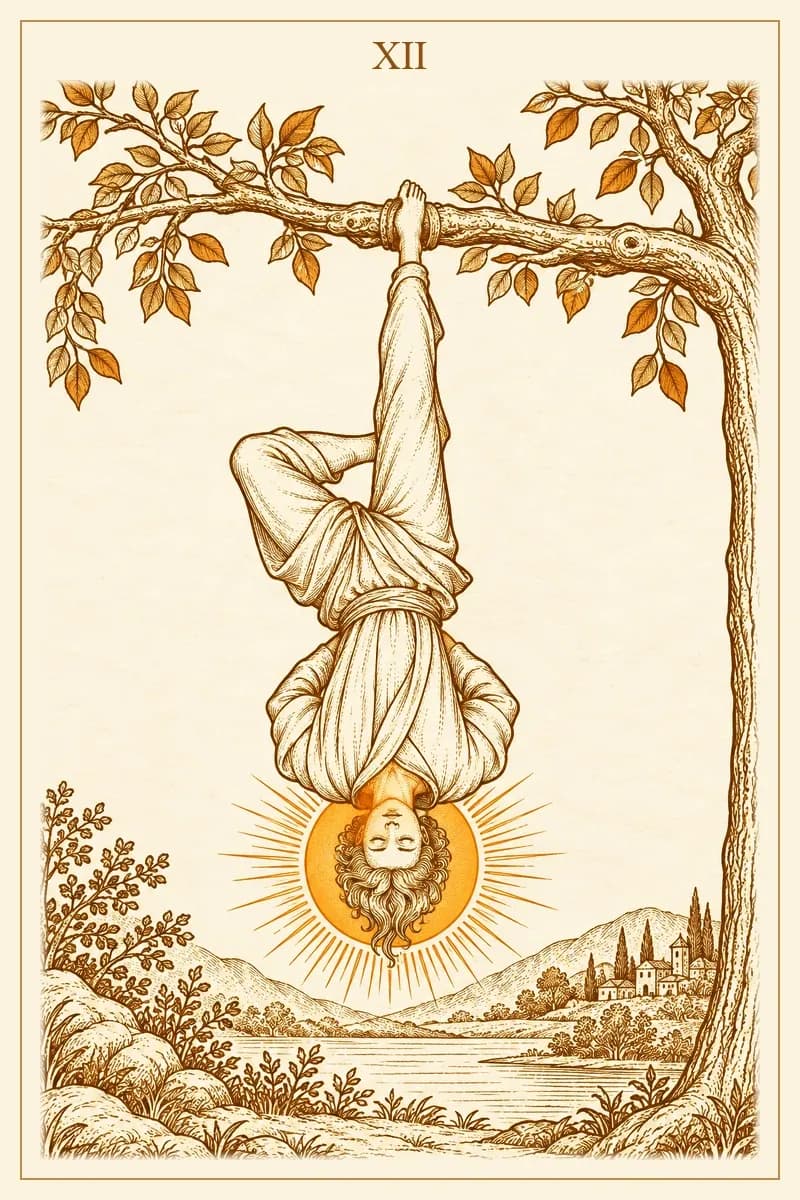
You already know what the diagnosis is. You've known for weeks, maybe months — the results have been sitting there, unread, while you stayed very busy not looking at them. That is exactly the tension this pair carries: one card hangs in deliberate suspension, and the other refuses to let the silence continue.
Voluntary waiting collides with compulsory reckoning. The Hanged Man chose his tree. Judgement did not ask for volunteers. Together they describe a moment when the grace period of contemplation expires — not with punishment, but with an insistence that you finally say out loud what you have quietly understood for a long time.
This is not a comfortable pairing. It is, however, a precise one. The combination does not arrive when you are still genuinely figuring things out — it arrives when you have already figured things out and have been, for reasons you might not have examined, choosing not to act on what you know.
The Hanged Man operates on the logic of surrender: release control, invert your assumptions, allow the view from upside-down to reorder your priorities. There is wisdom in his stillness. But stillness, taken too long, becomes avoidance wearing the mask of patience.
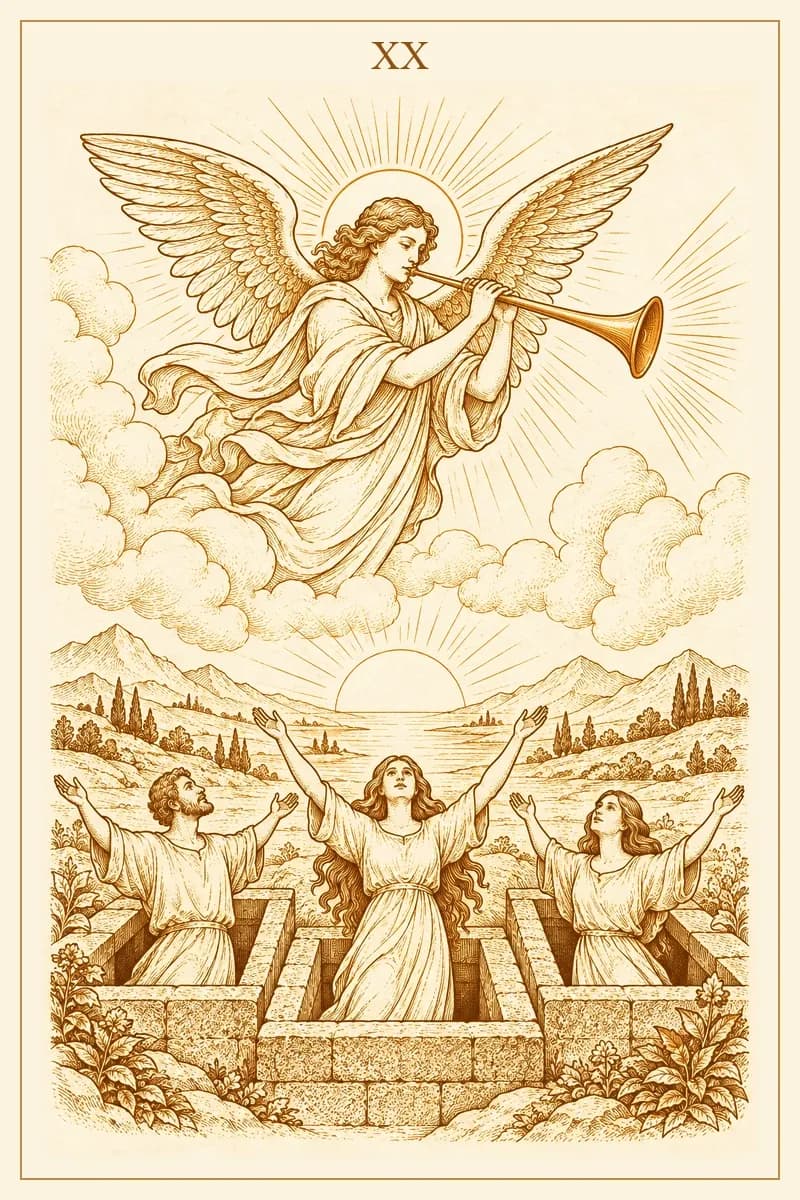
Judgement enters with its trumpet and obliterates the excuse. The figures rising from their coffins in the traditional imagery are not frightened — they are ready. They have been ready. The horn is simply the external event that makes pretending impossible.
Together, these cards ask a precise diagnostic question: are you still suspended because you genuinely need more information, or because having the answer will require you to act on it? The Hanged Man's gift is perspective. Judgement's demand is accountability. The combination says the perspective has been gained — the accounting is overdue.
In a relationship context, this pairing often surfaces around a long-deferred conversation. One partner has been hanging in reflection — processing old patterns, sitting with unspoken feelings, waiting for the right moment. Judgement signals that the moment is no longer optional.
This is not necessarily an ending. Many relationships that survive this combination emerge with a depth they lacked before, precisely because both people finally said the true thing instead of the safe thing. But if one person remains on the tree while the other sounds the trumpet, the distance between them becomes structural rather than temporary.
If you are single, this pair can describe a reckoning with a story you have been telling yourself about why love has not arrived — a story you have examined from the upside-down position long enough to know is no longer accurate.
Professionally, this combination appears when a project, role, or organization has been in a holding pattern that everyone knows cannot continue. The Hanged Man's presence suggests that the pause was intentional — perhaps a strategic freeze, a deliberate wait for the market, a personal period of reassessment after a setback.
Judgement says the freeze is over. The evaluation is happening now, whether you initiate it or not. Performance reviews, restructuring conversations, funding decisions — whatever external mechanism applies to your situation, it is moving whether you are ready or not.
The advantage this pair offers is the Hanged Man's clarity. You have had time to think. Use the conclusions you have already reached rather than pretending the thinking is still unfinished.
The shadow of this combination is self-inflicted limbo. Some people become attached to the identity of the one who is waiting, processing, not yet ready. It carries its own kind of nobility — the seeker in voluntary exile, the one who takes things seriously enough to pause before acting.
Judgement strips that identity away. It does not do so cruelly, but it does so completely. The shadow question is: what happens to your sense of self when the waiting ends? If the answer involves discomfort, that discomfort is the actual work.
There is also a shadow around judgment from others. Judgement in a combination like this can represent external evaluation — a board, a partner, a parent, an institution — rendering a verdict you have been hoping to influence by staying quiet long enough. Silence is not a strategy here. It reads as absence.
Keep or share this combination reference
Continue through published pairings that share The Hanged Man or Judgement.
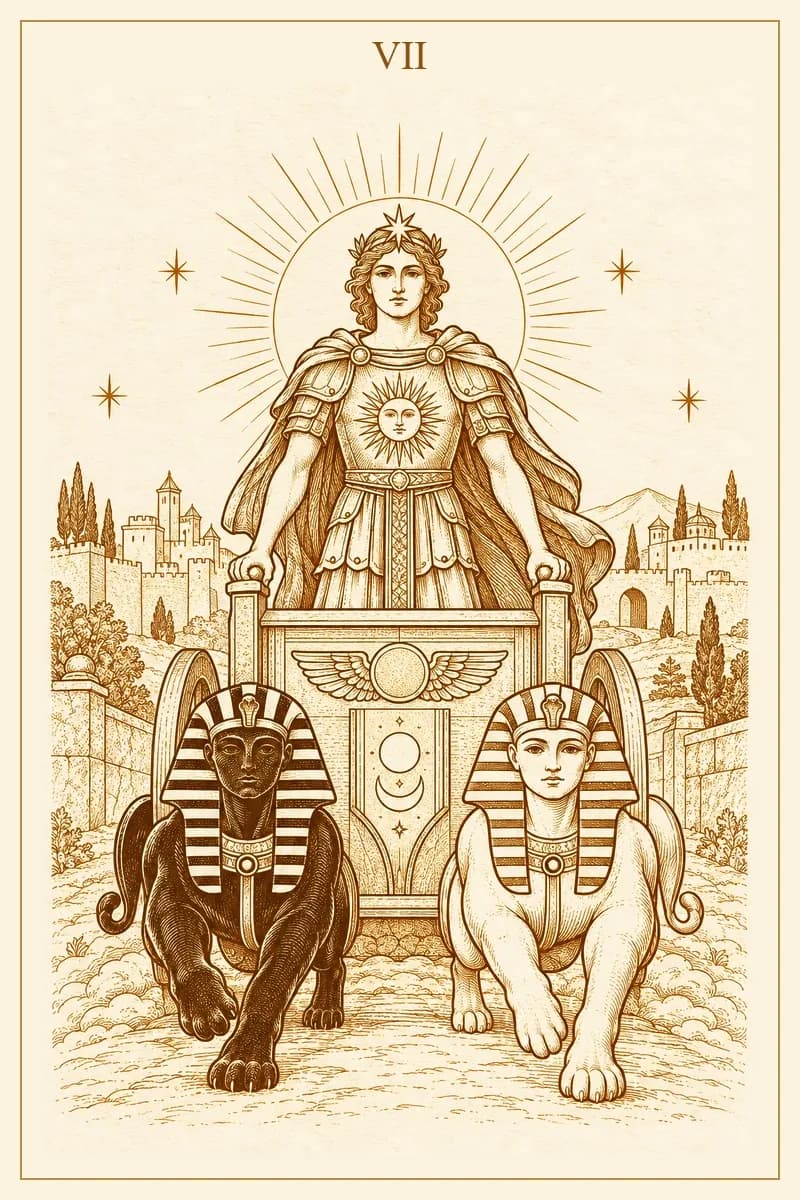
momentum versus surrender
driven reckoning
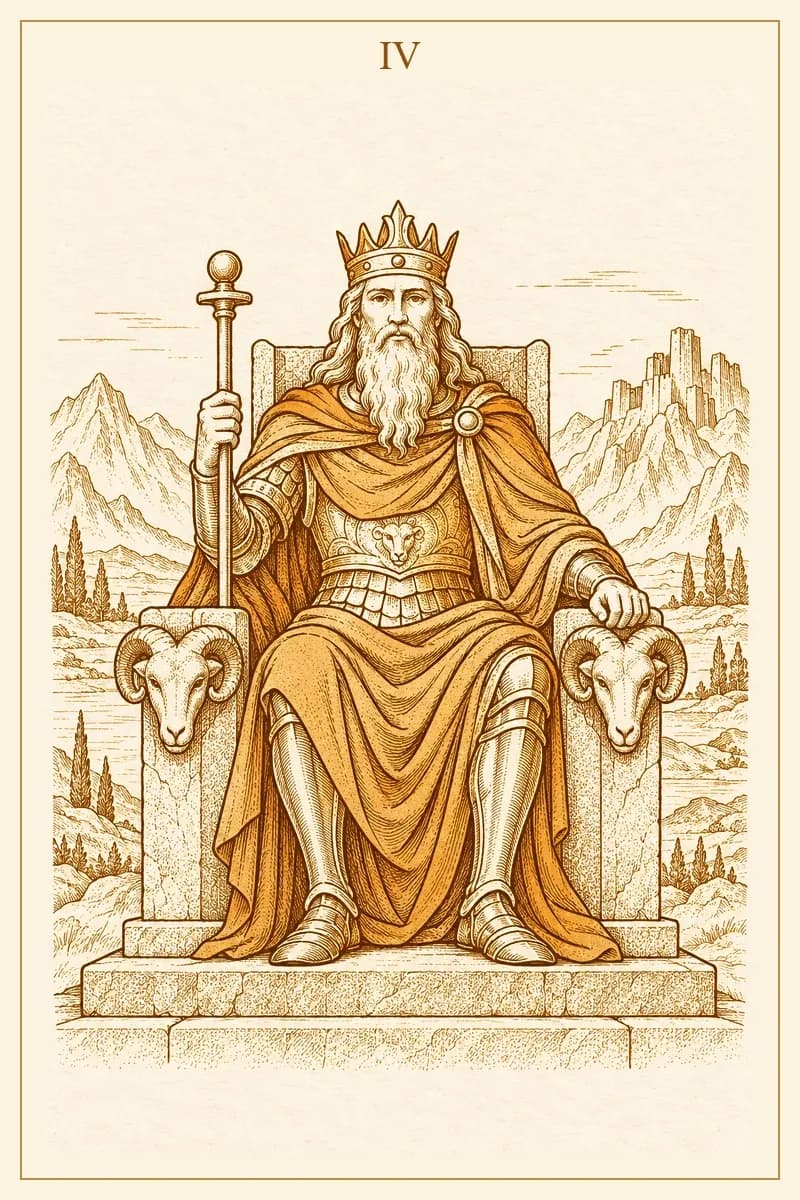
control vs release
bondage meets awakening
fertile suspension
earthly authority transcended
✦ Bring it to the cards ✦
Use this pairing as a starting point, then let a spread listen to the situation that is actually yours.
Begin a contextual reading