
Card Combination
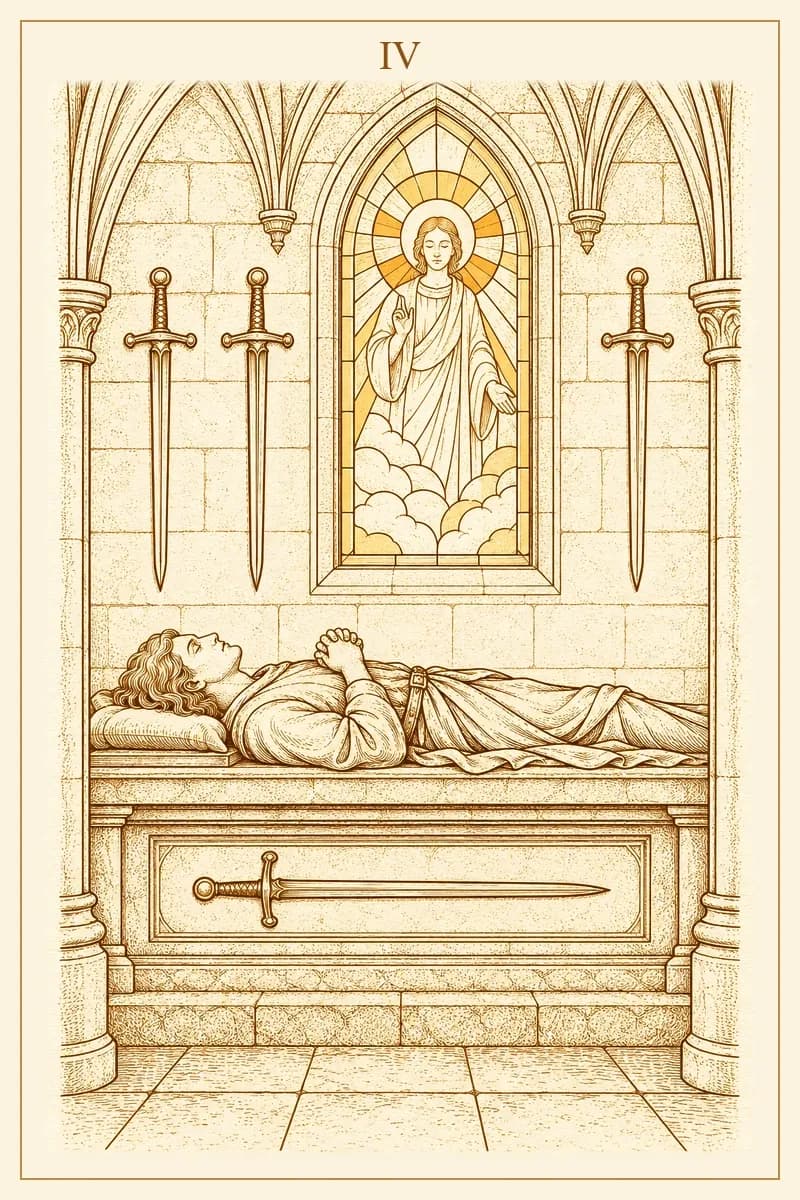
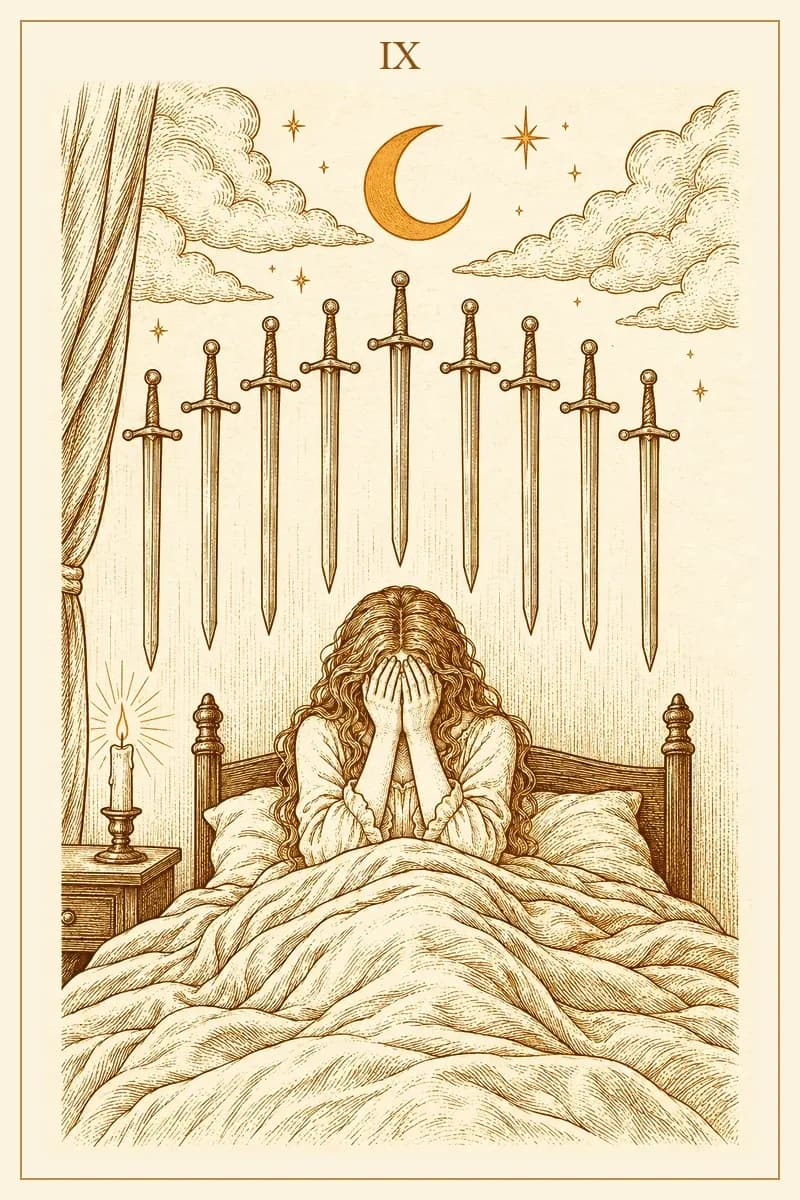
Meaning of Four of Swords and Nine of Swords Combination: Rest Against Nightmares
Recovery versus rumination
She is a physician who cannot take her own prescription. Her white coat hangs on the door, her stethoscope coils on the bedside table, and she knows — with the clinical certainty that comes from fifteen years of practice — that she needs sleep. The body requires it. The mind demands it. Every diagnostic manual she's ever read confirms that recovery is non-negotiable. And yet she lies awake, cataloging symptoms that may or may not be real, running differential diagnoses on her own fears until the alarm sounds and she rises, unrested, to heal others.
The Four of Swords is the prescription: rest, retreat, deliberate withdrawal from the battlefield. It's the hospital bed, the meditation cushion, the closed door with a sign that reads "recovering." The Nine of Swords is the patient who keeps ripping out her own IV line, unable to surrender to the healing process because her mind won't stop generating emergencies.
This pairing describes the specific agony of needing rest but being unable to access it — the body in the bed while the mind paces the corridor.
The Core Tension
The Four of Swords prescribes stillness with medical authority. It recognizes that the nervous system has been overstimulated, the mental reserves depleted, and the only remedy is temporary cessation of all activity. Put down the sword. Close your eyes. Let the body's repair mechanisms do what thinking cannot.
The Nine of Swords ignores the prescription. It sits upright in bed at three in the morning, hands over face, replaying every catastrophe — real and imagined — on a loop that admits no intermission. The swords hang above the sleeper like pending test results, each one representing an anxiety that feels too urgent to postpone.
The tension is medical in nature: the treatment exists, the diagnosis is clear, but the patient's own mind is the primary obstacle to recovery. You know what you need. You cannot stop doing the thing that prevents you from getting it.
Love & Relationships
In romantic contexts, this combination surfaces during periods when a relationship requires recovery but anxiety won't allow it. Perhaps you've been through a conflict, a betrayal, or a period of emotional exhaustion. The Four of Swords says: step back, create space, let the wound close. The Nine of Swords sends panicked texts at midnight.
This pairing often appears when one partner needs distance to heal while their own fear of abandonment prevents them from allowing that distance. You prescribe yourself solitude and then spend the solitude spiraling. The clinical term might be hypervigilance — the inability to lower your guard even when the environment is safe.
If you're single, this combination may indicate that you're between relationships for good reason but torturing yourself with worst-case projections about your romantic future instead of actually resting.
Career & Purpose
Professionally, the Four and Nine of Swords describe burnout complicated by anxiety about the consequences of resting. You need a break. Your performance metrics, your health, your creativity — all of them are sending clear signals that you've exceeded sustainable output. The Four of Swords writes you a medical leave note.
But the Nine of Swords catastrophizes the vacation. What if someone takes your clients while you're gone? What if the project fails without your oversight? What if resting proves you weren't essential? The swords above the bed become emails you haven't answered, deadlines you'll miss, competitors who don't sleep.
The professional prescription is the same as the personal one: the anxiety about resting is more damaging than whatever you're afraid of missing. The surgeon who operates while exhausted is more dangerous than the absent one.
Shadow Side
The shadow of this combination is the martyrdom of sleeplessness. There's a dark prestige in being the person who can't rest — it suggests importance, urgency, a mind so vital that it cannot afford to shut down. The Nine of Swords can become an identity: "I'm the one who worries so you don't have to."
There's also the Four of Swords shadow: using rest as avoidance. Some people retreat not to heal but to hide, prescribing themselves permanent convalescence as a way to avoid reengaging with the world. The hospital bed becomes a fortress. Watch for the line between necessary recovery and comfortable withdrawal — the physician knows the difference, even when the patient pretends not to.
Action Steps
- 1Schedule one non-negotiable period of rest this week — a minimum of three uninterrupted hours — and treat it with the same seriousness you would treat a medical appointment, because that's exactly what it is.
- 2Write down the three anxieties that are most actively preventing your rest, then perform triage: identify which is a genuine emergency, which is a chronic condition requiring long-term management, and which is a phantom symptom your tired mind invented.
- 3Create one physical boundary between your resting space and your anxiety triggers — remove the phone from the bedroom, close the laptop, or literally close the door — because the Four of Swords heals fastest in an environment the Nine of Swords cannot enter.
Related Pairings
Continue through published pairings that share Four of Swords or Nine of Swords.
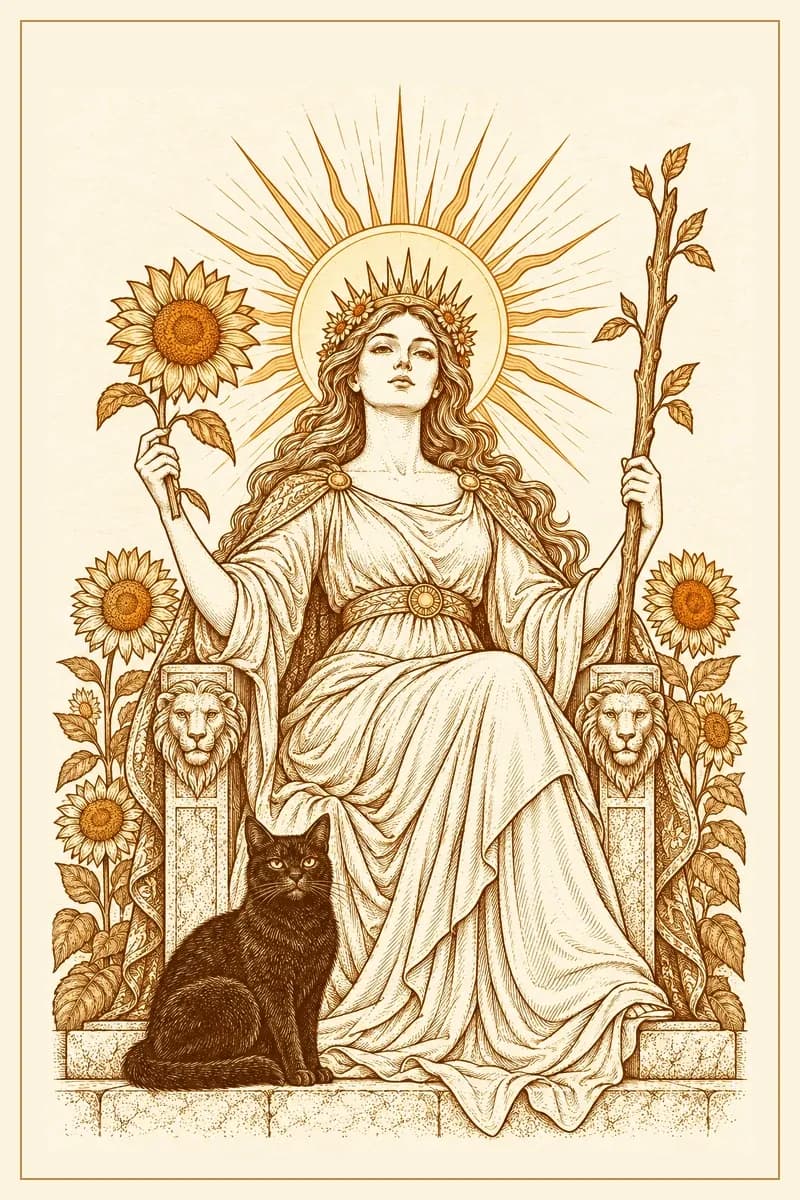
the performer learning that stillness is not weakness
Meaning of Queen of Wands and Four of Swords Combination: The Performer at Rest
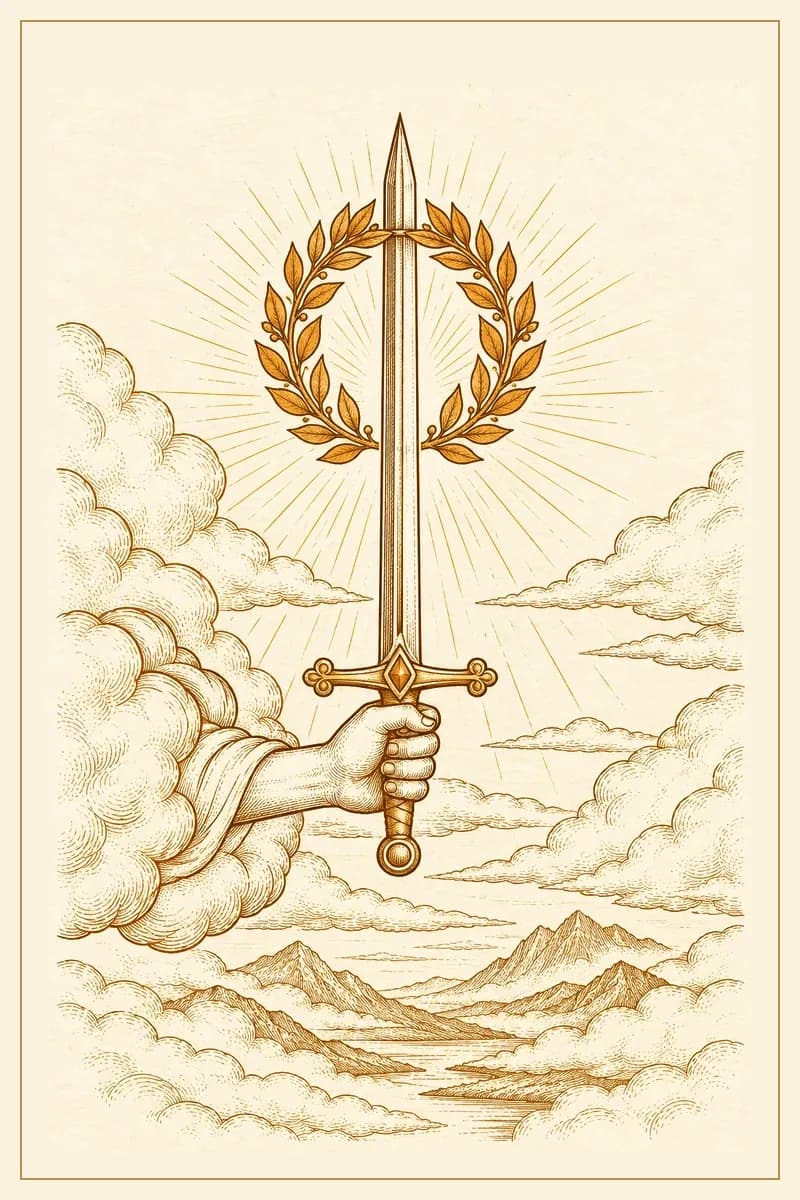
Truth born from suffering
Meaning of Ace of Swords and Nine of Swords Combination: Clarity Through Anguish
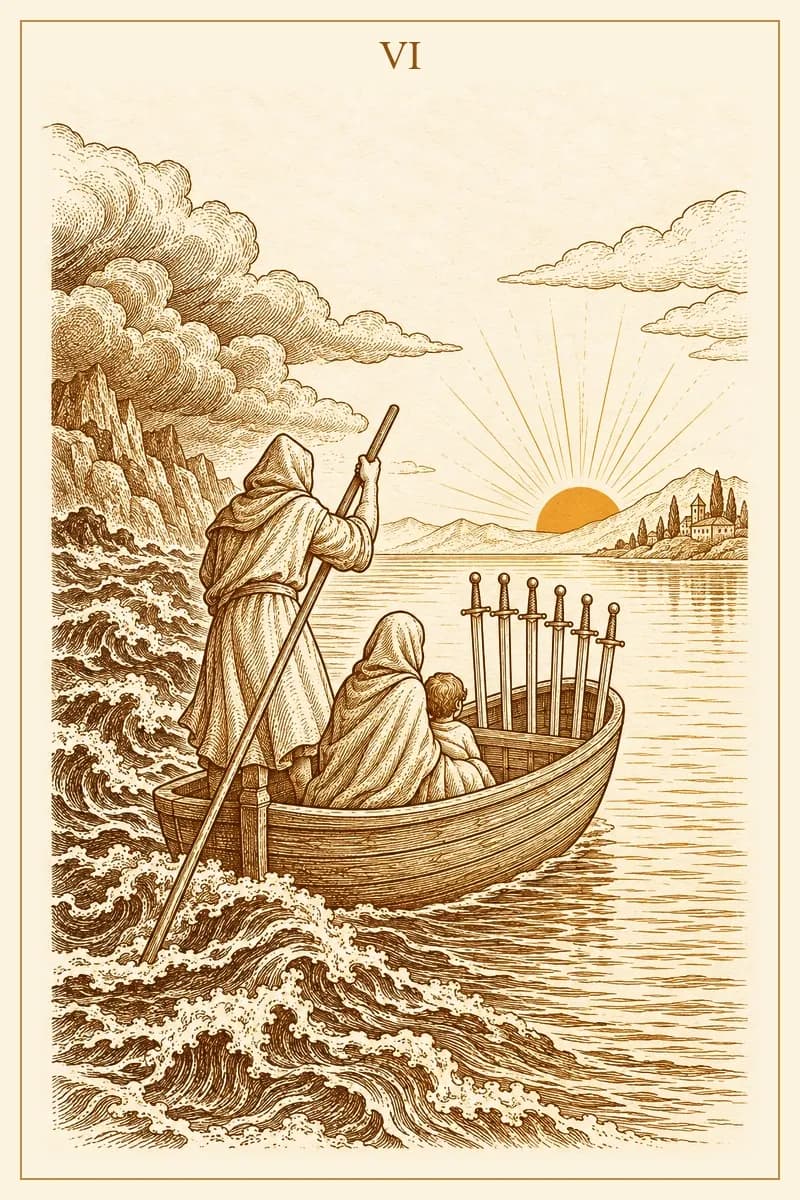
Anxious transition forward
Meaning of Six of Swords and Nine of Swords Combination: Leaving With the Pain
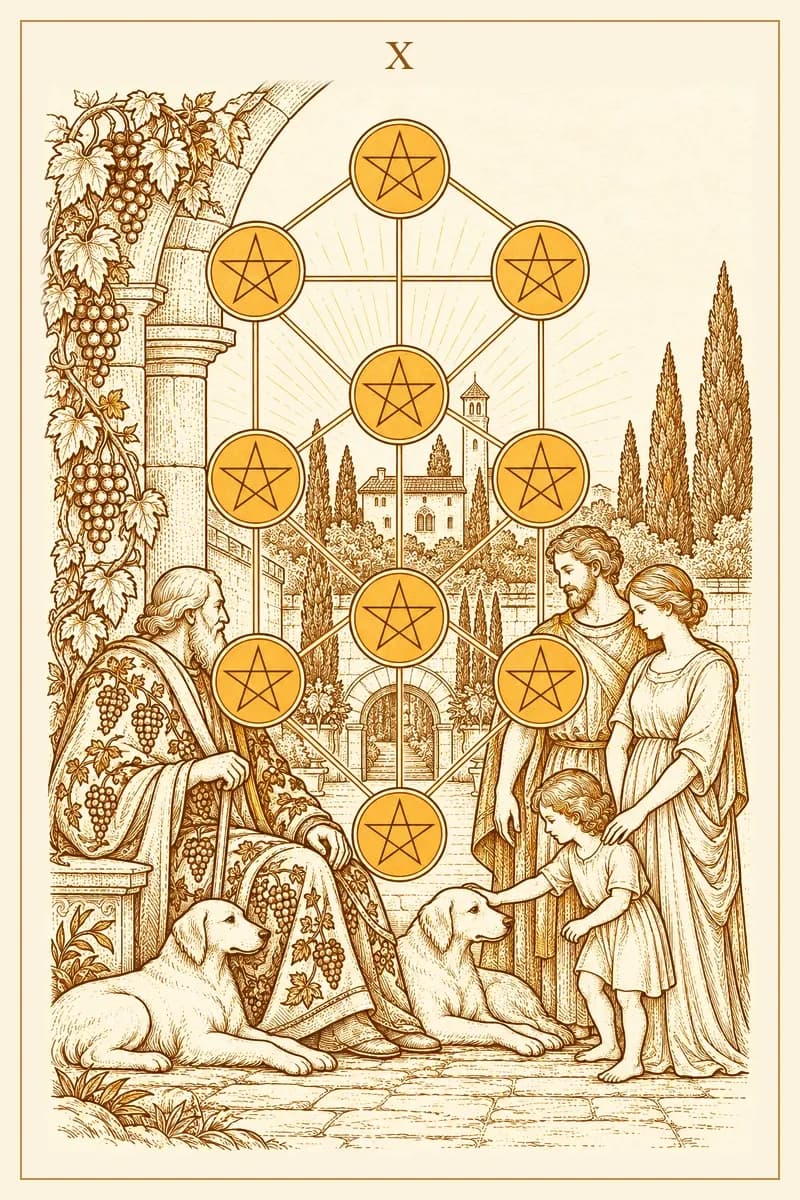
Anxiety within abundance
Meaning of Nine of Swords and Ten of Pentacles Combination: Anxiety Behind the Estate Walls
✦ Bring it to the cards ✦
Bring Four of Swords and Nine of Swords into your own reading
Use this pairing as a starting point, then let a spread listen to the situation that is actually yours.
Begin a contextual reading