
Card Combination

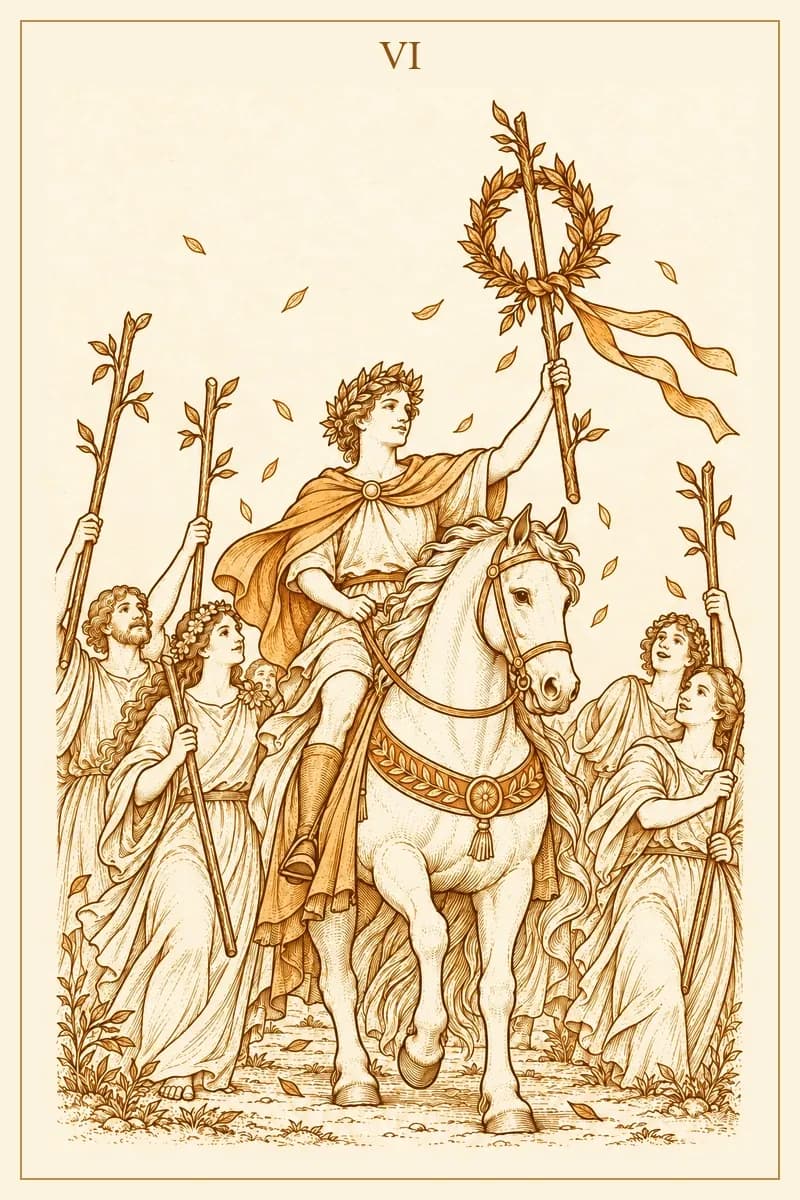
Meaning of Death and Six of Wands Combination: The Victory That Expires on the Podium
Triumph expiration
The surgeon is already scrubbing out when the resident bursts in with the lab results — the operation was a technical success, every suture placed with textbook precision, but the underlying pathology has been misdiagnosed from the start. The patient will wake up to applause from the surgical team and a condition that no longer matches the chart. The victory lap through the hospital corridor is happening in real time, and so is the quiet realization that the chart needs to be rewritten entirely.
You are standing in that corridor right now. Six of Wands handed you the laurel wreath, the recognition, the visible proof that you did something worth celebrating. Death is the second opinion that arrives while the confetti is still falling. Not to take away your skill — the surgery was flawless — but to announce that the diagnosis you built your reputation on has changed. The disease has mutated. The treatment protocol that earned you standing ovations is now clinically obsolete.
The Core Tension
Six of Wands is the discharge summary that reads "procedure successful, patient stable." It is public validation — your peers nodding, your name on the board, the metrics all green. Death is the follow-up scan that reveals something the initial imaging missed. The tension here is not between failure and success. It is between a success that was real and a context that has shifted beneath it. You earned your victory honestly. The problem is that the condition it addressed no longer exists in the form you treated. Think of a physician who spent a decade becoming the foremost authority on a procedure that medical advances have rendered unnecessary. The expertise is genuine. The standing ovation was deserved. And the field has moved on. Six of Wands keeps pointing at the framed certificates on the wall. Death keeps pointing at the patient who needs a completely different intervention.
Love & Relationships
You achieved something real in this relationship — built trust, weathered a crisis together, reached a place where others could see the health of what you had. Six of Wands in love is the couple that everyone references as the model, the one friends cite when they need proof that partnership works. Death does not invalidate that history. It delivers the specialist referral that says the relationship has entered a different phase, and the treatment plan that got you here will not serve the next stage. Perhaps the dynamic that earned admiration — one partner as the steady anchor, the other as the ambitious force — has calcified into something that restricts both of you. The public image of your relationship is a clean bill of health. The private reality is a set of symptoms that require a new diagnostic framework entirely. For those without a partner, this pairing signals that the version of yourself that attracted recognition — the confident profile, the curated presentation — is undergoing a cellular-level change. The applause was for a version of you that is being replaced by something the audience does not yet recognize.
Career & Purpose
The quarterly review glows. The project shipped on time. Your name circulates in conversations about promotion. Six of Wands is the professional equivalent of being published in a top medical journal — peer-reviewed, cited, celebrated. Death is the retraction notice. Not because the research was fraudulent, but because subsequent findings have changed the entire framework. The methodology was sound for its era. The era has ended. In practical terms, this can look like a role that gave you visibility suddenly being absorbed into a restructure, or a skill set that made you indispensable becoming automated. Your track record is not erased. But the specific conditions under which you were the obvious specialist have shifted. The career move here is not to defend your old diagnosis. It is to retrain for the pathology that actually exists now. The practitioners who survive paradigm shifts in medicine are not the ones who cling to their citation count — they are the ones who walk into the new ward and start learning.
Shadow Side
The shadow of this pairing is the physician who refuses a second opinion. You become so attached to the applause of the successful diagnosis that you suppress any evidence the condition has changed. Publicly, you maintain the narrative of victory. Privately, you know the patient chart no longer matches reality. There is also the inverse shadow: abandoning genuine accomplishments too quickly, dismissing real expertise because the landscape shifted, performing humility as a way to avoid the harder work of adaptation.
Action Steps
- 1Schedule your own second opinion: identify one area where you are still operating on an outdated diagnosis and name what has actually changed
- 2Separate your skill from your specific victory — write down three capabilities you demonstrated in your last success that transfer to a completely different context
- 3Have one honest conversation with someone who sees you clearly, not about what you achieved, but about what you need to address next
Related Pairings
Continue through published pairings that share Death or Six of Wands.

Ending births beginning
Meaning of The Fool and Death Combination: Ending Births Beginning
Unearned applause
Meaning of The Fool and Six of Wands Combination: Accidental Triumph

Craft confronting transformation
Meaning of The Magician and Death Combination: Skill Meets the Knife
Quiet skill, public acclaim
Meaning of The Magician and Six of Wands Combination: The Craft Behind the Crown
Silent dissolution
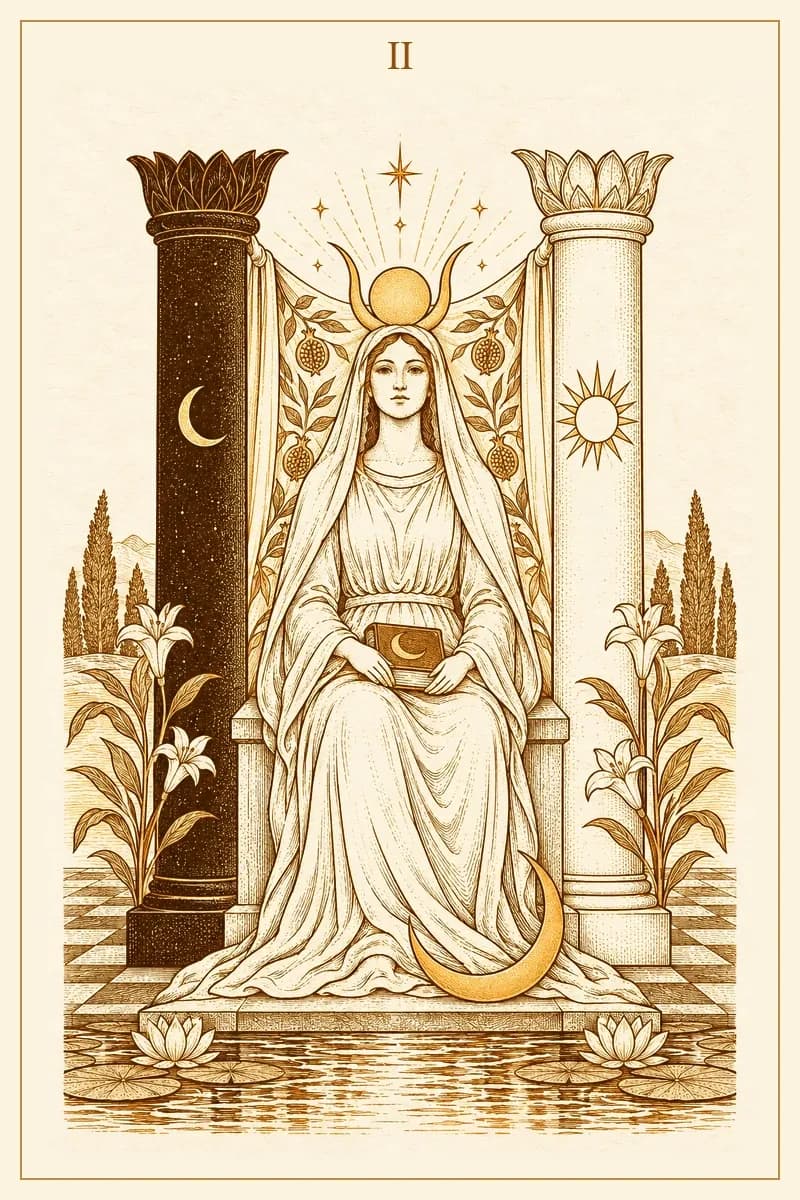
Meaning of The High Priestess and Death Combination: Hidden Transformation
Earned recognition
Meaning of The High Priestess and Six of Wands Combination: The Victory That Begins in Silence
✦ Bring it to the cards ✦
Bring Death and Six of Wands into your own reading
Use this pairing as a starting point, then let a spread listen to the situation that is actually yours.
Begin a contextual reading