Loading your view
The page is gathering the latest information.
The page is gathering the latest information.
craft confronting transformation
The smell hits before the sight — fat rendering in a hot pan, herbs crushed between two palms, garlic meeting oil at the edge of burning. Every cook learns the same lesson eventually: there is a precise moment when heat transforms a raw ingredient into something it could never have been alone. Before that moment, you have technique. After it, you have food. The second between them — knife down, fire doing the rest — is not reversible. You cannot un-caramelize an onion. Some changes, once made, are the point.
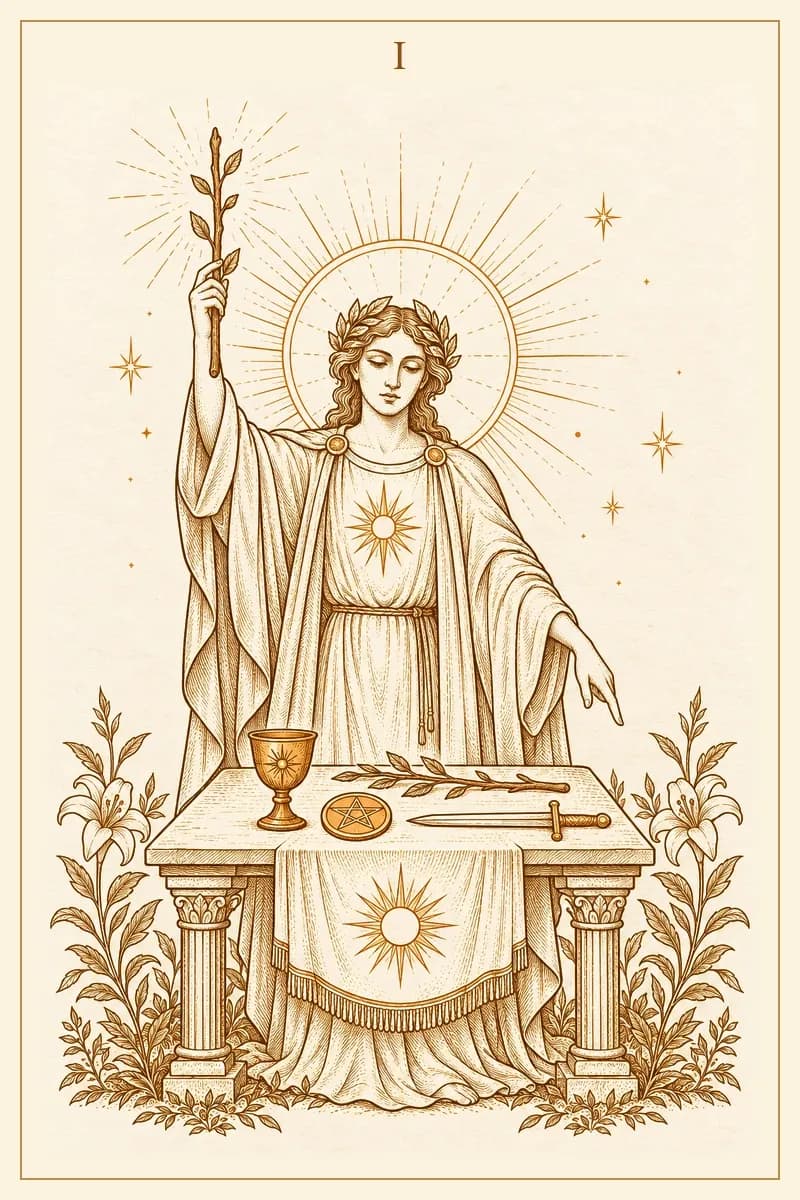
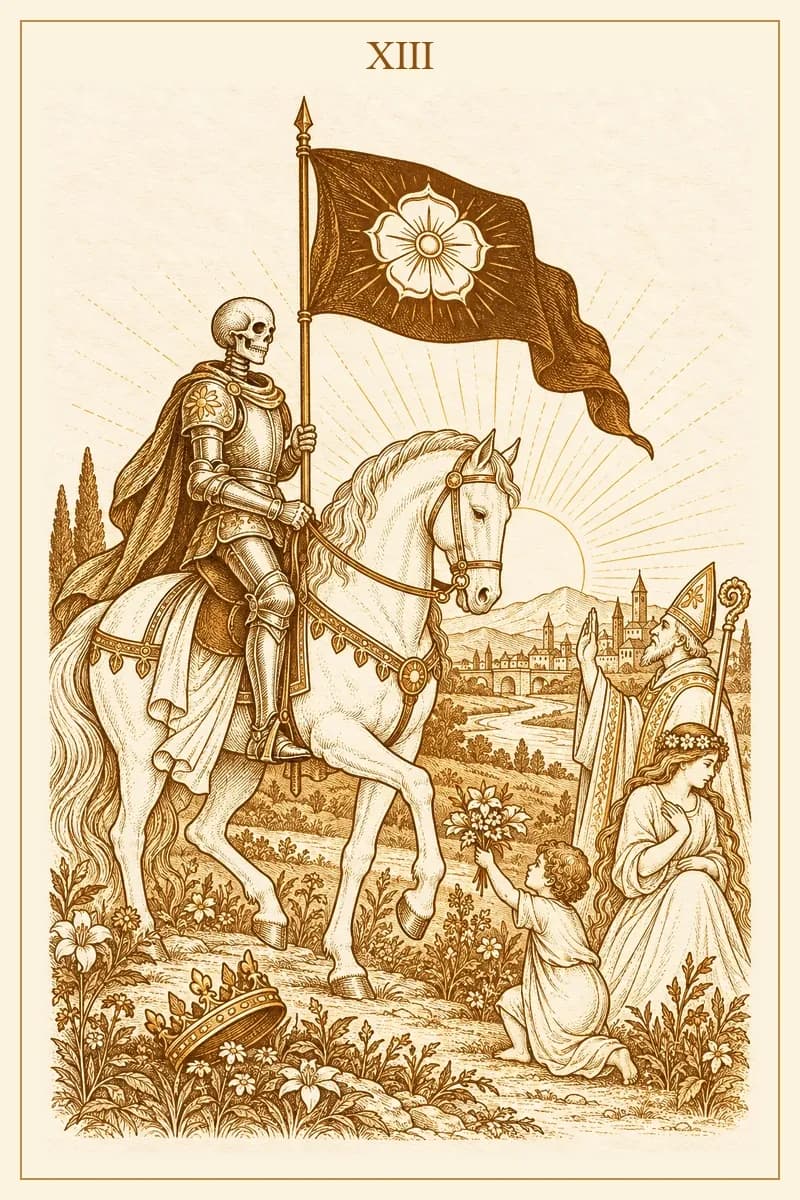
The Magician knows every technique. He can break down a bird, build a stock from bones, reduce a sauce to a gloss that coats a spoon like lacquer. His power is assembly and control — taking raw materials and shaping them into something coherent. Death controls the flame. Not as a threat, but as the irreversible force that completes what skill cannot finish alone. When these two appear together, the kitchen is open. Something is going to be cooked through.
The Magician's power is rooted in reversibility. He arranges. He adjusts. He can take the knife to a different angle, reduce the heat, add more salt. His competence is the competence of options — the feeling that no situation is so far along that he cannot renegotiate the terms. This is his gift and, in the presence of Death, his vulnerability. Because Death's power is rooted in the opposite: it operates at the point where adjustment is no longer available. The sauce has reduced. The meat has rested. The window for change has closed the way an oven door closes — softly, with finality.
Together, they produce a specific kind of demand. The Magician must bring everything he has — every technique, every tool, every learned instinct — and then surrender the outcome to a process that will complete itself without his permission. This is not comfortable for someone whose identity depends on competence. The tension is not between skill and failure. It is between skill and inevitability, which is harder to accept.
In relationships, this pairing marks a turning point that neither partner can manage their way around. One person — often the one with more emotional vocabulary, more capacity for deliberate communication — has been arranging the conditions of intimacy with the care of a cook setting up a mise en place. Everything in its place. Every conversation handled. Every difficult moment addressed with the right tools at the right time.
Death arrives to indicate that the preparation has ended. What has been cooking between two people is now at the point where it either transforms into something deeper — a different kind of commitment, a harder honesty, a love that has been through fire and is now something else entirely — or it is finished. The Magician's instinct is to adjust the heat, buy more time, refine the recipe. Death says: the dish is ready. Keeping it on the flame any longer does not improve it. The decision is whether to serve what has actually been cooked, or to insist it should have been something different.
Professionally, this combination describes a career inflection point where accumulated skill meets an irreversible change in context. The Magician has spent years mastering systems, refining processes, developing fluency that looks effortless because it has been practiced until it became instinct. Death signals that the context those skills were built for is ending. Not because of failure — contexts end. Industries shift. Roles that existed for decades dissolve not through anyone's fault but through the forward movement of time.
The question this pairing asks is blunt: can the cook adapt when the kitchen changes? The skills are real. The question is whether they have been developed as responses to a specific environment, or as fundamental capacities that survive the environment's end. Chefs who learned only one cuisine meet different problems at the cutting board than those who learned how heat and acid and fat behave at the level of principle.
The shadow emerges in two forms, both recognizable in a kitchen context. The first is the cook who refuses to accept that a dish has moved past the point of saving — who keeps adding ingredients, adjusting seasoning, insisting that more technique can correct what the fire has already decided. The Magician without Death's acceptance becomes a person who cannot finish anything because finishing means confronting the gap between what he intended and what actually happened.
The second shadow is subtler: using the expertise to avoid the transformation rather than to navigate it. Every new technique becomes a way to delay the moment of heat. Every skill becomes insulation from the reality that something must eventually change completely. Competence, in this configuration, is deployed not to create but to postpone.
Keep or share this combination reference
Continue through published pairings that share The Magician or Death.
Spontaneous Manifestation
driven transformation
controlled momentum
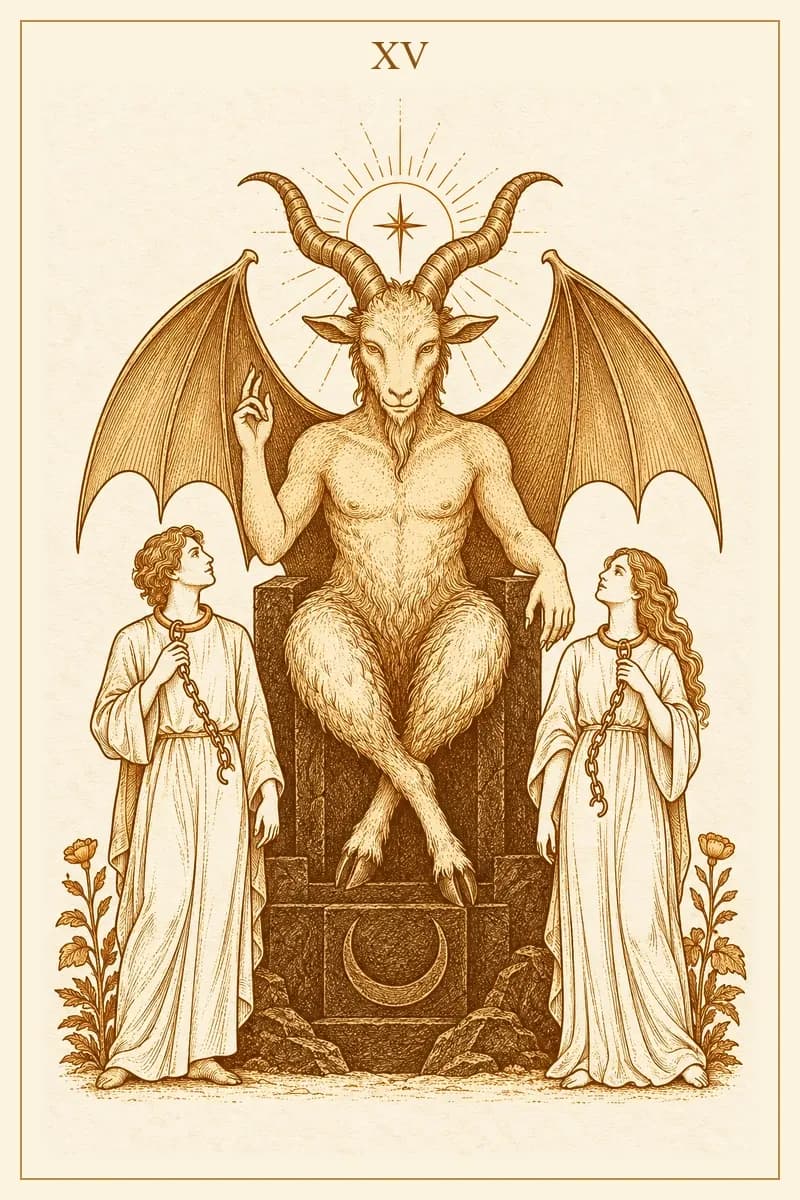
Forced Liberation
will versus compulsion

Hidden Transformation
✦ Bring it to the cards ✦
Use this pairing as a starting point, then let a spread listen to the situation that is actually yours.
Begin a contextual reading