Foundations · 10 min
Meet the deck
How the 78 cards are organized, where the Waite–Smith tradition comes from, and what a reading on VeilSoul can offer you.
In this lesson you will
- Name the parts of the deck: 22 Major Arcana and 56 Minor Arcana, split into 40 numbered cards and 16 court cards.
- Sort any card into its family from its name and picture.
- Describe what a reading offers: reflection and perspective, not a fixed fate.
- Recognize the 1909 Waite–Smith tradition that the VeilSoul deck keeps.
You open a tarot app for the first time and see 78 cards. It is tempting to think you must memorize every one of them before you can read. You don't: the deck has a structure, and once you see it, most cards begin to explain themselves.
The deck at a glance
A tarot deck has 78 cards in two families. The Major Arcana are 22 cards with a name and a number, from The Fool (0) to The World (XXI). They describe turning points and large themes: a new start, a hard choice, an ending that makes room for something else.
The Minor Arcana are the other 56 cards, and they describe everyday life. They come in four suits: Wands, Cups, Swords and Pentacles. Each suit has ten numbered cards, Ace to Ten, and four court cards: Page, Knight, Queen and King.
| Family | How many | What it describes |
|---|---|---|
| Major Arcana | 22 (0 to XXI) | Turning points and large themes |
| Numbered Minor cards | 40 (Ace to Ten, four suits) | Stages of everyday life |
| Court cards | 16 (four ranks, four suits) | Ways of acting, or people who act that way |
So when a card appears, your first question is simply: which family is it from? A Major says this is a large theme. A numbered card says this is a stage of ordinary life, and a court card says this is a way of acting.
Look first
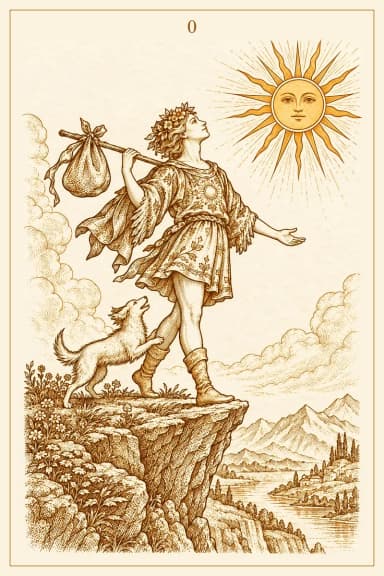
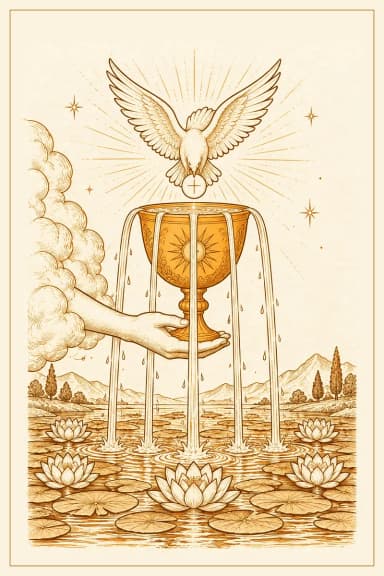
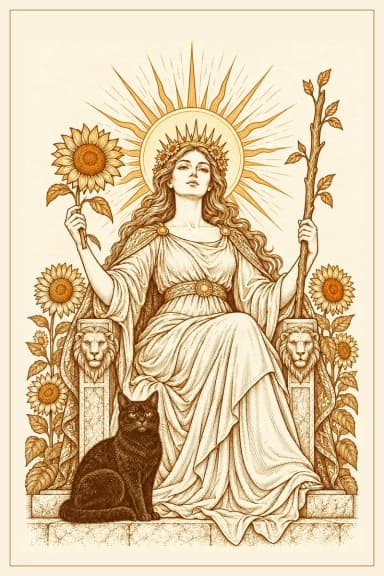
Before reading on, look at these three cards. One is a Major, one is a numbered card and one is a court card. Which is which, and what in the picture told you?
Remember
- The deck has 78 cards: 22 Majors for large themes and 56 Minors for everyday life, made of 40 numbered cards and 16 courts.
- The VeilSoul deck keeps the scenes of the 1909 Waite–Smith deck; tarot itself began as a fifteenth-century Italian card game, not in ancient Egypt.
- A reading gives you a picture to think with and a next step; it does not decide your future.
Sources: original VeilSoul text · VeilSoul card pages · the 1909 Waite–Smith imagery (public domain)