
Foundations · 12 min
Your first one-card draw
Run a one-card draw from question to journal line, keep to one question and one draw, and come back later to see what happened.
In this lesson you will
- Run a one-card draw from question to journal line.
- Follow the rule of one question, one draw.
- Come back to an entry later and compare it with what happened.
It is a busy morning and you have two minutes before the day begins. That is enough for a reading. A single card, read with attention and written down in one line, is the practice most readers keep for years.
The one-card ritual
A one-card draw is the smallest complete reading. It has five steps, and each takes only a moment:
- Settle. Take one slow breath and put the day's noise aside.
- Ask. Choose one open question, such as What do I need to keep in mind today?
- Draw. Draw one card and accept the one that comes.
- Look. Read it in the three layers from Read what you see: what is there, what is happening, how it feels.
- Write. Keep one line in your journal: the card, the detail you noticed and one thing you will do.
That last line matters most. Without it, a draw is a moment that slips away by lunchtime. With it, you build a record you can learn from.
Warm up
A quick look back before the new material. Recalling helps you remember.
Warm-up
Which sentence describes the Five of Pentacles, rather than interpreting it?
Warm-up
Someone tells you that The Fool and the other Majors are pages from an ancient Egyptian book of wisdom. What does the history say?
Look first
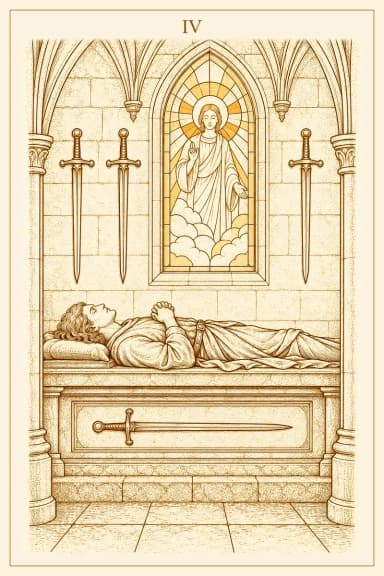
Imagine this is today's card. Look at it before reading on: what is there, what is happening, and how does it feel?
Remember
- A one-card draw has five steps: settle, ask, draw, look, write one line.
- One question, one draw: read the card that came, even when it is not the one you wanted.
- Come back to your entries each week; comparing cards with your days is how your own meanings grow.
Sources: original VeilSoul text · VeilSoul card pages · the 1909 Waite–Smith imagery (public domain)