
Card Combination
Meaning of The Tower and Six of Swords Combination: Escaping the Rubble
Flight after collapse
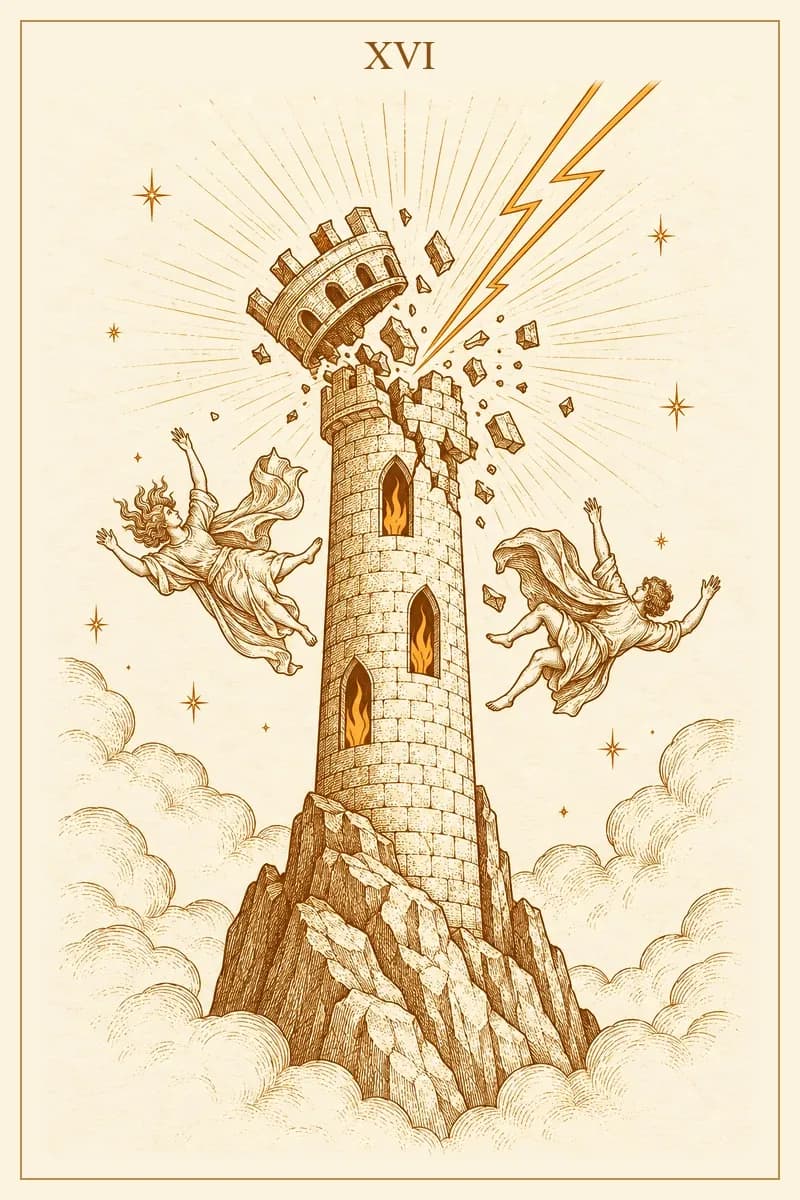
Lightning has already struck. The smoke is still rising, the stones still hot underfoot, and somewhere in the wreckage you realize you are standing up. Not triumphant — just upright, which is enough. This is where these two cards meet: not at the moment of destruction, but in the strange stillness that follows it, when the only direction left is away.
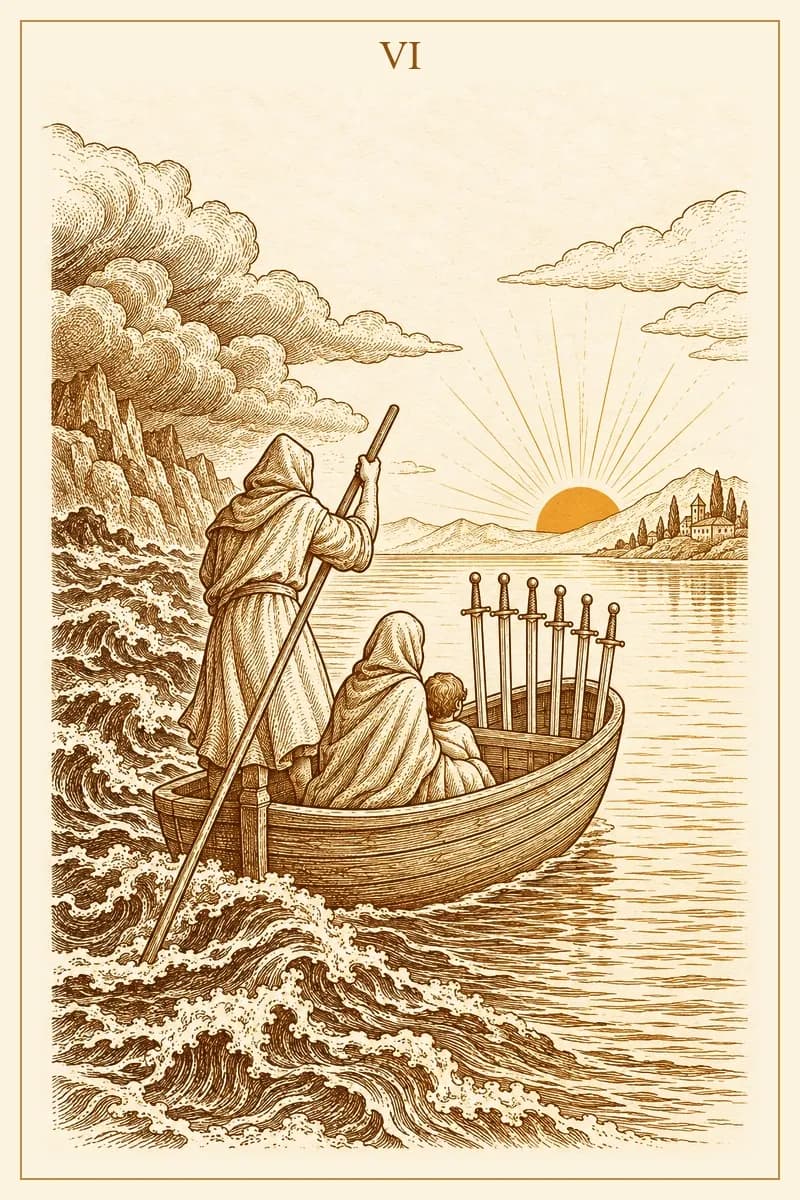
Six of Swords does not arrive with fanfare. There is no celebration in the small wooden boat that carries its figures across still, grey water. The passengers sit hunched, swords planted upright around them like a fence of old wounds they haven't yet set down. But they are moving. After everything The Tower tears apart, movement itself becomes the victory — ragged, reluctant, real.
What this pairing asks is not whether you wanted to leave. You didn't. The Tower rarely offers a choice. What it asks is whether, now that the structure is gone, you are willing to take up the oars.
The Core Tension
These cards pull in opposite directions even as they move in sequence. The Tower is vertical — lightning shoots down, walls fall outward, figures plummet. Everything about it is sudden, loud, irreversible. Six of Swords is horizontal — a slow crossing, a deliberate progression from one shore to another, conducted in near-silence.
The tension here is between the violence of the break and the patience required by what comes after. Collapse happens in seconds. Recovery happens in seasons. Many people get stuck precisely here: they experience a Tower event — a relationship ends without warning, a job disappears, a belief they held for years shatters — and then expect the crossing to be as fast as the fall. It isn't. Six of Swords is a winter river at dusk, not a spring thaw.
The invitation is to stop treating the slow crossing as evidence that something is still wrong, and to recognize it instead as the shape that healing actually takes.
Love & Relationships
When this combination appears in a love reading, something in the relationship has already broken beyond repair, or the break is imminent and both people know it even if only one will admit it. The Tower here is not metaphorical — a specific conversation happened, a trust was violated, a long-held illusion collapsed in a single afternoon.
Six of Swords following it does not promise reunion. It promises passage. One or both people are moving away from the site of damage toward something quieter. If you are the one crossing, the swords in the boat are still with you — the grief, the anger, the questions that have no clean answers. You carry them. But you carry them while moving.
For couples still together after a Tower rupture, this pairing describes the aftermath of a serious reckoning: the relationship has changed permanently, and the only question is whether both people are willing to row in the same direction.
Career & Purpose
Professionally, The Tower has likely already done its work — a layoff, a collapsed project, a sudden organizational restructuring, a mentor who turned out to be something other than what they appeared. The ground you built on is gone.
Six of Swords here is the unglamorous work of moving forward through uncertainty: updating the resume, accepting help, taking the smaller opportunity because it moves you in a useful direction. The water is choppy on the left side of the boat, calmer ahead. You are not yet at the calmer side, but you are pointed toward it.
Resist the pull to rebuild the exact same structure on the exact same site. The Tower fell because it needed to. Six of Swords is crossing toward different ground entirely.
Shadow Side
The shadow of this combination is drift without intention. Six of Swords can become passive if you let it — a floating away from pain rather than a deliberate crossing toward somewhere. After a Tower collapse, exhaustion is real and the temptation to simply let the current carry you is understandable. But a boat without oars is at the mercy of the river.
Watch for avoidance dressed as acceptance. Leaving the rubble behind is necessary. Knowing where you are going — even roughly — is what separates a crossing from being lost.
Action Steps
- 1Identify one concrete, small action that moves you away from the collapse site — not to outrun it, but to establish direction.
- 2Set down one sword you've been carrying: a grievance, a narrative, a version of events you keep replaying. Not forever. Just long enough to see the far shore.
- 3Notice whether the water ahead is calmer than the water behind you. It usually is. Let that be information, not yet a destination.
Related Pairings
Continue through published pairings that share The Tower or Six of Swords.
Reckless dismantling
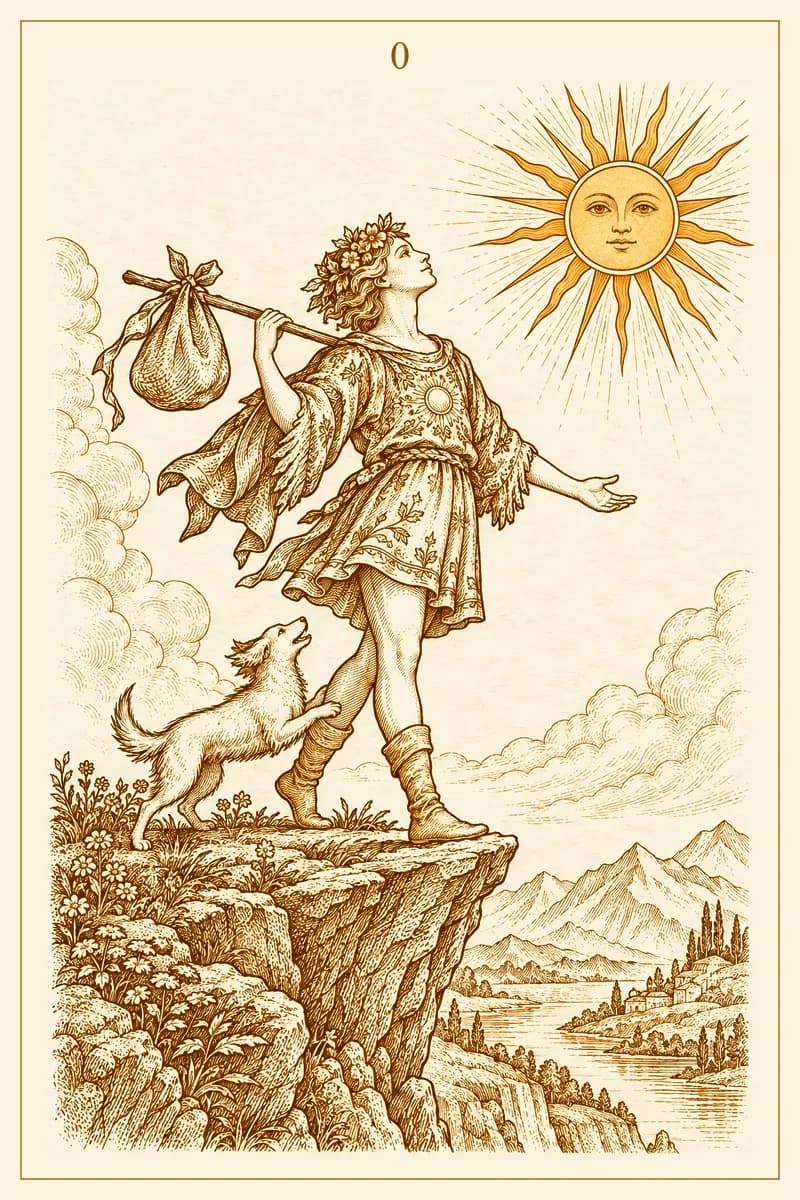
Meaning of The Fool and The Tower Combination: Unplanned Demolition
Undirected leap meeting deliberate passage to calmer waters
Meaning of The Fool and Six of Swords Combination: The Leap and the Crossing
Constructed collapse
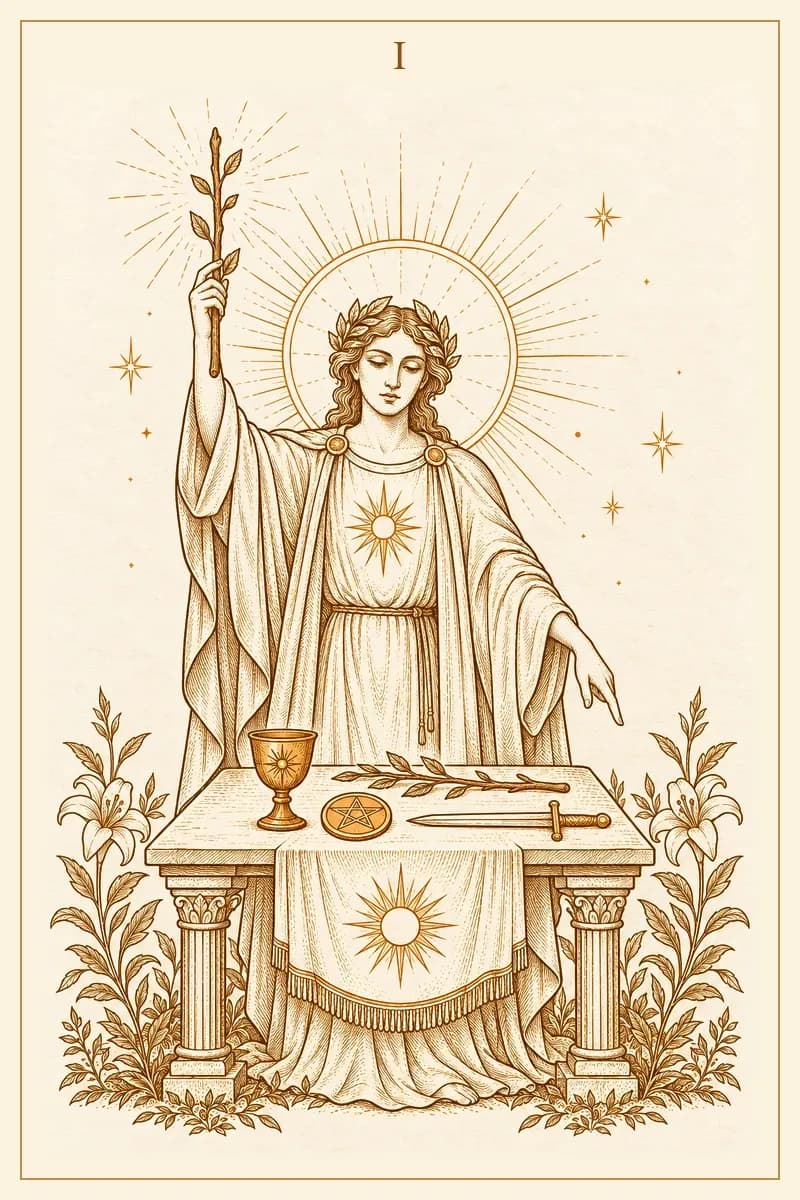
Meaning of The Magician and The Tower Combination: When the Builder Meets the Wrecker
Directed transition — using skill and will to navigate away from turbulence
Meaning of The Magician and Six of Swords Combination: Skill Meets Passage
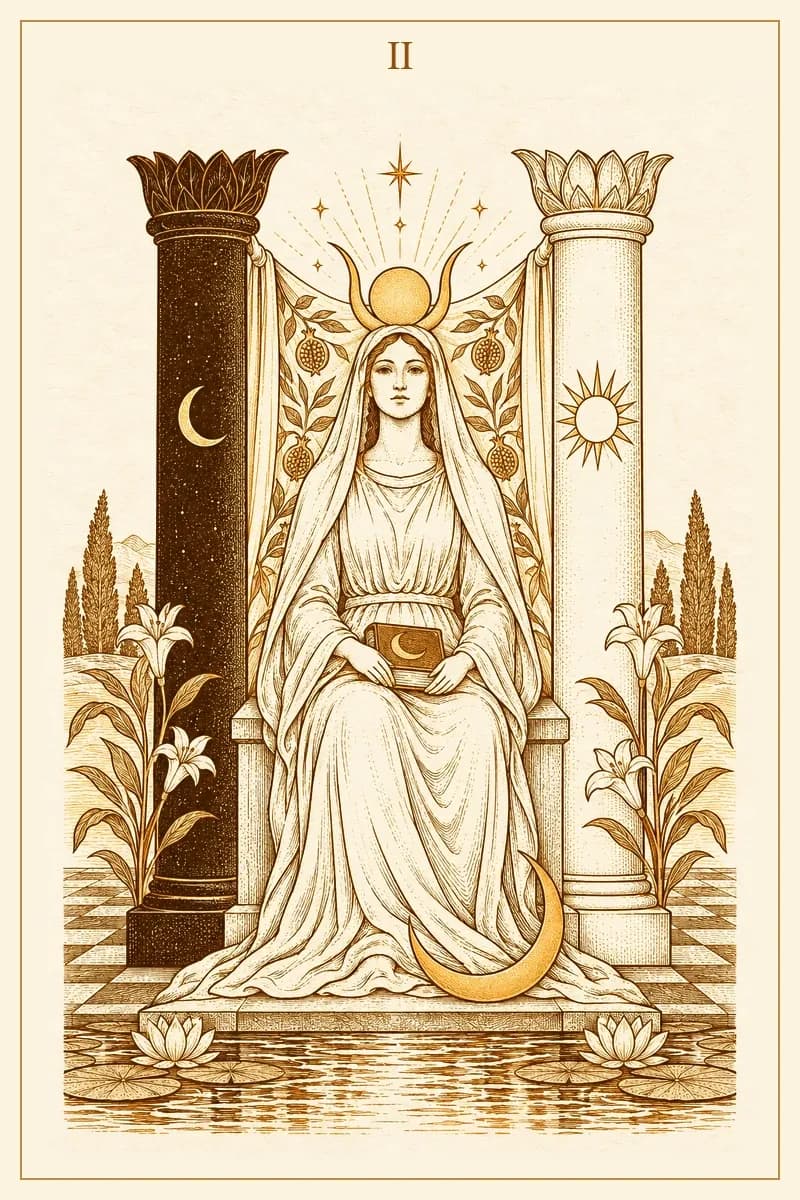
Revelation through collapse
Meaning of The High Priestess and The Tower Combination: Revelation Through Collapse
Intuition as navigator
Meaning of The High Priestess and Six of Swords Combination: The Inner Navigator
✦ Bring it to the cards ✦
Bring The Tower and Six of Swords into your own reading
Use this pairing as a starting point, then let a spread listen to the situation that is actually yours.
Begin a contextual reading