Loading your view
The page is gathering the latest information.
The page is gathering the latest information.
Reckless Dismantling
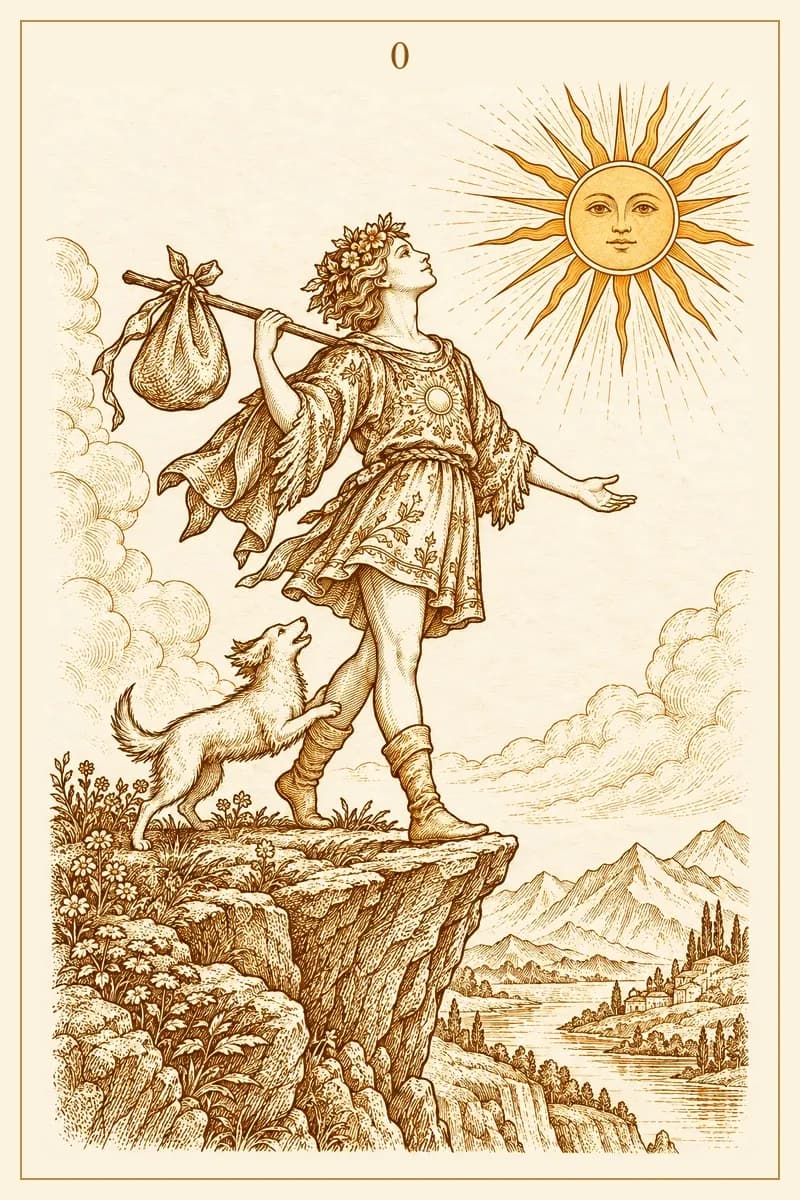
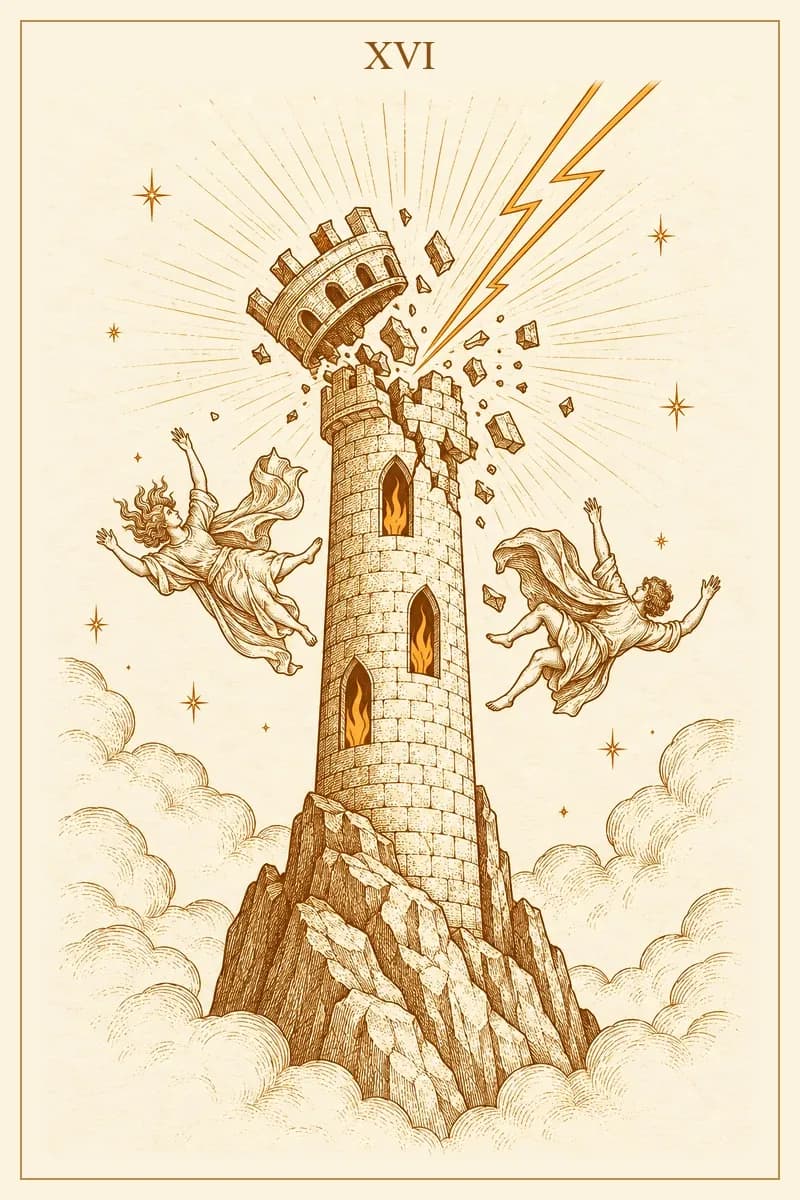
The engine that nobody inspected is the one that seizes at full throttle. There is a peculiar kind of destruction reserved for those who sprint toward a wall they genuinely cannot see — not because the wall is hidden, but because looking ahead would mean slowing down. The Fool and The Tower, placed side by side, operate on this exact principle: one card refuses to calculate risk, and the other card is risk made concrete and unavoidable.
Think of a gearbox running without lubrication. The Fool supplies relentless rotational force — optimism, curiosity, the sheer willingness to move. The Tower is the moment metal grinds against metal and the housing cracks open. Neither card is wrong in isolation. Gears are meant to turn. Housings are meant to contain pressure. But together, they describe the specific catastrophe that happens when motion meets resistance it was never designed to handle.
What makes this pairing genuinely dangerous — and genuinely useful — is its refusal to negotiate. There is no gentle version of this combination. Something will break, and the breaking will feel sudden even if the fractures were forming for months.
The Fool walks without a map. The Tower proves that the terrain was never safe to walk carelessly. This tension is mechanical at its root: input force versus structural tolerance. The Fool pours energy into systems, relationships, and identities that The Tower has already marked for demolition. The question is never whether the collapse happens. The question is whether the person standing in the rubble understands that they built the unstable structure themselves, one unexamined assumption at a time.
This is not punishment. A crankshaft that snaps under excessive torque is not being punished — it was simply loaded beyond its specification. The Fool's gift is momentum. The Tower's gift is honesty about what that momentum actually costs.
Romantic connections under this pairing tend to ignite fast and detonate faster. The Fool brings infatuation's full horsepower — the giddy texts, the all-night conversations, the conviction that this person is different. The Tower arrives when the fantasy collides with something immovable: a lie uncovered, a fundamental incompatibility that charm alone cannot bridge, or the sudden realization that attraction was substituting for actual compatibility.
For existing relationships, the combination functions like a stress test on a load-bearing joint. Whatever has been quietly rusting — unspoken resentments, avoided conversations, mismatched expectations — gets forced into the open. Couples who survive this pairing often describe the experience as brutal but clarifying. The pretense burns off, and what remains is either strong enough to rebuild on or obviously beyond repair.
Professionally, The Fool and The Tower describe the entrepreneur who launches before the prototype is tested, the employee who volunteers for a project without reading the brief, or the freelancer who quotes a price before understanding the scope. The energy is real. The preparation is absent. And the resulting failure tends to be spectacular enough that everyone in the office remembers it.
The mechanical lesson here is about tolerances. Every system has them. The Fool ignores tolerances. The Tower enforces them. Career moves made under this combination often involve a painful but educational collision with institutional reality — the politics nobody mentioned, the budget that was never actually approved, the deadline that was always impossible.
The upside: failure this visible creates clarity this thorough. People who survive a Tower moment in their career rarely make the same miscalculation twice. The Fool's optimism, once tempered by real consequence, becomes something far more useful — informed courage.
The shadow of this pairing is addiction to chaos. Some people learn to mistake destruction for progress, convincing themselves that if something broke, it must have needed breaking. This is the person who sabotages stable situations because stability feels boring, then frames the resulting wreckage as liberation.
Another shadow: refusing to learn from the collapse. The Fool's shadow is willful ignorance. The Tower's shadow is trauma that calcifies into rigidity. Combined, they can produce someone who oscillates between reckless leaps and defensive paralysis, never pausing long enough in the middle ground to build anything durable.
The mechanical equivalent is an engine that gets rebuilt after every failure but never gets its timing adjusted. The parts are replaced. The fundamental misalignment persists.
Keep or share this combination reference
Continue through published pairings that share The Fool or The Tower.
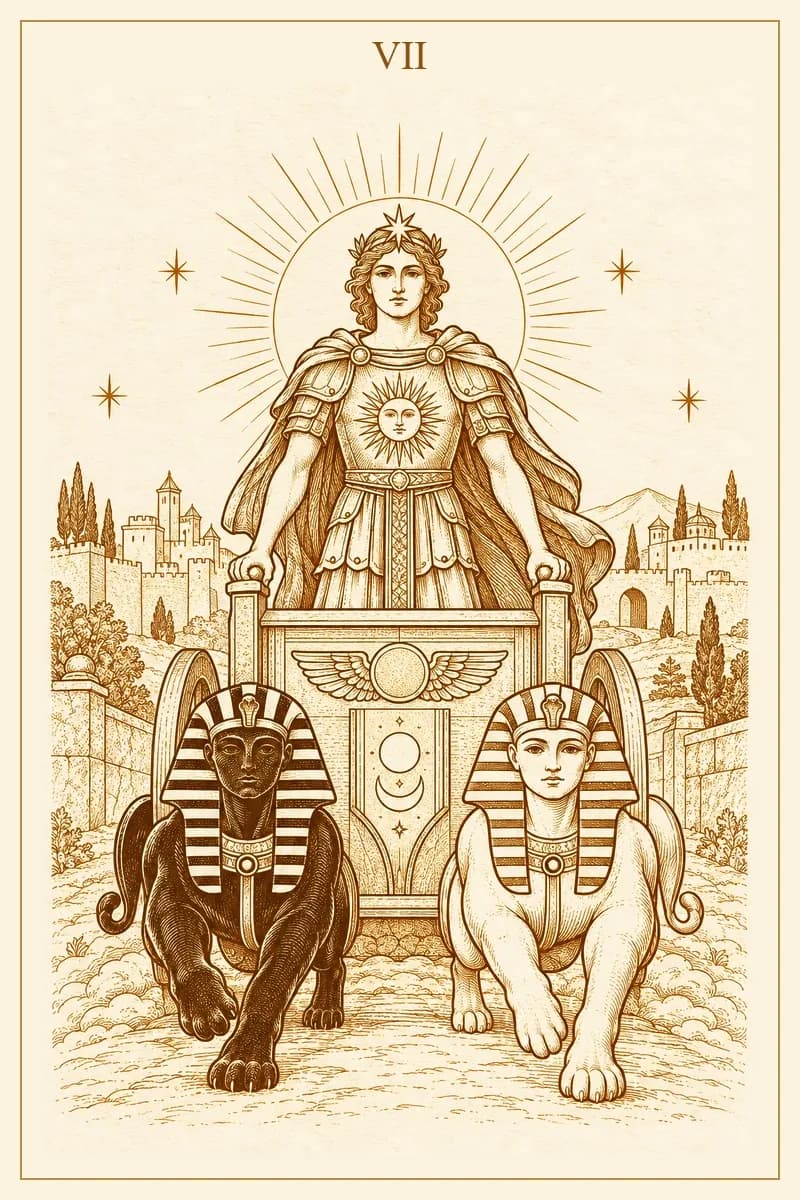
Reckless Momentum
controlled force shattered
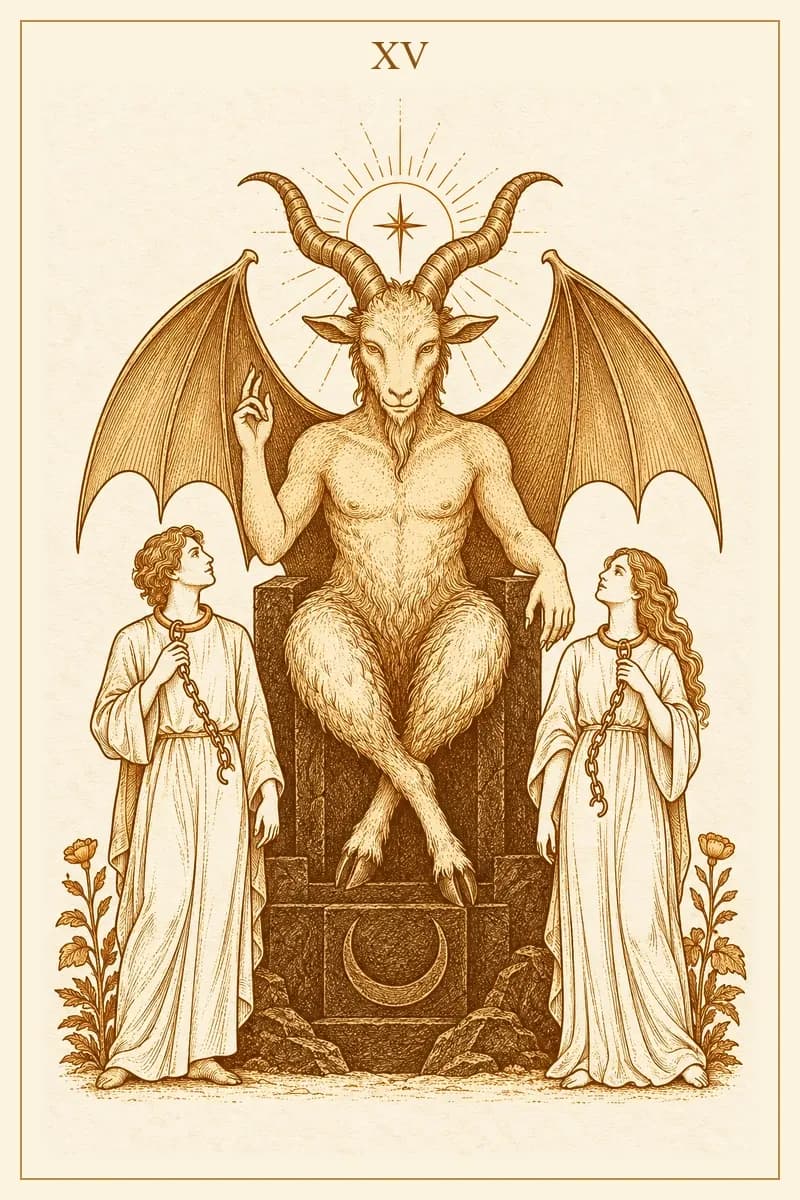
Innocence Meets Appetite
forced liberation
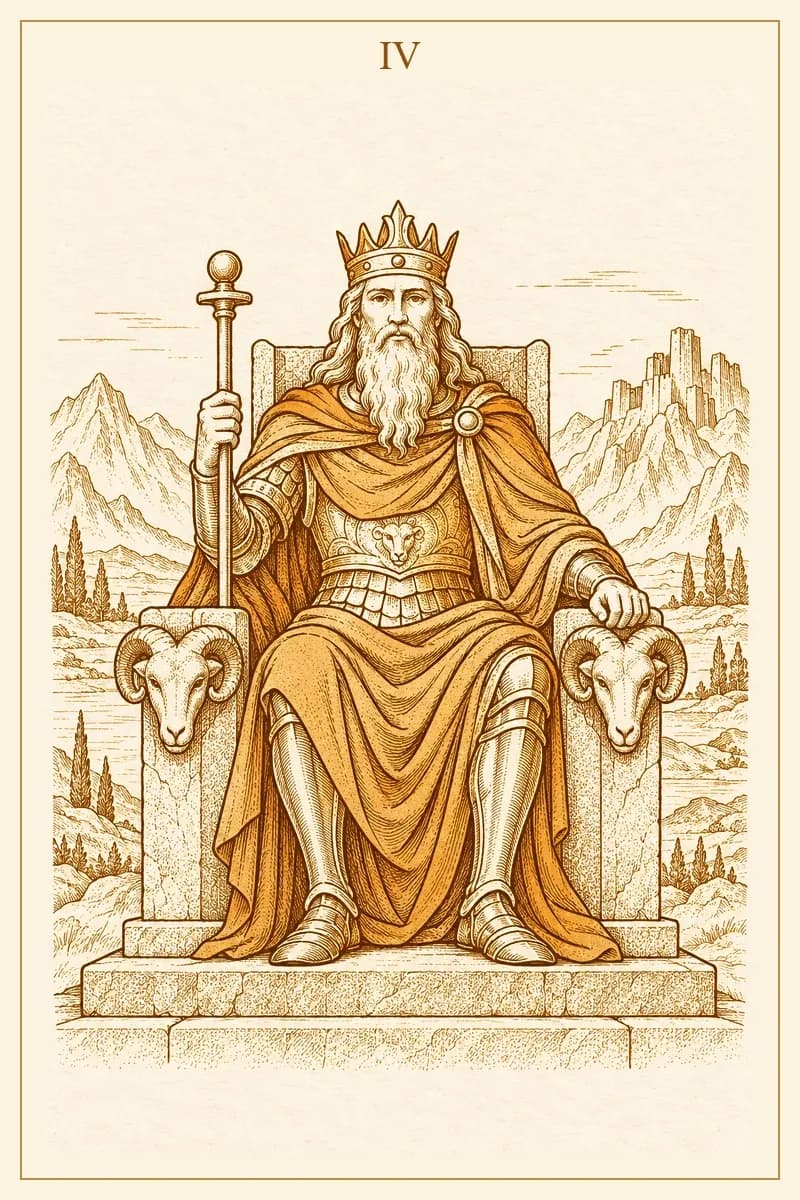
Structured Freedom
authority meets collapse
✦ Bring it to the cards ✦
Use this pairing as a starting point, then let a spread listen to the situation that is actually yours.
Begin a contextual reading