
Card Combination
Meaning of The Magician and Five of Swords: When Brilliance Becomes a Blade
tactical brilliance weaponized into domination
Every brilliant general eventually faces the same choice: use your power to protect something, or simply because you can.
The Core Tension
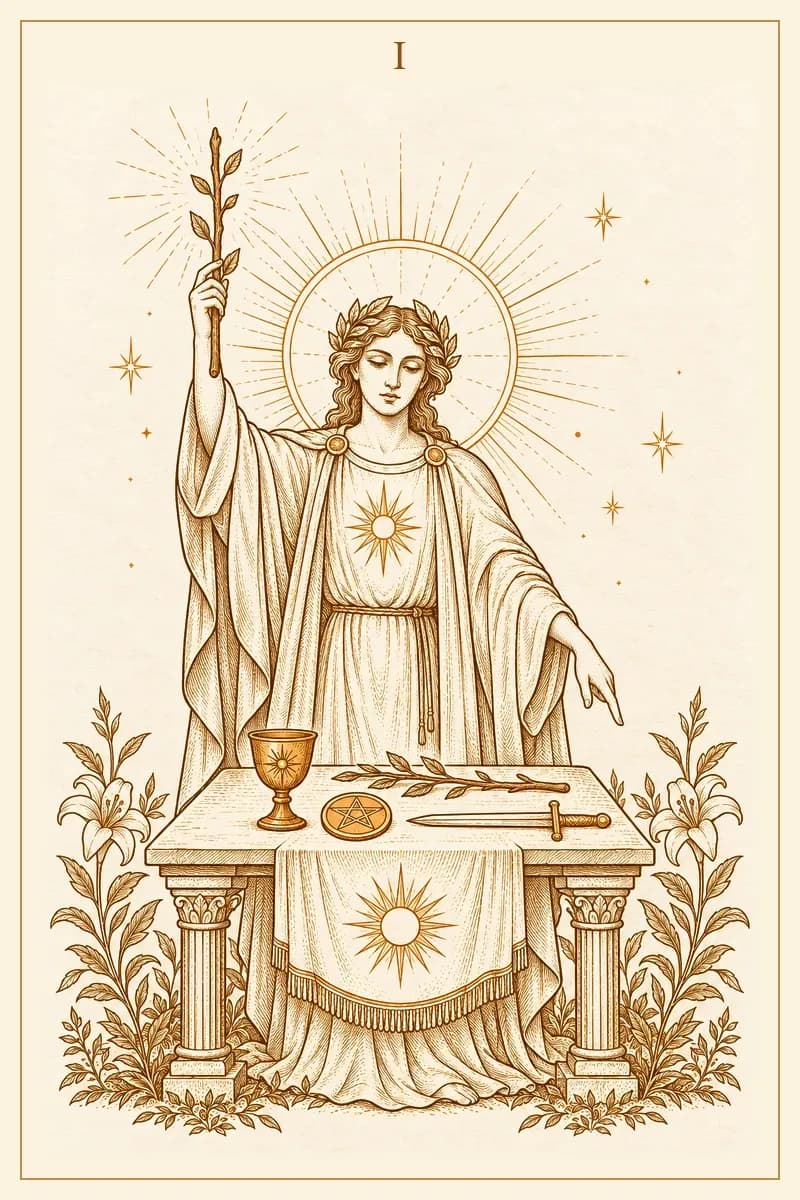
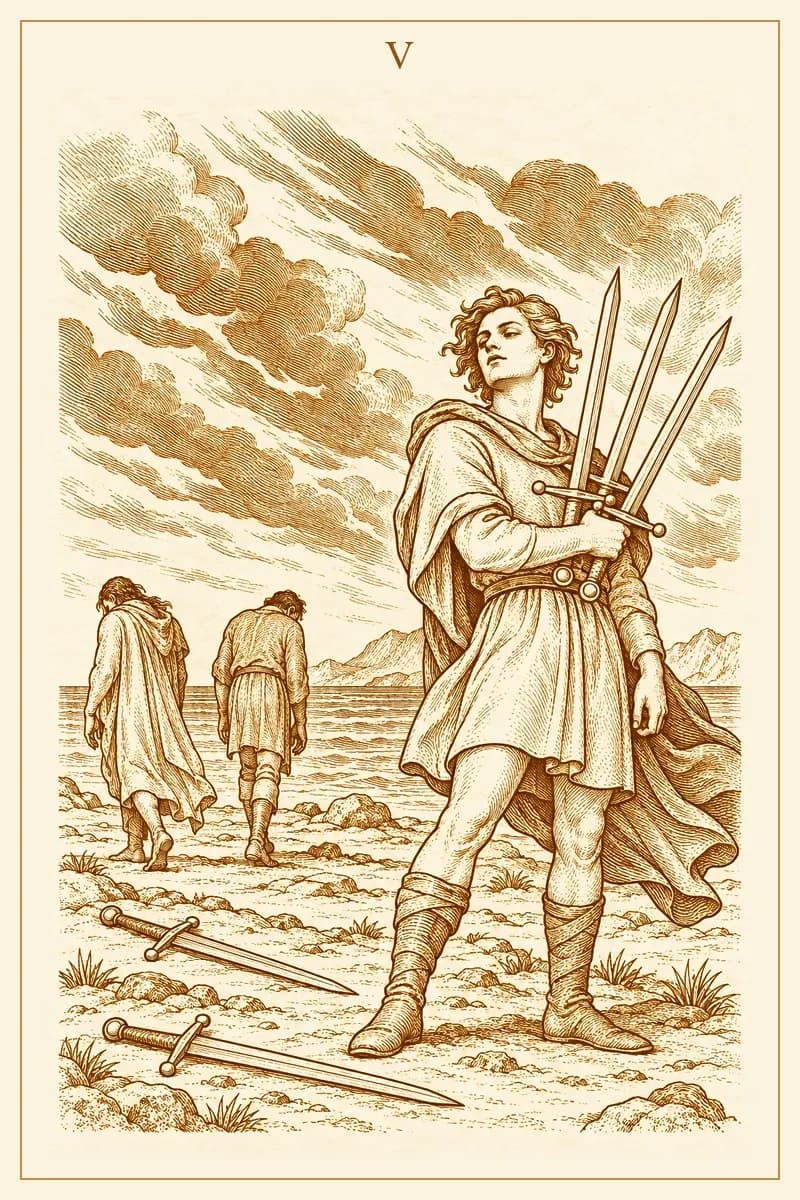
The Magician stands as a commander surveying the battlefield with every resource at his disposal — wand, cup, sword, pentacle — tools arranged with surgical precision. He doesn't stumble into victory; he engineers it. Now place the Five of Swords beside him. The battlefield has gone quiet, but not with peace. Three swords lie abandoned, the defeated figures walking away, heads lowered. The lone figure clutches all five blades with a smirk that says: I won. But the scene is hollow. There's no glory flag, no celebration — just the cold arithmetic of conquest.
This pairing asks a brutal question: what kind of soldier have you become? The Magician's gifts are real. Skill, focus, will, resourcefulness — these are not illusions. But the Five of Swords is the spoils of war when war was the point, not the means. Together, these cards describe a mind so capable it has started mistaking dominance for mastery. The tension here isn't between strength and weakness. It's between using power for something and using power at someone.
This combination also carries a warning about intelligence weaponized. The Magician can out-argue, out-maneuver, out-think almost anyone in the room. When the Five of Swords enters, that gift has become a siege weapon — deployed not to solve problems but to flatten opposition. Winning arguments, not finding truth. Securing position, not building something worth holding.
Love & Relationships
In romantic partnerships, this pairing often surfaces when one person is fighting to win rather than fighting to connect. The Magician's charm offensive is formidable — he knows exactly what to say, when to press, when to pull back. Add the Five of Swords and that romantic strategy curdles into control. Debates don't end in understanding; they end in surrender. One partner walks away with all five swords. The other walks away.
If you're on the receiving end of this energy, the relationship may feel like a chess match you never signed up for — every conversation a calculated move. If you're the one holding the swords, examine what you've actually won. Capitulation is not closeness. A partner who has stopped fighting back hasn't suddenly agreed with you; they've stopped believing the battle is worth it.
This combination can also flag a tendency to weaponize emotional intelligence — reading your partner's vulnerabilities precisely so you know where to strike. Recognizing this pattern early is the only way to stop it from becoming the signature move.
Career & Purpose
In professional contexts, The Magician with the Five of Swords maps directly onto the difference between competitive excellence and scorched-earth ambition. The competent strategist reads the room, adapts tactics, executes brilliantly. The Five of Swords version of this doesn't just want to succeed — it wants rivals eliminated, credit absorbed, territory consolidated.
Short-term, this can look like winning. Promotions arrive. Projects get delivered. Opposition quiets. But the battlefield is littered with alienated colleagues, resentful teams, and bridges reduced to ash. The Magician without ethical constraint doesn't build empires — he occupies them, and occupied territory always breeds resistance.
Watch for the moment when your workplace tactics shift from "how do I do this well" to "how do I make sure they don't." That pivot is the Five of Swords whispering in the Magician's ear.
Shadow Side
The shadow of this combination is the belief that capability justifies anything. The Magician's shadow is the trickster — the one who uses skill to deceive rather than illuminate. The Five of Swords' shadow is the pyrrhic victor — triumphant over ruins of his own making. Together, the shadow self here is the brilliant manipulator: someone who can see twelve moves ahead, uses that vision to corner others, and calls it strategy.
This shadow also includes the quieter form of domination: intellectual humiliation. Not physical coercion but the constant maneuvering that leaves others feeling outmatched, stupid, and small. That too is the Five of Swords' battlefield, and the Magician is exceptionally well-armed for it.
Action Steps
- 1Audit your recent wins: For each victory this week, ask honestly — did the other party lose something they didn't need to lose? Identify one place where you could have achieved your goal without taking the extra swords.
- 2Redirect one argument into a question: When you feel the urge to dismantle someone's position, replace the rebuttal with a genuine question instead. Practice using your tactical mind to understand rather than to prevail.
- 3Name what you're actually fighting for: Write down the real objective behind your current biggest conflict — not winning the conflict itself, but what you hoped the conflict would deliver. Reconnect strategy to purpose.
Related Pairings
Continue through published pairings that share The Magician or Five of Swords.
Spontaneous Manifestation
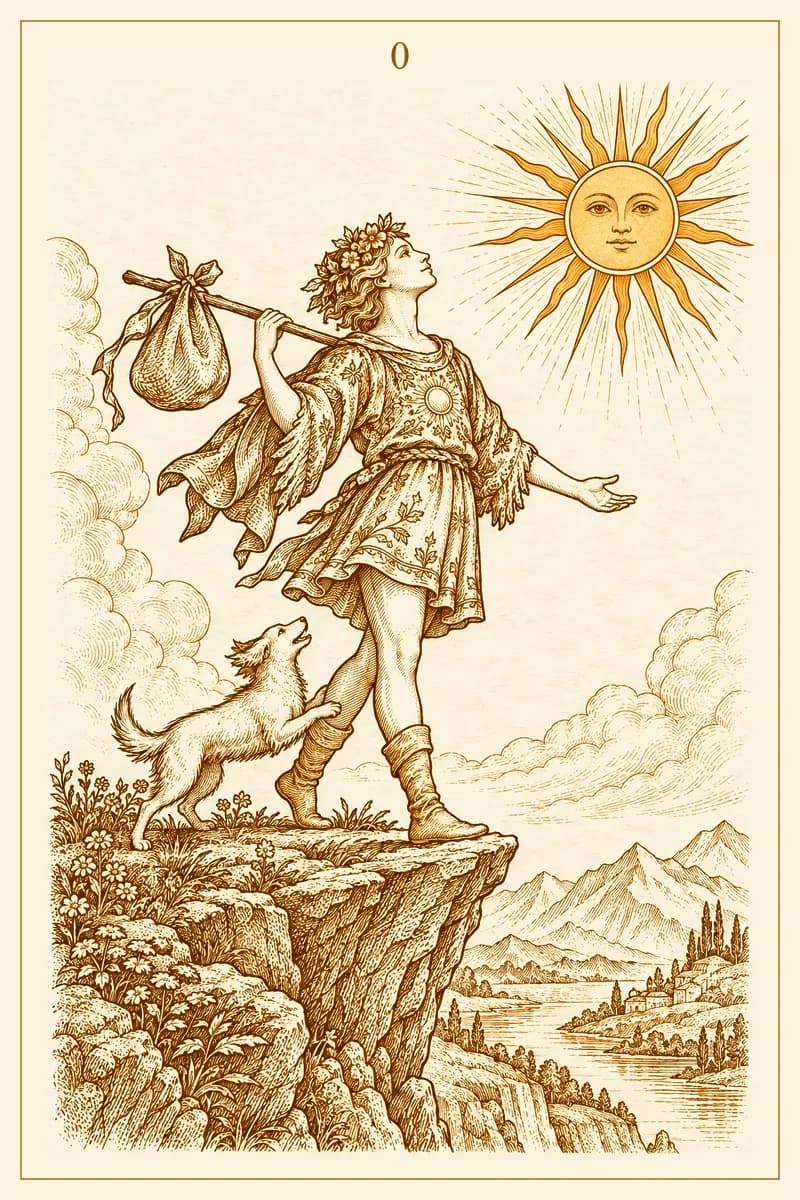
Meaning of The Fool and The Magician Combination: Spontaneous Manifestation
costly victory
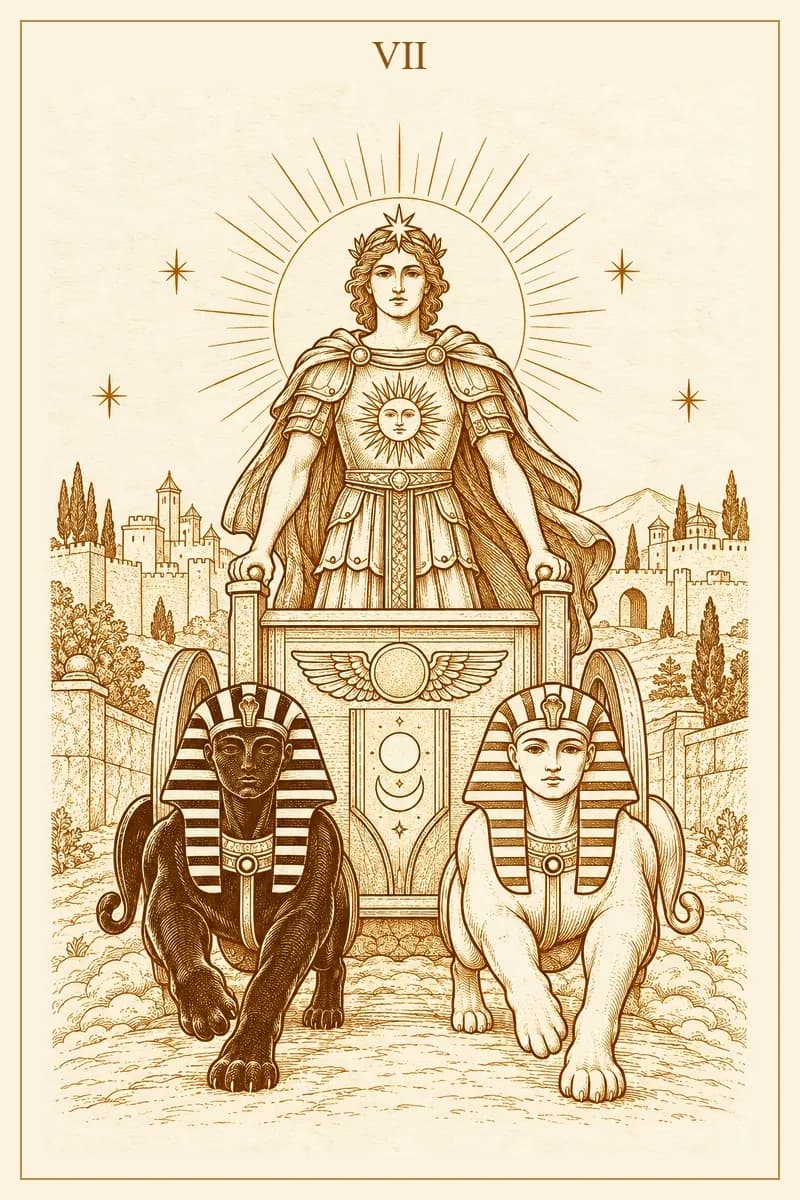
Meaning of The Chariot and Five of Swords Combination: Winning at a Cost
controlled momentum
Meaning of The Magician and The Chariot: Precision at Full Speed
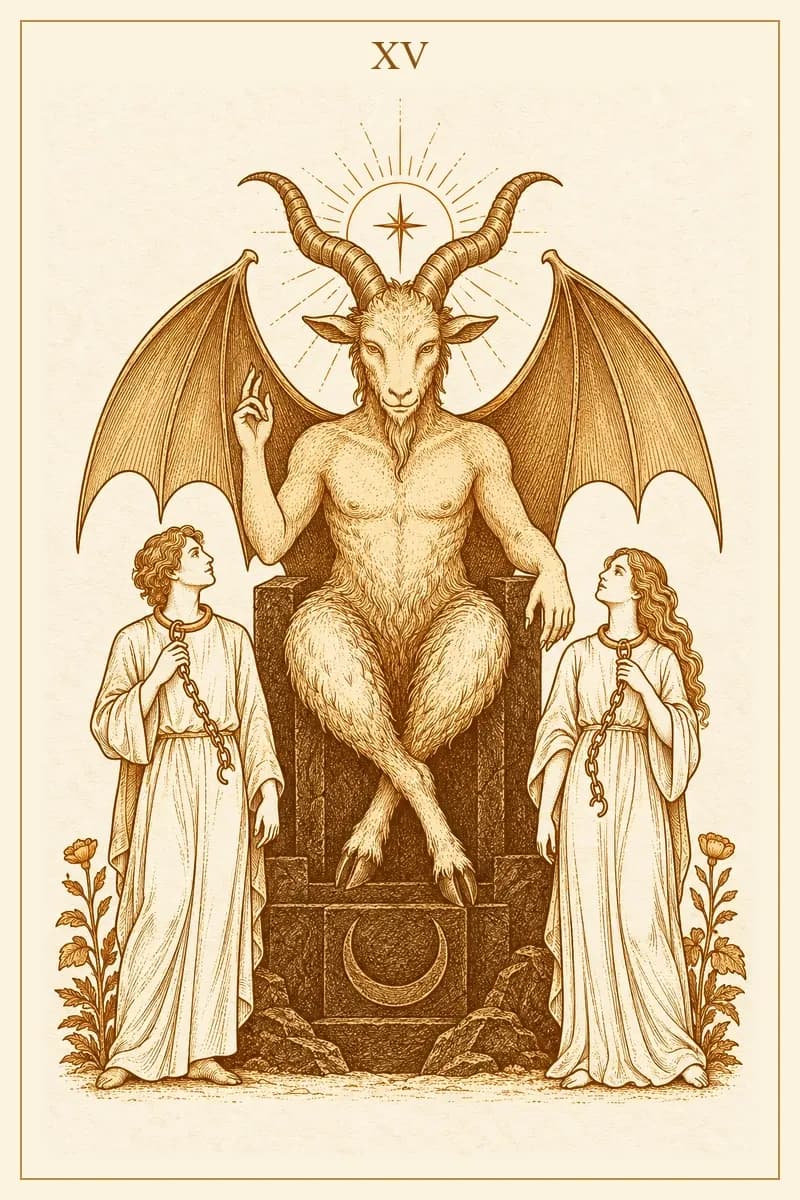
Toxic Power Games
Meaning of The Devil and Five of Swords Combination: Toxic Power Games
will versus compulsion
Meaning of The Magician and The Devil: Willpower on a Leash

pyrrhic authority
Meaning of The Emperor and Five of Swords: Winning at What Cost
✦ Bring it to the cards ✦
Bring The Magician and Five of Swords into your own reading
Use this pairing as a starting point, then let a spread listen to the situation that is actually yours.
Begin a contextual reading