Loading your view
The page is gathering the latest information.
The page is gathering the latest information.
will versus compulsion
The director has a vision. The leading actor has a contract with someone else.
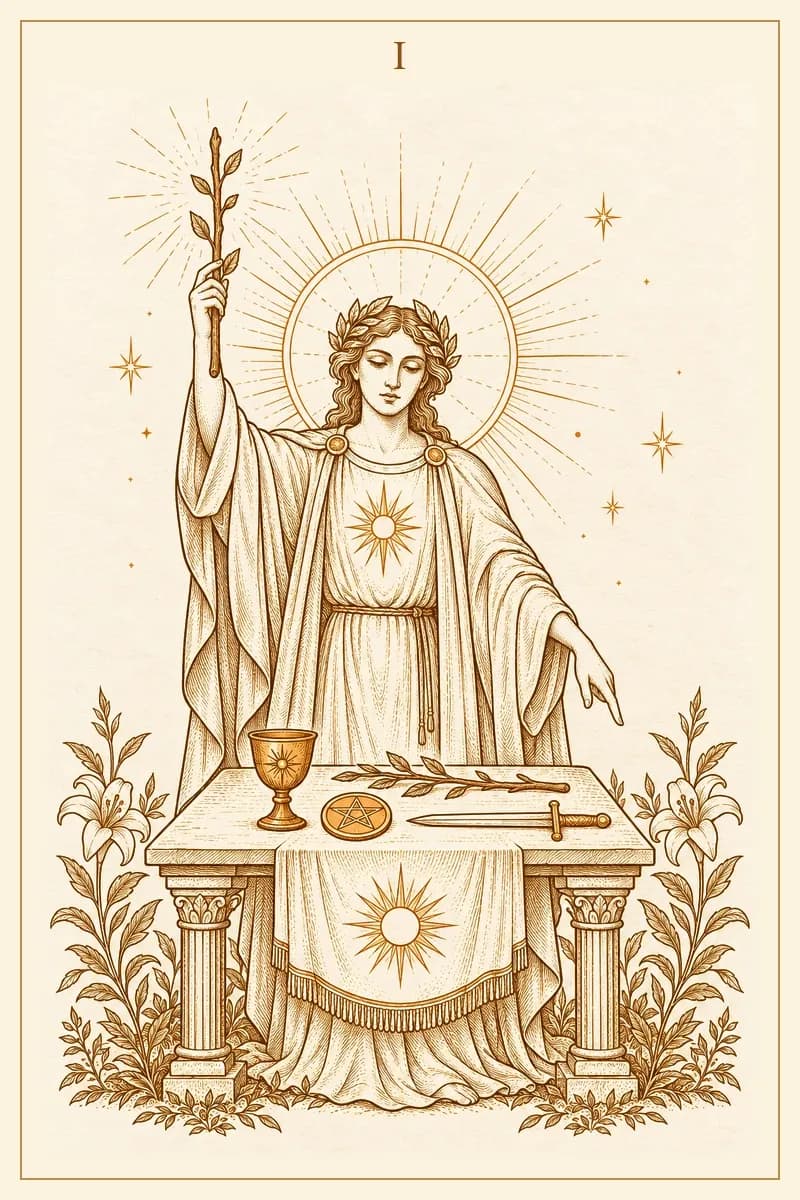
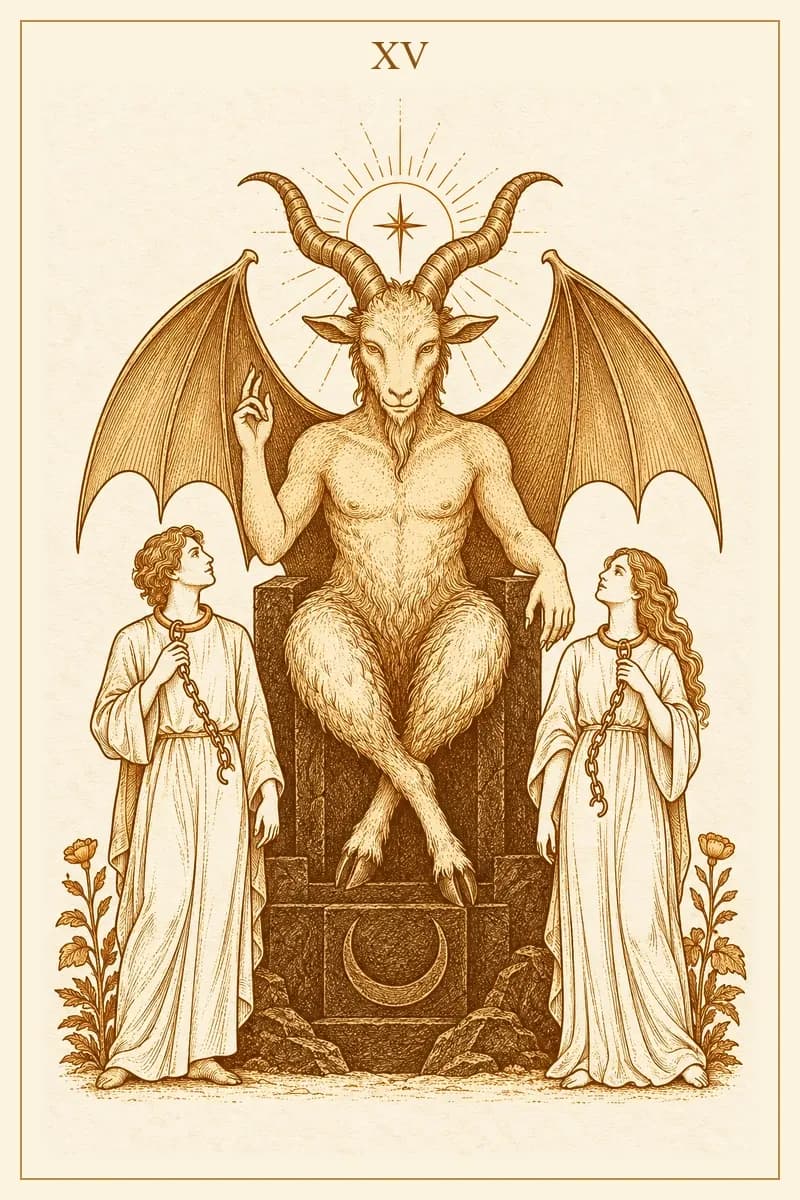
That is the opening tension when The Magician and The Devil appear together. On one side of the stage stands the conscious architect of reality — the figure who arranges every tool, every resource, every element of the craft into a deliberate performance. On the other side, in the wings where the audience cannot see, something else has already signed a deal with the actor. The performance proceeds, lights on, applause building, while offstage the real negotiation is happening in a language the director does not speak.
The Magician is conscious will made visible. He holds the wand, the cup, the sword, the coin — the four instruments of directed power — and performs with the certainty of someone who knows exactly what they are doing and why. The Devil is not his villain. The Devil is his shadow, the part of himself that operates through compulsion rather than choice, through appetite rather than intention, through the body's hunger rather than the mind's design.
Theater teaches a specific lesson: every great performance requires a script and a body willing to abandon it. The Magician writes the script. The Devil inhabits the body. This is not a clean division between good and evil — it is a split between two modes of operating that must eventually negotiate with each other or produce a spectacular collapse.
The Magician can plan a scene with surgical precision. He knows what effect he wants, which props to use, which lines will land at exactly the right moment. What he cannot always control is the actor who carries those intentions onto the stage — the actor who improvises, who loses the thread of the performance when a personal need surfaces, who delivers the memorized lines while internally somewhere else entirely.
The Devil is not external. That is the central misreading of this card. The chains on the figures in traditional imagery are loose. They could remove them. They stay because the pull of what binds them has become more familiar than freedom. The Magician, meeting the Devil, must confront the part of his own directed will that has quietly become something else — habit dressed as purpose, control dressed as craft, obsession dressed as excellence.
In relationships, this pairing describes someone capable of extraordinary intentionality alongside patterns they have stopped examining. The Magician brings genuine skill to intimacy: emotional attunement, deliberate care, the capacity to create connection as an act of craft. The Devil brings the patterns underneath — the attachment style that has calcified into compulsion, the need for control that disguises itself as devotion, the jealousy that runs the show while the conscious self performs something more dignified.
This combination can produce a lover who is brilliant on the surface and entangled underneath. Their affection is real. So is the dependency. Recognizing the difference — between choosing someone and needing them in a way that has stopped being a choice — is the central work this pairing names.
Professionally, Magician-Devil territory is where ambition shades into obsession without announcing the transition. The drive that built the career does not stop when the career is built. It finds a new target, a new benchmark, a new rung that justifies the same relentless effort. This is not laziness or failure. It is the opposite problem: a will so disciplined it has forgotten how to be anything other than in pursuit.
The person operating under this combination may be producing extraordinary results while running on fuel that has a cost they have not yet calculated. The Magician's tools are all present. The performance is technically flawless. The question the Devil quietly insists on is: who decided the show must never end, and when did that decision stop being a choice?
The shadow of this pairing is a performance that has replaced a life. The Magician becomes so skilled at constructing what he intends to present that the backstage — the messy, uncontrolled, genuinely human parts — atrophies. The mask becomes load-bearing. Remove it and there is nothing beneath that has been allowed to develop.
The Devil's gift, when integrated rather than fought, is honesty about what actually drives behavior. Not the clean narrative of conscious will but the rawer truth of appetite, attachment, and compulsion. A director who knows what the actors are actually feeling — including the ones they didn't audition for — gives a better performance than one who only works from the official script.
Keep or share this combination reference
Continue through published pairings that share The Magician or The Devil.
Spontaneous Manifestation
ambition vs obsession
controlled momentum
hidden compulsion
bondage versus healing
disciplined mastery
✦ Bring it to the cards ✦
Use this pairing as a starting point, then let a spread listen to the situation that is actually yours.
Begin a contextual reading