
Card Combination
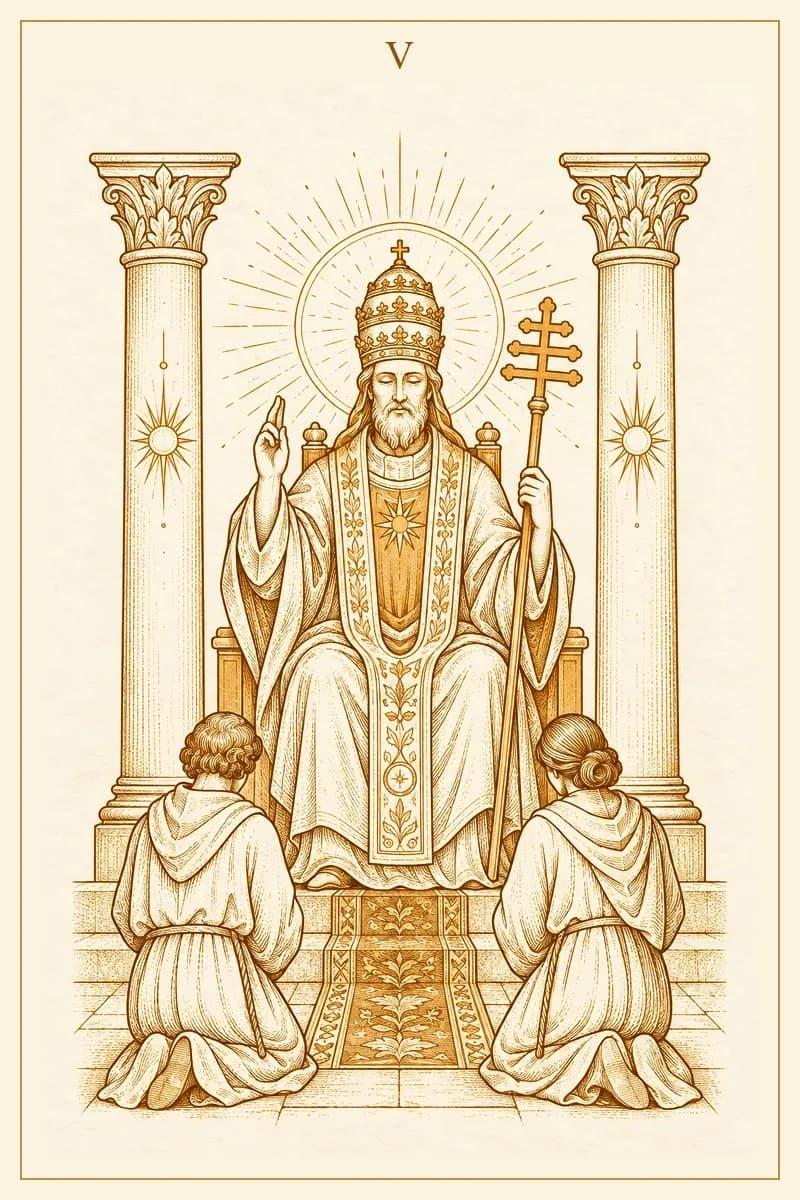
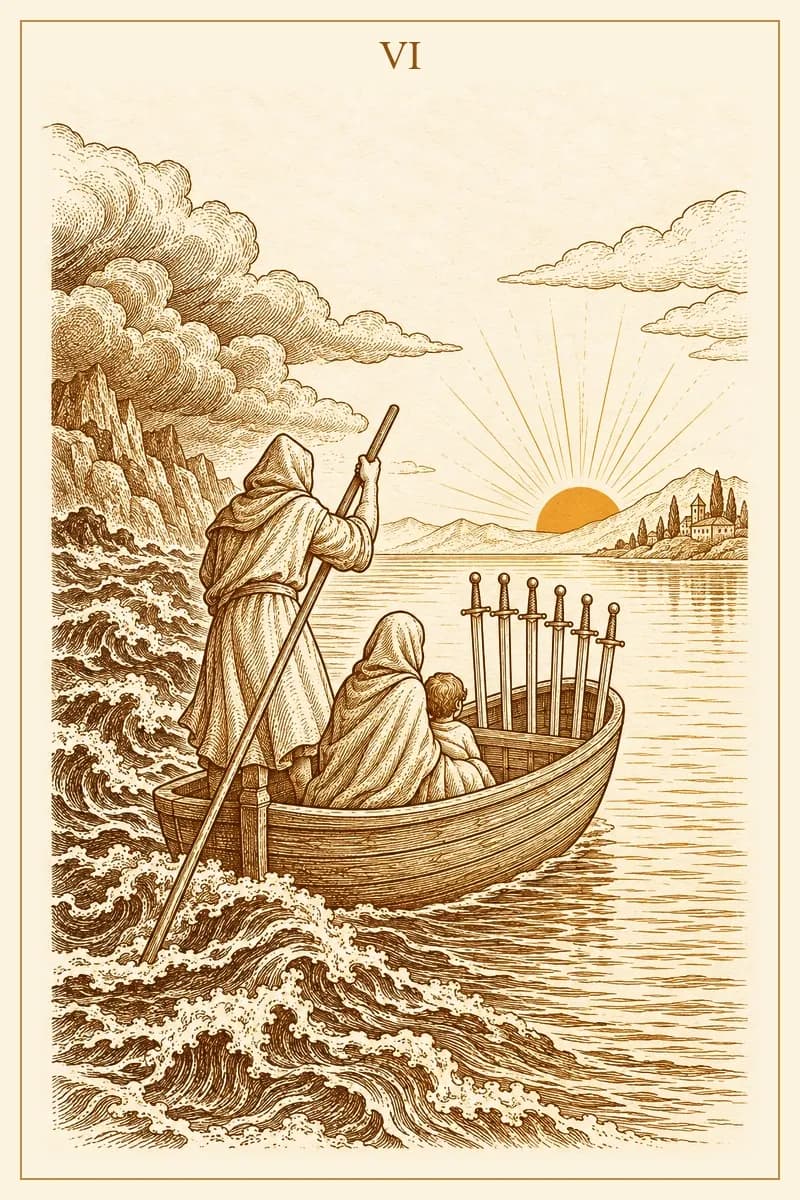
Meaning of The Hierophant and Six of Swords Combination: Leaving by the Book
Guided transition
The boat is already moving. You didn't choose the current — someone else mapped it, named it, blessed it — but here you are, drifting away from a shore you once called home. The Six of Swords carries its passengers in silence, and the Hierophant stands at the dock, not waving goodbye but nodding approval. This is an authorized departure. That distinction matters more than it seems.
When these two cards land together, they describe a transition that is not spontaneous or rebellious — it is sanctioned. Someone — an institution, a tradition, a spiritual framework — has given you permission to move on, or has nudged you firmly in that direction. The departure feels orderly, even ceremonial. But orderly does not mean painless, and sanctioned does not mean chosen.
What sits between these cards is the question of agency. Did you decide to leave, or did the system decide for you? The Hierophant hands down structures; the Six of Swords ferries people through calm but melancholy waters. Together, they build a corridor — functional, even beautiful — but corridors only run in one direction.
The Core Tension
Think of a cathedral under renovation. The scaffolding is up, the nave is roped off, and visitors are guided along a single approved path. The building is changing, but only within the boundaries of what the architects permit. That is the architecture of this combination: movement that is real, but contained.
The Hierophant represents codified wisdom — the rules that have survived long enough to be considered sacred. The Six of Swords represents passage through difficult water toward calmer ground. The tension is this: the passage is genuinely healing, but you didn't choose the route. Someone else drew the map. You are following it faithfully, and that faithfulness is both your anchor and your constraint.
This pairing often appears when a person is leaving something — a relationship, a belief system, a career — but doing so in a way that is heavily influenced by external guidance. You are moving, but you are moving as instructed.
Love & Relationships
In a relationship reading, this combination can signal a separation or transition that is handled with emotional formality — counseling, mediated conversations, a carefully observed protocol of untangling. One or both people are following a script, perhaps a religious framework around divorce, perhaps a therapist's structured process of closure.
There is genuine care in this carefulness, but also distance. The swords in the Six are carried silently, upright, pointing forward. Nothing explodes. But nothing is fully processed in the open either. If you are leaving a relationship under this energy, ask whether the structure around the leaving is helping you grieve — or helping you avoid it.
Career & Purpose
Professionally, this combination describes a transition that goes through proper channels. A resignation that is handled with two weeks' notice and a formal handoff. A restructuring that follows HR procedures to the letter. A career pivot that is mentored, certified, credentialed. The Hierophant insists on legitimacy; the Six of Swords ensures the move still happens.
This is not a bad thing. Transitions handled with institutional support tend to land more softly. But watch for the moment when following procedure becomes a way of not acknowledging what you actually feel about leaving. The paperwork gets done. The feelings get filed away.
Shadow Side
The shadow of this combination is compliance without consent. You go through the approved door not because you chose it but because you were guided there by someone or something with authority over you. The move is real — you are genuinely leaving or changing — but it belongs more to the institution than to you.
There is also the risk of premature peace. The Six of Swords shows calmer water ahead, and the Hierophant assures you this is the right path. So why does something still feel unresolved? Because smooth water is not the same as healed water. A well-managed transition can still leave the core wound untouched.
Action Steps
- 1Separate the wisdom in the guidance you've received from the authority of whoever delivered it — one may be worth keeping even if the other isn't.
- 2Write down what you are actually moving away from, not the official version, but the personal one. Name it plainly.
- 3Notice whether the structure around your transition is serving your healing or substituting for it.
- 4The Hierophant and Six of Swords together describe a passage that is real, often necessary, and shaped by forces larger than yourself. The move is sanctioned, the route is marked, and the water ahead is calmer. What is yours to do is make sure you are actually arriving somewhere — not just following a path because it was laid out for you.
Related Pairings
Continue through published pairings that share The Hierophant or Six of Swords.
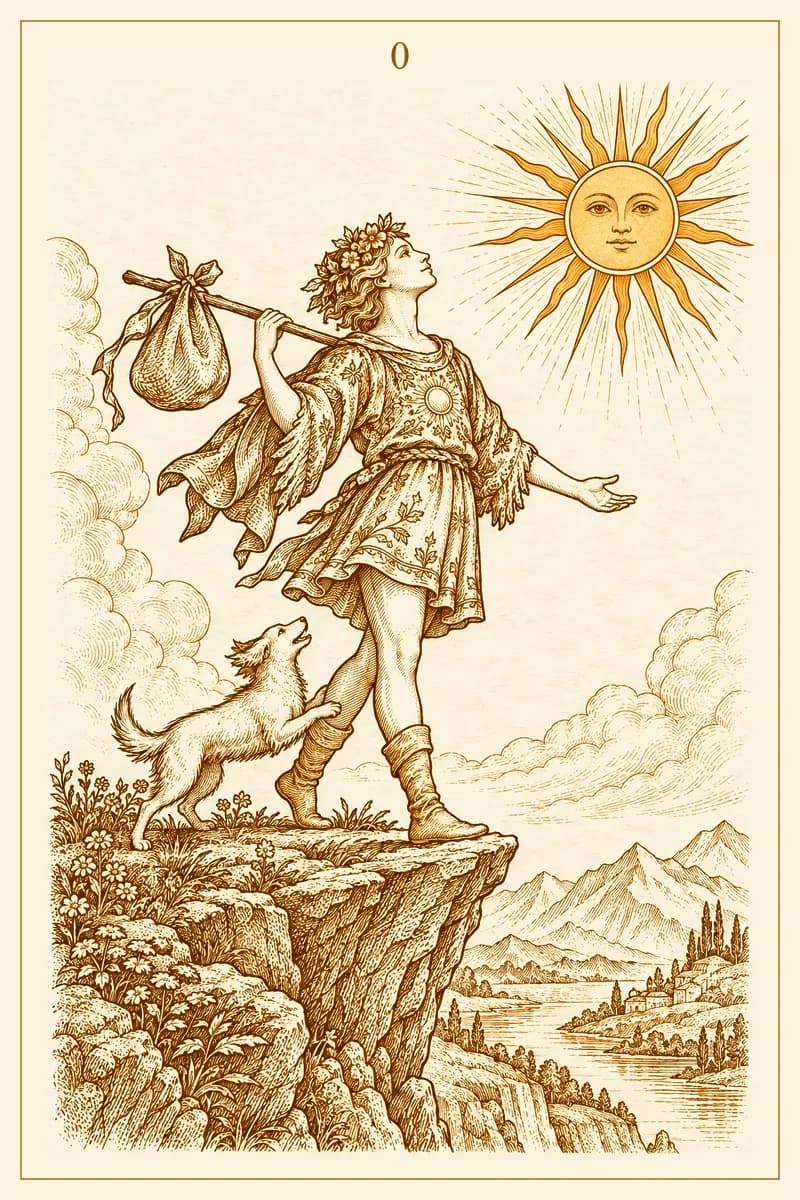
Sacred rebellion
Meaning of The Fool and The Hierophant Combination: Tradition Meets Freedom
Undirected leap meeting deliberate passage to calmer waters
Meaning of The Fool and Six of Swords Combination: The Leap and the Crossing
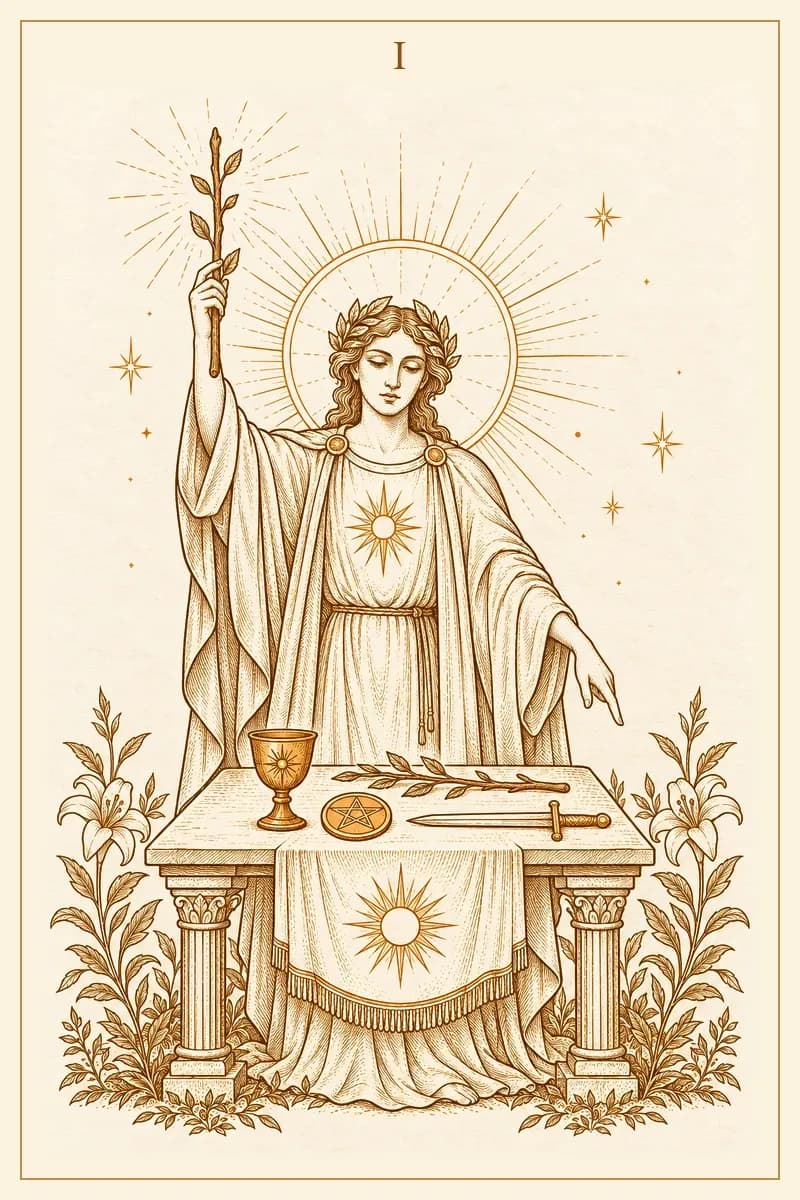
Structured mastery
Meaning of The Magician and The Hierophant Combination: The Cathedral You Build Yourself
Directed transition — using skill and will to navigate away from turbulence
Meaning of The Magician and Six of Swords Combination: Skill Meets Passage
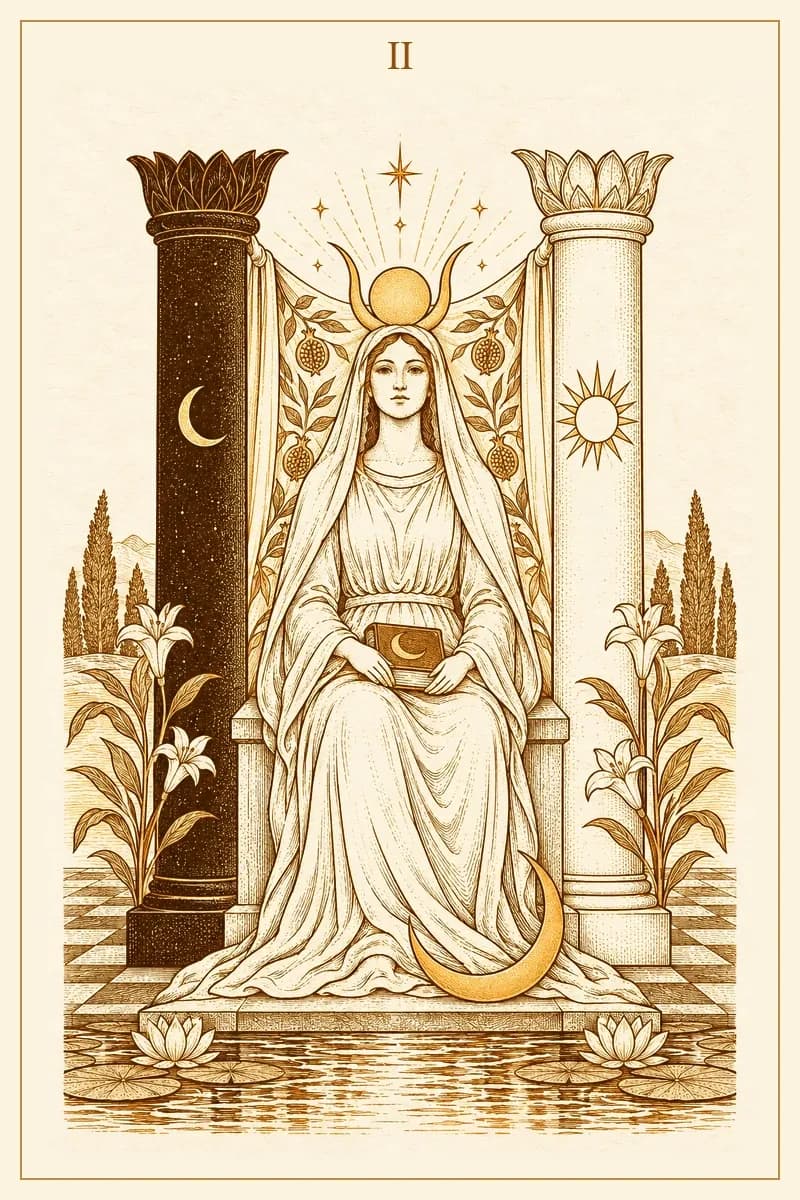
Inner and outer doctrine
Meaning of The High Priestess and The Hierophant Combination: Inner and Outer Doctrine
Intuition as navigator
Meaning of The High Priestess and Six of Swords Combination: The Inner Navigator
✦ Bring it to the cards ✦
Bring The Hierophant and Six of Swords into your own reading
Use this pairing as a starting point, then let a spread listen to the situation that is actually yours.
Begin a contextual reading