
Card Combination
Meaning of The Hanged Man and Three of Wands Combination: Strategic Stillness
Pause as strategy
The general who wins the battle is rarely the one who moved first. In the annals of military strategy, from Sun Tzu to the campaigns of the Second World War, the decisive advantage often belonged not to aggression but to the side that knew how to wait — that understood inaction as a weapon, that used stillness to gather intelligence while the enemy exhausted itself in motion. The paradox at the heart of this reading is precisely that: sometimes the most powerful forward move you can make is to stop.
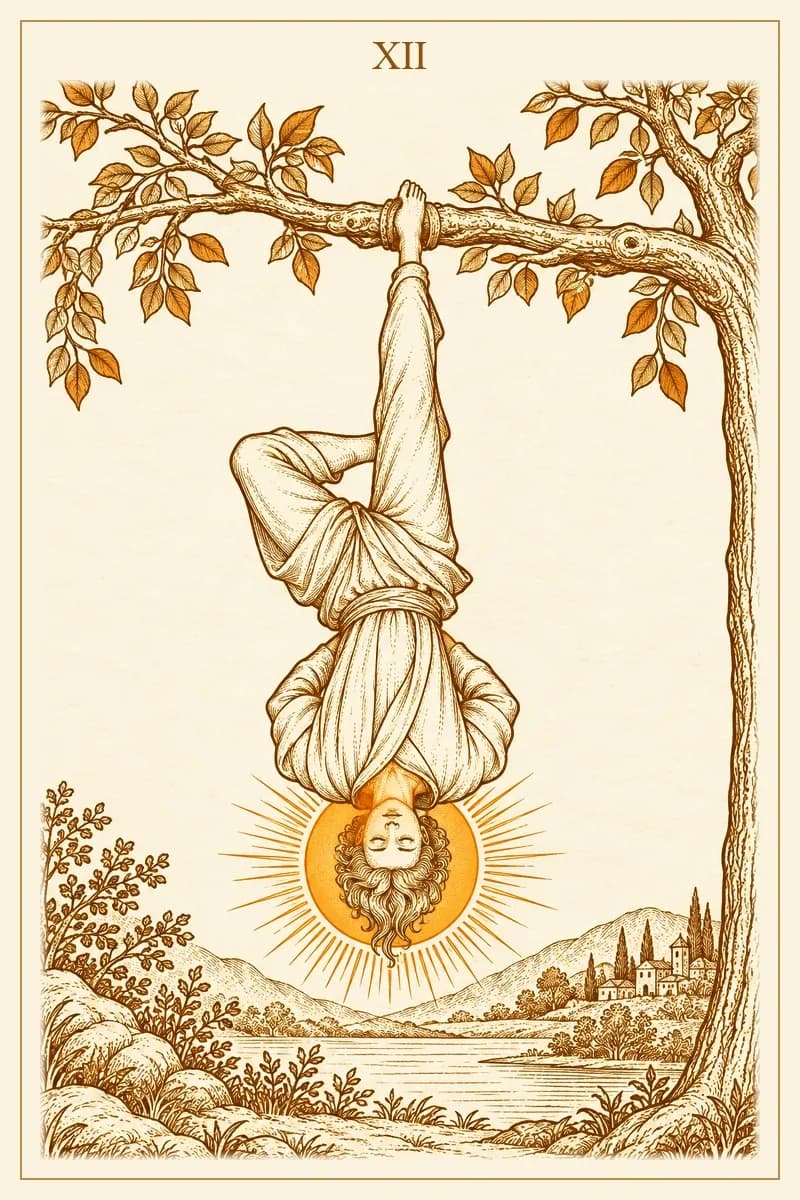
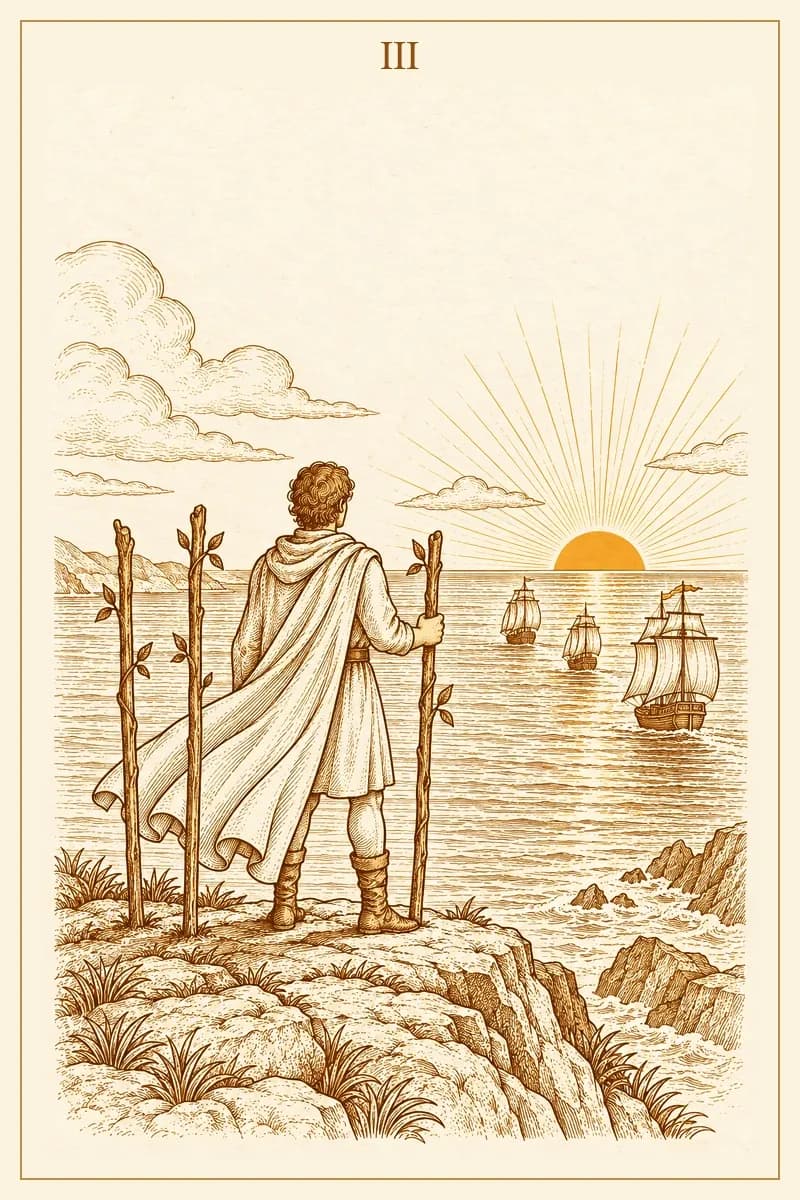
The Hanged Man is one of tarot's most misread figures. Suspended by his own foot, face calm, he is not being punished. He chose this position, or arrived at it through circumstances that forced a perspective no forward momentum would have granted him. He sees the world upside down, and this inversion is the point. The Three of Wands, meanwhile, stands at the cliff's edge watching ships sail outward — ships that he sent, toward horizons he has already calculated. He is patient not because he is passive, but because the plan is already in motion.
Together, these cards form a portrait of someone who has learned — or urgently needs to learn — that the pause between intention and action is not wasted time. It is where the strategy becomes real.
The Core Tension
The tension here is between suspension and projection: the Hanged Man's enforced or voluntary halt against the Three of Wands' long-range gaze toward what is coming. One card asks you to release control; the other asks you to exercise foresight. They seem to pull in opposite directions, but a deeper reading reveals they are the same instruction issued from different angles.
The Three of Wands cannot see clearly if the mind is still running the last campaign. The Hanged Man's gift — and cost — is the perspective that comes only when you stop trying to force outcomes. In war strategy terms, this combination describes the interval between deployment and engagement: troops are in position, plans are laid, and the commander must now practice the most difficult discipline in any field: waiting with full attention rather than anxious movement.
Love & Relationships
In a romantic context, the Hanged Man and Three of Wands often appear when someone is between chapters — not in a relationship but not closed to one, or in a relationship that has reached a decision point where no decision feels available yet. The Three of Wands has sent its ships out; the Hanged Man is learning what it means to watch them go without grasping at the ropes.
For those in relationships, this combination can indicate a partner who is physically or emotionally present but whose attention is partly on the horizon. This is not betrayal. It is vision. The question worth exploring together is whether both people can hold the same long view, or whether one person's expansion feels like abandonment to the other.
Career & Purpose
Professionally, this pairing appears at junctures where action has been taken — projects launched, bids submitted, applications sent — and the only remaining variable is time. The Three of Wands has done its work. The Hanged Man now asks you to resist the urge to undermine your own investments with anxious revision.
This combination also speaks to career transitions that require a fallow period. The strategist who forces the next campaign without allowing for rest and re-evaluation ends up fighting the new battle with the old army's assumptions. If you are between positions, between projects, or between identities professionally, the Hanged Man and Three of Wands together are a sophisticated instruction: use this gap. What you understand about the horizon from this suspended vantage point will not be available once you are moving again.
Shadow Side
The shadow of this combination is the confusion of paralysis with wisdom. Not every pause is strategic. The Hanged Man can become an excuse for avoiding a decision that is genuinely available, dressing inaction in spiritual language while the Three of Wands' ships drift without a destination. There is a difference between chosen suspension and fearful stalling, and it requires unusual honesty to tell them apart.
The Three of Wands carries its own shadow: the tendency to project so far into the future that the present becomes instrumental — a waiting room for better things. Long-range vision without presence can leave you perpetually arriving at a future that always recedes.
Action Steps
- 1Identify one area where you have been moving quickly to avoid the discomfort of not knowing, and deliberately slow down for four days — track what information surfaces in the stillness that motion was drowning out.
- 2Map one long-term intention with the specificity of a logistics plan: not "I want a better career" but which ship, carrying what, bound for which port, estimated arrival when.
- 3Practice one full conversation this week where you listen without formulating your response until the other person has completely finished — treat it as reconnaissance.
Related Pairings
Continue through published pairings that share The Hanged Man or Three of Wands.
Stillness ambushes motion
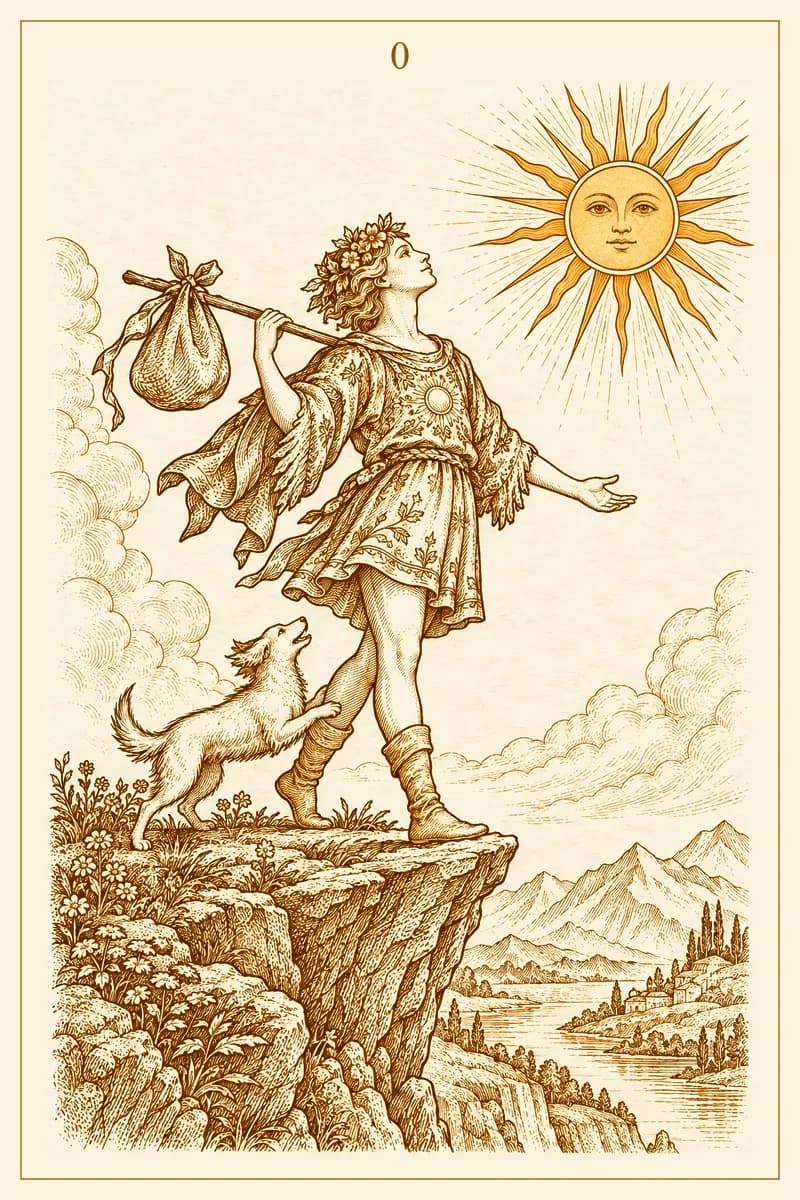
Meaning of The Fool and The Hanged Man Combination: Stillness Ambushes Motion
Visionary recklessness
Meaning of The Fool and Three of Wands Combination: Blind Expansion
Control versus release
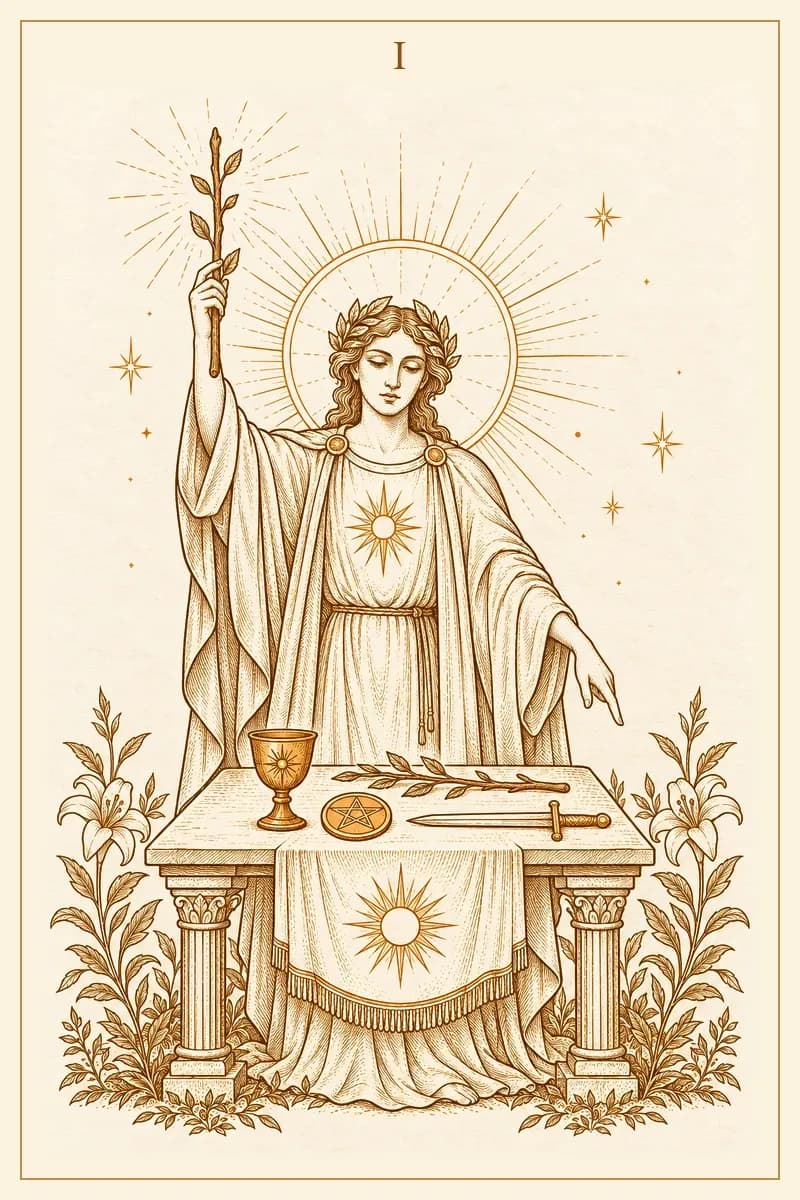
Meaning of The Magician and The Hanged Man Combination: When Control Meets Surrender
Intention into expansion
Meaning of The Magician and Three of Wands Combination: Launching What You Built
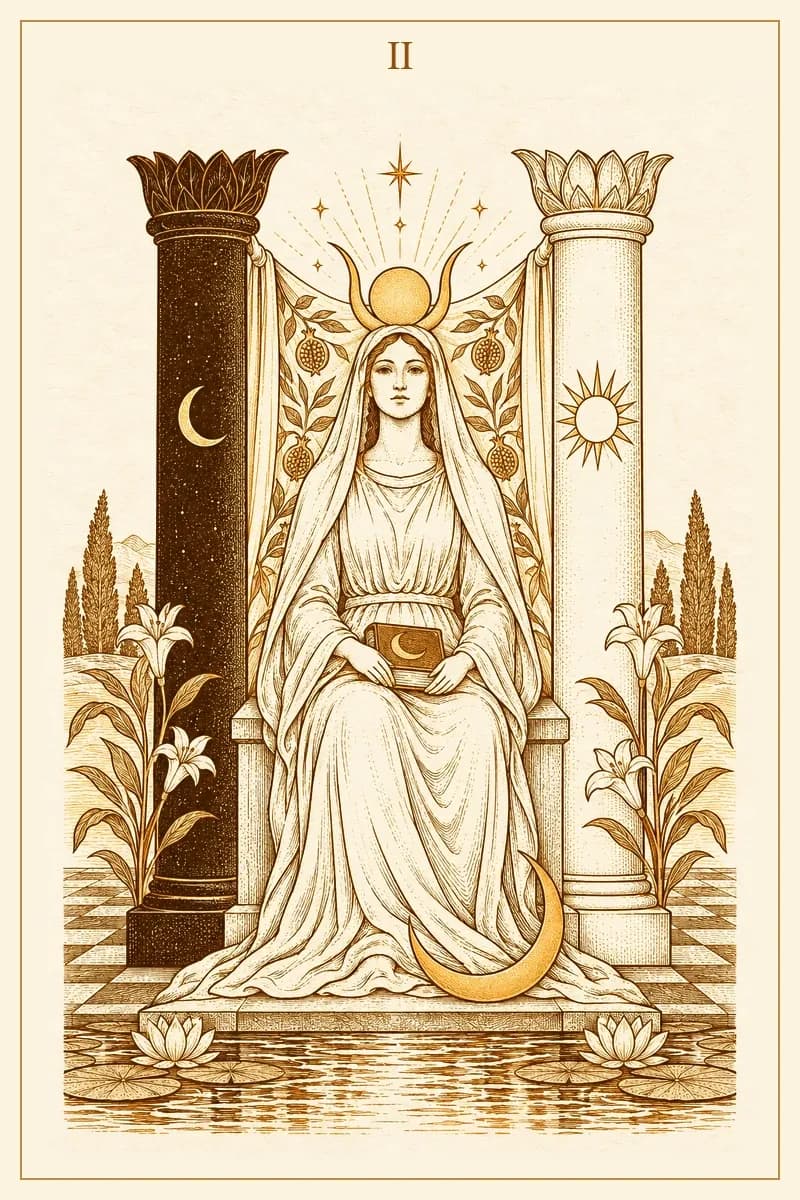
Sacred surrender
Meaning of The High Priestess and The Hanged Man Combination: Sacred Surrender
Foresight in motion
Meaning of The High Priestess and Three of Wands Combination: Foresight Already in Motion
✦ Bring it to the cards ✦
Bring The Hanged Man and Three of Wands into your own reading
Use this pairing as a starting point, then let a spread listen to the situation that is actually yours.
Begin a contextual reading