
Card Combination
Meaning of The Fool and Three of Wands Combination: Blind Expansion
Visionary recklessness
Most generals lose wars not because they lack intelligence but because they gather too much of it. They wait for the scouts to return, for the terrain reports to confirm what the terrain already said with its own mouth, for the supply lines to be triple-checked before a single boot crosses the river. Meanwhile the amateur, the one who wandered onto the battlefield by accident, walks straight through the unguarded flank because it never occurred to him that flanks needed guarding.
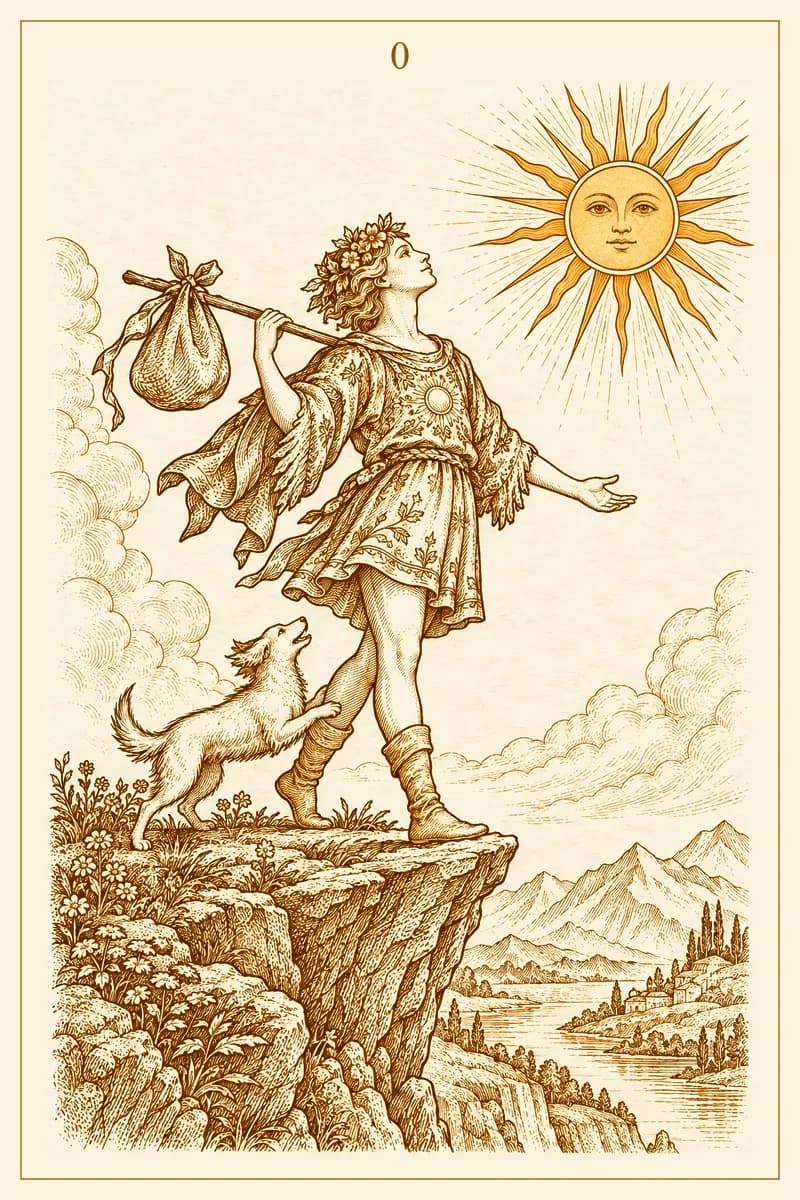
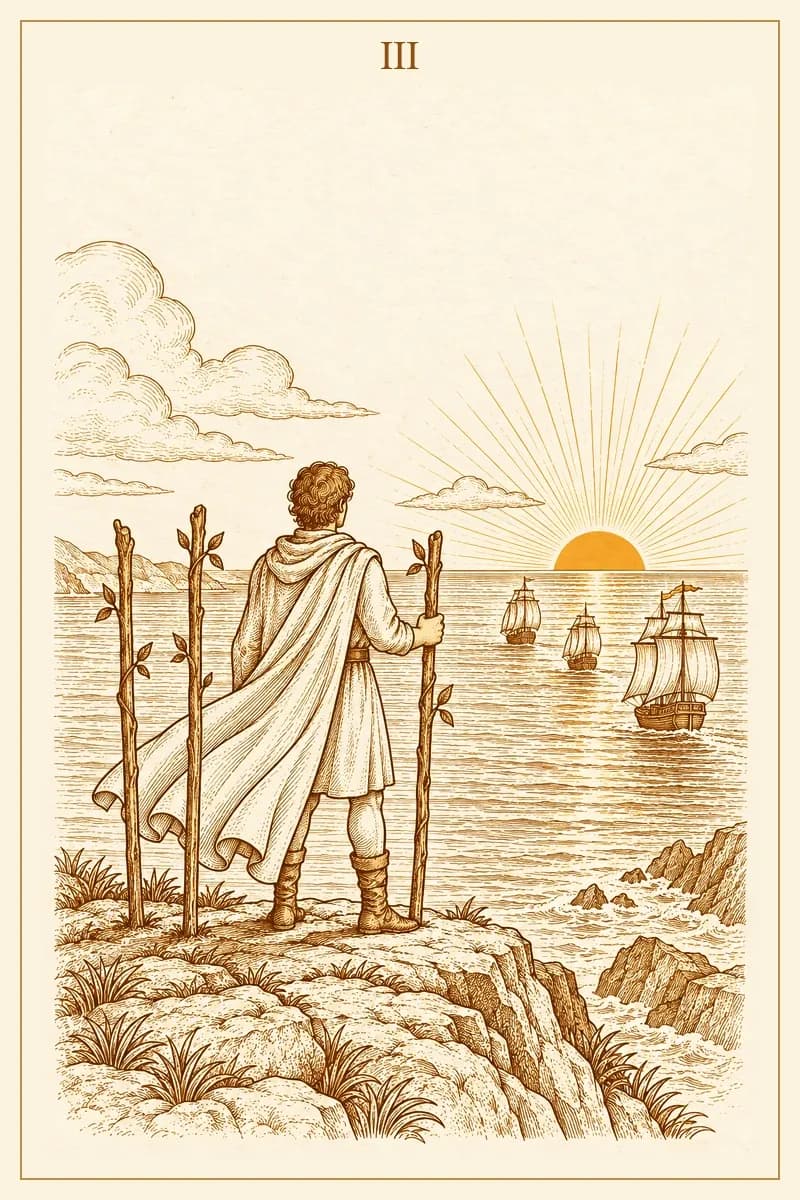
The Fool and the Three of Wands sit at opposite ends of the same military table. One has never seen a map. The other has drawn several, charted the trade winds, calculated when the ships should arrive and what their cargo will weigh. The Fool carries nothing but motion. The Three of Wands carries everything but motion. And the question this pairing forces into the open is whether foresight without recklessness is just another word for hesitation.
There is a figure on a hilltop in the Three of Wands, watching the sea. He has already sent something out — an investment, a venture, a piece of himself loaded onto a vessel and pushed into deep water. He is waiting for results. The Fool is not waiting for anything. The Fool is already on the next hill, or the next country, or falling off the edge of the known world with a small dog barking at his heels. Put them together and you get the rarest kind of strategist: one who plans the campaign and then abandons the plan the moment the first arrow flies.
The Core Tension
Foresight versus impulse, but not in the way you'd expect. The Three of Wands is not a cautious card. It has already taken the risk — the ships have sailed, the wagers have been placed. What it does is stand still afterward, watching the consequences approach. The Fool cannot stand still. He is constitutionally incapable of it. So the tension is not between action and inaction. It is between acting and then watching, versus acting and then acting again before the first action has finished revealing its shape.
The productive version of this pair creates a rhythm: launch, observe, launch again with what the observation revealed. The destructive version launches endlessly, each new venture burying the data from the last one under a fresh layer of enthusiasm.
Love & Relationships
Someone in this dynamic has already made a significant emotional investment and is scanning the horizon for signs that it will pay off. The other person is still exploring — not unfaithfully, but with a restlessness that makes the watcher on the hill nervous. The Three of Wands energy asks: will this return to me? The Fool energy answers: I don't understand the question.
This pairing works when the explorer learns that departure is not the only form of courage. Standing on the hilltop, watching the sea, refusing to send another ship until the first one docks — that requires a nerve the Fool has never had to develop. And the watcher benefits from the Fool's reminder that no amount of horizon-scanning replaces actually being in the water.
Career & Purpose
You are either launching something or waiting for early results from something you already launched. Possibly both at the same time. The danger is not inaction — both of these cards have already moved. The danger is failing to correlate the data from the first move with the direction of the second. A founder who launches a product and then immediately pivots to the next idea before reading the first month's numbers is living in the shadow of this combination. A team leader who sends the proposal and then cannot stop refreshing the inbox is living in its anxiety.
The strategic move is to set a specific observation window. Decide in advance how long you will watch before you act again. Write it down. The Fool in you will want to tear it up within forty-eight hours. Let the Three of Wands hold the pen.
Shadow Side
The shadow here is colonial optimism — the belief that every horizon exists to be claimed, that expansion is always good, that the ships will always come back heavier than they left. The Fool's innocence strips away the ethical questions that the Three of Wands should be asking: whose water am I sailing into? What am I displacing with my arrival? Unchecked, this pair produces the kind of confident expansion that mistakes appetite for vision and movement for progress.
The quieter shadow is the refusal to grieve what the ships carried away. Something was sacrificed to fund the voyage. The Fool forgets this instantly. The Three of Wands pretends to forget while staring at the exact spot on the horizon where the mast disappeared.
Action Steps
- 1Name one venture you launched but never stayed long enough to watch — return to the hilltop and look for its sails
- 2Identify where your appetite for the next move is burying useful information from the last one
- 3Choose one horizon and commit to watching it for a full week before sending another ship
Related Pairings
Continue through published pairings that share The Fool or Three of Wands.

Spontaneous manifestation
Meaning of The Fool and The Magician Combination: Spontaneous Manifestation

Innocent knowing
Meaning of The Fool and The High Priestess Combination: Innocent Knowing
Intention into expansion
Meaning of The Magician and Three of Wands Combination: Launching What You Built

Fertile leaps
Meaning of The Fool and The Empress Combination: Fertile Leaps
Foresight in motion
Meaning of The High Priestess and Three of Wands Combination: Foresight Already in Motion

Structured freedom
Meaning of The Fool and The Emperor Combination: Structured Freedom
✦ Bring it to the cards ✦
Bring The Fool and Three of Wands into your own reading
Use this pairing as a starting point, then let a spread listen to the situation that is actually yours.
Begin a contextual reading