
Card Combination

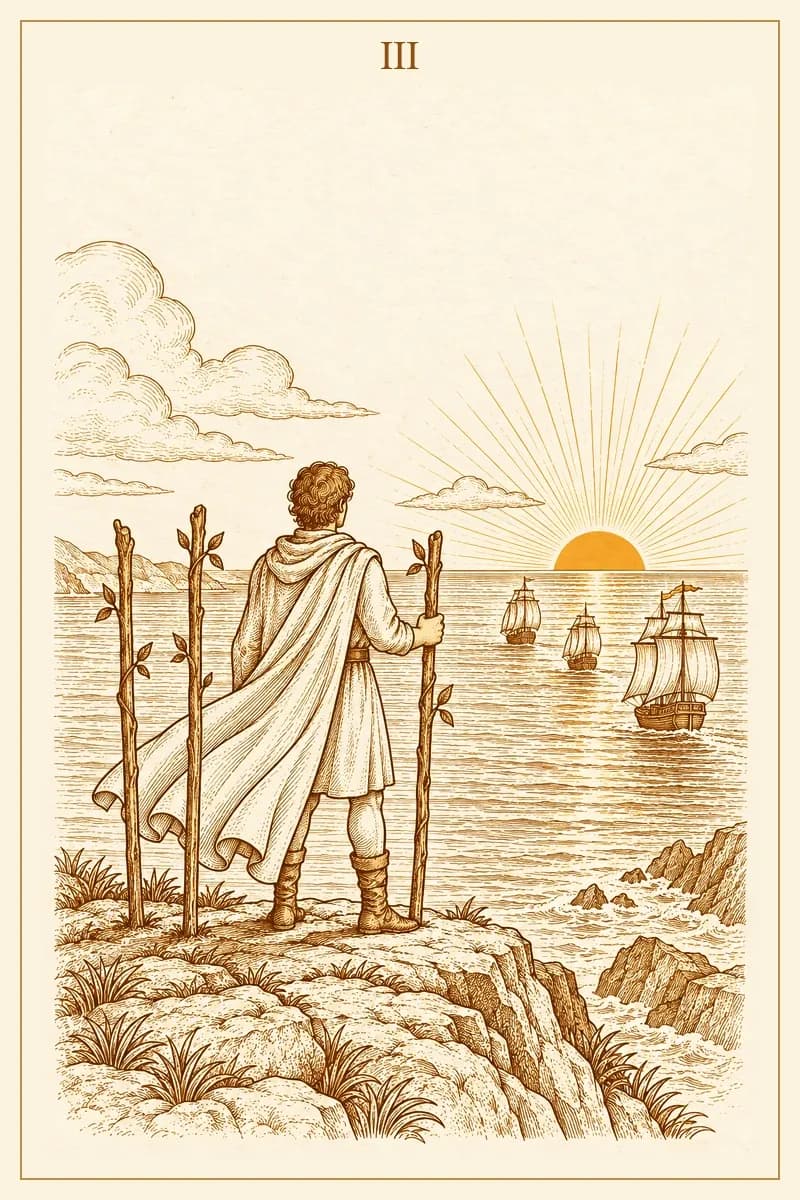
Meaning of The Magician and Three of Wands Combination: Launching What You Built
Intention into expansion
Picture a composer standing at the edge of a rehearsal hall after the final run-through, score still in hand but no longer looking at it. The musicians have filed out, the chairs are stacked, the hall is empty. What this person watches is not the room — it is something further out, something beyond the walls where the performance will happen in three days. The score has been written. Every instrument has its part. Now comes the harder discipline: letting the work travel without being able to control what greets it when it arrives.
The Magician is that composer. He entered with four tools — wand, cup, sword, coin — and arranged them into something that did not exist before. His intention was total, his command of the elements complete. The Three of Wands is the moment after the rehearsal ends, when he walks to the window and looks at the horizon where his ships have set sail. Not passive waiting. Active watching — the kind that gathers intelligence from distance, that reads the first signals of return before most people could even name what they were seeing.
The Core Tension
The Magician belongs to the moment of making. His power lives in the present-tense act of bringing will and tool into contact: this note, this chord, this harmonic decision. He does not compose in general — he composes this piece, with these instruments, toward this exact effect. His relationship to the future is one of authorship: he determines it through precision applied now.
The Three of Wands belongs to the moment of receiving. The figure on the cliff has already sent three wands into the world as vessels — three bets placed, three musical scores dispatched to three different stages in distant cities. The work is no longer fully under his direction. What arrives back are not the ships he sent but the ships transformed by the voyage: laden with cargo he couldn't have specified in advance, carrying weather marks and re-tuned instruments and crew who learned things on the water. The tension is productive: the Magician's instinct is to keep refining, to pull the score back and change the key signature one more time. The Three of Wands' intelligence is knowing that the ship has already left and the captain is competent. The combination describes the arc from the act of manifesting to the discipline of watching early results arrive without flinching and without interfering.
Love & Relationships
In a relationship, this pairing often appears when someone has deliberately constructed something — said the necessary thing, made the gesture that broke the distance, set the terms for how they want to be met. The Magician half of the dynamic knows what it built and built it consciously. The Three of Wands half is now standing at the window, watching the other person absorb what was offered.
The risk is that the composer keeps revising after the orchestra has departed. Explaining the gesture. Clarifying the statement. Layering footnotes onto something that was already complete. When two cards combine this way, the lesson is to let the first sincere act travel its full distance before introducing another one. Early returns in love do not always look like what you imagined shipping. Give them time to dock before assessing the cargo.
Career & Purpose
Professionally, this is the signature of someone who has moved from conception to early deployment and is now watching the first data come in. The Magician provided the blueprint — the pitch, the product, the project structure assembled from genuine competence. The Three of Wands represents the first feedback loops: early clients, initial numbers, a pilot run that is now complete and generating signal.
The professional strength here is that neither card operates in fantasy. The Magician demanded specificity at the construction stage; the Three of Wands demands honest assessment at the reception stage. The work goes wrong when early positive signals are used to stop listening rather than to calibrate more precisely. The ships returning with good cargo are information, not permission to stop watching the horizon.
Shadow Side
The shadow falls when the Magician's capacity to manifest becomes a compulsion to launch rather than a decision to launch. Composing a new score before the first one has been performed. Sending the next fleet before the first has docked. The Three of Wands horizon then becomes a cluttered skyline of simultaneous arrivals, none of which receive enough attention to be properly interpreted. Expansion without consolidation is not growth — it is the musical equivalent of playing all twelve instruments simultaneously and calling the noise a symphony.
The opposite shadow: the watcher who never reloads. Camps at the cliff, observes every incoming ship with great attention, but never returns to the composing hall to write the next piece. The vantage point becomes a residence.
Action Steps
- 1Identify the one project already in motion and sit with its early signals for three days before launching anything new beside it
- 2Notice where you have been revising something already sent — a conversation, a proposal, a message — and let it travel without amendment
- 3Map one concrete next step that belongs to the receiving phase, not the making phase: a follow-up question, a measurement, a listening session rather than another presentation
Related Pairings
Continue through published pairings that share The Magician or Three of Wands.
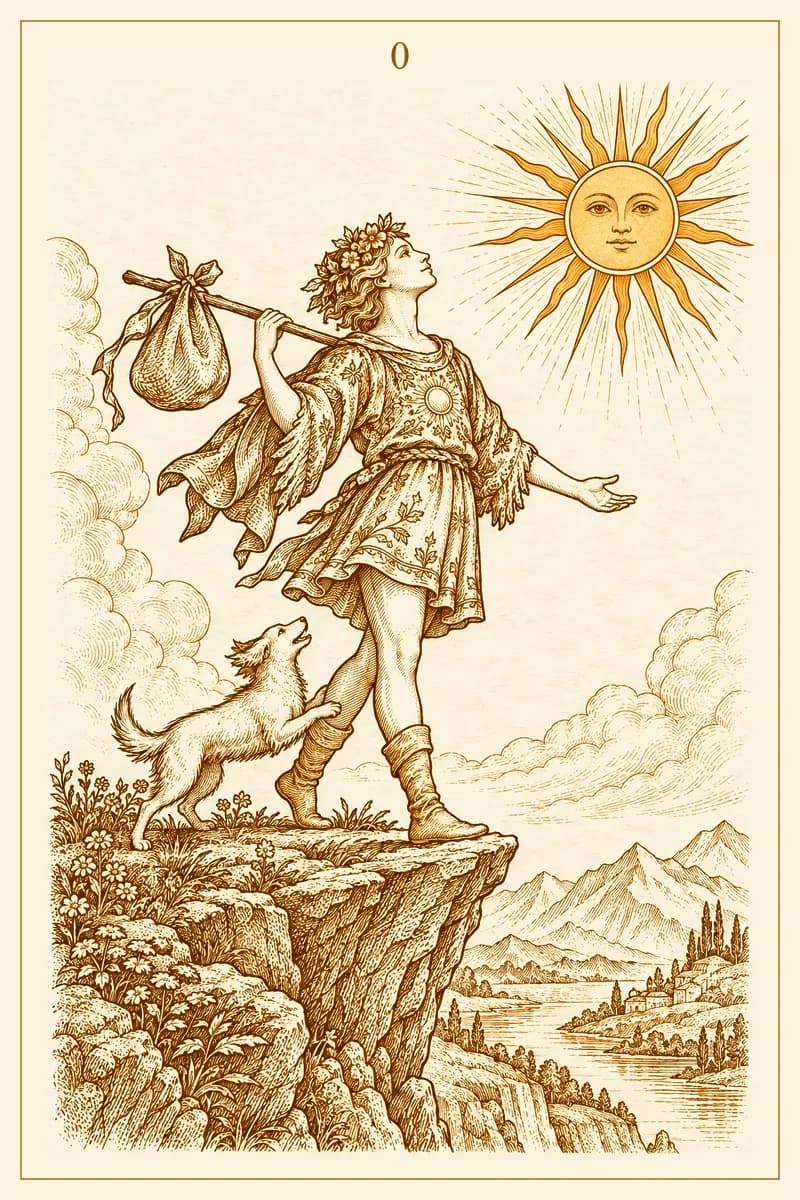
Spontaneous manifestation
Meaning of The Fool and The Magician Combination: Spontaneous Manifestation
Visionary recklessness
Meaning of The Fool and Three of Wands Combination: Blind Expansion
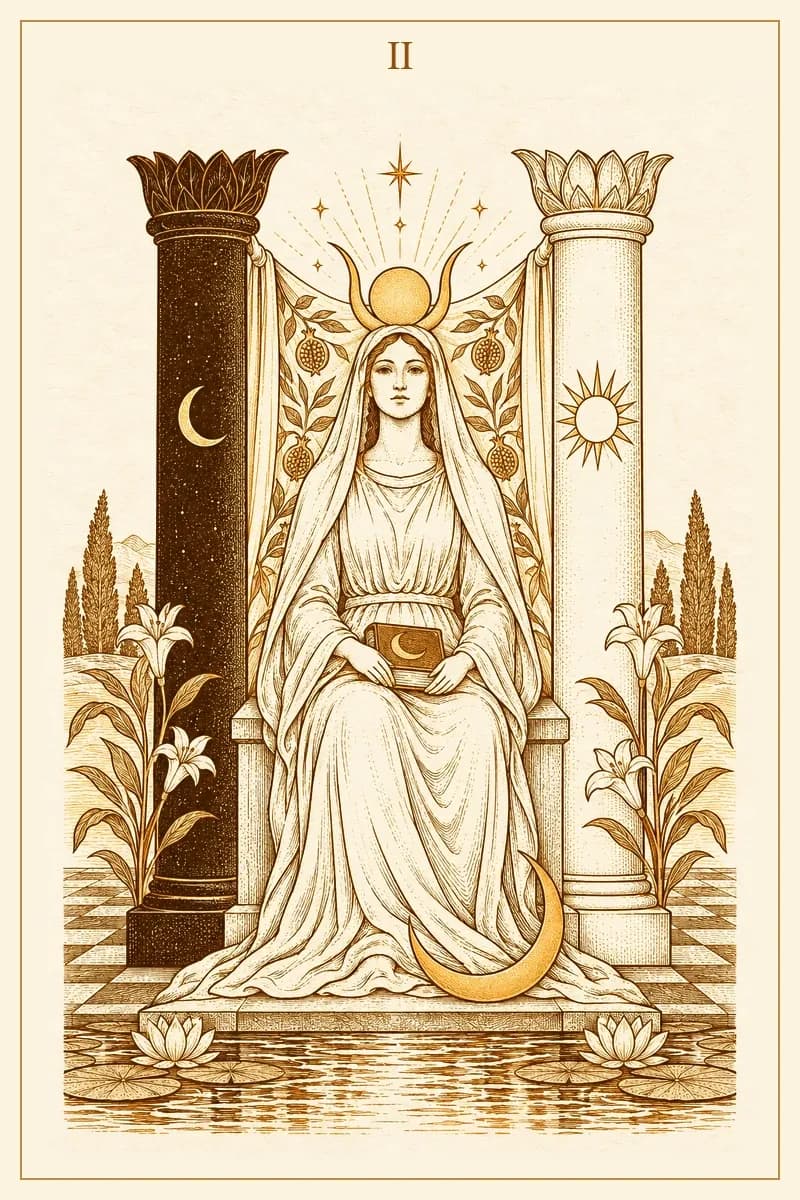
Conscious action harmonizing with unconscious knowing
Meaning of The Magician and The High Priestess Combination: The Conductor and the Silence Between Notes

Fertile willpower
Meaning of The Magician and The Empress Combination: Seeds That Obey the Hand
Foresight in motion
Meaning of The High Priestess and Three of Wands Combination: Foresight Already in Motion

Disciplined mastery
Meaning of The Magician and The Emperor Combination: The Architect of Command
✦ Bring it to the cards ✦
Bring The Magician and Three of Wands into your own reading
Use this pairing as a starting point, then let a spread listen to the situation that is actually yours.
Begin a contextual reading