
Card Combination
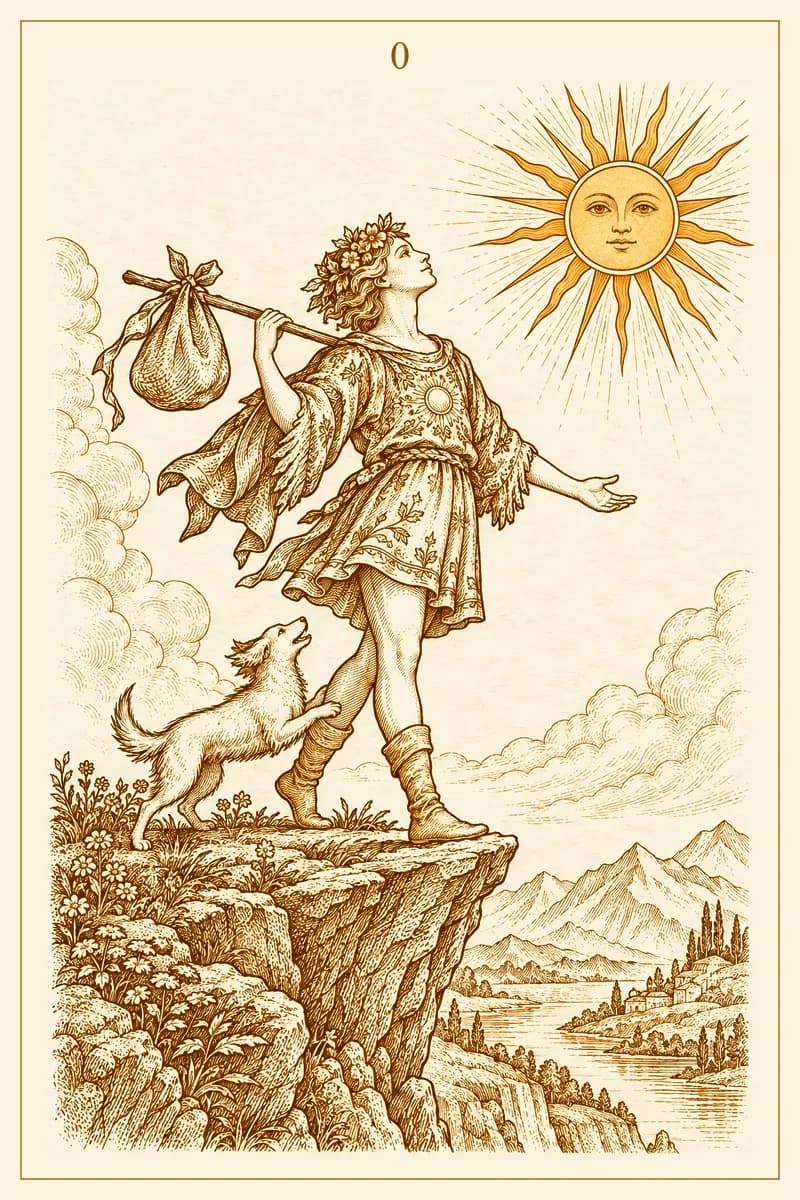
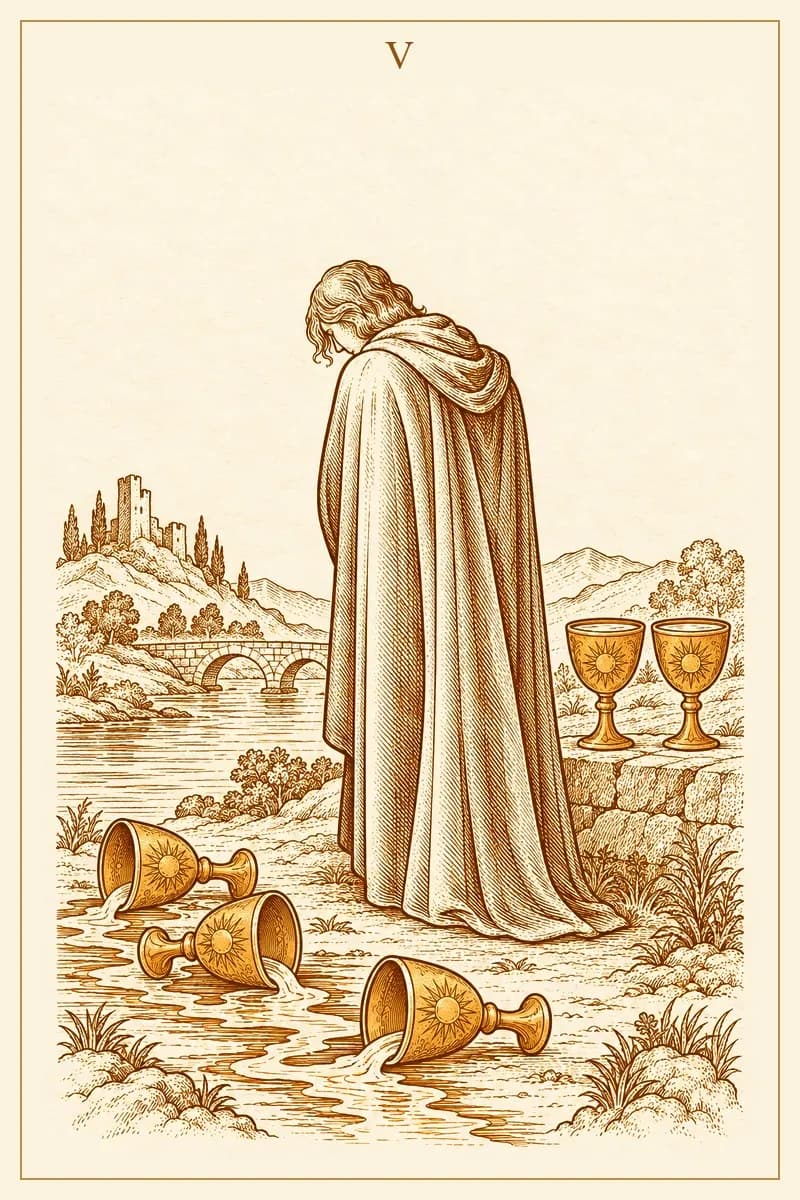
Meaning of The Fool and Five of Cups Combination: Singing Over Spilled Wine
Innocence meets grief
The cellist is still playing. Three chairs in the ensemble sit empty — the violinist left mid-movement, the flautist never showed, and the oboist packed up during intermission without saying a word. The audience is sparse. The hall echoes in places that shouldn't echo. But the cellist has reached the second movement and something in his bow arm refuses to stop. Not because the music is beautiful, though parts of it are. Because stopping would mean the silence wins, and the silence has already taken enough tonight.
This is the scene when The Fool meets the Five of Cups. One card walks into a room without checking the program. The other has been reading the program so long the ink has smudged, every line a record of performances that ended badly. The Fool hears music and walks toward it. The Five of Cups hears the same notes and counts the missing instruments.
The Core Tension
Grief has a tempo. It is slow, deliberate, repetitive — a phrase that returns to the same minor key until the listener knows every interval by memory. The Fool has no use for tempo. He improvises. He doesn't know the key signature and doesn't care that he doesn't know it. When these two energies collide, the question is not whether you should mourn or move forward. The question is whether you can hold a melody and a lament in the same bar of music without letting either one drown the other out.
The Five of Cups fixates on the three overturned vessels. The wine is on the ground. The stain is spreading. There is real loss here — not imagined, not exaggerated, not something that positive thinking can mop up. But two cups remain standing behind the grieving figure, and the figure's back is turned to them. The Fool would have noticed those two cups first because he approaches the table without a count of what should be there. He sees what is, not what is missing.
The tension is productive when grief becomes the bass line rather than the entire composition. You do not skip the lament. You do not pretend the three cups never fell. But you also do not build a monument to spillage and call it the whole concert.
Love & Relationships
Someone is still counting the cost of a previous heartbreak while a new connection knocks at the door. The Five of Cups keeps replaying the final argument, the unanswered message, the moment the relationship shifted from difficult to finished. The Fool arrives without that archive. He sees the person in front of him, not the ghost standing behind them.
This pairing surfaces when one partner carries unprocessed loss into present intimacy. The grief is legitimate. The wall it builds is not. If you are the one grieving, notice whether your sorrow has become a rehearsed piece you perform to avoid learning new music. If you are the one arriving, notice whether your lightness is genuine openness or a refusal to sit with someone else's minor key long enough to understand it.
Career & Purpose
A project failed. A contract fell through. A colleague you relied on moved to another company. The professional landscape holds visible evidence of what went wrong, and someone on the team cannot stop conducting the post-mortem. Every meeting circles back to what was lost — the budget that evaporated, the client who walked, the strategy that looked brilliant on paper and collapsed on stage.
Meanwhile, there are two active accounts that need attention. There is a small opportunity that nobody has pursued because everyone is too busy mourning the large one that disappeared. The Fool energy here is not about ignoring the failure. It is about noticing that the orchestra still has living musicians and an audience, however small, that showed up. Conduct the ensemble you actually have. Write for the instruments still in the room.
Shadow Side
The shadow plays two discordant notes. First: toxic positivity. The Fool's lightness becomes a weapon when it dismisses legitimate grief. Telling a person staring at three spilled cups to "look at the bright side" is not wisdom — it is a refusal to witness. The two standing cups do not cancel the three fallen ones.
Second: grief as identity. The Five of Cups can fall so deeply into mourning that loss becomes the only song worth singing. The lament calcifies into a permanent solo. Nothing can interrupt it — not opportunity, not kindness, not the sound of a new instrument tuning up in the next room. When someone offers a different melody, it feels like betrayal of the old one.
Action Steps
- 1Identify one loss you have been replaying on a loop — write down specifically what was lost, then write down what remains, and spend equal time with both lists
- 2Notice where your forward momentum is actually avoidance of sitting with something that still hurts, and give that unfinished feeling ten honest minutes before you move again
- 3Pick up one neglected project or relationship that has been standing quietly behind your grief like a full cup you forgot to drink from
Related Pairings
Continue through published pairings that share The Fool or Five of Cups.
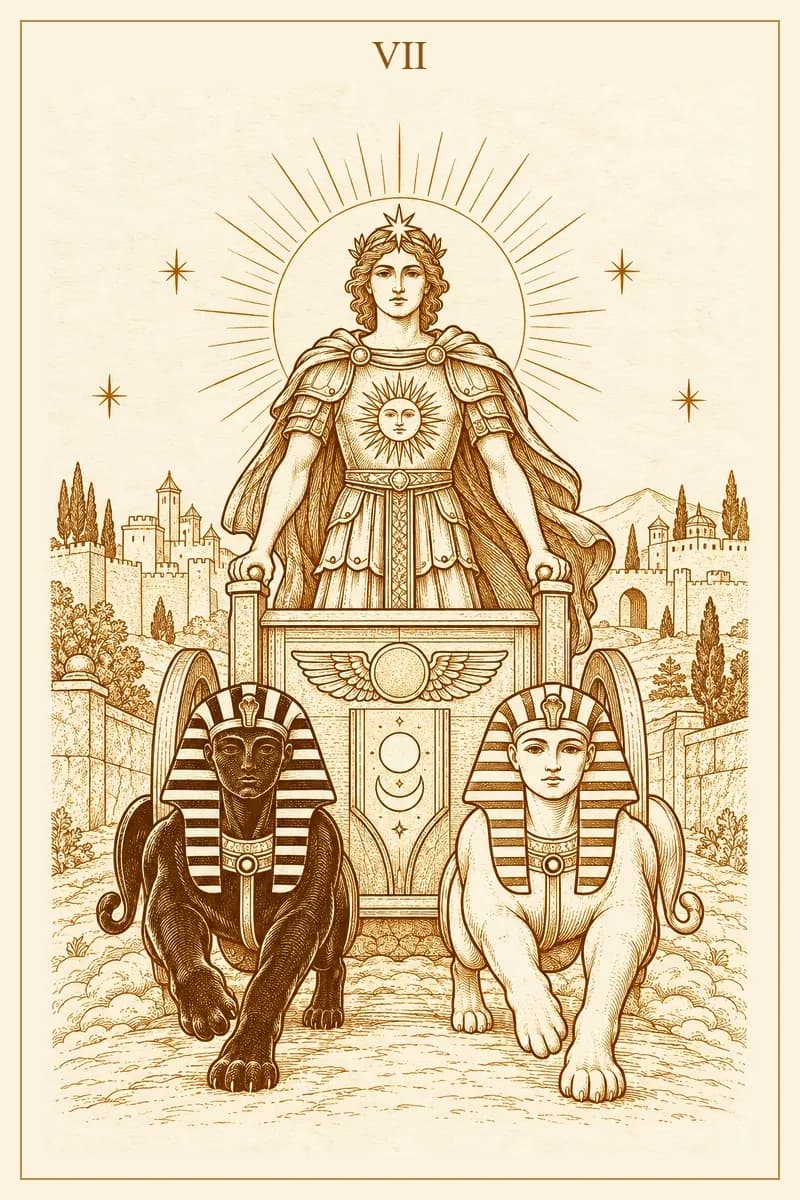
Reckless momentum
Meaning of The Fool and The Chariot Combination: Reckless Momentum
Grief and momentum
Meaning of The Chariot and Five of Cups Combination: Driving Through Grief
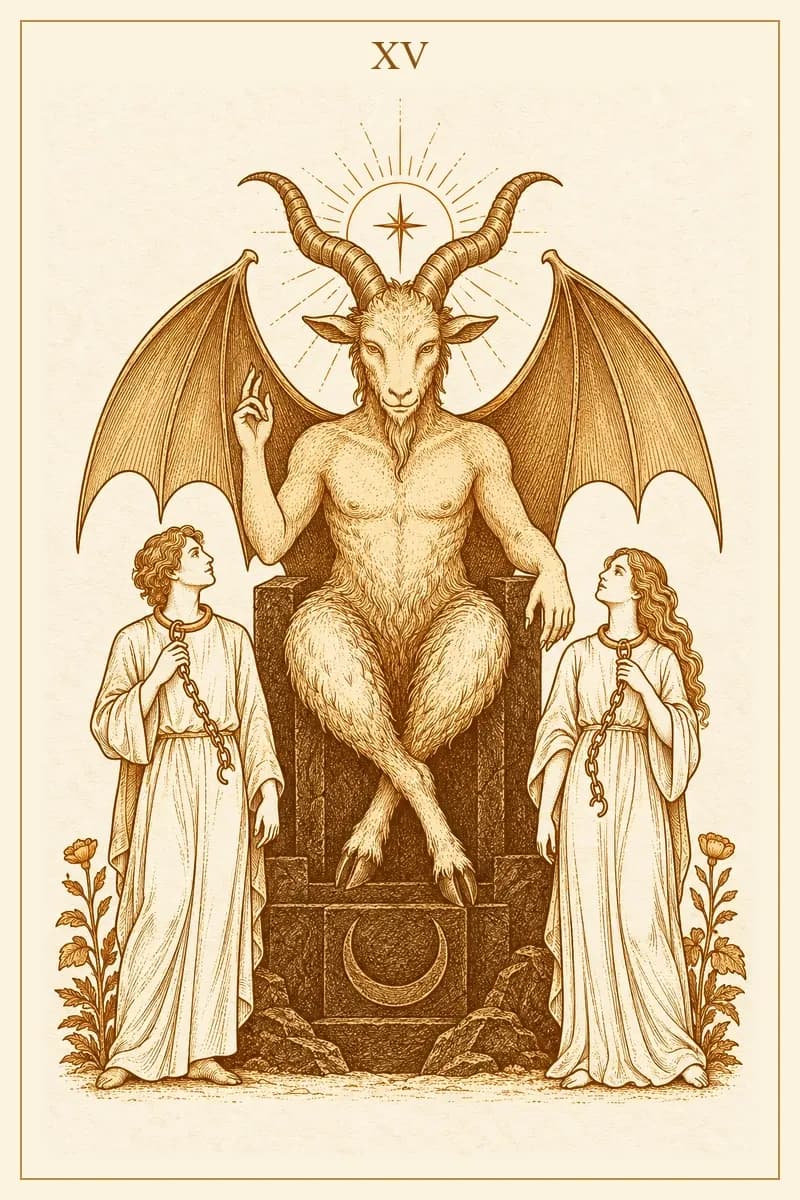
Innocence meets appetite
Meaning of The Fool and The Devil Combination: Innocence Meets Appetite
Grief-fueled bondage
Meaning of The Devil and Five of Cups Combination: Grief Feeding Chains

Structured freedom
Meaning of The Fool and The Emperor Combination: Structured Freedom
The grief a ruler will not allow himself — and what that refusal eventually costs
Meaning of The Emperor and Five of Cups Combination: The Ruler Who Cannot Grieve
✦ Bring it to the cards ✦
Bring The Fool and Five of Cups into your own reading
Use this pairing as a starting point, then let a spread listen to the situation that is actually yours.
Begin a contextual reading