
Card Combination

Meaning of The Emperor and Five of Cups Combination: The Ruler Who Cannot Grieve
The grief a ruler will not allow himself — and what that refusal eventually costs
He woke before dawn, as he always did. Checked his calendar. Reviewed the day's obligations. Made no mention — not to himself, not to anyone — of the anniversary. There was work to do. There was always work to do.
That is the character who walks through this reading. The Emperor and the Five of Cups describe a person who has built formidable structures — of discipline, of control, of forward motion — and is now encountering loss with a set of tools that were never designed for it.
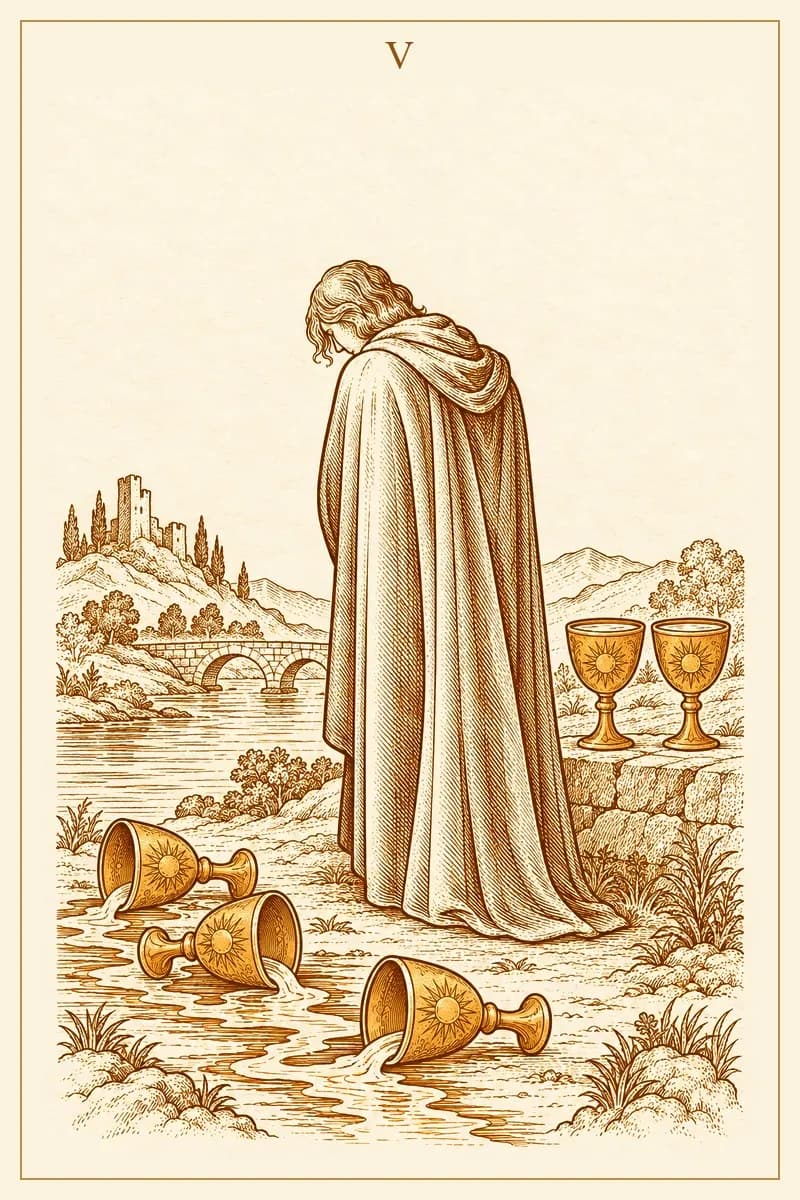
The Emperor sits on his throne of granite, absolute in command. The Five of Cups shows a cloaked figure at the water's edge, head bowed over three spilled cups — two still stand behind the figure, full and upright, but the figure cannot look away from what is gone. Together: a study in what happens when strength meets grief and insists on winning.
The Core Tension
Autumn does not argue with the falling leaves. The trees do not hold emergency meetings to prevent the color change. The season of loss arrives because it is part of the full cycle, and the forest does not shame itself for going bare.
The Emperor has not learned this. He is a winter-into-spring energy — the force that pushes through cold and arrives on the other side with something built. What he struggles with is the autumn itself: the fallow, the period of necessary loss before renewal. The Five of Cups sits squarely in that autumn. Three cups spilled. The cloaked figure unable to turn away long enough to see the two that remain.
The tension here is not between strength and weakness. It is between two legitimate forces: the drive to maintain forward momentum, and the equally real need to stop and acknowledge what was lost. The Emperor says: we do not dwell. The Five of Cups says: but I am still standing at the water's edge.
Love & Relationships
In relationship readings, this pairing often describes someone — or a dynamic between two people — in which grief is being handled through control. A breakup is processed by immediately restructuring daily life. A loss within the relationship is acknowledged briefly and then covered with productivity.
This is not pathological. The Emperor's response to emotional pain is often to build something — create order where chaos has entered. That impulse has real value. But it carries a cost: the two standing cups represent what remains and could be moved toward. They cannot be seen while the figure is fixated on the spillage. An Emperor who refuses to grieve cannot clearly evaluate what is still intact.
If you are reading this in the context of a past relationship: you may have been so committed to not falling apart that you never fully registered what was lost. That gap surfaces later — in the next relationship, as an unexpected coldness or an overreaction to a small slight.
Career & Purpose
Professionally, this pairing can mark a period following significant loss — a project collapse, a rejection, a venture that did not survive. The Emperor's instinct is to pivot immediately: assess damage, reallocate resources, move on. Spring will come if we keep working through winter.
But unprocessed grief corrupts the next season's planting. The leader who did not allow himself to feel the failure carries that unexplored loss forward — often as overcorrection, excessive risk-aversion, or a cynicism that poisons team morale before the next project finds its footing.
The Five of Cups is asking you to look at the spilled cups — not to wallow, but to look. Acknowledge what actually happened, what was genuinely lost, what you had hoped for. The winter has to be experienced before spring has any meaning.
Shadow Side
The shadow this pairing casts is the person whose competence becomes a wall. So capable, so structured, so clearly in command — that everyone, including themselves, believes they have moved on. Grief is seasonal. Suppressed, it does not disappear; it goes underground and emerges in the wrong season, the wrong direction.
The Emperor's armor is his strength and his danger. Against external opposition, it is invaluable. Against internal weather, it stops the very process that would restore him.
Action Steps
- 1Name one loss you have not yet fully acknowledged — a relationship, a professional disappointment, a version of your life you expected by now — and allow yourself five unstructured minutes with it, without immediately problem-solving.
- 2Look at what is still standing: the two upright cups are not a consolation prize, they are the actual remaining path. Identify one thing that survived the loss and deserves your deliberate attention.
- 3If you are in a leadership role, notice whether your team is being allowed to acknowledge setbacks before being redirected, or whether your pace requires them to skip the autumn entirely.
- 4The Emperor and Five of Cups do not oppose each other so much as they reveal each other's limits. Authority without grief becomes brittleness. Grief without any structure becomes flood. The invitation here is the harder one: to let the leaves fall without treating it as a failure of the forest, and to trust that what has been built is strong enough to survive a season of bare branches.
Related Pairings
Continue through published pairings that share The Emperor or Five of Cups.

Structured forward momentum
Meaning of The Emperor and The Chariot Combination: Authority in Motion
Grief and momentum
Meaning of The Chariot and Five of Cups Combination: Driving Through Grief
Authority versus control
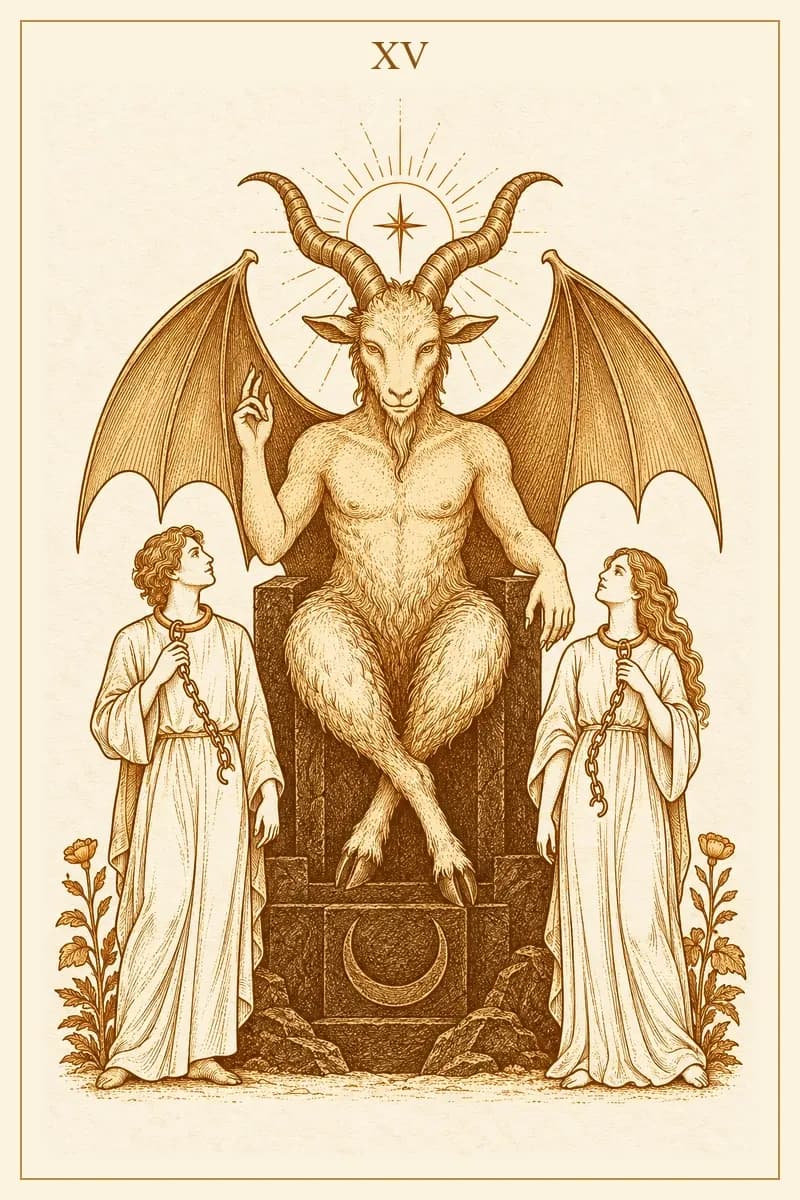
Meaning of The Emperor and The Devil Combination: When Authority Becomes a Cage
Grief-fueled bondage
Meaning of The Devil and Five of Cups Combination: Grief Feeding Chains
Control vs release
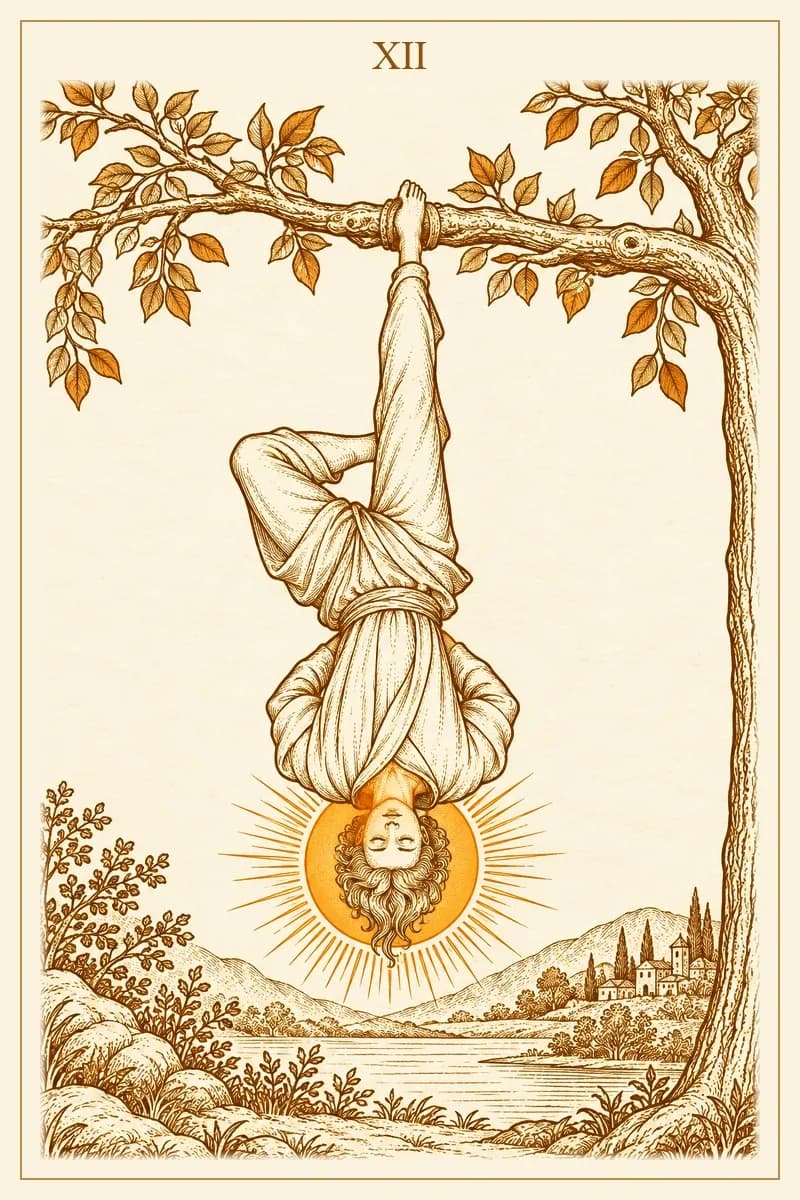
Meaning of The Emperor and The Hanged Man Combination: When Control Meets Surrender
Outer vs inner authority
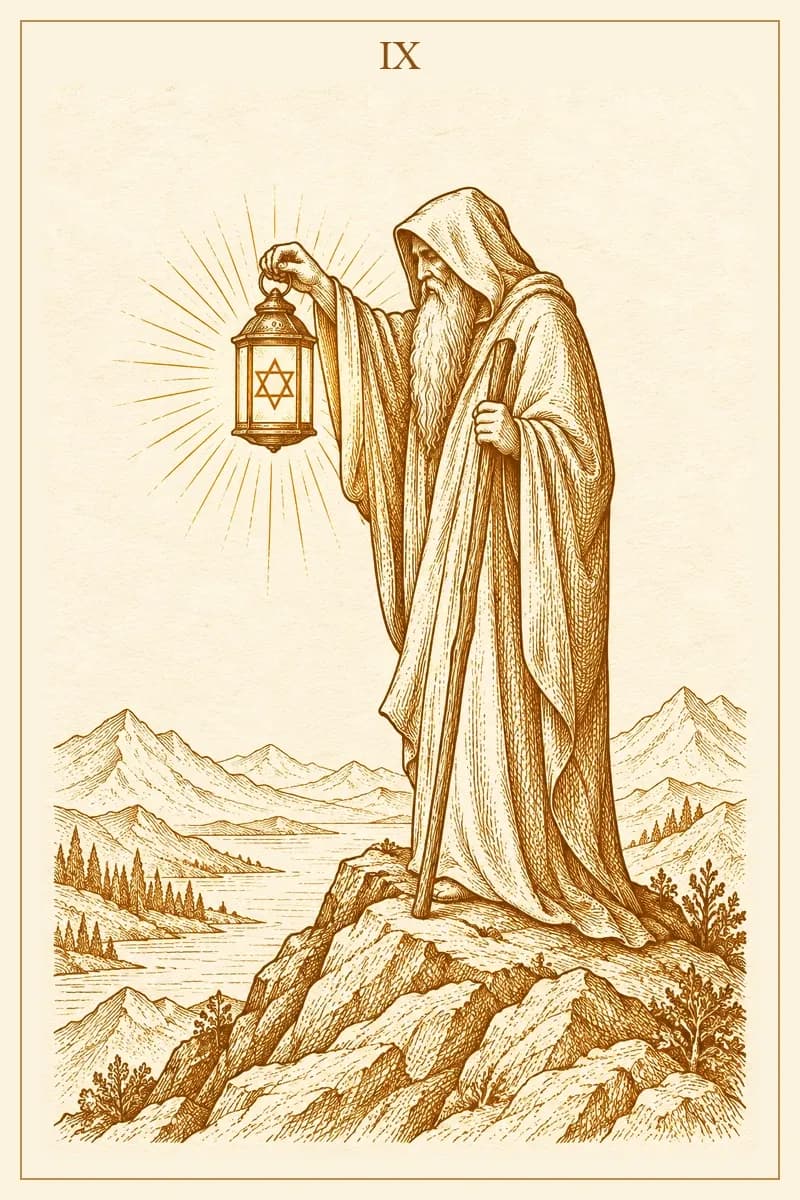
Meaning of The Emperor and The Hermit Combination: Command Meets Solitude
✦ Bring it to the cards ✦
Bring The Emperor and Five of Cups into your own reading
Use this pairing as a starting point, then let a spread listen to the situation that is actually yours.
Begin a contextual reading