Loading your view
The page is gathering the latest information.
The page is gathering the latest information.
Innocence Meets Appetite
There's a type of person who lights up every room they walk into—not through strategy, but through genuine enthusiasm for whatever's happening. They commit fully, love loudly, work with total presence. They're also the easiest person in the room to manipulate, because their openness doesn't carry a threat model. They've never built one.
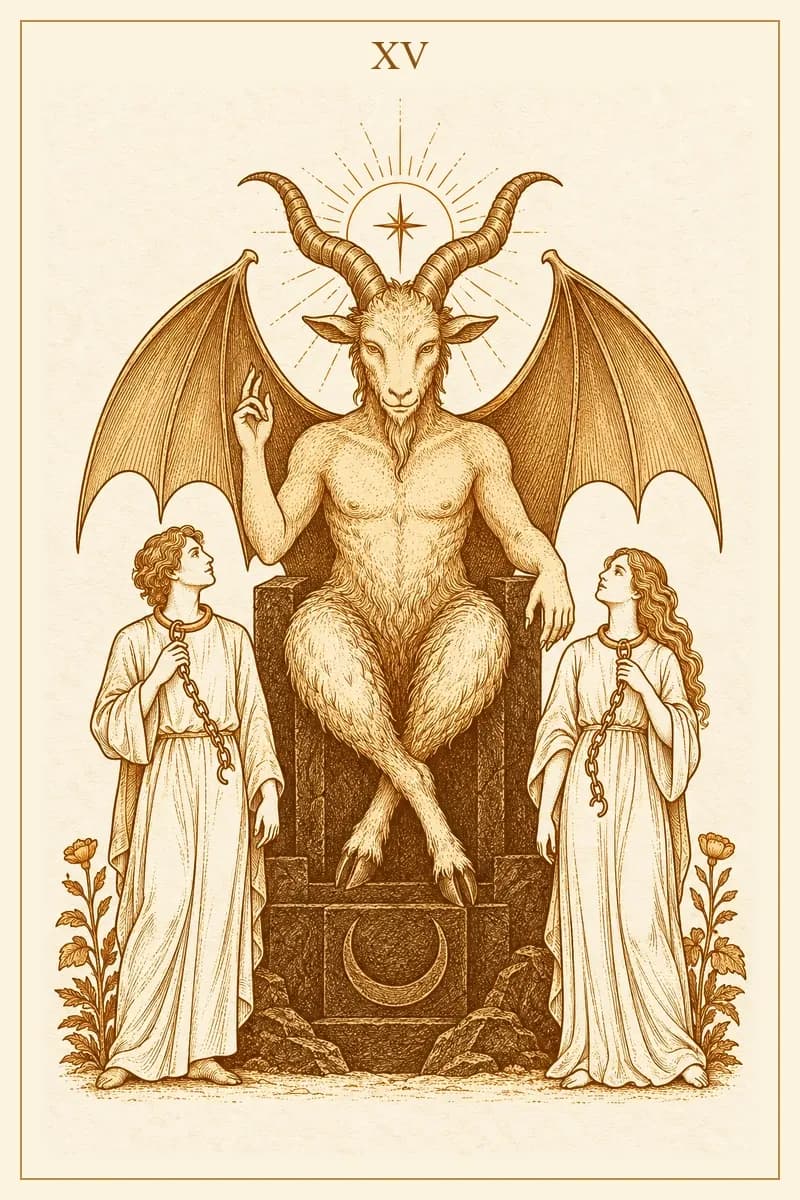
That's The Fool walking into The Devil's theater.
The Devil isn't malevolent in the cartoonish sense. He's a director who knows exactly which role to cast you in and exactly how to make you think you chose it yourself. The Fool, bless him, auditions with everything he has. He doesn't read the contract. He's never needed to.
Think of it as a theatrical production where the casting is the trap. The Fool arrives at the audition as himself—open, talented, willing. The Devil has written a role that fits The Fool precisely, which means The Fool can perform it naturally, which means The Fool can perform it indefinitely, which means The Fool eventually forgets he was ever performing at all.
This is how freedom becomes compulsion: not through force, but through comfort. The chain in The Devil card—look at it carefully—is loose. The figures in the image could remove it. They don't. Not because they can't, but because removing it would require acknowledging that it's there.
The friction between these cards is the friction between innocence and sophistication. The Fool's naivety is real and in many contexts is his greatest asset. Here, it's precisely what's being exploited.
In relationships, this combination most often describes the point where a free and joyful connection has quietly developed a compulsive quality—where "I love spending time with this person" has become "I'm anxious when I'm not with this person" without anyone noticing the transition.
The Fool falls into this because his openness makes him genuinely vulnerable to the specific kind of person who mistakes intensity for love. The Devil-adjacent partner isn't necessarily aware of what they're doing. They may simply be someone whose way of connecting is through pull—through being needed, through creating slight dependency, through making the space around them feel charged.
The shadow: the Fool's freedom can be gradually traded away in increments too small to notice until the total is significant. The chain didn't appear overnight.
Professionally, The Fool and The Devil together often describe someone in a situation—a role, a company, a relationship with a client or mentor—that started with genuine excitement and has slowly become something that costs more than it gives.
The Fool started with enthusiasm. The Devil is the structure that has since formed around that enthusiasm: the expectations, the identity, the sunk cost, the reputation that now depends on maintaining something that has stopped being good for you. Leaving isn't simple, because you've played the role long enough that others have written it into their plans.
The specific sabotage: confusing loyalty with captivity. The Fool values commitment; The Devil bets on it.
The lie this combination enables is the most comfortable kind: *I chose this.* And technically, the Fool did choose it—at the beginning, with full enthusiasm, without coercion. The Devil's genius is that he never had to force anything. The initial choice was real.
What changes is the quality of the choice as the situation develops. Choosing to enter is not the same as choosing to stay under conditions you couldn't have seen at the start. The Fool's shadow here is the refusal to revisit choices already made—the equation of changing your mind with admitting failure, when in fact it's the only honest response to having learned something.
Keep or share this combination reference
Continue through published pairings that share The Fool or The Devil.

Reckless Momentum
ambition vs obsession

hidden compulsion

Structured Freedom

bondage versus healing
Fertile Leaps
✦ Bring it to the cards ✦
Use this pairing as a starting point, then let a spread listen to the situation that is actually yours.
Begin a contextual reading