Loading your view
The page is gathering the latest information.
The page is gathering the latest information.
bondage versus healing
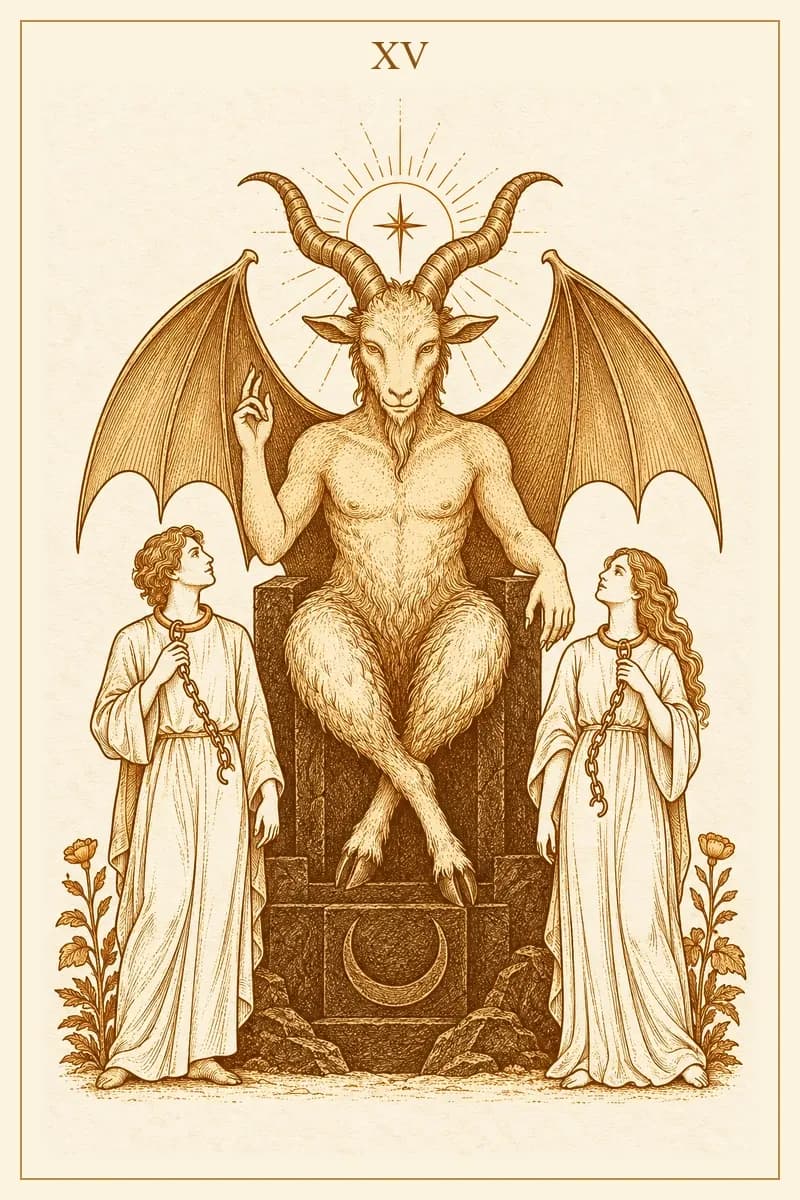
There is a patient who keeps pulling out her IV. The nurses know her well — she has been admitted three times this year, always for the same wound, always self-inflicted in the same way. And yet, between admissions, she walks to the hospital garden and stares at the sky with something undeniable in her eyes. Hope. That is not a contradiction. That is The Devil and The Star sharing the same body.
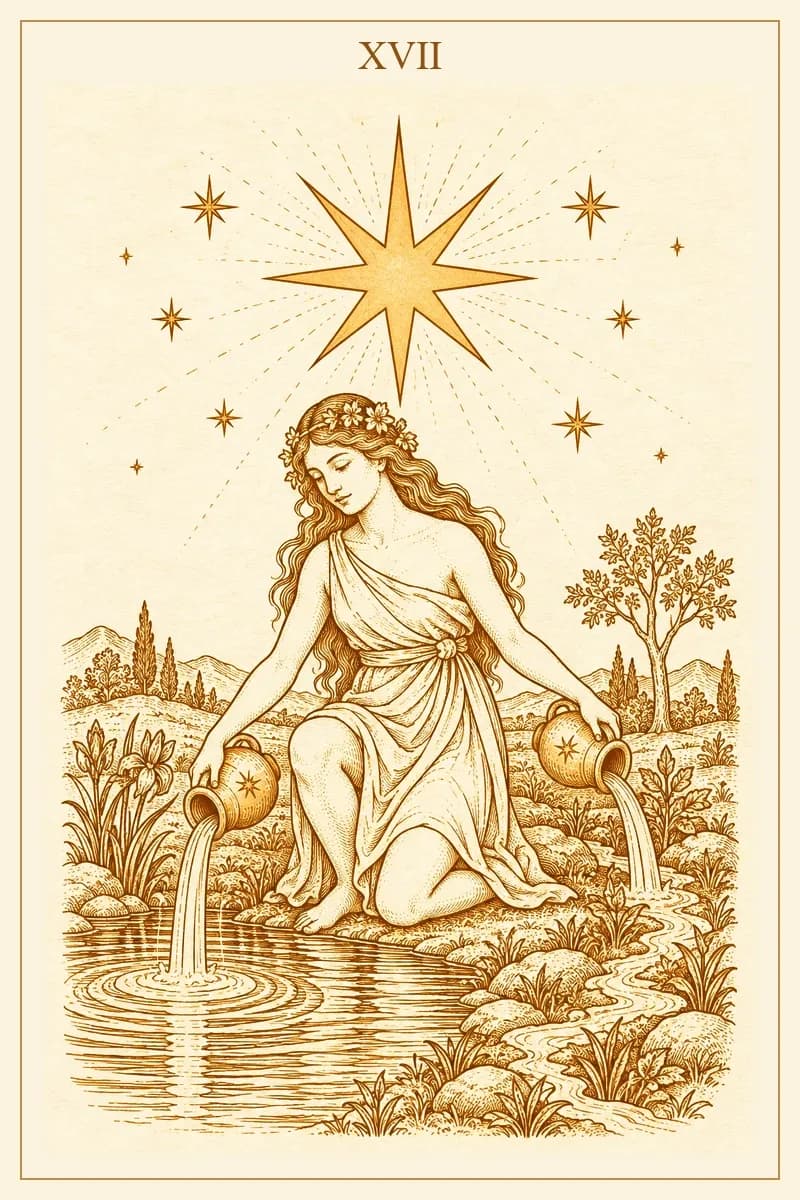
These two cards describe a person — or a situation — caught between the pull of something destructive and the faint, persistent signal of something better. The Devil diagnoses the condition: dependency, compulsion, the seductive comfort of chains you could theoretically remove but haven't. The Star reads the patient's chart and says the prognosis is not hopeless, but it requires honesty the patient may not yet be willing to give.
The tension here is not between darkness and light in any simple sense. It is between a wound that has become comfortable and the discomfort of actual repair. The Star does not promise painless recovery. It promises the possibility of one — which is entirely different.
Medically speaking, this pairing looks like a diagnosis of chronic illness paired with a treatment plan the patient keeps abandoning. The Devil represents what has calcified: the habit, the relationship pattern, the belief system that feels like identity now. You do not just have the addiction — you have become it. The chains on the figures in The Devil are famously loose. They could be lifted off. This is the cruelest part of the card.
The Star arrives not as a rescue but as a prognosis report. It shows what healing would look like if the treatment were actually followed. It is the doctor who hands you the bloodwork and says, "The damage is real, but the body can still repair itself at this stage." The Star requires you to believe in repair when the damage is still visible.
Together, these cards describe a condition where the patient intellectually understands recovery is possible — they may even genuinely want it — but keeps returning to the behavior, the person, or the story that causes harm. The diagnostic question is not whether hope exists. It is whether hope is being treated as motivation or as an excuse to delay.
In a relationship reading, this combination frequently describes a connection where one person — or both — can clearly see what is unhealthy about the dynamic but returns anyway. The Devil here is the chemistry, the familiarity, the sunk-cost logic that says leaving means the suffering was meaningless. The Star is every moment of clarity: the morning you woke up and thought, "I deserve something that does not hurt this much."
This pairing does not automatically mean end the relationship. It means the relationship cannot survive without genuine structural change — not promises, not temporary improvements during a good week, but the kind of change that requires acknowledging the wound fully. The Star only functions when the diagnosis is accepted.
Professionally, The Devil and The Star appear when someone is trapped in a career, workplace, or pattern that drains them — but they stay because the financial security, the status, or the fear of the unknown is more immediate than the vision of something better. The Star here is not pointing to a fantasy job. It is pointing to the competence and clarity already inside the person that the current environment is actively suppressing.
The prescription is specificity. Vague hope does not treat The Devil's grip. Concrete steps — an updated resume, a single honest conversation, one new skill acquired — begin to loosen chains that have calcified through inaction.
The shadow risk of this combination is using hope as a sedative. The Star's gentle light can become a story told at bedtime: "Someday things will be different." This is The Devil's most sophisticated trick — allowing enough hope to prevent despair, but not enough action to produce change. The patient reads the good prognosis and decides there is time. There is always time. Until there isn't.
The other shadow: confusing healing with perfection. The Star does not promise a flawless outcome. It promises restoration. Someone who only accepts recovery if it looks like the life before the damage will reject every genuine treatment that falls short of an impossible standard.
Keep or share this combination reference
Continue through published pairings that share The Devil or The Star.
ambition vs obsession
disciplined hope
hidden compulsion
control meets healing
liberation through exposure
Hope embodied
✦ Bring it to the cards ✦
Use this pairing as a starting point, then let a spread listen to the situation that is actually yours.
Begin a contextual reading