
Card Combination
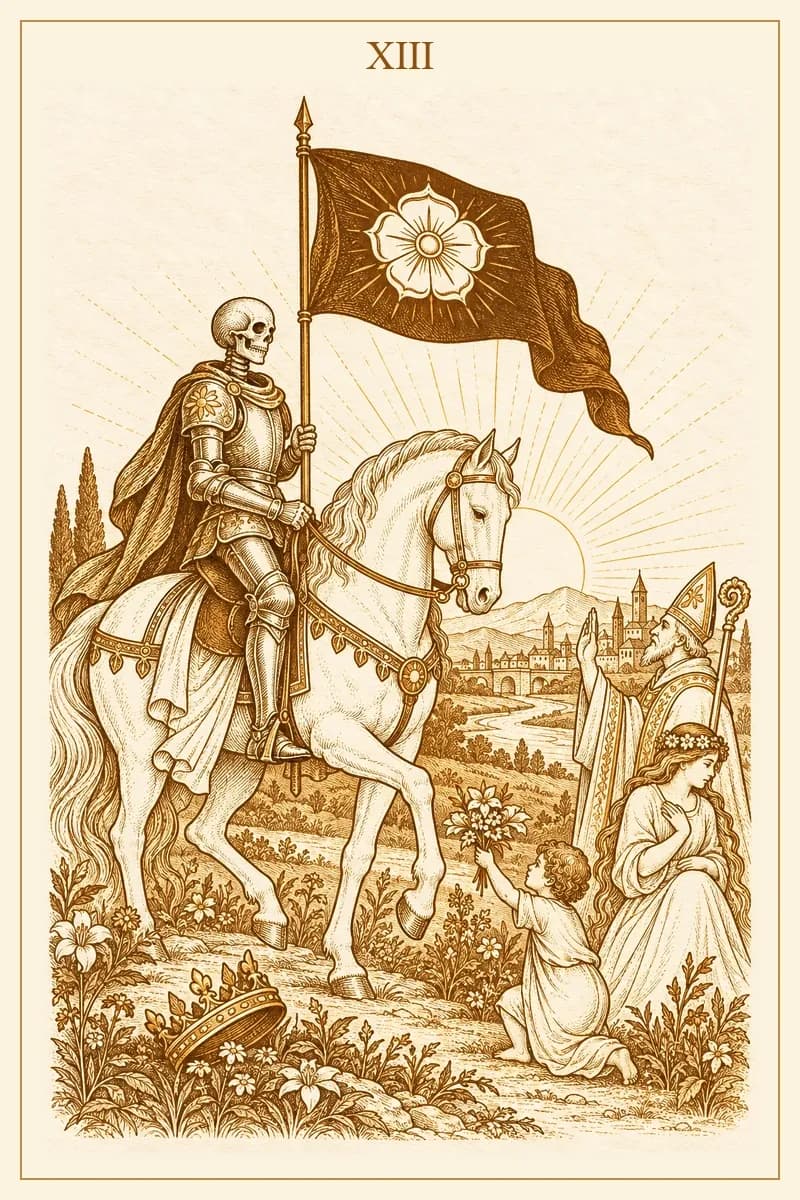
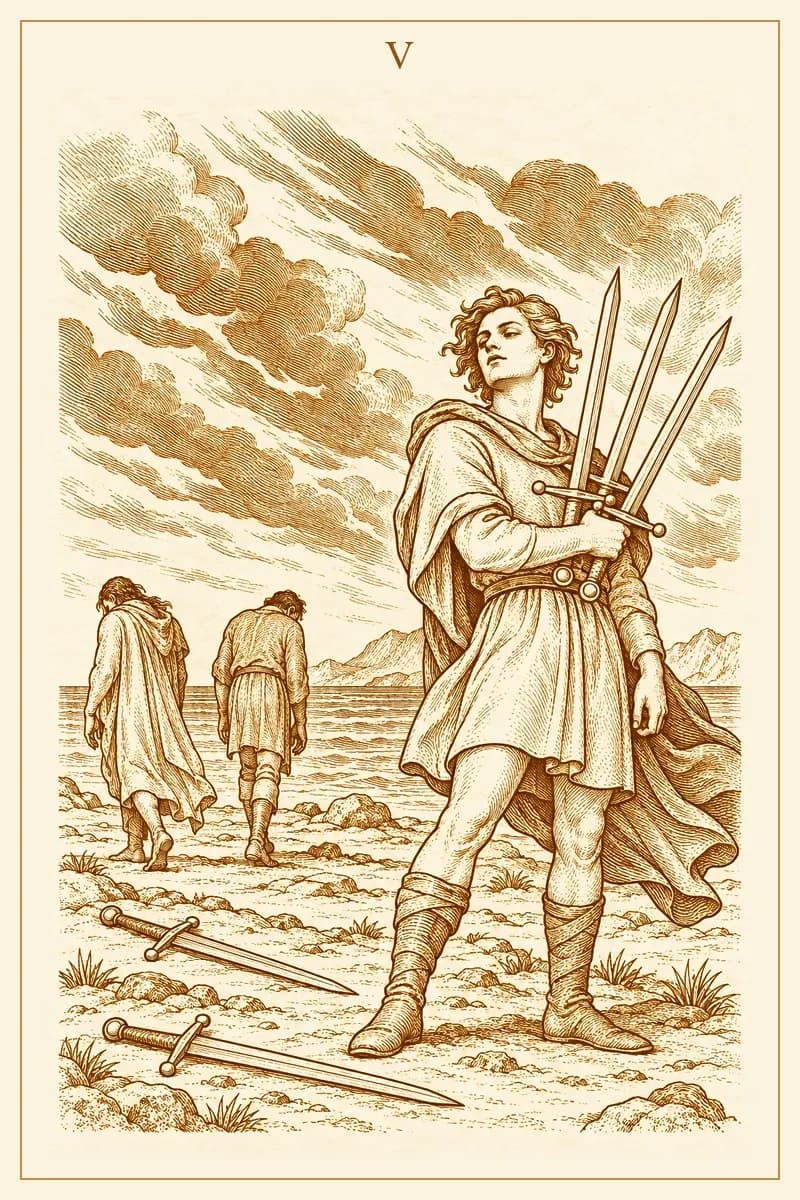
Meaning of Death and Five of Swords Combination: Ruthless Endings
pyrrhic transformation
She sits at the poker table long after the others have left. Chips stacked high, cards fanned across green felt, and not a single person willing to play another hand. She won everything — and the room emptied because of it. The dealer watches from the corner, shuffling a deck that no longer matters. Victory, it turns out, sounds exactly like silence.
This is the architecture of Death meeting the Five of Swords: a transformation that arrives not through surrender but through the slow recognition that the fight itself was the thing that needed to die. One card strips away what no longer serves. The other clutches its spoils with white knuckles, convinced that holding on is the same as winning.
The collision between these two energies is less dramatic than it sounds. It is quiet, surgical, and often arrives disguised as getting exactly what you wanted.
The Core Tension
Death operates without malice. It is the turning of seasons, the closing of accounts, the body replacing its own cells. The Five of Swords, however, carries intention — sharp, competitive, sometimes cruel. It is the card of hollow victories, of arguments won at the expense of relationships, of strategies that succeed on paper and fail in every room that matters.
Together, they describe a moment where the methods you used to survive are now the very things killing you. The bluff that worked for years stops working. The intimidation that kept rivals at bay has also kept allies at a distance. Death arrives not as punishment but as the natural consequence of a game played too long with the wrong stakes.
The poker metaphor holds: you have been playing a table where the buy-in was your own integrity, and the house always wins that particular hand.
Love & Relationships
In relationships, this pairing exposes the cost of winning arguments. One partner has been keeping score — cataloguing offenses, stockpiling ammunition for the next disagreement. Death sweeps across the board and reveals that the scoreboard itself was the problem.
This can manifest as a breakup that feels like relief, or as a painful reckoning within a relationship that survives. Either way, the dynamic of winner-and-loser within the partnership must end. The Five of Swords wants to prove a point. Death does not care about points. It cares about what is alive and what is already gone.
For those who are single, this combination often marks the death of a competitive approach to dating — the end of playing hard to get, of treating connection like a game with rules and rankings.
Career & Purpose
Professionally, Death and the Five of Swords describe the aftermath of office politics taken too far. You outmaneuvered a colleague, secured the promotion, landed the client — and now you sit in a corner office wondering why nobody stops by. The Five of Swords collected the win. Death is here to collect the cost.
This pairing can also signal the end of a toxic work environment. Not a graceful transition but a necessary severing — walking away from a team or company where manipulation had become the primary currency. The poker chips are worthless outside the casino.
For business owners, examine where competitive strategy has crossed into destructive territory. Market dominance means nothing if the internal culture has rotted from the inside.
Shadow Side
The shadow here is the belief that transformation requires a villain. Death and the Five of Swords can create a narrative where someone else is always at fault — you are simply responding to their aggression, their dishonesty, their incompetence. The Five of Swords excels at justification.
The deeper shadow is subtler: the fear that without conflict, you have no identity. Some people have built their entire sense of self around being the one who fights, who wins, who survives. Death threatens not just the fight but the fighter. Who are you when there is no opponent across the table?
Sit with the discomfort of that question rather than reaching for the nearest enemy.
Action Steps
- 1Identify one conflict you are maintaining not because it matters but because conceding feels like losing, and walk away from it deliberately
- 2Notice where your language frames situations as competitions with winners and losers, then rewrite the story without those roles
- 3Fold one hand you would normally play — decline one argument, one power struggle, one opportunity to prove you are right — and observe what fills the space
Related Pairings
Continue through published pairings that share Death or Five of Swords.
driven transformation
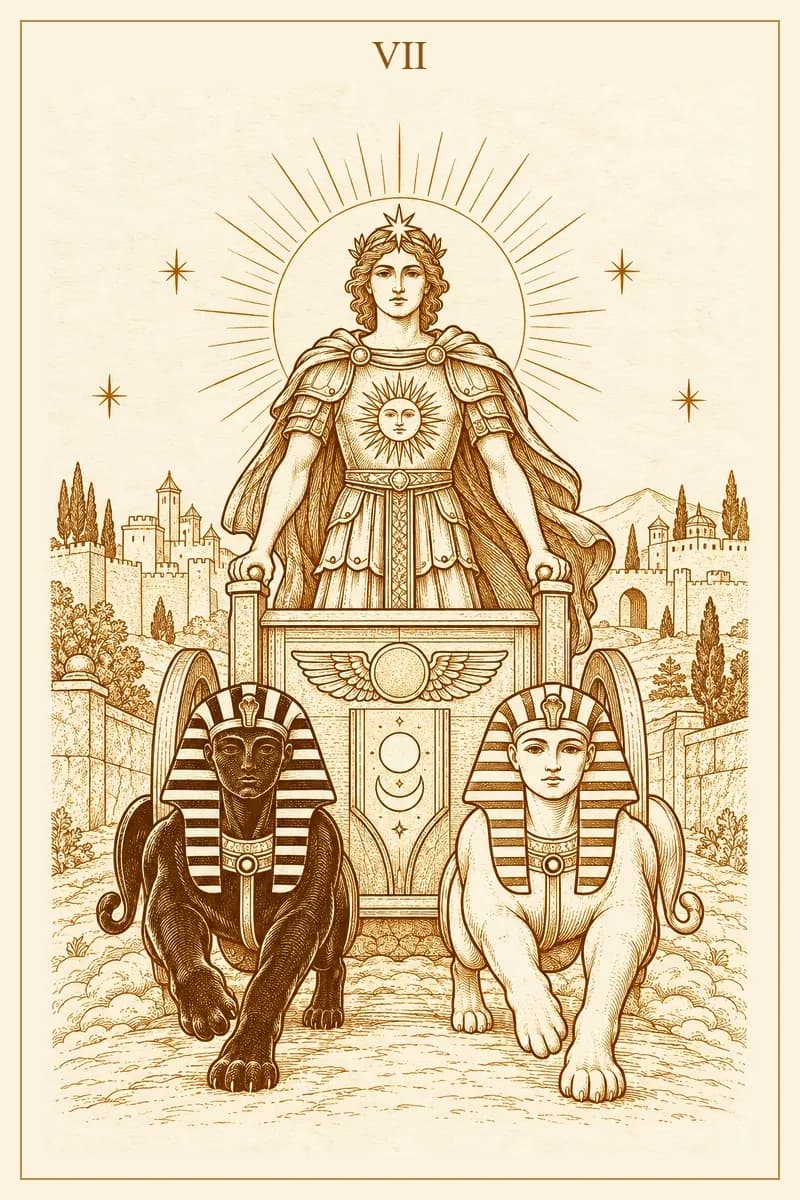
Meaning of The Chariot and Death: Momentum Meets Transformation
costly victory
Meaning of The Chariot and Five of Swords Combination: Winning at a Cost
Forced Liberation
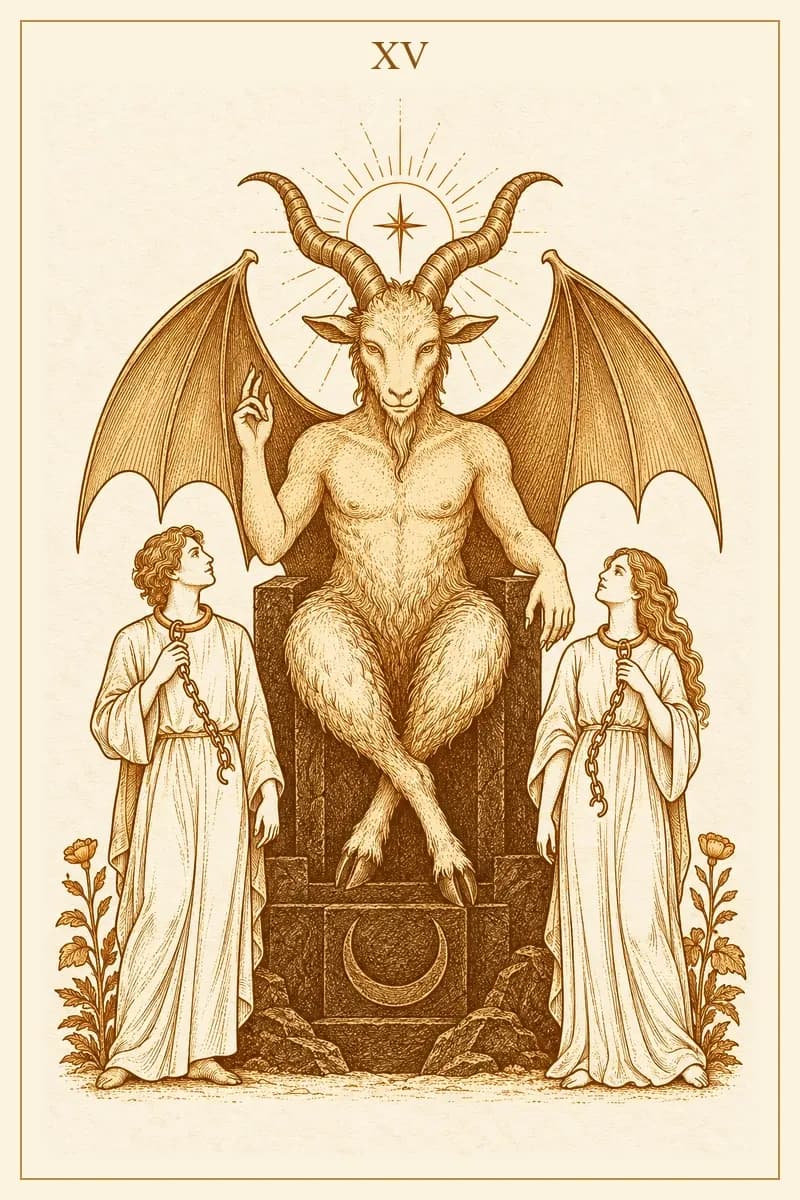
Meaning of Death and The Devil Combination: Forced Liberation
Toxic Power Games
Meaning of The Devil and Five of Swords Combination: Toxic Power Games
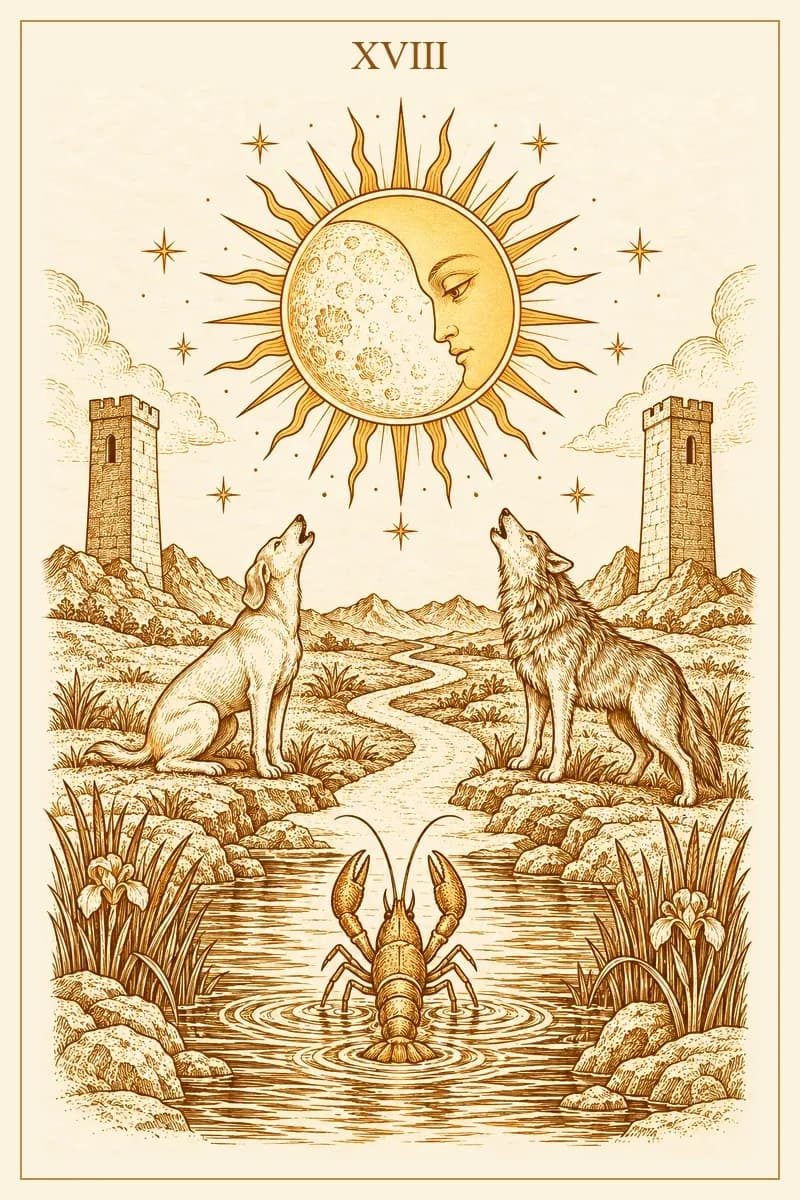
Hidden Transformation
Meaning of Death and The Moon Combination: Hidden Transformation
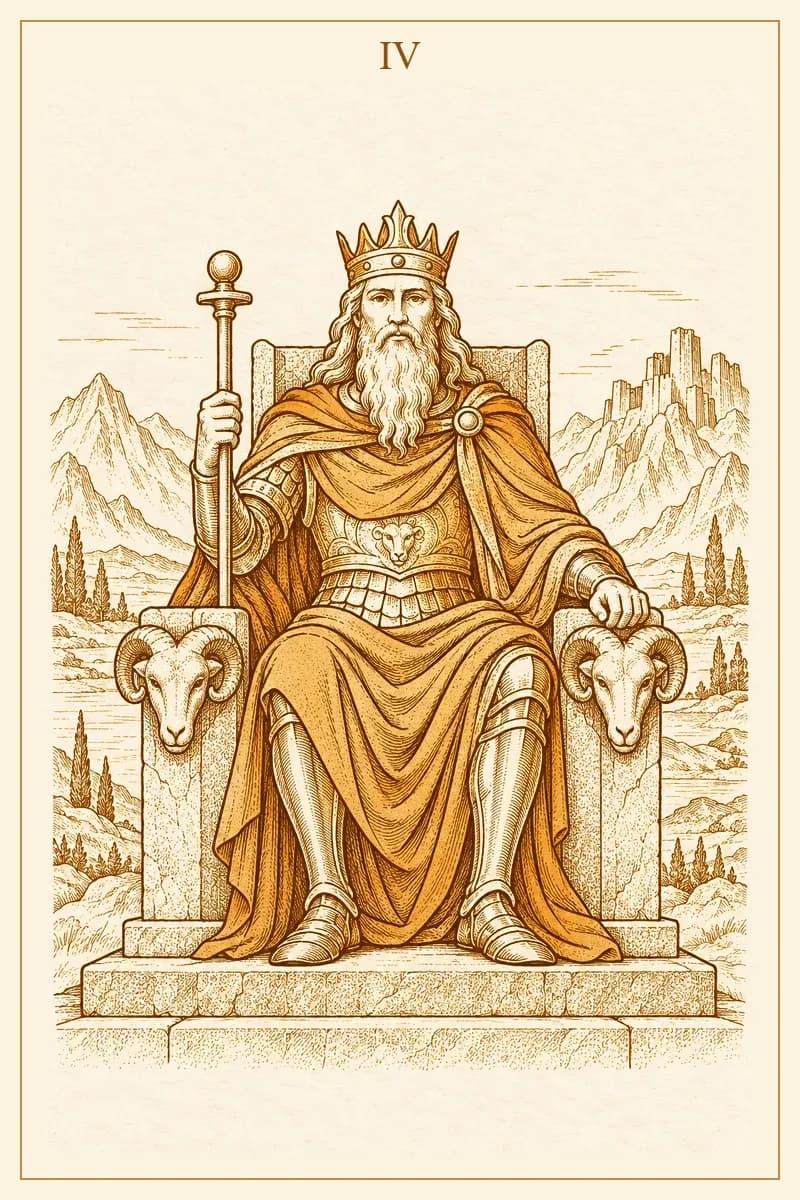
pyrrhic authority
Meaning of The Emperor and Five of Swords: Winning at What Cost
✦ Bring it to the cards ✦
Bring Death and Five of Swords into your own reading
Use this pairing as a starting point, then let a spread listen to the situation that is actually yours.
Begin a contextual reading