Loading your view
The page is gathering the latest information.
The page is gathering the latest information.
driven transformation
Picture a machine running at full throttle — pistons firing, gears turning, every component synchronized toward a single purpose — and then the road simply ends. Not with a crash, but with a deliberate stop. The engine does not break down. The driver chooses to step out because the vehicle has carried them as far as it can. What comes next cannot be driven to.
That is the paradox sitting at the heart of this pairing. One card is pure forward motion: controlled, willful, almost mechanical in its insistence on progress. The other is the gear-shift that cannot be reversed — the moment the whole mechanism gets stripped down, rebuilt, or retired entirely. Together, they describe the strange experience of being simultaneously at your most capable and at the edge of something you cannot push your way through.
Most people encounter this combination when they have been winning. The momentum is real, the discipline has paid off, and yet something in the structure of their life has begun to grind. A career that accelerated beautifully now sits in a lane that no longer fits. A relationship moved forward with impressive speed and has arrived at a wall that speed alone cannot breach. The Chariot brought you here. Death is showing you the door.
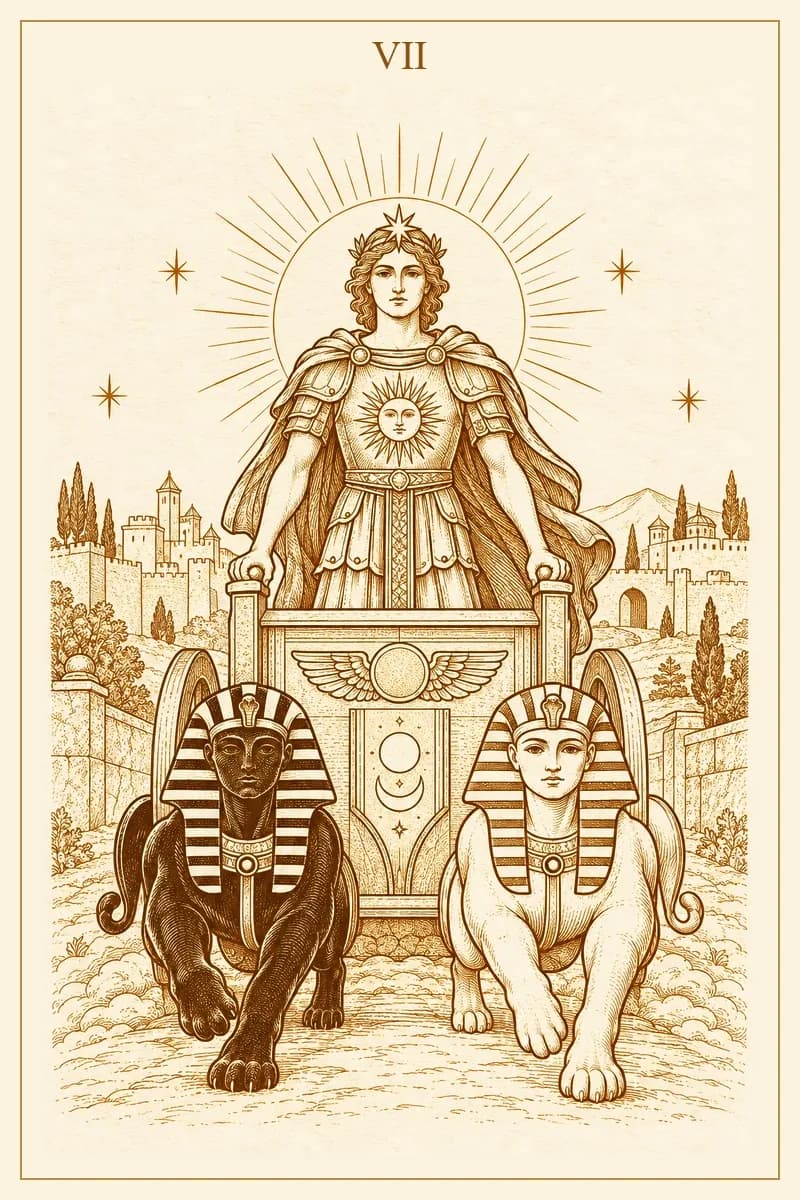
The Chariot operates through control. It channels opposing forces — symbolized by those two sphinxes pulling in different directions — into unified forward movement. Its power comes from restraint applied to raw energy. Death operates through release. It does not ask whether you are ready or whether your timing is convenient. It dismantles what has served its purpose so that something structurally different can take its place.
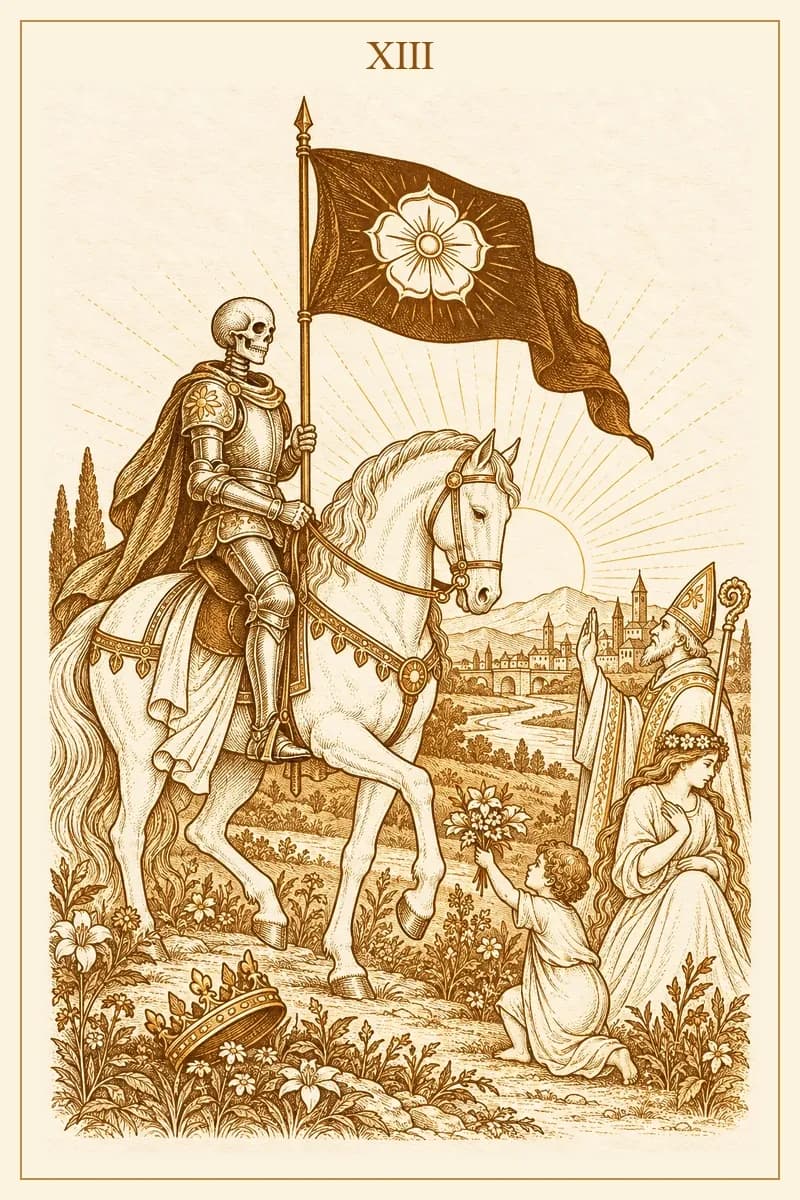
When these two archetypes occupy the same reading, the tension is between the ego's investment in momentum and the soul's requirement for discontinuity. The Chariot wants to steer. Death removes the steering wheel. This is not a punishment — it is a mechanical necessity. Some transformations simply cannot be navigated. They have to be undergone.
The question this pairing poses is not whether change will come. It is whether you will exhaust yourself trying to drive through it, or whether you will recognize the moment when willpower must yield to surrender.
In romantic readings, this combination often surfaces when a relationship has been sustained through sheer determination. One or both partners have been working hard to keep things moving — managing logistics, pushing through conflict, refusing to let things stall. The Chariot's discipline has been admirable. But Death is signaling that the structure of the relationship itself needs to transform, not just the effort level.
This might mean a relationship ends. More often, it means the version of the relationship you have been maintaining must end so that a more honest version can exist. The controlled, forward-facing dynamic has to give way to something more vulnerable and less managed. That feels like loss because it is a loss — of a familiar role, a comfortable pattern, a self-image built around being the one who holds things together.
Professionally, The Chariot combined with Death marks a pivot point for people who have built real traction. The drive that produced results is not broken — but the vehicle it was powering has reached the end of its useful life. A role, a business model, a professional identity, a goal pursued for years: something in the structure is being retired whether you participate in that process or not.
The mechanical logic here is clear. An engine optimized for one kind of road does not automatically excel on another. Reengineering requires stopping. The person who insists on maintaining speed through a structural overhaul tends to produce neither good speed nor a good overhaul.
The shadow of this pairing is the driver who cannot stop. The Chariot's discipline, taken to its extreme, becomes rigidity. When Death enters and begins its work, a Chariot-dominant response is to redouble effort — to work harder, optimize more, push through on willpower alone. This can delay the inevitable at serious cost: burnout, broken relationships, a professional identity that has outrun its own purpose.
There is also a subtler shadow: using the language of transformation to avoid the actual work of transformation. Calling something a Death card moment while continuing to operate in exactly the same way is a mechanical failure — like describing a needed engine rebuild while only changing the oil.
Keep or share this combination reference
Continue through published pairings that share The Chariot or Death.
ambition vs obsession
momentum versus surrender
Forced Liberation
driven introspection
Hidden Transformation
willpower versus illusion
✦ Bring it to the cards ✦
Use this pairing as a starting point, then let a spread listen to the situation that is actually yours.
Begin a contextual reading