
Card Combination
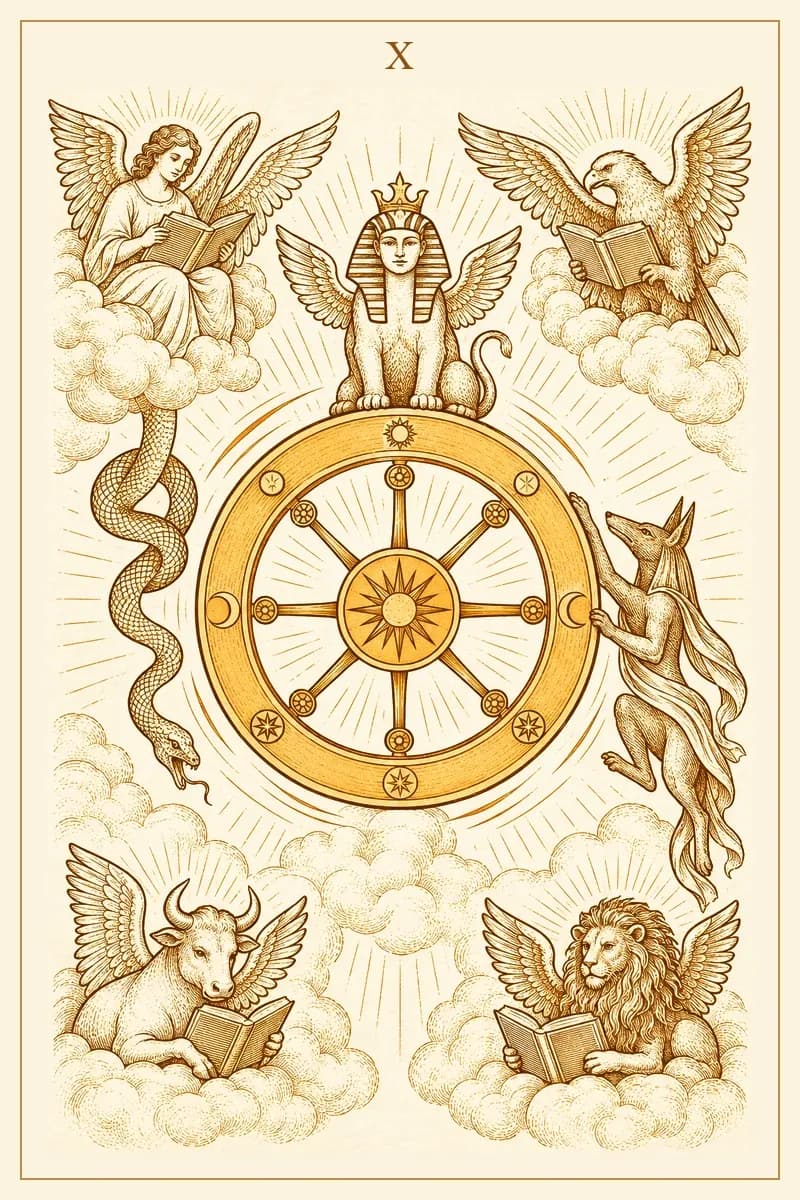
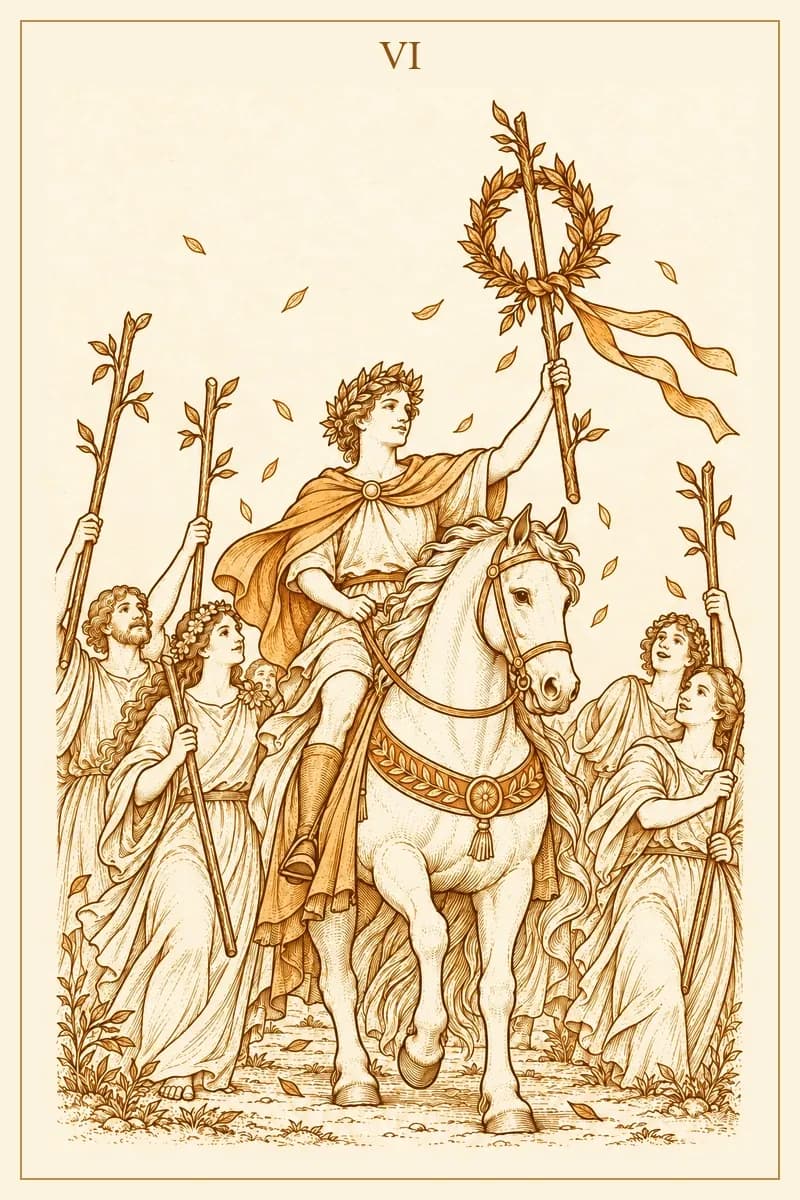
Meaning of Wheel of Fortune and Six of Wands Combination: Victory at the Turning Point
Peak and pivot
The audience is still applauding. The curtain has not quite finished falling. And somewhere backstage, the stage manager is already striking the set for the next production — one that has nothing to do with the role you just played so brilliantly. This is the quiet drama that unfolds when the Wheel of Fortune and the Six of Wands appear in the same reading: a standing ovation arriving at precisely the moment the theater is changing its entire season.
The Six of Wands is unambiguous about what it depicts. A figure on horseback, laurel wreath in place, the crowd assembled to witness and confirm. Something has been won — a competition, a campaign, a long effort finally recognized. This is not delusion or self-congratulation. Something real was accomplished, and the card marks it plainly.
The Wheel of Fortune introduces a variable the victory does not account for. It does not diminish what you have earned. It simply notes that the conditions that made the winning possible are already rearranging themselves. The ground beneath the triumphant horse is starting, almost imperceptibly, to shift.
The Core Tension
The Six of Wands is a card of confirmation. Its energy looks backward and outward — backward at the effort that justified the recognition, outward at the audience whose response validates it. This orientation is entirely natural after genuine achievement. Savoring a win, accepting praise, letting yourself be seen as the person who delivered: none of that is wrong.
The Wheel of Fortune operates on a completely different axis. It looks neither backward nor outward but forward and inward — not at what was accomplished but at what is already changing. Its energy is structural and restless. It does not know how to hold still, and it is not interested in the curtain call.
The tension between them is therefore theatrical in the truest sense: the protagonist is on stage for their finest scene while the playwright is already revising the third act. The audience sees a triumph. The playwright sees a transition.
The practical risk is not failure. It is the performance extending one act too long — the hero who cannot step off the stage, who begins mistaking the applause for the whole of the story.
Love & Relationships
When this combination appears in a romantic reading, it often marks a moment when one partner's public or professional success is beginning to alter the invisible architecture of the relationship. The Six of Wands says: something has been recognized, elevated, validated. The Wheel of Fortune says: this changes the dynamic, whether or not either of you chooses to name that yet.
For couples, this pairing asks which version of the relationship you are actually in. The one that existed before the recognition, or the one that is quietly forming now? Neither answer is wrong, but continuing to perform the first version while living in the second creates a specific kind of distance.
For those unattached, the Six of Wands followed by the Wheel suggests that visible success is attracting new attention — and that not all of it is coming from people who knew you before the win. Discernment between who sees you and who sees the laurel wreath matters more than usual.
Career & Purpose
In career and professional contexts, this is one of the more complex combinations because it can look like pure good news while actually requiring immediate strategic attention. The Six of Wands confirms that recent work has paid off — a project launched, a pitch won, a reputation shifting in your favor. This is real and worth acknowledging.
But the Wheel of Fortune alongside it is a structural cue, not a celebration companion. It is asking: now that you are visible, what are you visible as? The person who won this particular contest, or the person who can navigate what comes next? Those are not the same answer, and the market — professional, creative, or otherwise — will be making its own evaluation of which one you are.
The specific pitfall is coasting on the Six's momentum while the Wheel re-deals the hand. Industries reorganize. Audiences move. The project that made your reputation may not be the one that grows it.
Shadow Side
The shadow of this combination is the performer who cannot leave the stage. The Six of Wands can, at its worst, require an audience — and the Wheel's churning can be misread as further applause, further proof of centrality, further evidence that the hero's journey is still in its rising arc.
There is also a subtler shadow: the fear that accepting the transition means surrendering the win. It does not. The Wheel is not a thief. It is a director, and the best ones know when to close a successful run and use its momentum to fund the next production.
Action Steps
- 1Accept the recognition fully this week — do not deflect or minimize what you have earned — but separate the celebration from the planning, and give deliberate time to each.
- 2Identify one thing that made your recent success possible that is unlikely to be available in the same form six months from now, and begin thinking about what replaces it.
- 3Notice who is paying attention to you because of your win, and ask honestly whether those people are interested in where you are going or only in where you have been.
Related Pairings
Continue through published pairings that share Wheel of Fortune or Six of Wands.
Surrendered motion
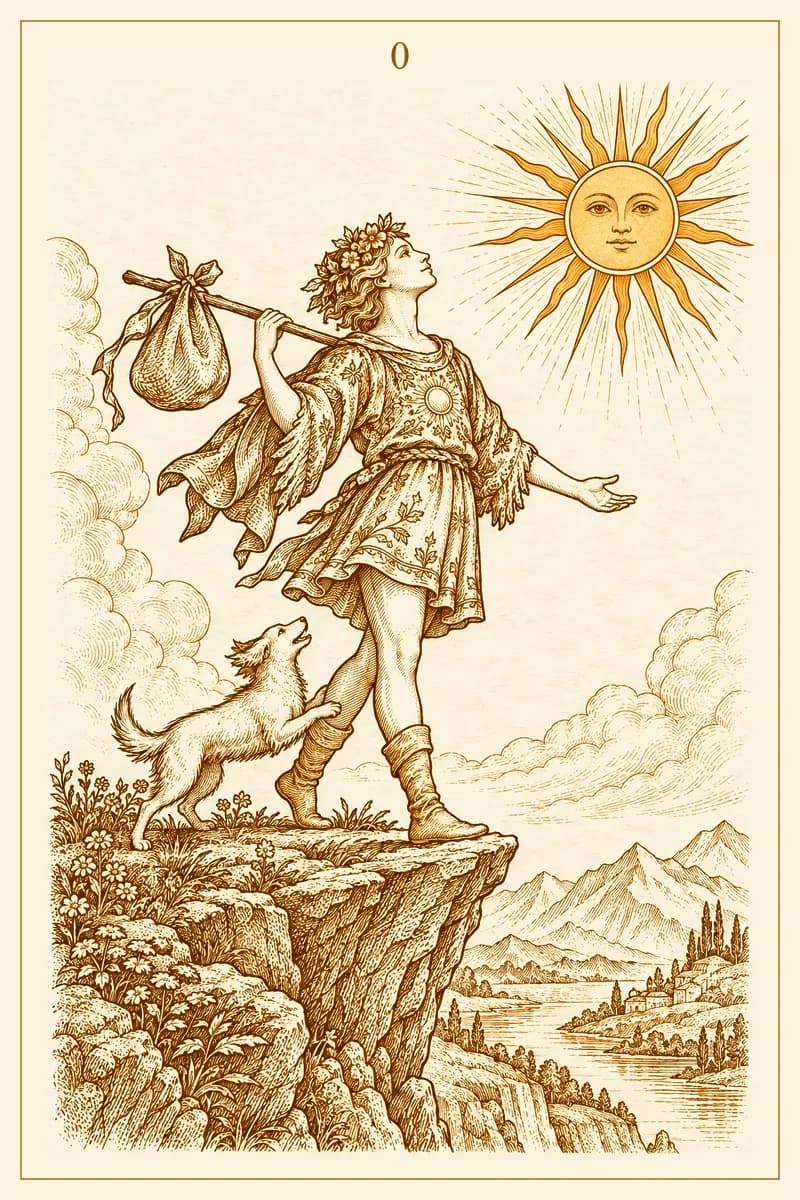
Meaning of The Fool and Wheel of Fortune Combination: Surrendered Motion
Unearned applause
Meaning of The Fool and Six of Wands Combination: Accidental Triumph
Directed will meeting cyclical fate
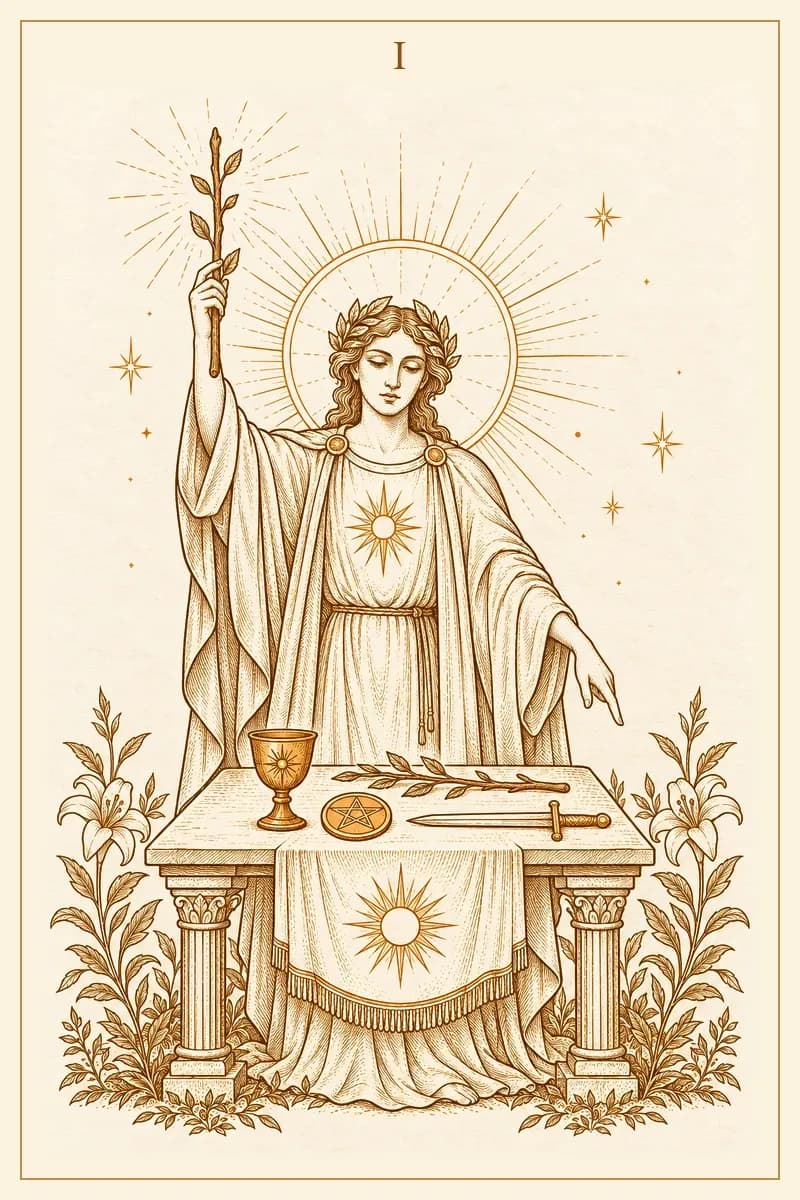
Meaning of The Magician and Wheel of Fortune Combination: The Hand on the Spinning Gear
Quiet skill, public acclaim
Meaning of The Magician and Six of Wands Combination: The Craft Behind the Crown
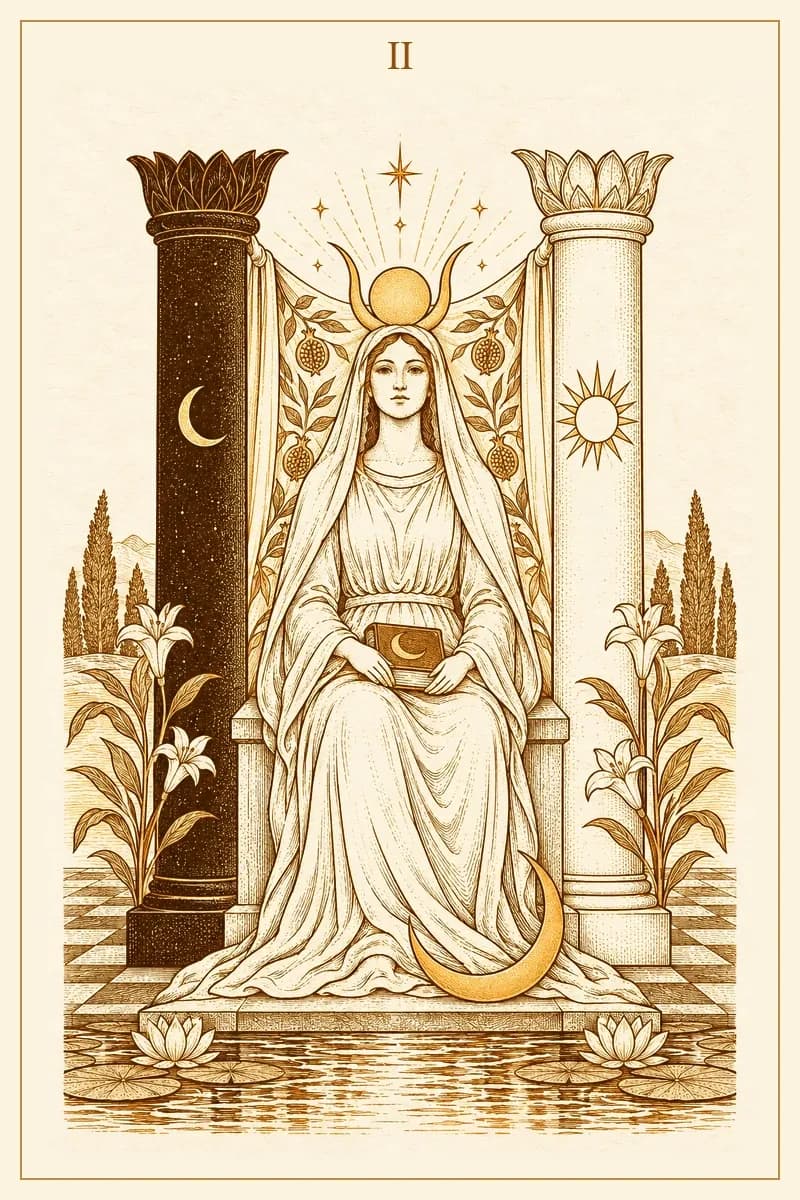
Reading the cycle
Meaning of The High Priestess and Wheel of Fortune Combination: Reading the Cycle
Earned recognition
Meaning of The High Priestess and Six of Wands Combination: The Victory That Begins in Silence
✦ Bring it to the cards ✦
Bring Wheel of Fortune and Six of Wands into your own reading
Use this pairing as a starting point, then let a spread listen to the situation that is actually yours.
Begin a contextual reading