
Card Combination


Meaning of Temperance and Five of Cups Combination: Healing Through What Remains
Proportion amid loss
One card stands at a riverbank, calmly mixing two vessels, neither rushing nor spilling. The other figure stands hunched over three overturned cups, back turned to the two cups still full and upright behind them. The contrast is stark — and the conversation between these two cards is not gentle.
Temperance is the cook who knows that a sauce reduced too quickly burns, that timing and proportion are the whole art. Five of Cups is the diner who knocked over the wine and can only see the stain. Neither is wrong in what they're doing. But only one of them will eat tonight.
This pairing lands when grief is real but partial. Something was lost — a relationship, a role, an expectation you'd been carrying for years. The Five of Cups doesn't lie about that. Three cups are genuinely spilled. But Temperance insists on the arithmetic of what's left: two cups remain. The question this combination asks is not whether you should mourn, but whether you are accounting accurately.
The Core Tension
Five of Cups pulls attention toward damage and absence. Temperance pulls attention toward proportion, balance, and the long view. Together they create a productive friction: grief without paralysis, patience without denial.
The tension breaks down when you let Five of Cups dominate. Fixating on what was lost while ignoring what survived is not honoring the loss — it's misreading the situation. Temperance asks you to apply the same steady hand to your emotional inventory that it applies to its mixing vessels. That means acknowledging the spilled cups fully and then turning around.
Temperance doesn't minimize the Five of Cups experience. It doesn't say the loss was small or that you're overreacting. It says: you're a skilled cook standing in a kitchen, and burning the remaining meal won't restore what spilled.
Love & Relationships
In relationships, this combination often appears after a rupture — a breakup, a betrayal, or a period of emotional distance that left real damage. The Five of Cups is the wound: something between you cracked, and the crack was real.
Temperance here is the slow temperature. It asks whether you've examined what survived the rupture. Not every relationship marked by loss is finished. Sometimes the two remaining cups — the shared history, the continued care, the thread of something genuine — are worth turning toward. But this requires honest inventory, not optimism. You have to actually look at what's standing before you decide what it means.
For those newly single, this pairing advises against cataloguing every mistake and regret from the previous relationship. Cook with what you have. The ingredients for something better are often already in the kitchen; fixating on what you threw away won't produce a meal.
Career & Purpose
Professionally, Five of Cups often marks a project failure, a missed opportunity, or a role you didn't get. Temperance alongside it asks what assets, skills, and relationships remain after the loss — not as consolation, but as practical audit.
This is the combination that appears after a failed pitch or a restructured team. The meeting didn't go the way you prepared for. One strategy is to reconstruct everything that went wrong in exhaustive detail. Another strategy — the one Temperance recommends — is to identify what worked, what resources remain, and what the next attempt looks like with those inputs. Grief has a place, but the recipe needs to move forward.
If you're in a leadership position, this pairing also warns against projecting your own loss narrative onto a team that may have recovered faster than you have. Not everyone in the kitchen shares your relationship with the spilled sauce.
Shadow Side
The shadow of this combination is premature closure. Temperance's steadiness can, if misapplied, become pressure to move on before the grief has been processed. Five of Cups has something to say — the three overturned cups represent something real that deserves acknowledgment, not just efficient reorganization.
Watch for signs that you're performing balance while actually suppressing the loss. Temperance practiced without full honesty is just emotional efficiency, and emotional efficiency that skips grief tends to produce it again later, less manageable.
The other shadow: using the Five of Cups energy to refuse the turn. Deciding that because something was lost, nothing should be attempted again. That's not caution — it's a stalled kitchen.
Action Steps
- 1Make a written list of what the loss actually took from you — be specific — and then make a separate list of what remains intact. Do not merge the lists. Read them as two distinct documents.
- 2Identify one action you've been delaying because of the loss. Set a specific time to take it, not because the grief is over, but because the remaining cups need your attention.
- 3Notice one place where you're applying Temperance's patience to a situation that actually calls for Five of Cups' acknowledgment of real damage. Correct the balance in the direction of honesty, not efficiency.
Related Pairings
Continue through published pairings that share Temperance or Five of Cups.

Controlled momentum
Meaning of The Chariot and Temperance Combination: Controlled Drive Meets Measured Pace
Grief and momentum
Meaning of The Chariot and Five of Cups Combination: Driving Through Grief

Controlled patience
Meaning of The Emperor and Temperance Combination: When Command Meets the Slow Cure
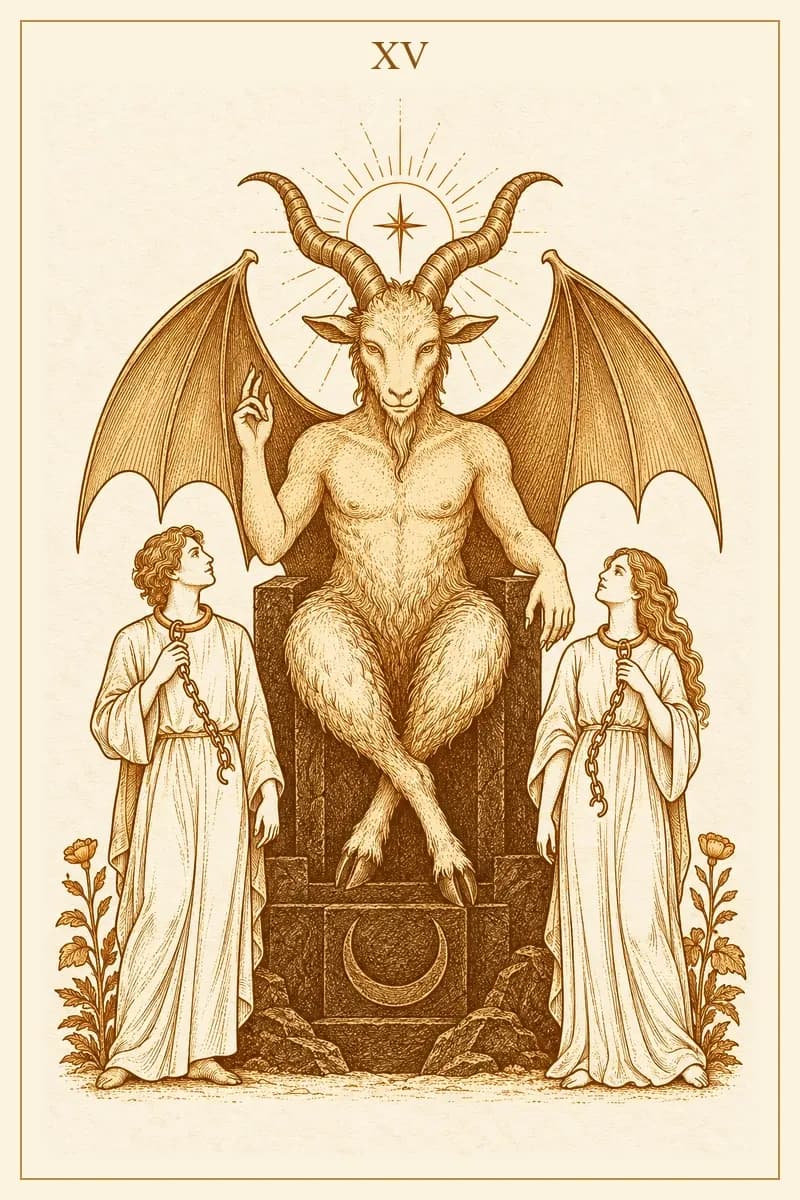
Grief-fueled bondage
Meaning of The Devil and Five of Cups Combination: Grief Feeding Chains

Fertile balance
Meaning of The Empress and Temperance Combination: When Abundance Learns to Flow
The grief a ruler will not allow himself — and what that refusal eventually costs
Meaning of The Emperor and Five of Cups Combination: The Ruler Who Cannot Grieve
✦ Bring it to the cards ✦
Bring Temperance and Five of Cups into your own reading
Use this pairing as a starting point, then let a spread listen to the situation that is actually yours.
Begin a contextual reading