
Card Combination
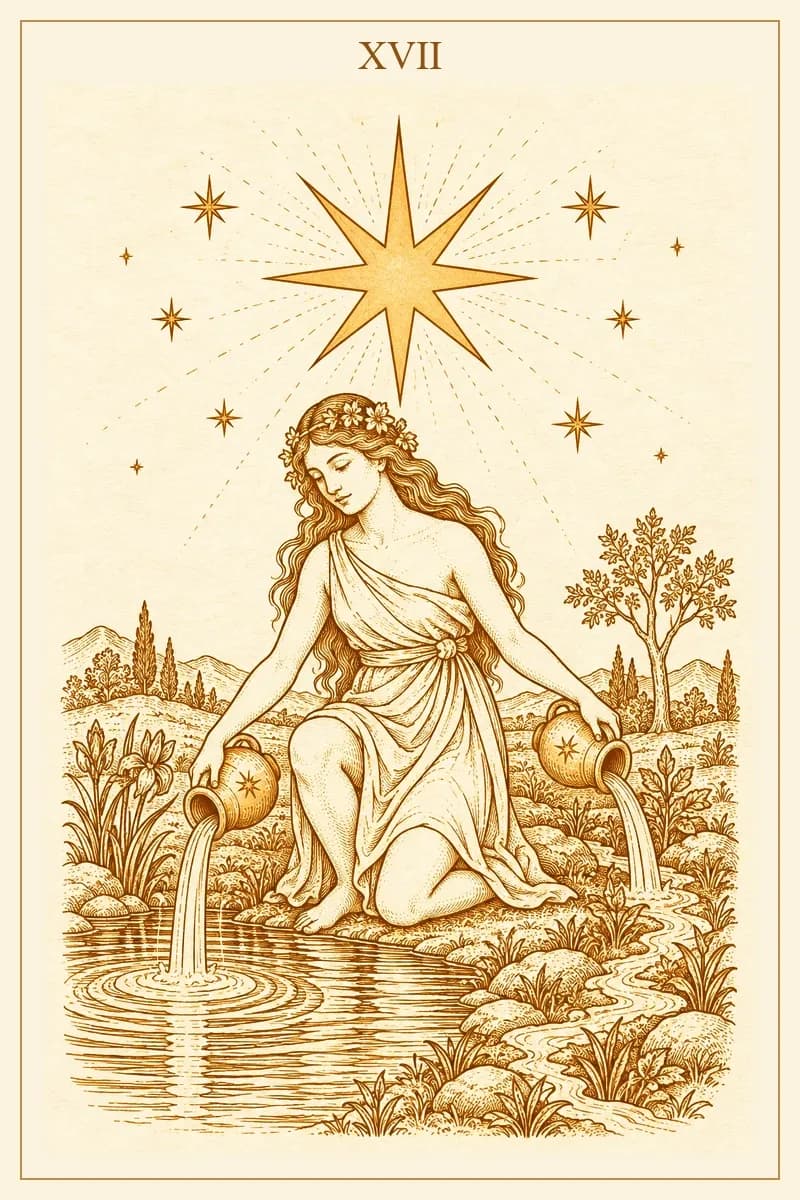
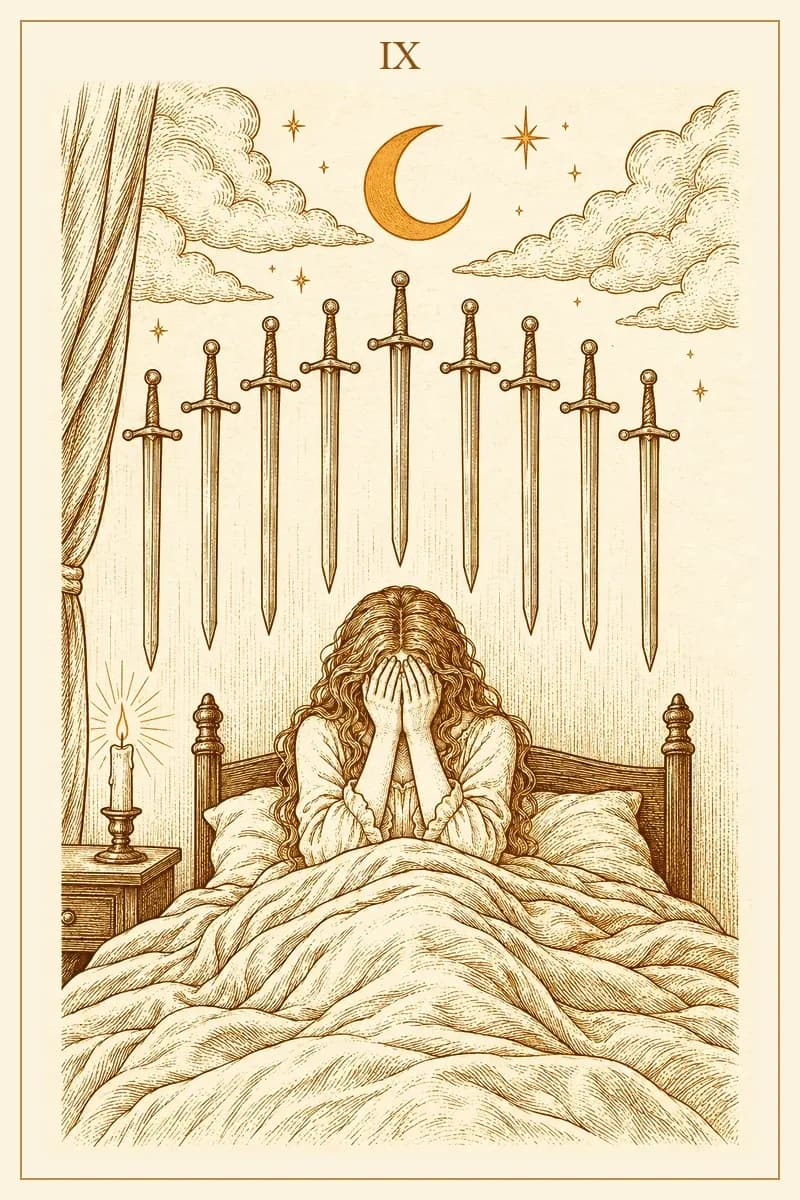
Meaning of The Star and Nine of Swords Combination: Hope at 3 AM
Healing light inside insomnia
The sheets smell of sweat and lavender—one from the body that has been turning for hours, the other from the spray someone suggested would help with sleep. It did not. The Nine of Swords sits upright in bed, hands covering the face, while overhead the Star hangs low enough to press her light against the window glass. The room is dark except for that single persistent glow, the kind you notice only after your eyes have adjusted to everything going wrong.
There is a specific quality to hope that arrives during suffering rather than after it. Not the morning-after relief, not the retrospective gratitude of someone who made it through. This is the cold water handed to a marathon runner at mile twenty-two, when the legs have stopped cooperating and the mind is bargaining for permission to quit. The Star does not wait for the Nine of Swords to finish its panic. She shows up mid-crisis, which is both her gift and her provocation.
The Core Tension
The Nine of Swords lives in the skull. Its territory is the 3 AM thought spiral—the catastrophic projection, the guilt inventory, the relentless replay of conversations that ended badly. Every sword on the wall represents a thought that has been sharpened past usefulness into something that only cuts inward. The Star, by contrast, lives in the body's deeper systems: the breath beneath the breath, the pulse that continues regardless of what the mind is screaming.
The tension here plays out like a boxing match between a fighter who will not stop throwing punches and a corner team that keeps sending their athlete back into the ring, not to win but to survive each round. The Star is not trying to knock out your anxiety. She is working the cut above your eye, pressing ice to the swelling, whispering that you can take one more round. The victory condition is not triumph. It is still standing when the bell rings.
This means the combination does not eliminate suffering. It places a floor beneath it. The Nine of Swords can take you as deep as your worst thoughts allow, but the Star ensures there is a bottom—a point where the descent stops and something in you remembers that darkness is not the whole story.
Love & Relationships
In relationship readings, this pairing often surfaces when one partner carries significant anxiety—clinical or situational—and the other has become the steady presence that makes the worst nights survivable. The dynamic works only when the steady partner does not confuse patience with fixing. The Star heals by proximity, not intervention. Sitting with someone through their spiraling thoughts without offering solutions is one of the most demanding forms of love, and this combination asks exactly that.
For those navigating attraction, the cards suggest you may be drawn to someone whose wounds are visible. Not performed, not weaponized—simply present, the way a goalkeeper's bruised palms are present after a match. The connection will deepen not through shared joy but through shared honesty about what keeps each of you awake.
Career & Purpose
Professionally, The Star and Nine of Swords describe the worker who performs well despite carrying an invisible weight. The colleague who meets every deadline while privately battling imposter syndrome so severe it wakes them before dawn. The entrepreneur whose pitch deck is polished while their inner monologue runs a highlight reel of failure scenarios.
The cards point toward work environments where mental health is acknowledged rather than pathologized. If your current role rewards the appearance of effortlessness while punishing any admission of struggle, this pairing marks that gap as unsustainable. The Star's influence favors workplaces that treat vulnerability as data—useful information about where support is needed—rather than evidence of weakness.
Creative work benefits particularly from this combination. The Nine of Swords provides raw material: the textures of anxiety, the precise vocabulary of dread. The Star provides the distance necessary to shape that material into something others can recognize and feel less alone inside.
Shadow Side
The shadow emerges when hope becomes another form of self-punishment. "I should feel better by now" is the Nine of Swords wearing the Star's jersey—anxiety disguised as optimism, using your own healing timeline as a weapon against you. Like an injured athlete who returns to the field too early because they cannot tolerate being sidelined, the shadow pushes recovery into performance.
There is also the risk of addiction to the rescue cycle. The crisis arrives, the light appears, the crisis fades—and then you unconsciously generate the next crisis because the light only shows up when things are bad. Notice if your hope is conditional on your suffering.
Action Steps
- 1Write down the three thoughts that visit most often between midnight and dawn, then read them in daylight and notice which ones lose their authority when the room is bright
- 2Choose one physical action that interrupts your anxiety pattern—cold water on wrists, a walk to the end of the block, ten seconds of deliberate exhale—and use it once each night this week
- 3Tell one person something specific you are struggling with, not to receive advice but to hear the words exist outside your own head
Related Pairings
Continue through published pairings that share The Star or Nine of Swords.
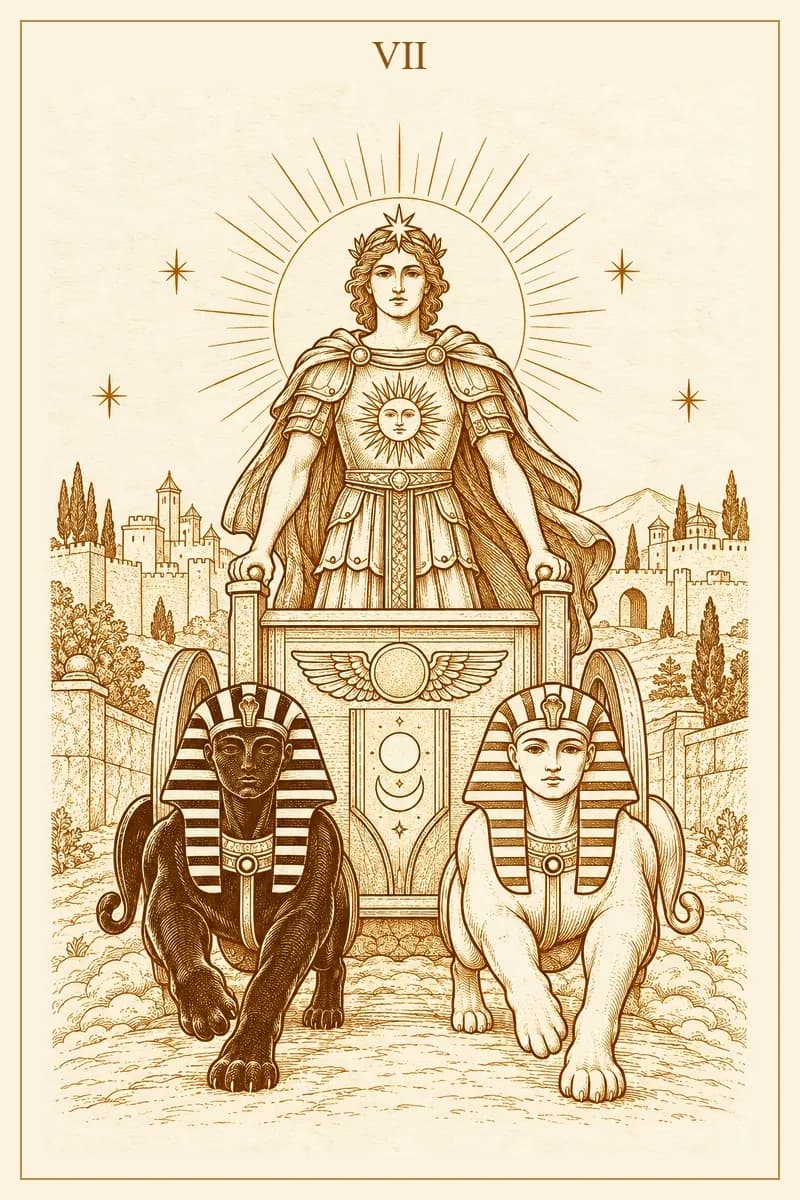
disciplined hope
Meaning of The Chariot and The Star Combination: Driven by Light
Relentless drive, mental collapse
Meaning of The Chariot and Nine of Swords Combination: Driven Into the Dark
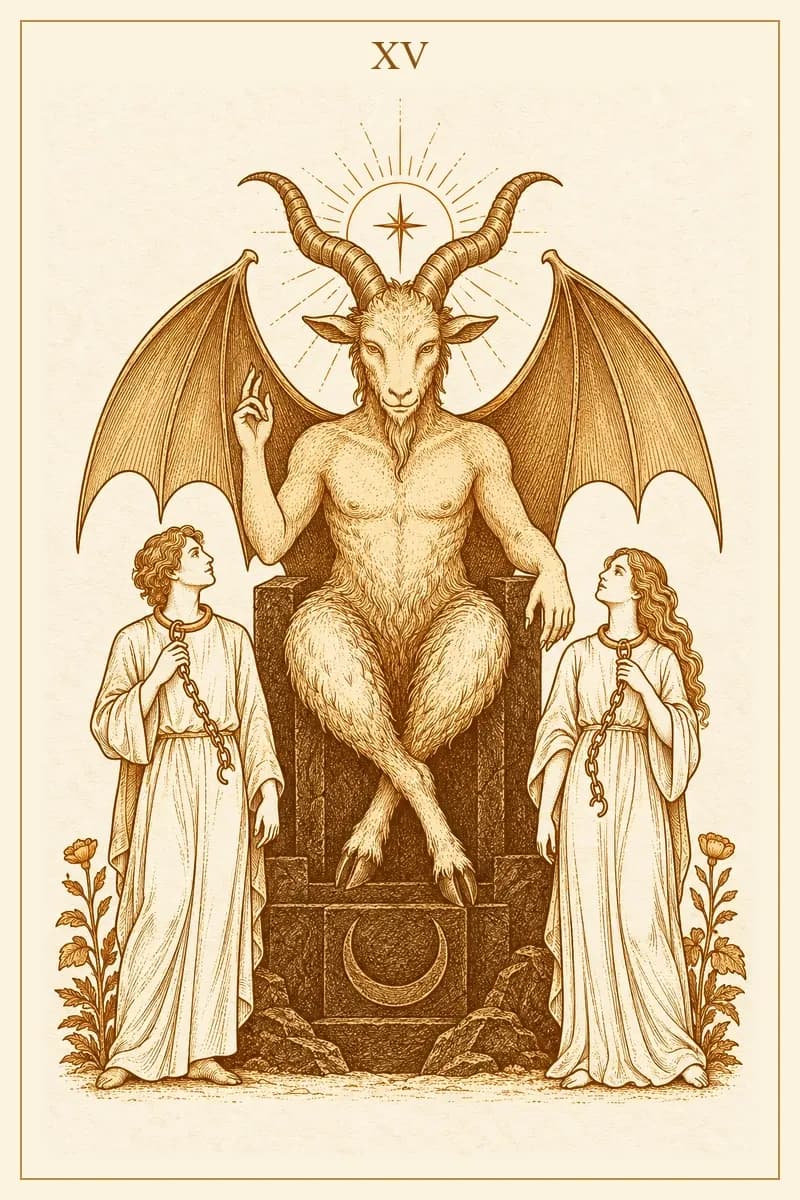
bondage versus healing
Meaning of The Devil and The Star Combination: Addiction vs. Recovery
Addictive anxiety
Meaning of The Devil and Nine of Swords Combination: Compulsive Dread
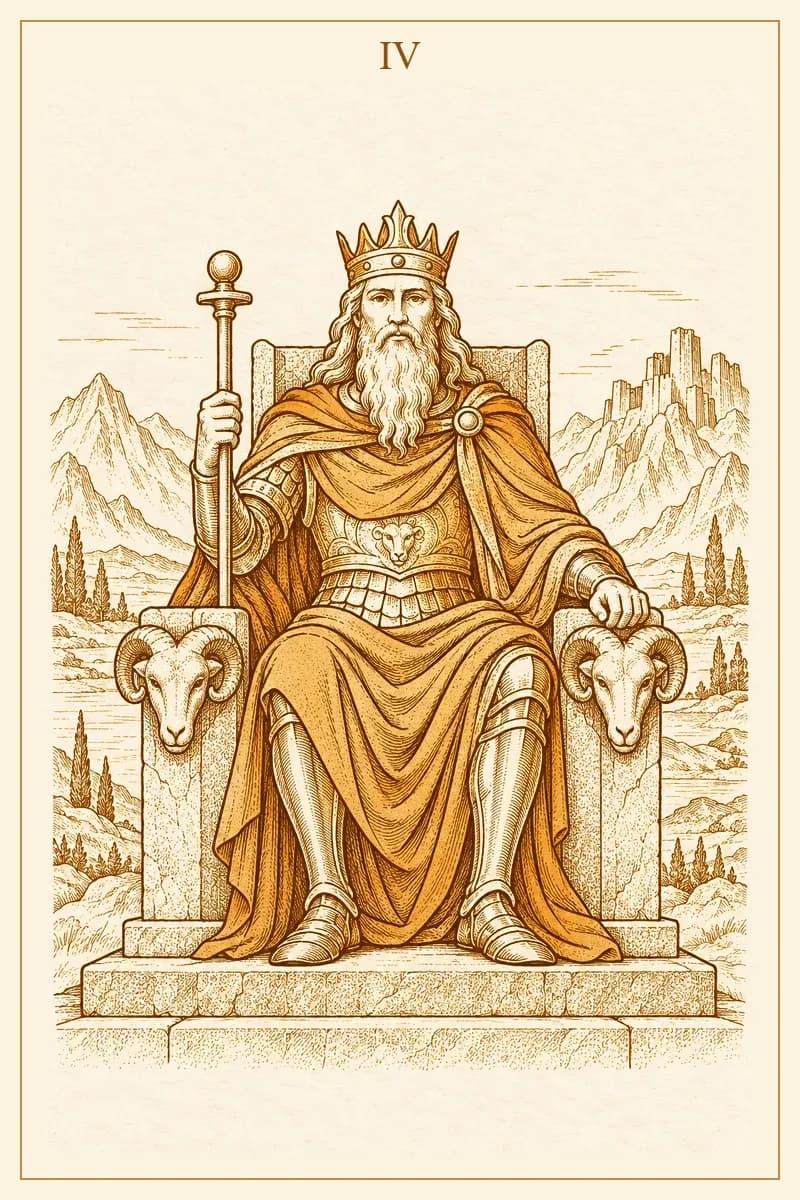
control meets healing
Meaning of The Emperor and The Star: When Control Meets Healing
Power feeding fear
Meaning of The Emperor and Nine of Swords Combination: Authority and Dread
✦ Bring it to the cards ✦
Bring The Star and Nine of Swords into your own reading
Use this pairing as a starting point, then let a spread listen to the situation that is actually yours.
Begin a contextual reading