Loading your view
The page is gathering the latest information.
The page is gathering the latest information.
Truth through surrender
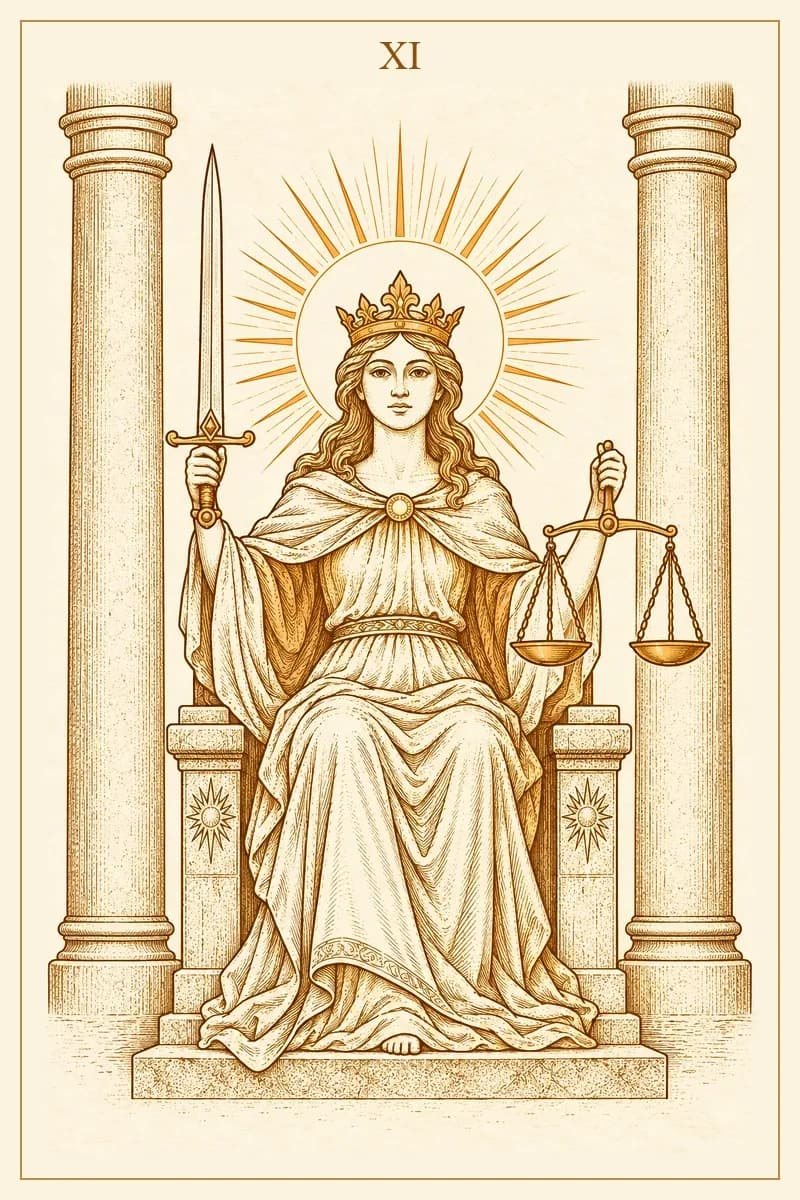
Some decisions cannot be forced into shape. You can gather every fact, line up the evidence, and still find that the scales refuse to tip — not because you lack information, but because the verdict requires a kind of waiting that logic alone cannot provide. That is the architecture of this pairing: a load-bearing wall you cannot remove without understanding the full structure first.
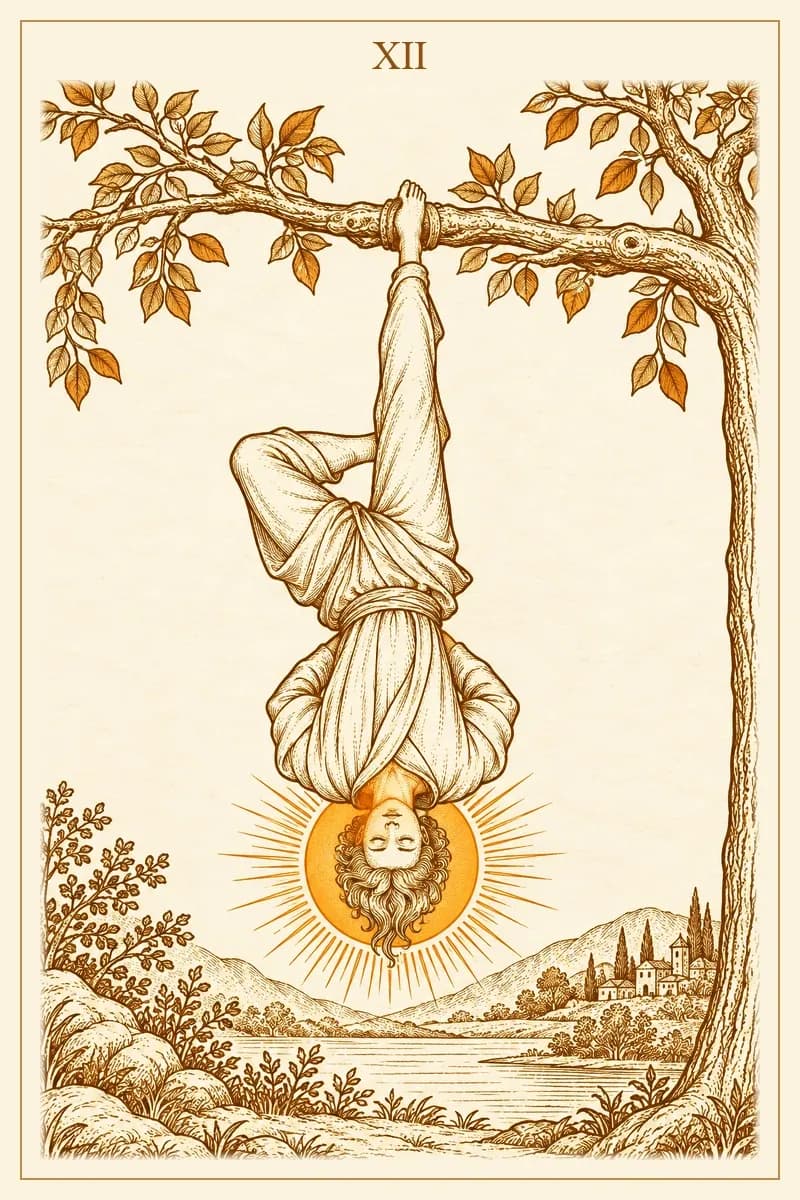
Justice arrives with clarity and demand. It cuts through noise and asks you to account for what is real, what is fair, and what the consequences of your choices actually are. The Hanged Man, suspended and oddly serene, insists that clarity sometimes arrives only after you stop pushing for it. Together they construct a doorway you cannot walk through in a hurry.
These two cards form a combination that is less about conflict and more about sequence — Justice naming what must be resolved, The Hanged Man insisting on the conditions under which real resolution becomes possible. Rushing one at the expense of the other produces judgment without wisdom, or peace without accountability.
Justice operates on horizontal time: cause, effect, consequence, correction. It is a card of record-keeping, of tallying what has been done and what must now follow. The Hanged Man lives in vertical time — the pause between floors, neither ascending nor descending, finding in the suspension itself a different kind of knowledge.
The structural tension here is between accountability and surrender. Justice says: face what is true. The Hanged Man says: but first, stop moving long enough to see it clearly. Neither card is passive, despite how The Hanged Man may appear. Choosing to wait — to hold the weight of a situation without immediately acting on it — is a form of discipline that Justice ultimately respects. A verdict delivered too quickly is not justice; it is reaction wearing a robe.
When these energies pull against each other, you may feel frozen: you know something needs addressing, but every solution feels premature. That paralysis is not a problem. It is the combination doing its work.
In relationships, Justice and The Hanged Man together often mark a period of honest reckoning that cannot be rushed. Someone — possibly you — is being asked to hold still long enough to see a dynamic clearly rather than simply reacting to it. Perhaps a pattern has repeated and fairness demands it be named. Perhaps the urge to react quickly would produce the wrong outcome.
If you are in a partnership, this pairing can signal a necessary pause in a conflict — not avoidance, but a genuine suspension of hostility while both people actually look at what is happening. It is the moment before a difficult conversation when both parties agree to speak from what is real rather than what is reactive.
For those not currently partnered, this combination asks whether you have been honest with yourself about what you are carrying forward from past relationships. What has not been settled? What ledger remains open? The Hanged Man suggests you already know more than you think — but only if you stop long enough to hear it.
Professionally, this pairing often arrives when a decision with significant consequences is on the table — a career move, a contract, a collaboration that requires real commitment. Justice wants the full accounting: what are the actual costs, the actual benefits, who bears what risk? The Hanged Man wants you to resist the pressure of artificial deadlines.
The architecture metaphor holds well here: you would not remove a load-bearing wall without reading the blueprints. A job offer, a business negotiation, a team restructuring — all of these may look simple on the surface while concealing structural complexity underneath. Take the time to read the blueprints before you swing.
This combination also cautions against confusing busyness with progress. Sometimes the most productive thing you can do professionally is nothing — waiting for the right information, the right moment, the right alignment of circumstances before committing your weight.
The shadow of this pairing is self-righteousness in suspension. Justice, unchecked, can become rigidity — the need to be correct rather than fair. The Hanged Man's pause can curdle into avoidance — using the wisdom of waiting as cover for simply not wanting to deal with something difficult.
Watch for the tendency to make prolonged deliberation feel noble when it is actually fear. Likewise, watch for the opposite: delivering quick judgments dressed up as the result of careful thought. Both moves are available to you, and neither serves what this combination is actually pointing toward.
Keep or share this combination reference
Continue through published pairings that share Justice or The Hanged Man.
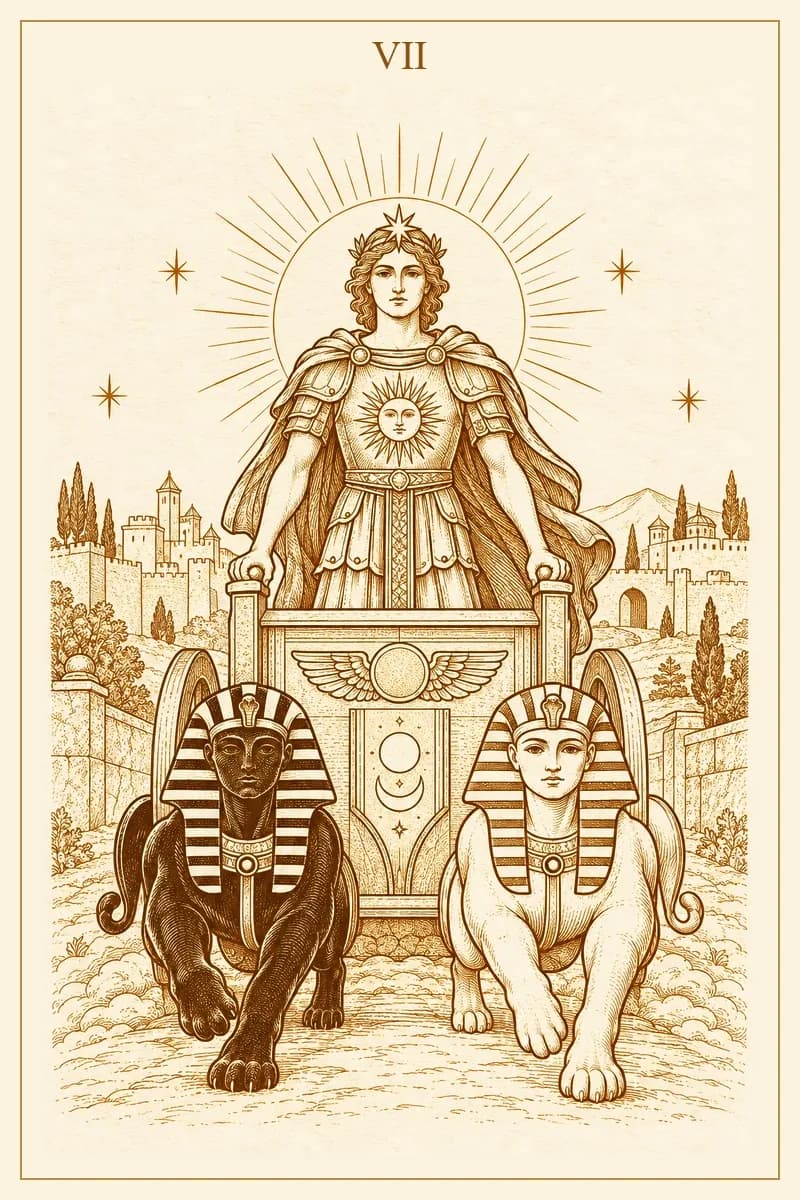
earned victory
momentum versus surrender
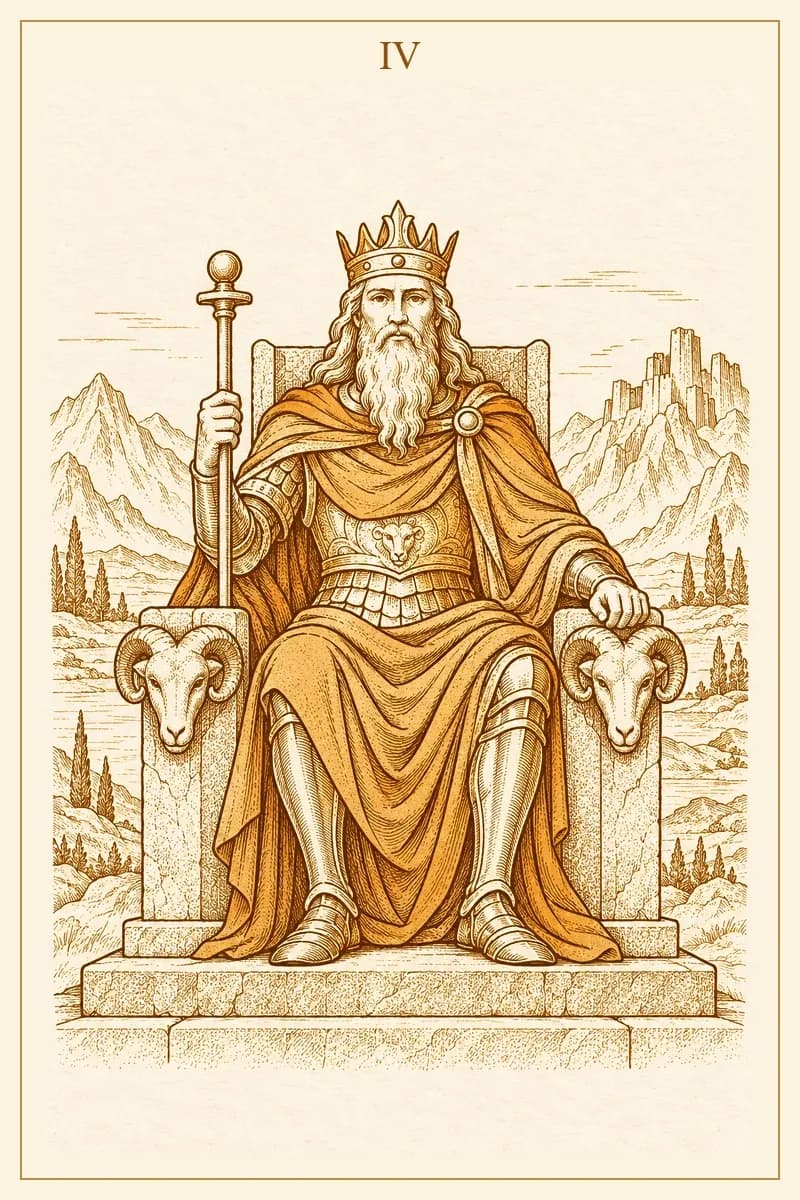
authority meets accountability
control vs release
abundance under judgment
fertile suspension
✦ Bring it to the cards ✦
Use this pairing as a starting point, then let a spread listen to the situation that is actually yours.
Begin a contextual reading