
Card Combination
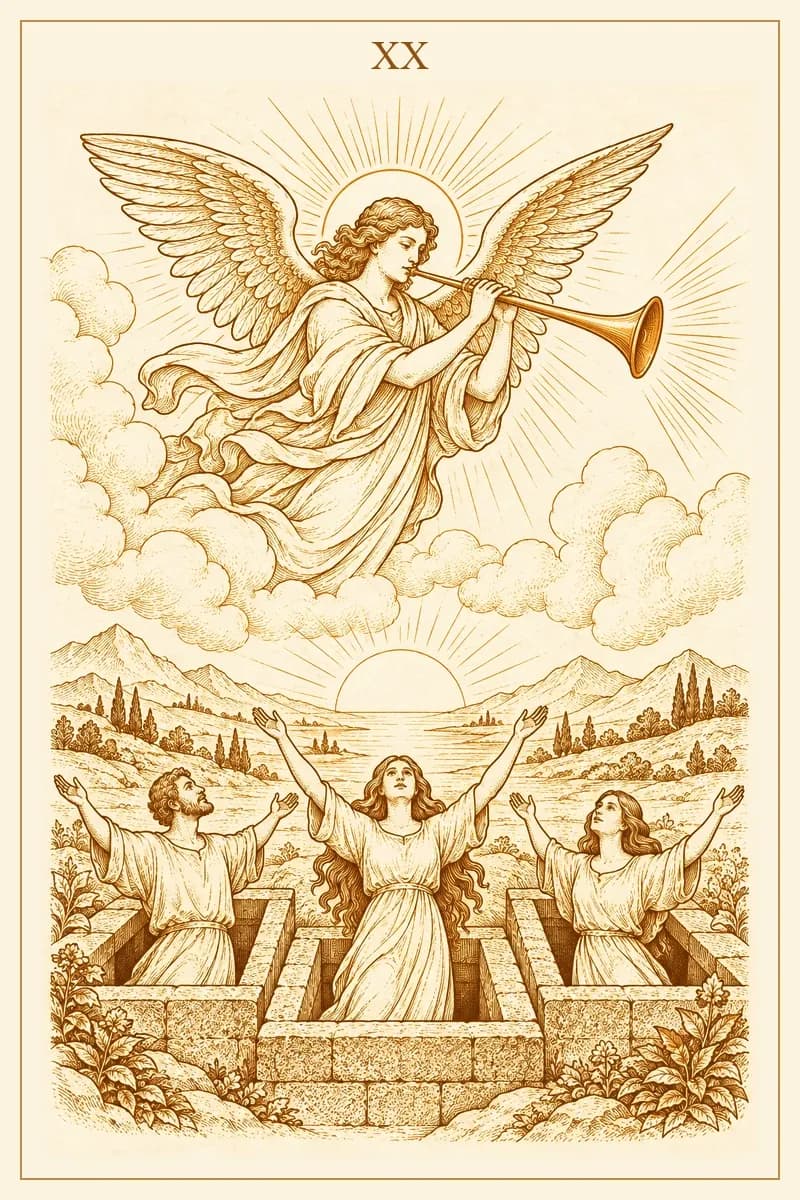
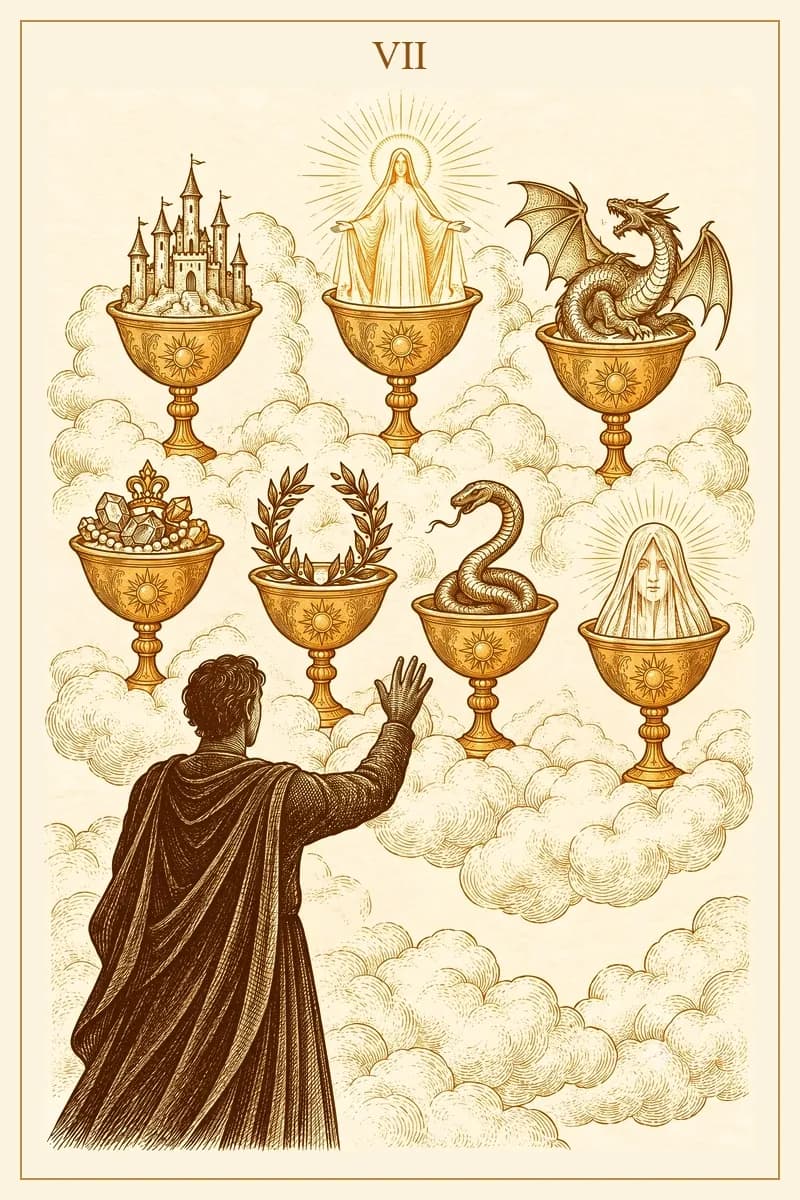
Meaning of Judgement and Seven of Cups Combination: Clarity From Fog
Discernment over illusion
She is the kind of architect who produces extraordinary concept drawings. The renderings on her desk show buildings that breathe light differently depending on the hour, public spaces that seem to anticipate how people will move through them, facades that hold a conversation with the skyline. Her sketchbook is a testament to genuine vision. The problem — and her colleagues have watched it accumulate for years — is that almost none of it gets built. At the moment of commitment, when the dream must submit to the constraints of actual ground, actual budget, actual code, something in her stalls. There is always another iteration, a more interesting possibility, a reason to keep the options open just a little longer.
This is the Seven of Cups meeting Judgement, and it is one of the more psychologically precise combinations in the deck. The Seven of Cups is pure image — seven chalices floating in cloud, each one containing something magnificent or terrible, all equally unreal in the sense that they exist only as potential. Judgement is the trumpet blast: the moment when the dead rise, when account is called, when you are summoned from your comfortable suspension into the irreversibility of a real choice.
Together, these cards describe the interval — sometimes years long — between a person's capacity for vision and their willingness to be held accountable to one particular vision. It is not a comfortable portrait. It is an honest one.
The Core Tension
The Seven of Cups loves the proliferation of possibility. Each cup is a version of a life, and as long as no cup has been chosen, all remain available. This is not merely fantasy or escapism, though it can become both. It is also the genuine pleasure of a capacious imagination, the real value of keeping options alive. The richness in the Seven of Cups is not fake. The problem is that richness without selection is not a life — it is a catalog.
Judgement has no patience for the catalog. It calls from above the clouds, which is precisely where the Seven of Cups lives. This card is not about small decisions; it is about the summons to account for who you have been and to step fully into who you are becoming. The architectural tension is exact: the concept drawing must at some point become a set of construction documents. The dream must touch the ground. And once it does, all the other possible buildings will not be built.
Love & Relationships
In love, the Seven of Cups can generate a particular kind of relational suffering: the inability to fully commit to the present relationship because the imagination keeps generating alternatives. Not necessarily infidelity in action, but infidelity in attention — a persistent wondering whether the next cup might contain something more exactly fitting. Judgement arrives in this context as a call to account: what has this relationship actually been? What has it produced? What would it become if you chose it without reservation?
For single people, this combination often points to a pattern of idealization followed by disappointment — a cycle where no real person can match the inhabitants of the seven cups. Judgement does not ask you to lower your standards. It asks you to distinguish between vision worth holding and fantasy used as protection against the vulnerability of actual contact.
Career & Purpose
Professionally, Judgement and the Seven of Cups describe the gap between creative potential and executed work. The person this combination addresses most directly has ideas — often genuinely good ideas — that live in notebooks, in half-written proposals, in conversations at the end of dinner parties. Judgement is the moment this person's own deeper knowledge breaks through the pleasant fog: this must be built now, or it will not be built at all.
The architectural metaphor is useful here. A concept drawing impresses no one who needs a building to actually stand in. The client — whether that client is the market, an employer, or your own future — needs the structure to exist in three dimensions, to have doors that open and walls that keep out rain. At some point, the vision must become engineering.
Shadow Side
The shadow of this combination cuts in both directions. The Seven of Cups can use Judgement's intensity as just another cup — the cup containing spiritual awakening, the cup containing radical transformation — without ever actually surrendering to the accounting. It turns the summons into a concept rather than an experience.
Judgement's shadow, when combined with the Seven of Cups, can produce harsh self-condemnation: years of dreaming reframed as years of failure, all that beautiful drifting retrospectively converted into evidence of inadequacy. This is a misuse of Judgement's energy. The reckoning Judgement calls for is not punishment but orientation — a chance to see clearly where you are so you can choose, with full information, where to go.
Action Steps
- 1Select one project, relationship, or intention that has lived in concept-drawing phase for more than six months and commit to one concrete, physical action on it this week — something that changes the actual world rather than the imagined one.
- 2List every major option you are currently keeping open in some area of your life, and notice which ones you are maintaining out of genuine interest versus which ones you are maintaining to avoid committing to a different one.
- 3Write a one-paragraph honest accounting of one significant thing in your life — not a fantasy of what it could become, but a clear-eyed description of what it currently is.
Related Pairings
Continue through published pairings that share Judgement or Seven of Cups.
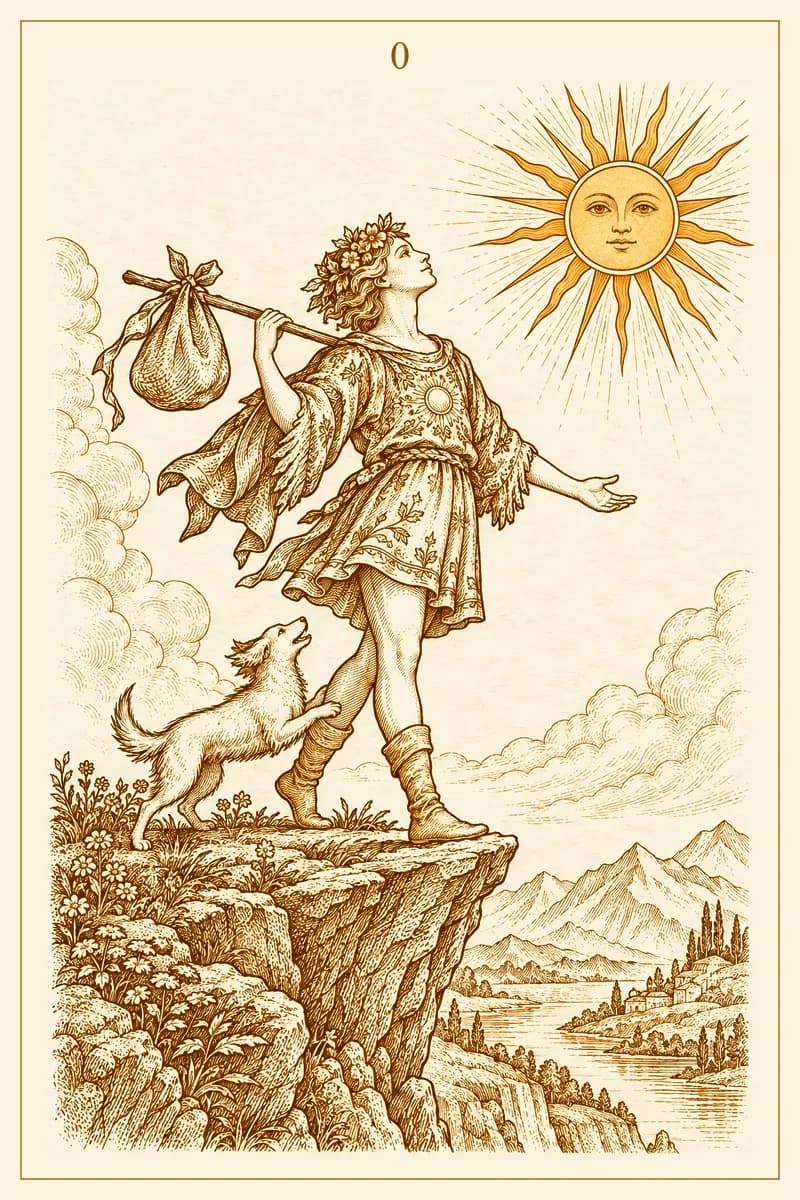
Beginningless self meets ultimate accountability
Meaning of The Fool and Judgement Combination: The Call Before the Story
Fantasy meeting undirected openness
Meaning of The Fool and Seven of Cups Combination: Too Many Clouds, One Step
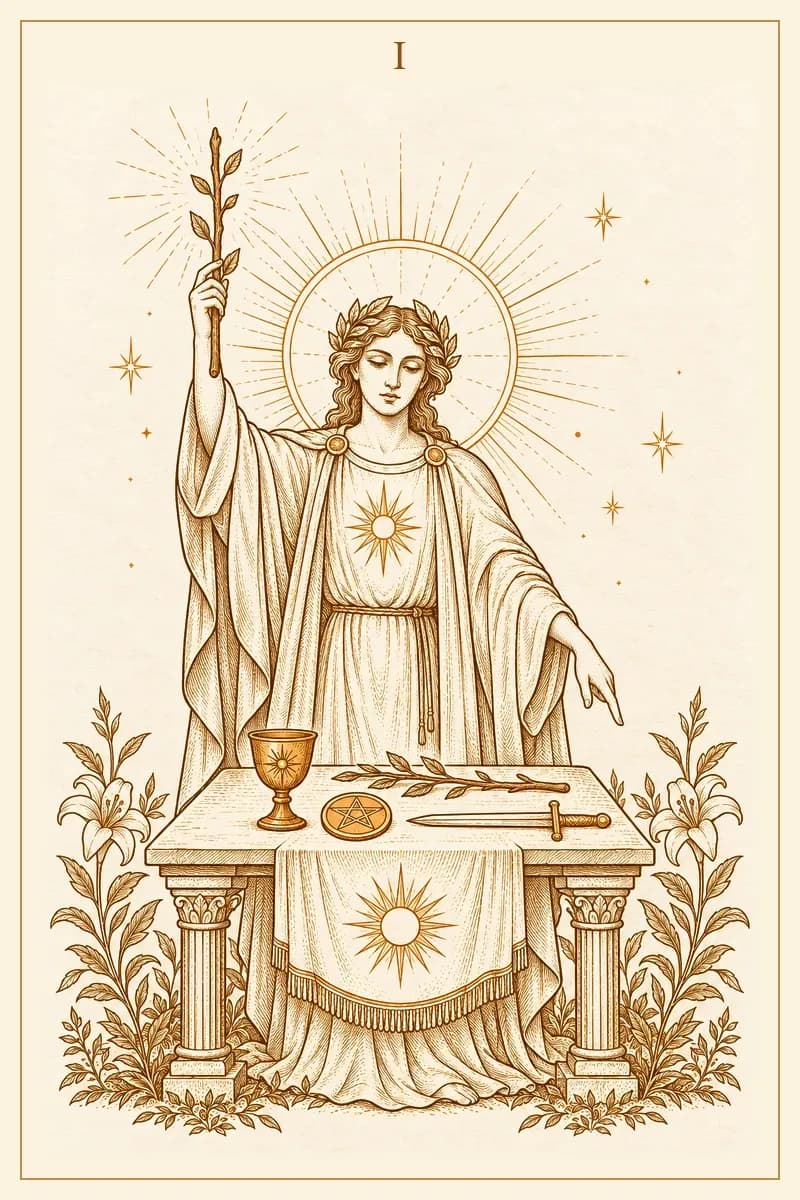
Mastery summoned to transformation
Meaning of The Magician and Judgement Combination: When Mastery Meets Its Calling
Skill versus illusion
Meaning of The Magician and Seven of Cups Combination: Power Without a Target
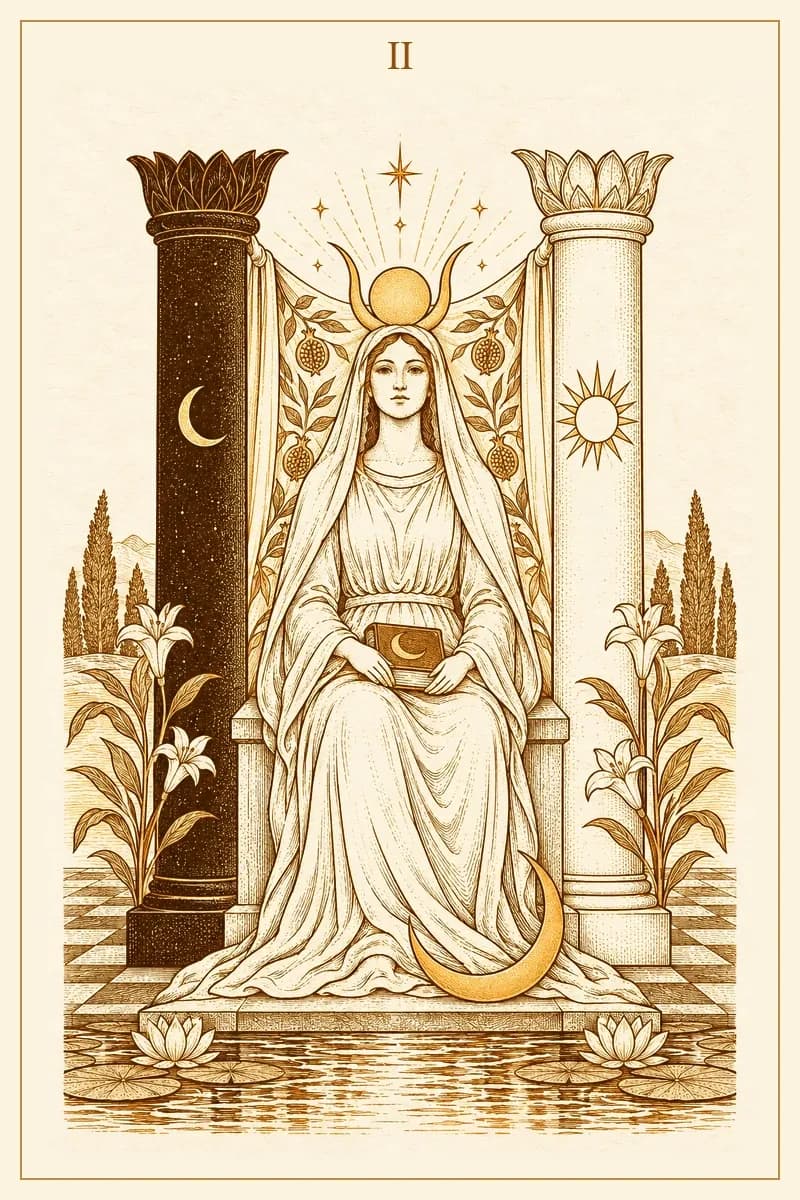
Reckoning within
Meaning of The High Priestess and Judgement Combination: The Reckoning Within
Discernment amid illusion
Meaning of The High Priestess and Seven of Cups Combination: Seeing Through Illusion
✦ Bring it to the cards ✦
Bring Judgement and Seven of Cups into your own reading
Use this pairing as a starting point, then let a spread listen to the situation that is actually yours.
Begin a contextual reading