
Card Combination
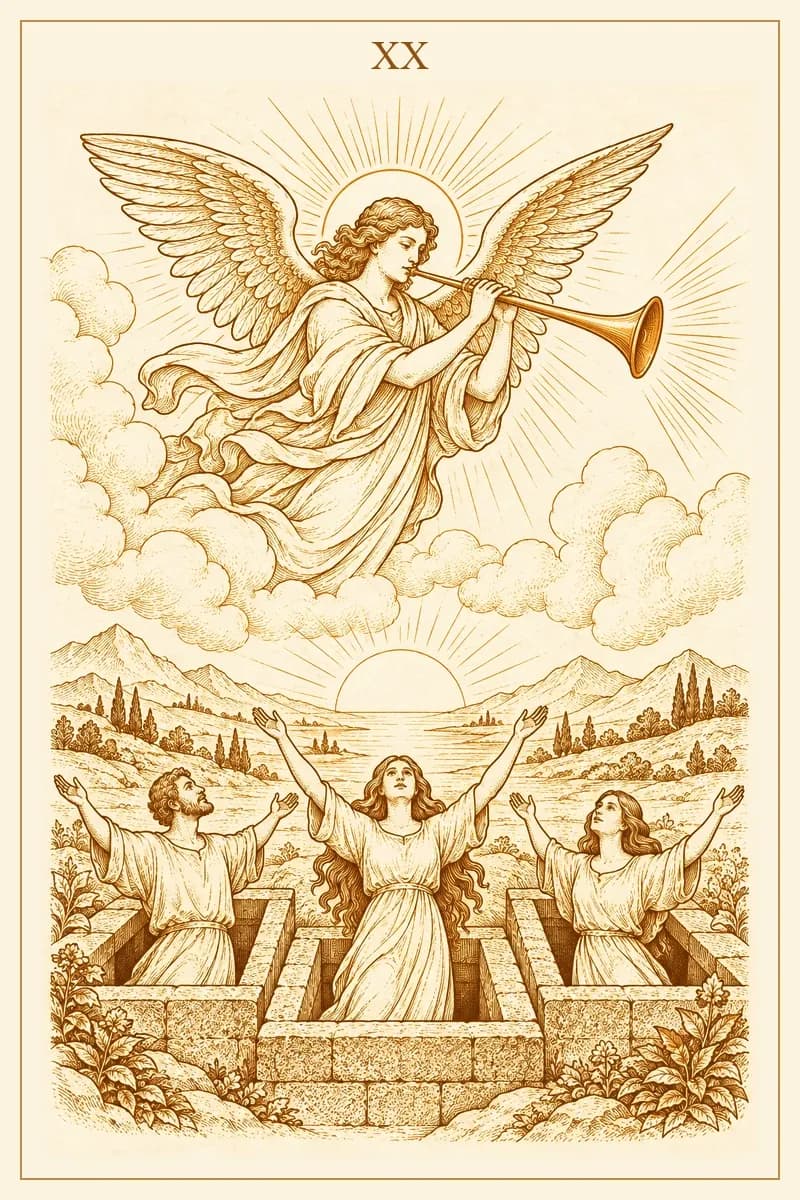
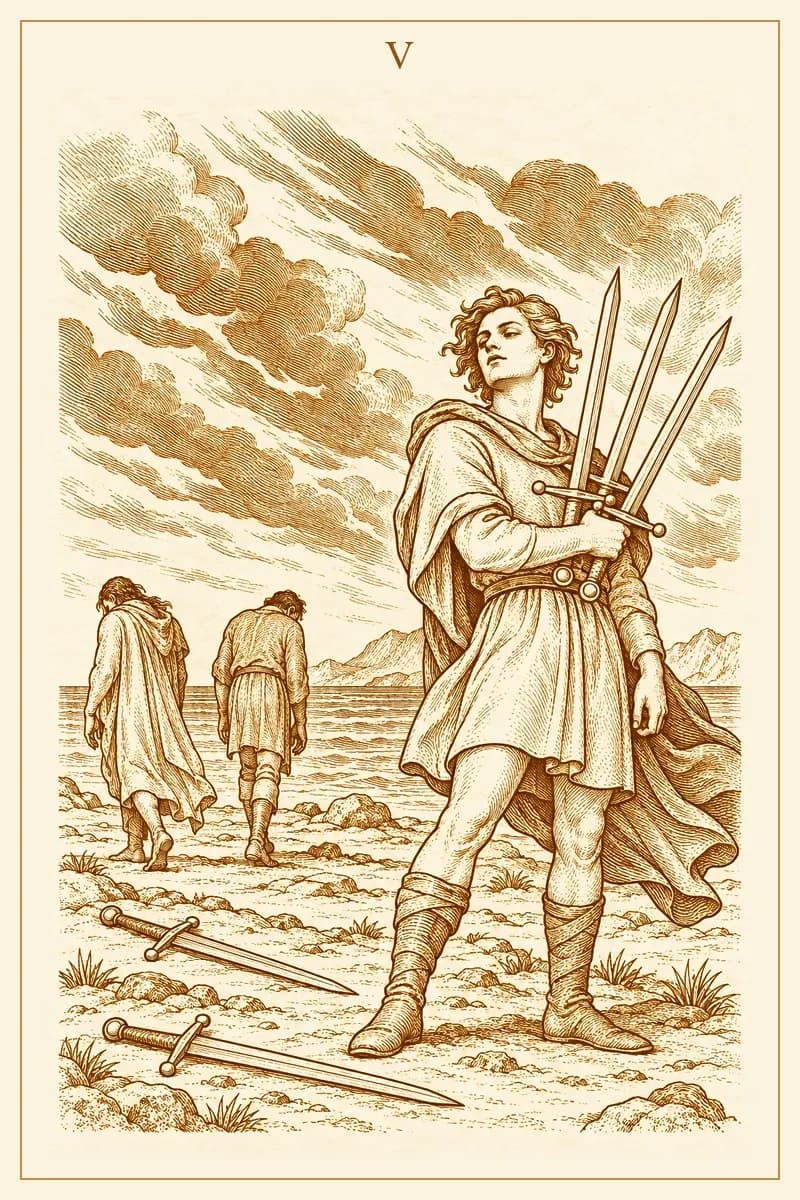
Meaning of Judgement and Five of Swords Combination: Bitter Reckoning
painful accountability
She stands at center stage, spotlights flooding the space where shadows once hid her. The audience is silent. In her left hand, she holds every argument she thought she won. In her right, the hollow weight of what those victories actually cost. She has rehearsed this monologue a thousand times in private, but tonight the curtain has risen whether she is ready or not.
This is the person living through Judgement crossed with the Five of Swords. Not someone gently called to reflect, but someone dragged into the blinding light of their own scoreboard. Every tactical win, every cutting remark deployed at the perfect moment, every bridge burned for the sake of being right — all of it now projected on the screen behind her for the entire theater to see.
The trumpet has sounded, and it does not care about justifications.
The Core Tension
Judgement demands a full accounting. The Five of Swords represents conflicts where winning felt necessary but left wreckage behind. Together, these cards stage an intervention that cannot be postponed. The tension lives between the soul's hunger for wholeness and the ego's desperate grip on being right.
Think of it as the final act of a play where the protagonist must face the audience without a script. No clever dialogue to hide behind, no stage direction that says "exit left." The Five of Swords scattered the other actors — they left the stage wounded or silent. Judgement brings the house lights up and asks: was this performance worth the empty seats?
This is not punishment. It is precision. The reckoning strips away the narrative you built around necessary cruelty and asks what remains underneath.
Love & Relationships
In relationships, this pairing surfaces old wounds that were never properly closed. If you won an argument but your partner withdrew into silence for weeks, Judgement reopens that file. If you chose pride over vulnerability and watched intimacy drain away, the bill arrives now.
For couples, this combination demands radical honesty about power dynamics. Who holds the sharper tongue? Who uses withdrawal as a weapon? The Five of Swords patterns in love often involve one person consistently dominating while the other accumulates quiet resentment. Judgement insists both parties step onto the stage and speak without armor.
For those who are single, examine whether past relationship endings followed a pattern of scorched earth. If every ex-partner tells a similar story about how things ended, this is the moment to listen to the chorus rather than dismissing each voice individually.
Career & Purpose
Professionally, this pairing often appears when workplace conflicts have created a toxic residue that everyone pretends not to smell. The colleague you outmaneuvered in a meeting six months ago still avoids eye contact. The team you restructured without consultation operates with mechanical compliance but zero loyalty.
Judgement here functions like an unexpected audit of your professional relationships. It does not evaluate your spreadsheets — it evaluates your impact on the humans around those spreadsheets. The Five of Swords may have secured a promotion or a project win, but the cost is now visible in turnover rates, in the talent that quietly transferred to other departments, in the meetings where no one challenges your ideas because they stopped caring.
The call is to lead with accountability rather than authority. Acknowledge the collateral damage. It will feel like weakness on the stage, but the audience — your colleagues — will recognize it as the first honest performance you have given.
Shadow Side
The shadow side of this combination is weaponized self-judgment. Some people, upon hearing Judgement's trumpet, will turn the Five of Swords inward and begin a campaign of self-destruction disguised as accountability. They confess everything to everyone, not from genuine remorse but from a compulsive need to control the narrative of their own punishment.
Another shadow: using the language of reckoning to manipulate. Apologizing strategically, performing vulnerability to regain trust that will be exploited again. The Five of Swords is clever, and it can costume itself in Judgement's robes to stage a false redemption arc.
Watch also for the temptation to revisit resolved conflicts and reopen them under the guise of "clearing the air." Not every old battle requires a sequel. Some curtains closed for good reason.
Action Steps
- 1Identify one specific conflict where you prioritized winning over connection, and take a single concrete step toward repair — a direct conversation, a written acknowledgment, or a genuine offer to listen without defending your position
- 2Audit your inner monologue for self-righteous narratives that frame past aggression as justified defense, and write down what the other person's version of events might honestly look like
- 3Practice sitting with discomfort for ten minutes daily without reaching for distraction, letting the weight of accountability exist without rushing to resolve it through action or explanation
Related Pairings
Continue through published pairings that share Judgement or Five of Swords.

driven reckoning
Meaning of The Chariot and Judgement Combination: Drive Meets Reckoning
costly victory
Meaning of The Chariot and Five of Swords Combination: Winning at a Cost
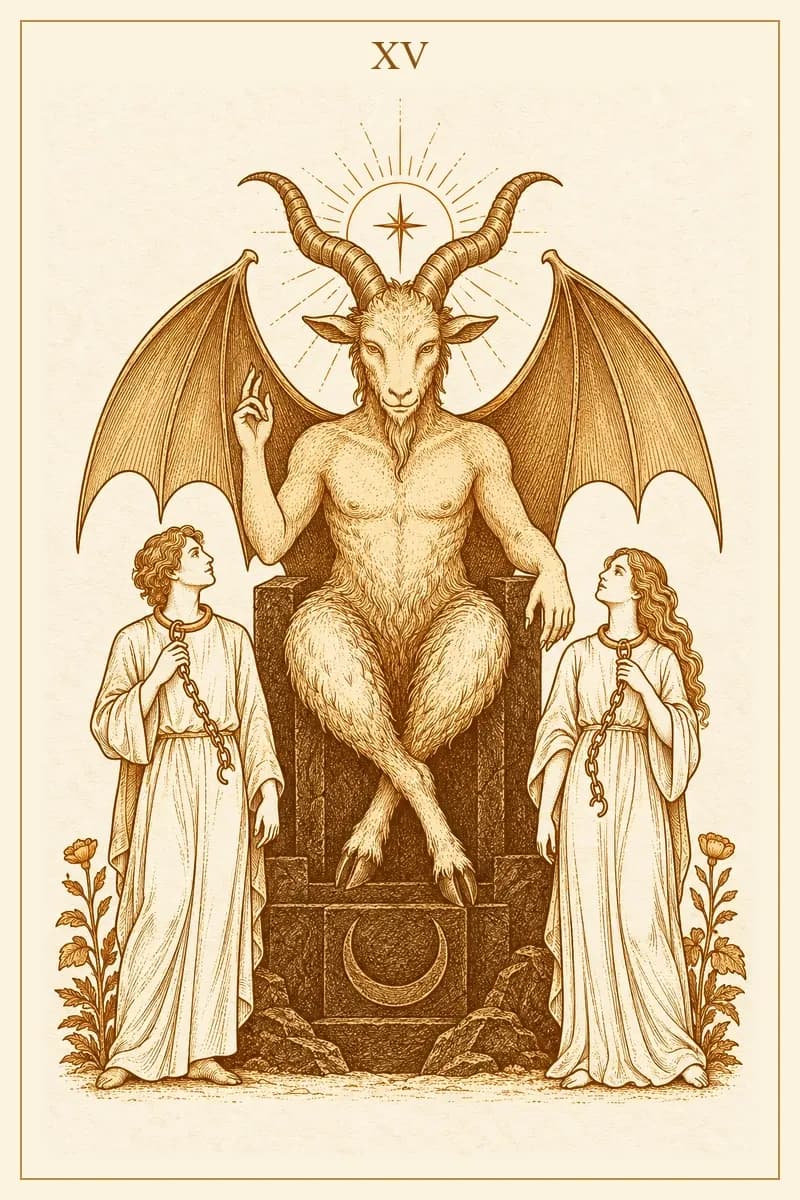
bondage meets awakening
Meaning of The Devil and Judgement Combination: Chains and Reckoning
Toxic Power Games
Meaning of The Devil and Five of Swords Combination: Toxic Power Games

earthly authority transcended
Meaning of The Emperor and Judgement: When Authority Meets a Higher Summons
pyrrhic authority
Meaning of The Emperor and Five of Swords: Winning at What Cost
✦ Bring it to the cards ✦
Bring Judgement and Five of Swords into your own reading
Use this pairing as a starting point, then let a spread listen to the situation that is actually yours.
Begin a contextual reading