Loading your view
The page is gathering the latest information.
The page is gathering the latest information.
faith under fog
The sermon has already begun. You are seated in the third row, in your usual place, repeating the responses you have known since childhood — and somewhere between one word and the next, a door you cannot see swings open in the back of your mind. You don't know what is on the other side. You don't know if you should look. You keep reciting the words.
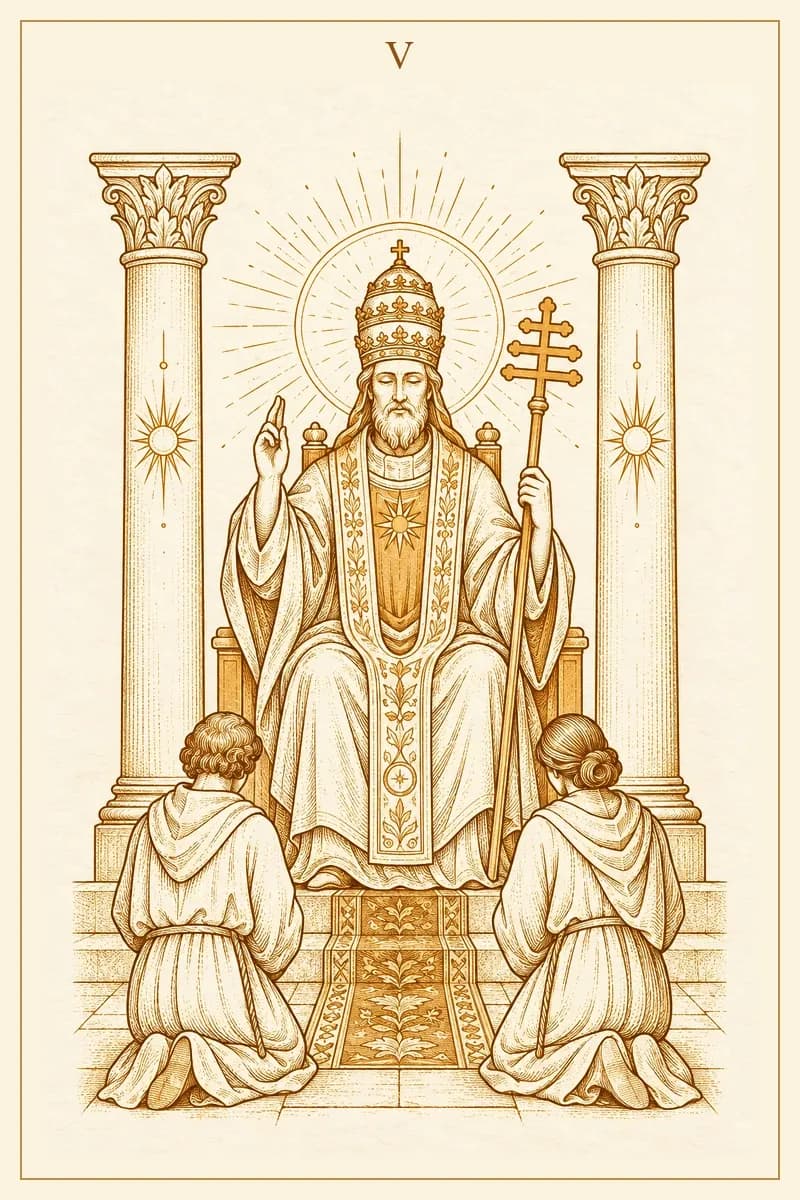
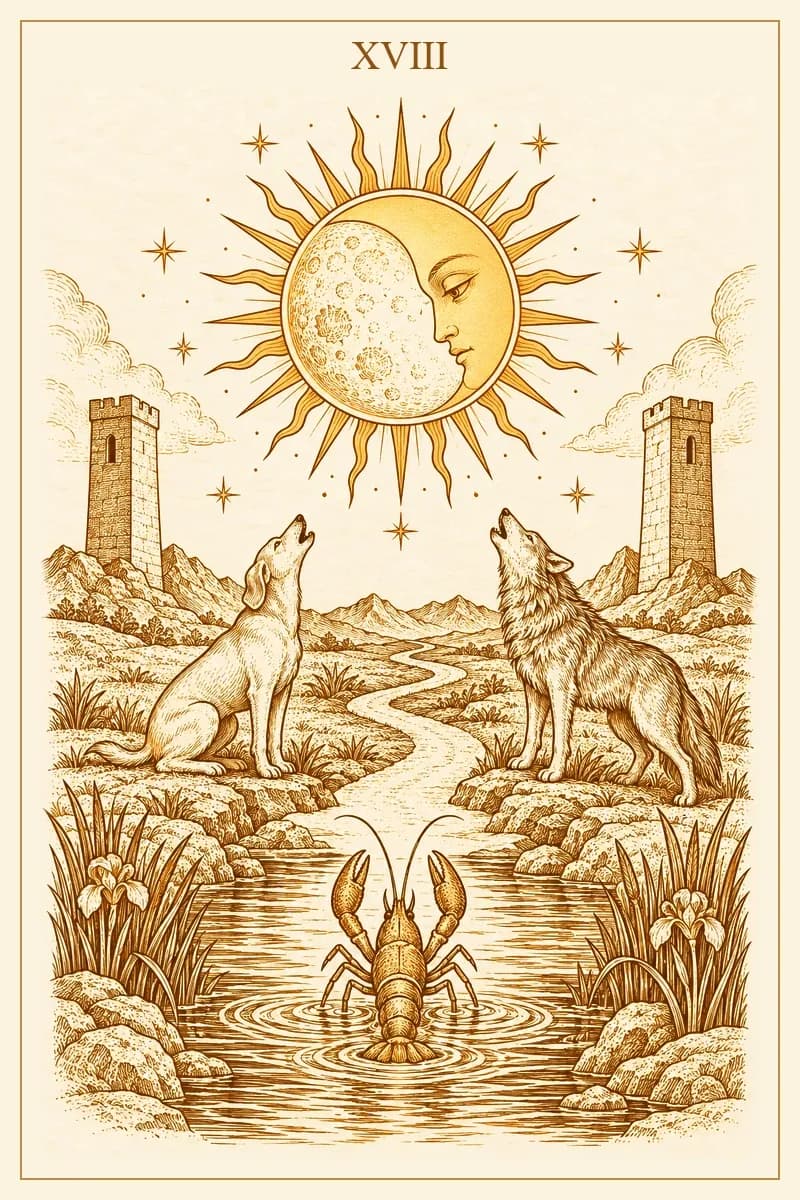
That interior moment — performing certainty while uncertainty moves through the walls like fog — is exactly where The Hierophant and The Moon meet. One card is the stage set: robes, columns, ritual, the visible architecture of belief. The other is the lighting rig gone dark, the wings full of shapes you cannot quite identify, the audience that may or may not be there.
This pairing does not announce itself loudly. It works through repetition and erosion. You follow the script, you honor the form, and yet something keeps shifting in the peripheral vision of your inner life. The question this combination poses is not whether to abandon structure but whether you are honest enough to let the uncertainty live alongside it.
The Hierophant wants clarity of doctrine and the comfort of shared framework. It is the card of the institution, the elder, the tested path — the reassurance that others have walked this way before and survived. The Moon, however, is where clarity dissolves. It is the card of subconscious currents, of things that cannot be named directly, of the imagination working at frequencies that reason cannot tune into.
Put them together and you get a stage set illuminated by flickering light. The forms are all present — the roles, the words, the expected sequence of events — but everything casts a strange shadow, and not all of the figures moving in the background are who they appear to be. The Hierophant wants consensus; The Moon resists resolution.
This tension is most acute for people whose outer religious, ideological, or institutional life is running smoothly while something underneath is quietly unraveling — or conversely, for people who are drowning in formless anxiety and need the stabilizing rope of a tradition to hold on to.
In a love reading, this combination carries particular weight. The Hierophant in relationship often represents the official version of the partnership: the committed couple, the publicly recognized unit, the relationship that meets the expectations of family or community. The Moon is everything that version doesn't say out loud — the insecurities, the projections, the things both people feel but neither names.
This pairing can indicate a relationship where the outward form looks stable while something underneath is unsettled. One or both partners may be performing a version of the relationship that doesn't fully match their interior experience. That is not necessarily malicious — it may simply be that the emotional undercurrents have not yet been given language.
For single people, it can signal confusion about what they actually want versus what they have been told they should want. The Hierophant's voice — family expectations, social scripts, inherited definitions of a good partner — may be drowning out the quieter, more honest signal of The Moon.
Professionally, this combination often points to institutional environments where appearance of certainty is highly valued, and where admitting doubt or confusion carries real professional risk. Medicine, law, religion, academia — any field where the authority depends partly on projecting unshakeable expertise — can produce this dynamic.
The Moon here is not necessarily incompetence. It may be integrity: the awareness that the prescribed answer is not quite right, that something in the case or the situation doesn't fit the standard framework. The question is whether the professional environment creates any room for that kind of honest uncertainty, or whether the Hierophant's demand for correct performance simply overrides it.
This combination can also appear when someone suspects that the institution they work within is not entirely as it presents itself — policies that contradict stated values, unspoken rules that override the written ones.
The shadow of this pairing is the performance of conviction. When The Hierophant and The Moon lock together in their most dysfunctional mode, the result is someone who maintains the full external apparatus of belief while privately experiencing something entirely different — doubt, disillusionment, or simply a felt sense that the map no longer matches the territory.
This is not hypocrisy in the simple sense. It is often the product of environments where doubt is punished, where questions mark you as a problem rather than a thinker. The Moon's fog is not always internal confusion — sometimes it is the institutional mist deliberately maintained to prevent clear seeing.
Keep or share this combination reference
Continue through published pairings that share The Hierophant or The Moon.
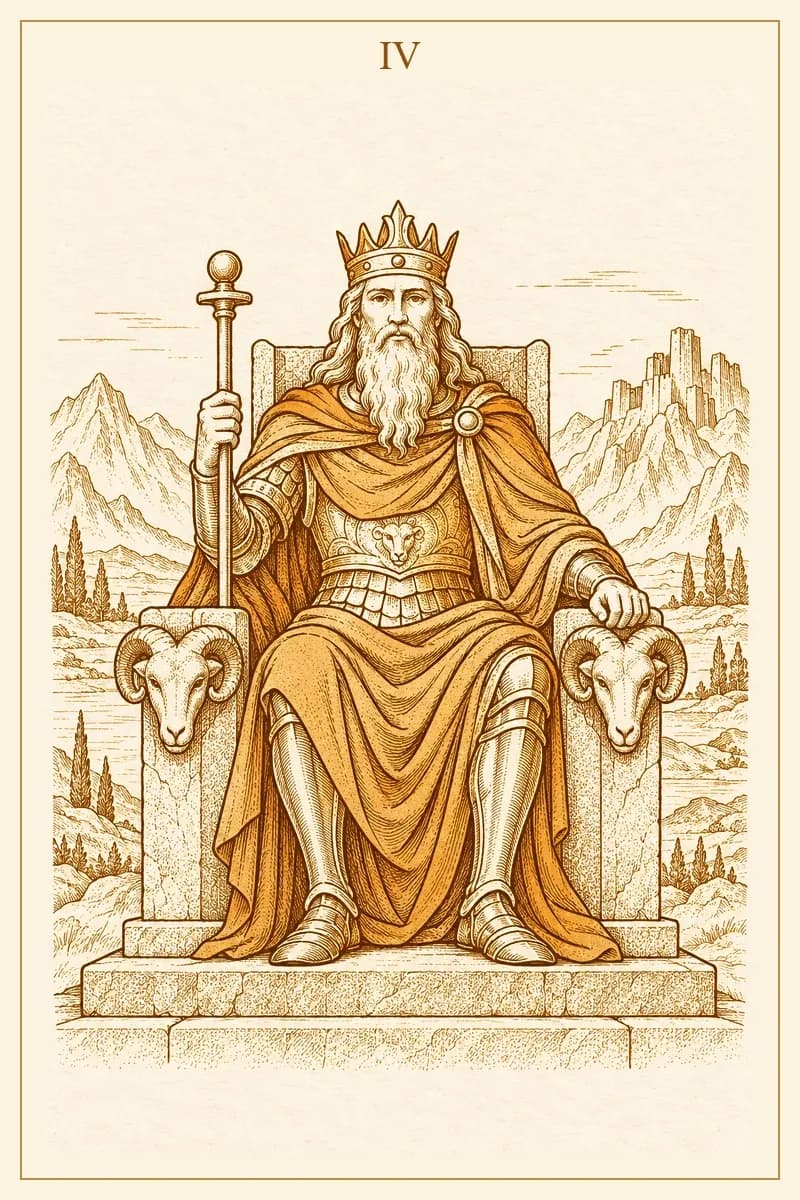
authority meets doctrine
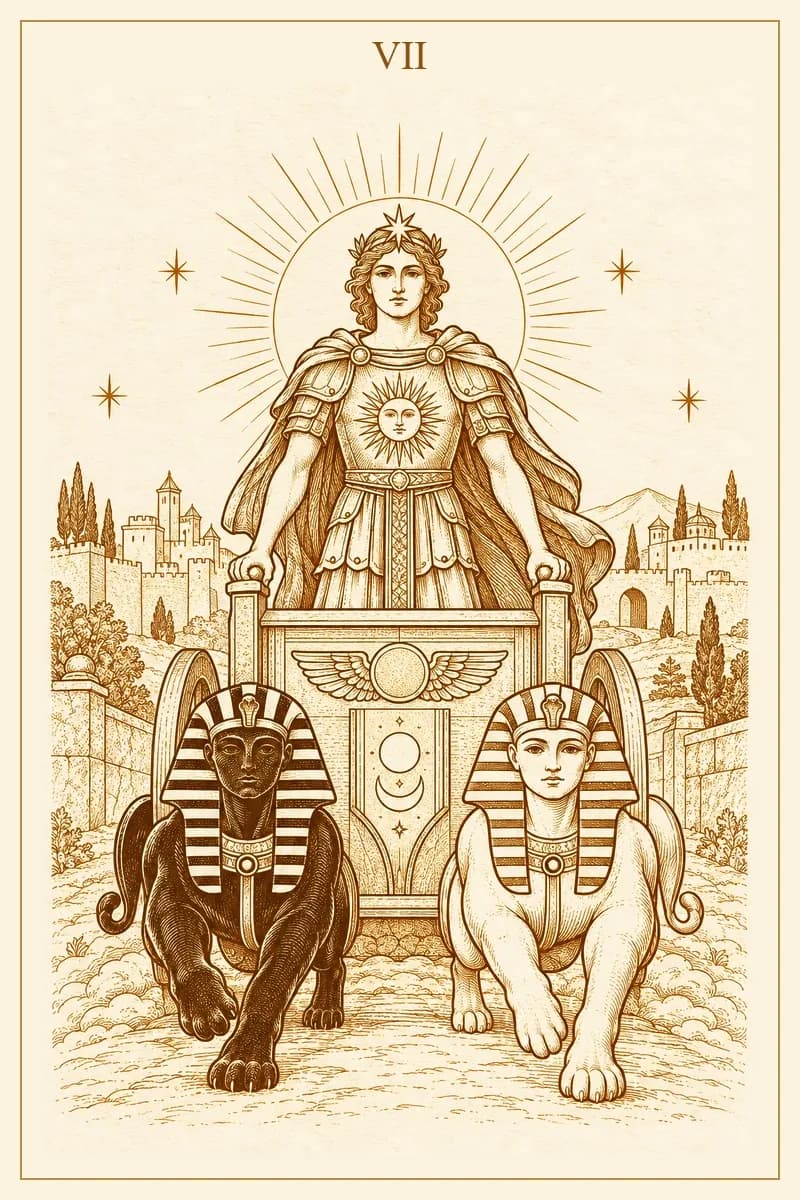
willpower versus illusion
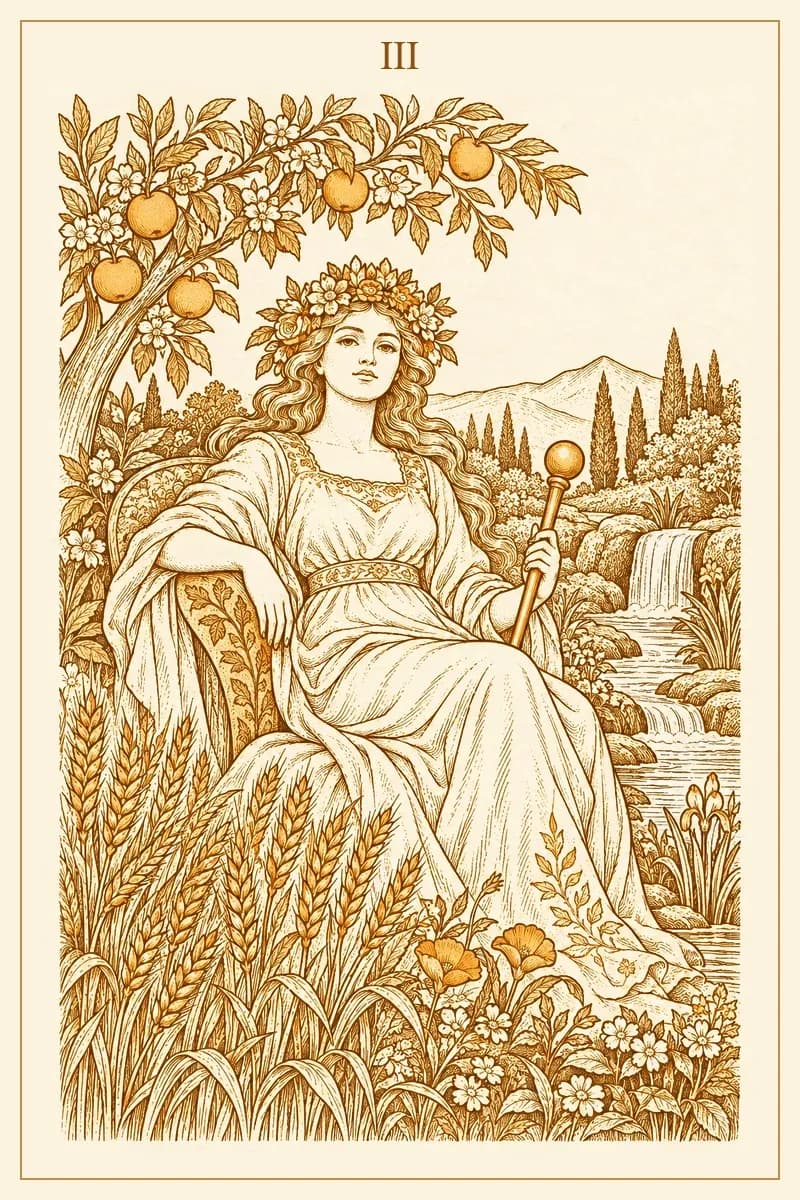
abundance versus doctrine
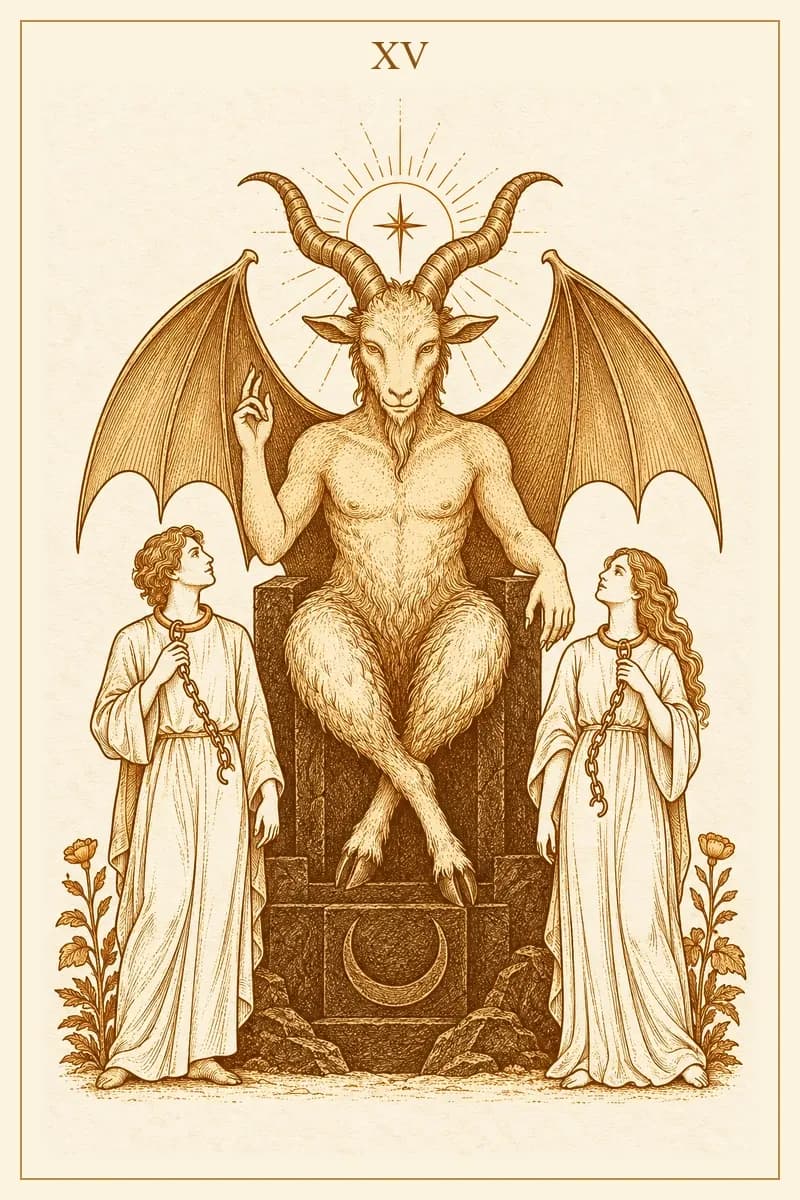
hidden compulsion
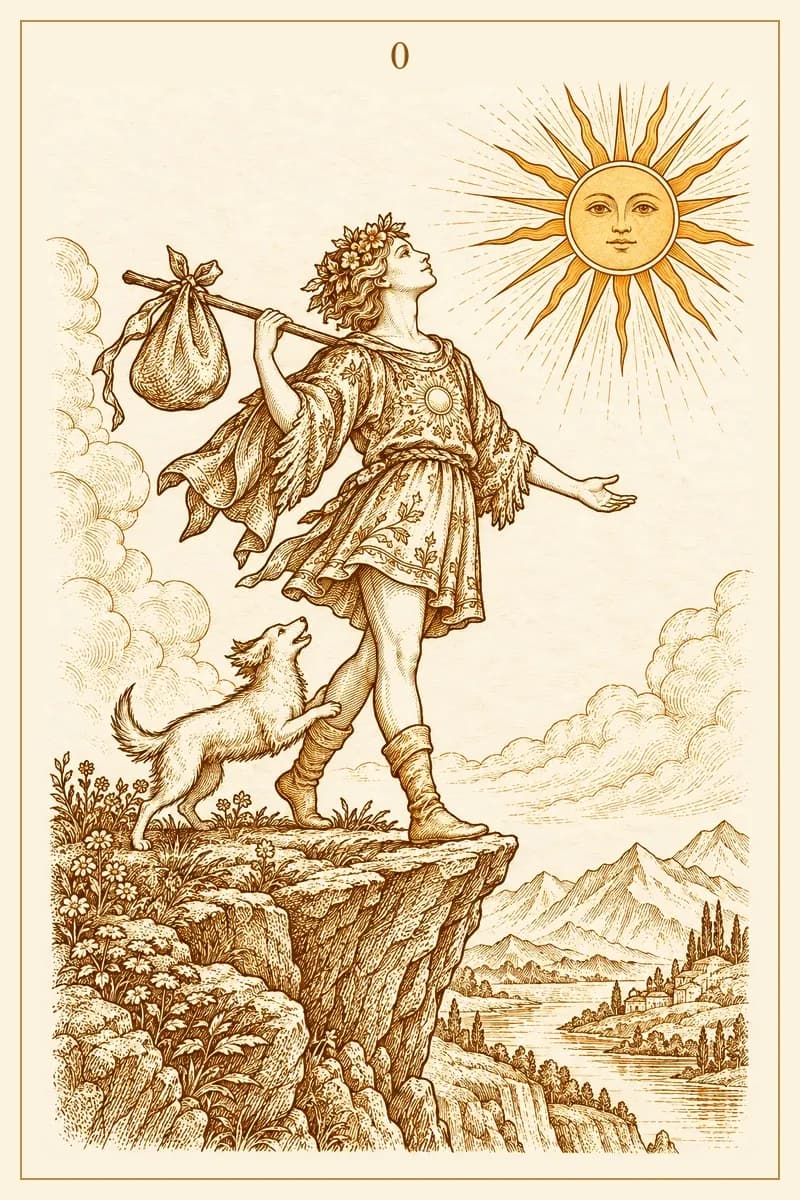
Sacred Rebellion
authority confronting the unseen
✦ Bring it to the cards ✦
Use this pairing as a starting point, then let a spread listen to the situation that is actually yours.
Begin a contextual reading