Loading your view
The page is gathering the latest information.
The page is gathering the latest information.
doctrine versus desire
The most honest things we ever do are the things the institution didn't sanction. And yet — we still need the institution. That is the paradox at the heart of the Hierophant and the Lovers: two cards that seem to be pulling in opposite directions are actually describing the same human ache. We want to belong. We want to choose freely. Most of the time, we cannot fully have both.
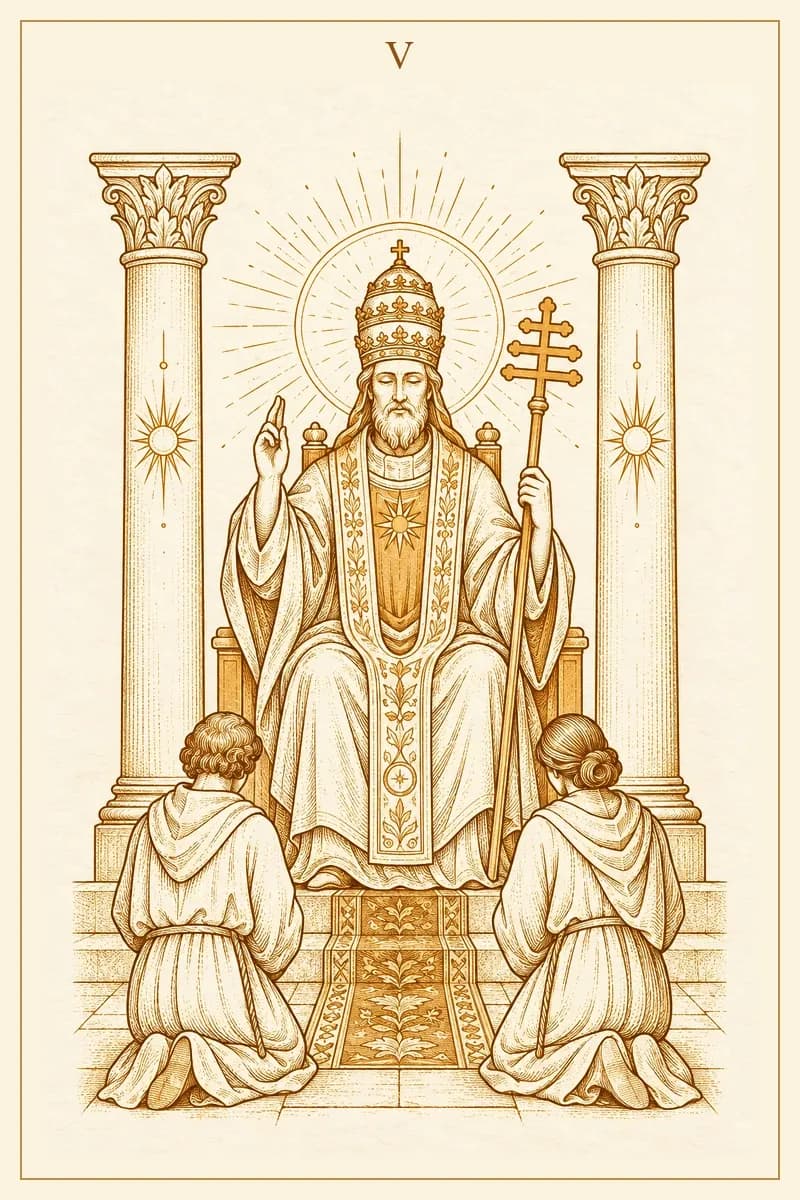
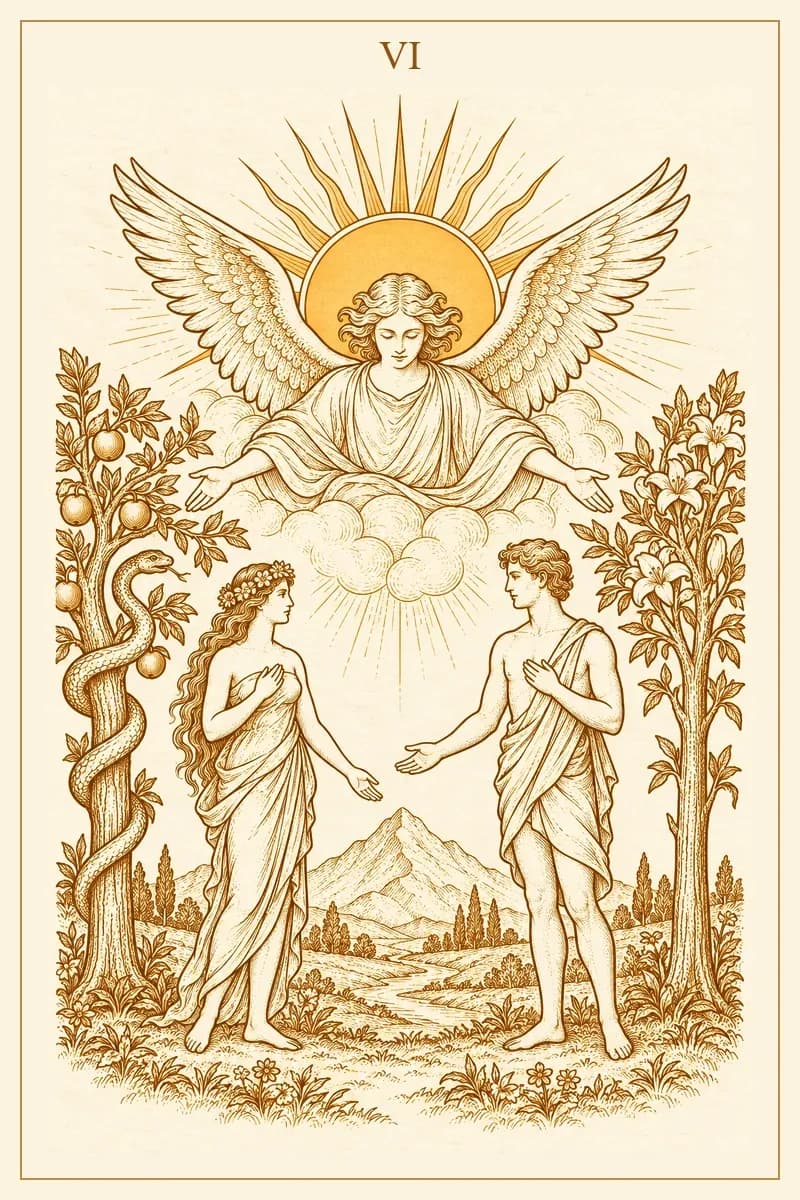
The Hierophant is the keeper of the script. He has studied what works, codified it, and now offers it to you in the form of tradition, doctrine, or social expectation. He is not the villain of this story — he is a witness to the fact that humans have been navigating love, meaning, and commitment long before you arrived, and some of that accumulated wisdom is worth inheriting. The Lovers, meanwhile, are standing in the garden before any script existed. Their choice is raw, immediate, and fully their own. They are not consulting the manual.
When these two cards meet in a reading, the stage is set for one of the oldest dramas in human experience: the moment when what you were raised to believe collides with what you actually feel.
In theater, there is a term for the gap between what a character says and what they mean: subtext. The Hierophant and the Lovers together are pure subtext. On the surface, you may be going through all the right motions — attending the ceremonies, honoring the commitments, saying the expected things. Underneath, something else is happening. A choice has not been made, or a choice has been made and not yet admitted.
The Hierophant is not asking you to betray yourself. At his best, he is offering structure that helps love survive contact with real life — the vows that hold when feelings are difficult, the community that supports a relationship when the couple is struggling alone. The trouble arrives when the structure becomes the point: when people stay in a relationship because it fits the expected script, not because it fits their actual lives.
The Lovers do not ask for perpetual passion. They ask for honesty about what you have genuinely chosen versus what you have simply not yet found the courage to unchoose.
This combination appears most often when someone is standing at a crossroads in a relationship — not necessarily a dramatic one, but a real one. The Hierophant energy might look like: family pressure to formalize a relationship, religious or cultural expectations about how love should be expressed, the pull toward a conventional path because it's recognizable and safe. The Lovers energy is asking: but is this what you want? Not what is expected. Not what looks right. What do you actually want?
If you are in an established relationship, this pairing can signal a moment to re-examine the terms you agreed to at the start. Commitments made in one season of life don't always serve who you've become. The Hierophant would say: honor your word. The Lovers would add: make sure the word you're honoring still reflects a real choice.
For those not yet in a relationship, this combination sometimes appears when you've been choosing partners based on external criteria — the person who checks the right boxes for your family, your culture, your self-image — while something deeper goes unexamined.
In professional contexts, the Hierophant and the Lovers describe the friction between following established pathways and pursuing work that genuinely aligns with who you are. The Hierophant represents the credential, the institution, the career ladder that others have validated as worthwhile. The Lovers represent the work that doesn't need external validation because the internal pull is too strong to ignore.
This combination rarely appears in a work reading without some version of the question: are you in the right role? Not right by the resume. Right by the way it feels at 7am when you think about the day ahead. The Lovers in a professional context is specifically about alignment — the difference between a job and a calling is the degree to which the choice is genuinely yours.
The Hierophant's gift here is practical: callings still require craft, credentials, and commitment to the less glamorous parts of the work. Inspiration without discipline produces unrealized potential.
The shadow of this combination is the performance of devotion. Someone who has learned to say all the correct things, participate in all the expected rituals, and project the image of a committed, values-driven person — while privately living in a different story entirely. The Hierophant's shadow is hypocrisy; the Lovers' shadow is self-deception. Together, they describe a life that looks coherent from the outside and feels hollow from within.
There is also a subtler shadow: the person who rebels against every tradition purely on principle, mistaking rejection of structure for freedom. The Lovers does not mean choose chaos. It means choose consciously.
Keep or share this combination reference
Continue through published pairings that share The Hierophant or The Lovers.
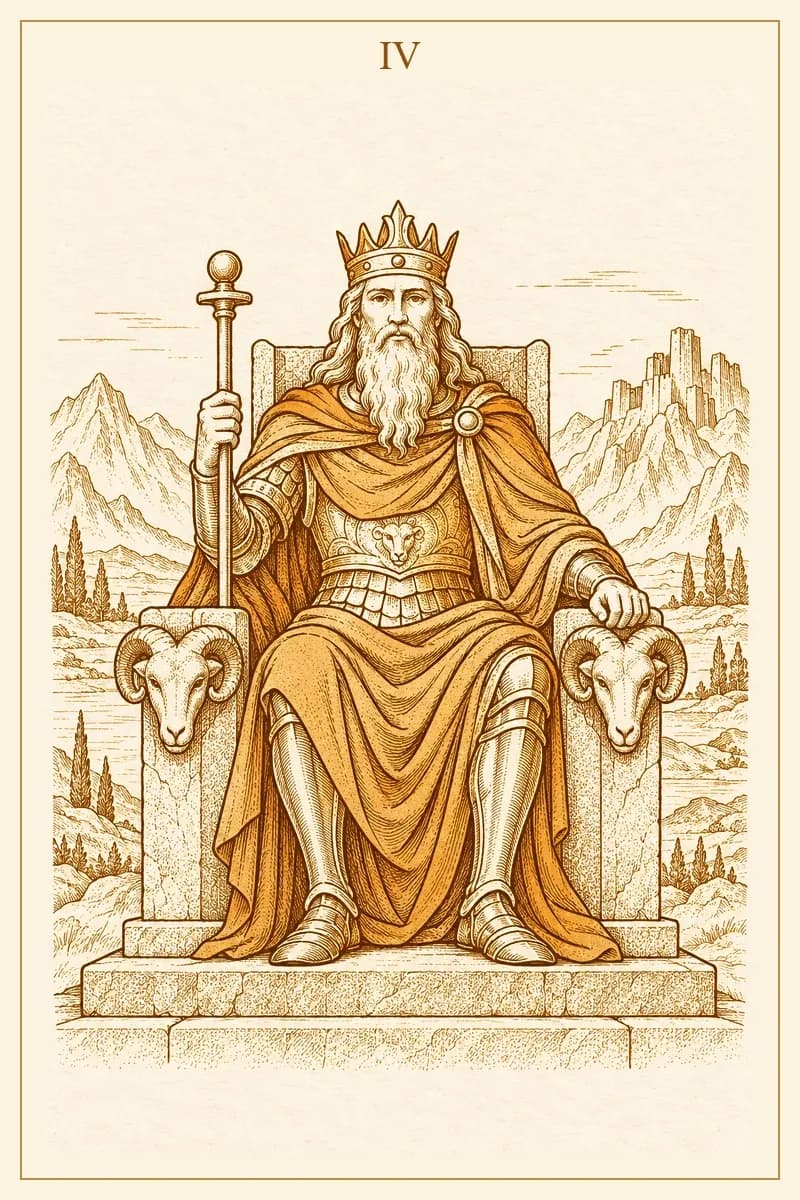
authority meets doctrine
duty vs desire
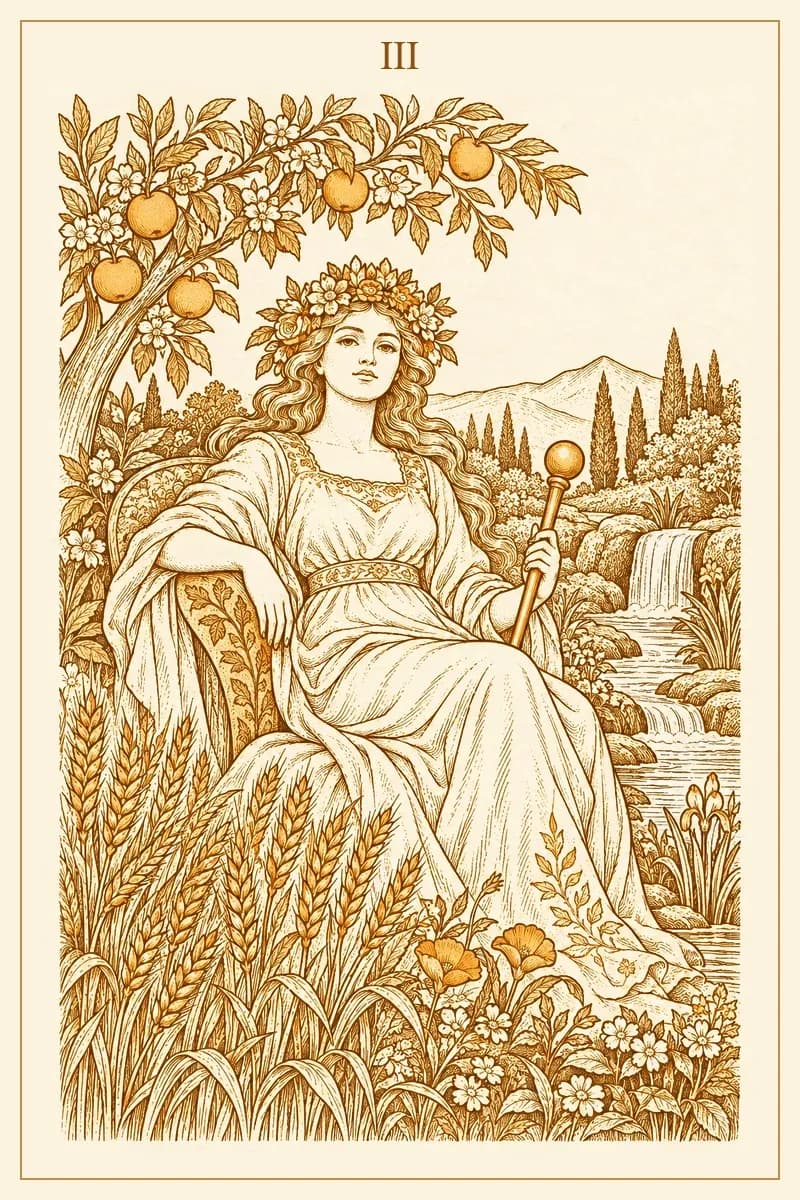
abundance versus doctrine
abundance meets conscious choice
Sacred Rebellion
Innocent Desire
✦ Bring it to the cards ✦
Use this pairing as a starting point, then let a spread listen to the situation that is actually yours.
Begin a contextual reading