Loading your view
The page is gathering the latest information.
The page is gathering the latest information.
conscious skill navigating unconscious uncertainty
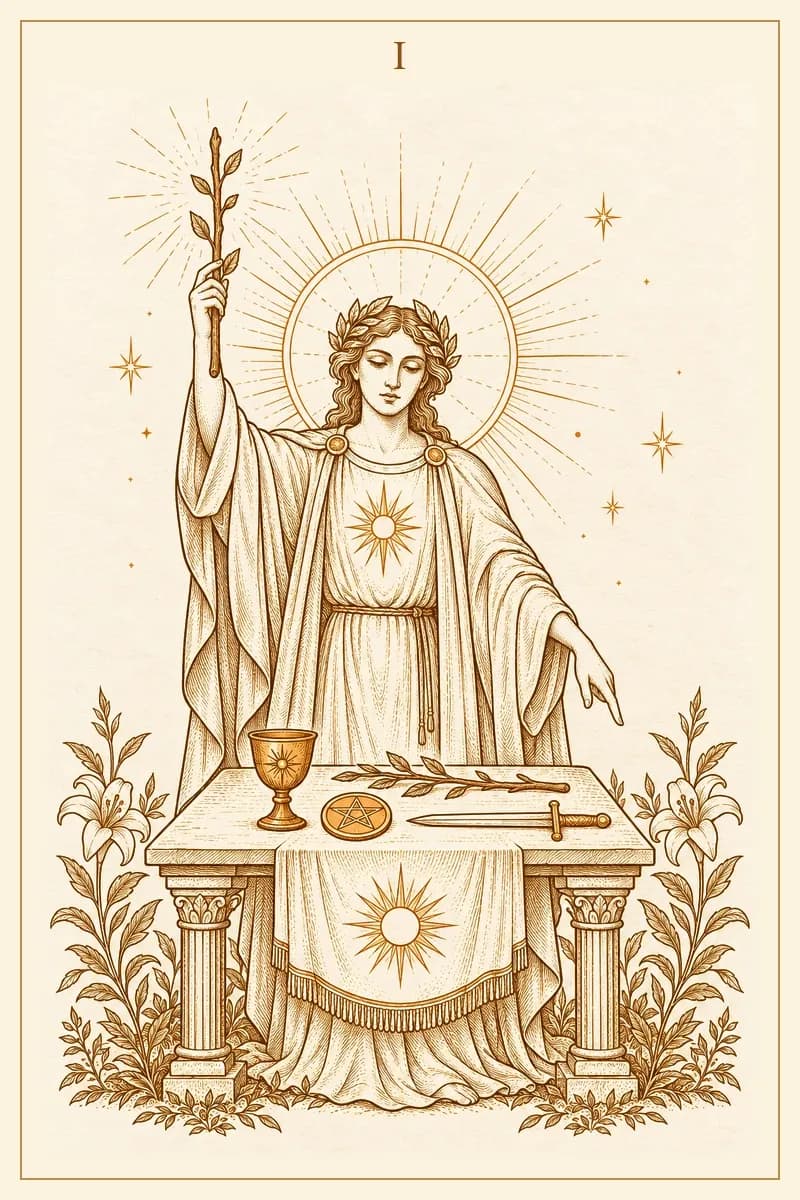
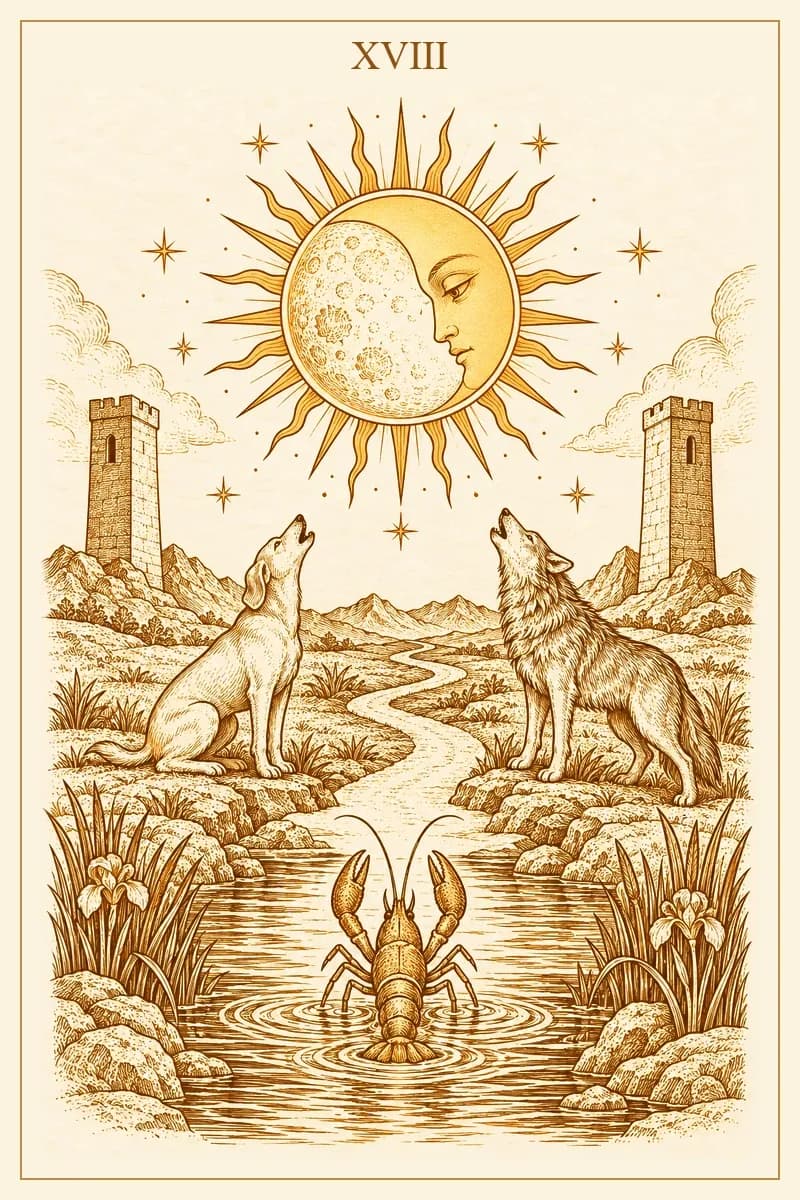
The best poker player at the table is not the one with the best hand. He is the one who can play a bad hand as though it were the best, and — here is where the paradox lands — who knows, with complete clarity, exactly how bad his hand is. The Magician and The Moon produce this exact situation: a player at full technical command sitting at a table where the cards keep changing when he looks away, the room keeps shifting geometry, and the other players may or may not be real.
The Magician is the practitioner. The four suits on his table are not decorations — they are resources, each one ready for deliberate deployment. His power is knowing which tool handles which problem, reading a situation clearly enough to select the correct instrument and use it with precision. He does not bluff accidentally.
The Moon is the felt-lined back room where the stakes have changed and nobody announced it — where the chips represent something other than money, and someone is signaling with their eyes to someone you haven't identified. The Moon is what happens below the table: unconscious patterns, unexamined fears, the ancestral anxiety about scarcity that fires before the rational mind can override it.
A skilled player enters every hand with a system. He calculates odds, reads body language, controls his own tells, adjusts based on reliable reads. The system works because it assumes the game is legible — the cards mean what they say, the other players' behavior maps onto comprehensible motivations, the pot is the pot.
The Moon dismantles legibility. Not through chaos — through fog. The game is still being played. The rules still technically apply. But the reads are unreliable, because the Magician is not only calculating his opponents' hands. He is also, without fully knowing it, calculating his fears about losing, memories of the last time the game went sideways, his complicated feelings about whether he deserves to win at all. These calculations run beneath his rational system and distort the outputs without announcing themselves as distortions.
This is the precise tension: a person with genuine skill operating in a field where unconscious material keeps editing the data. The tools are real. The fog is also real. The question is not whether the Magician can maintain technical excellence — he can. The question is whether he can do it while the floor shifts.
When these two cards appear together in a love reading, someone in the relationship is performing competence in a situation that actually requires vulnerability. They communicate clearly, solve every solvable problem, and never miss an important date. And they do not know — or will not say — what they are afraid of.
The Moon in love surfaces material that skill cannot process: the fear that being truly known will end the relationship, the way a current partner's voice occasionally sounds like a previous one who left, the suspicion that closeness will eventually come due. The Magician's instinct is to manage this — deploy the right technique, apply the correct framework, resolve the issue. But Moon material does not resolve through technique. It requires being looked at directly, which is different from being managed.
The functional version of this pairing is a person who can say: I have these tools, and right now I cannot trust what I'm reading. That admission is not weakness. It is the sharpest move available.
Professionally, this combination marks a period when objective capability and subjective noise operate simultaneously. The Magician executes. The Moon ensures that execution is happening inside a fog bank of unexamined assumptions, organizational undercurrents, or professional anxiety that predates this specific job.
The practical impact: decisions that should be straightforward feel weighted. Neutral feedback reads as threat. The Magician at work under the Moon is not performing badly — but he is spending more energy managing internal interference than the situation requires. The corrective is not more technique. It is naming the specific fear running underneath the current project precisely enough that it stops running the read.
The shadow wears two faces. The first is the Magician who refuses to acknowledge the fog — who doubles down on system because admitting something is unreadable feels like professional failure. He keeps raising into a hand he cannot see, convinced enough precision will cut through the darkness. It will not. Precision is a tool for clear conditions. In the dark, it becomes a way of staying busy while avoiding the actual problem.
The second shadow is the Moon untempered by discipline: dissolving into the fog entirely, surrendering to anxiety with no rational framework to steady the descent. This is not intuition. This is the felt table with no player at the seat, chips scattered, hand never played.
Keep or share this combination reference
Continue through published pairings that share The Magician or The Moon.
Spontaneous Manifestation
willpower versus illusion
controlled momentum
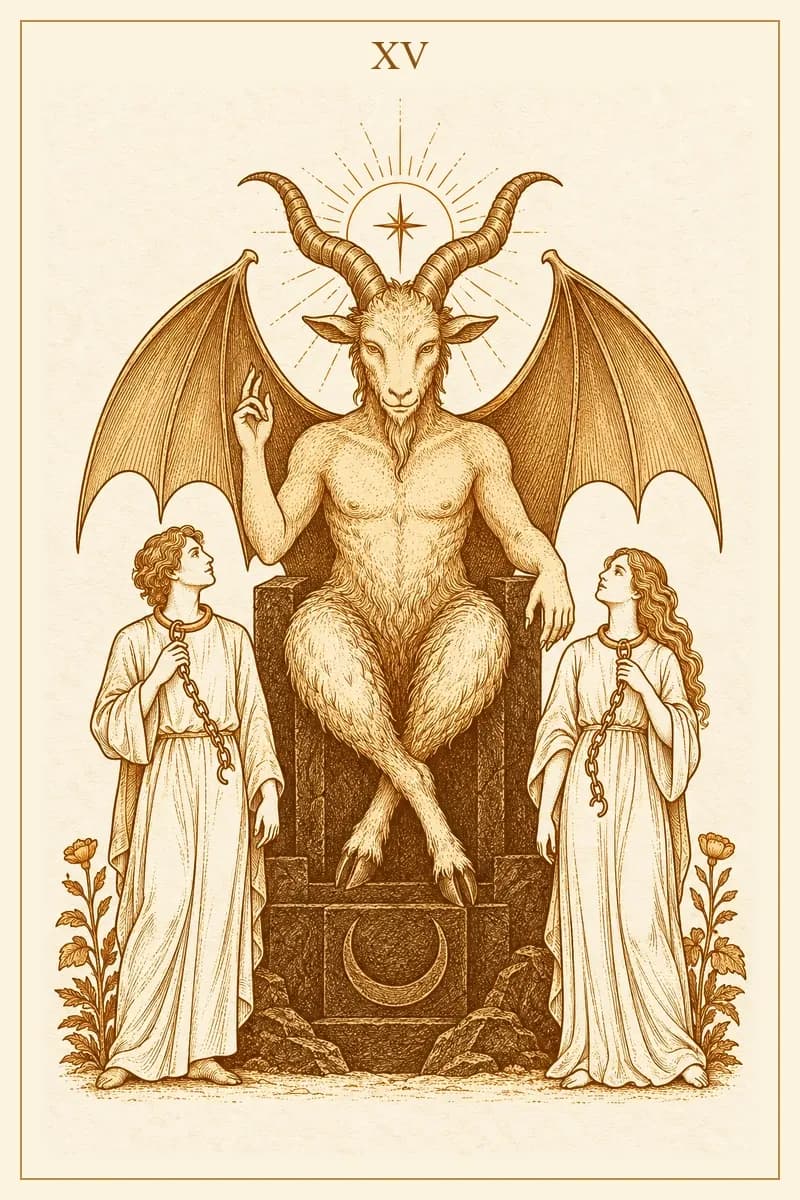
hidden compulsion
will versus compulsion
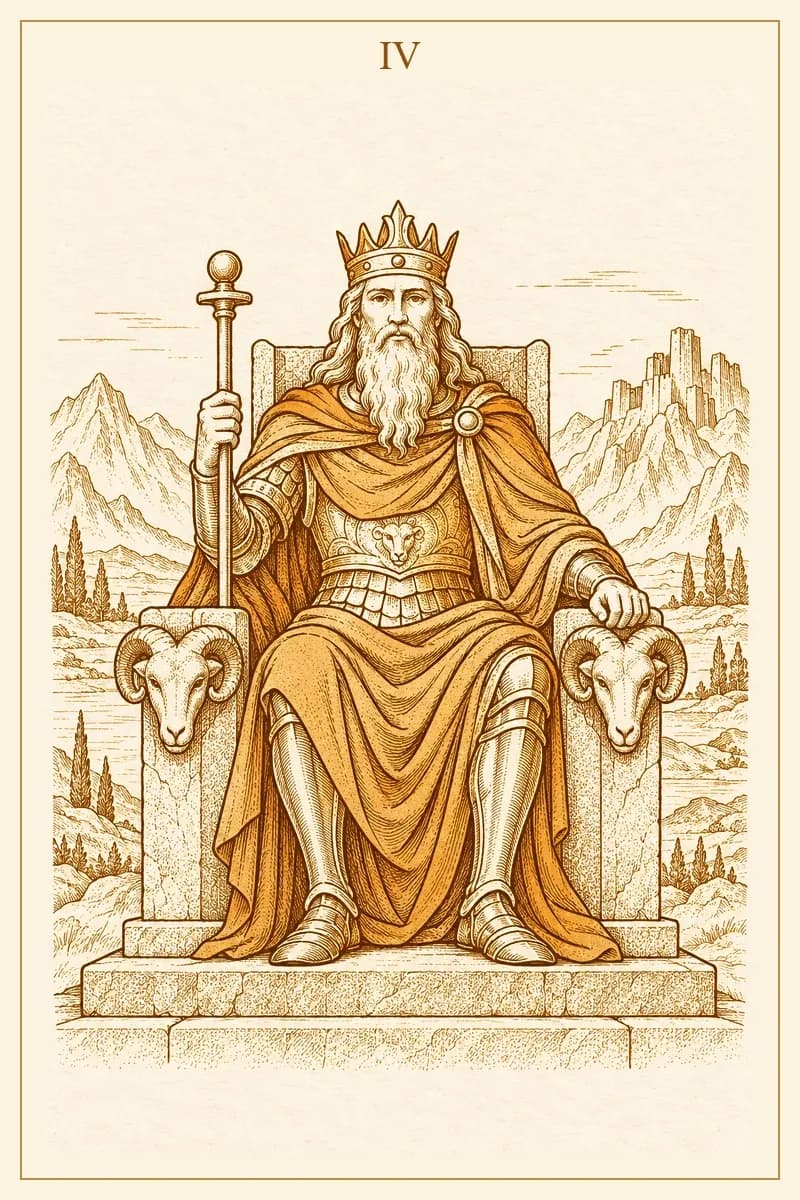
authority confronting the unseen
✦ Bring it to the cards ✦
Use this pairing as a starting point, then let a spread listen to the situation that is actually yours.
Begin a contextual reading