Loading your view
The page is gathering the latest information.
The page is gathering the latest information.
inner vs. outer authority
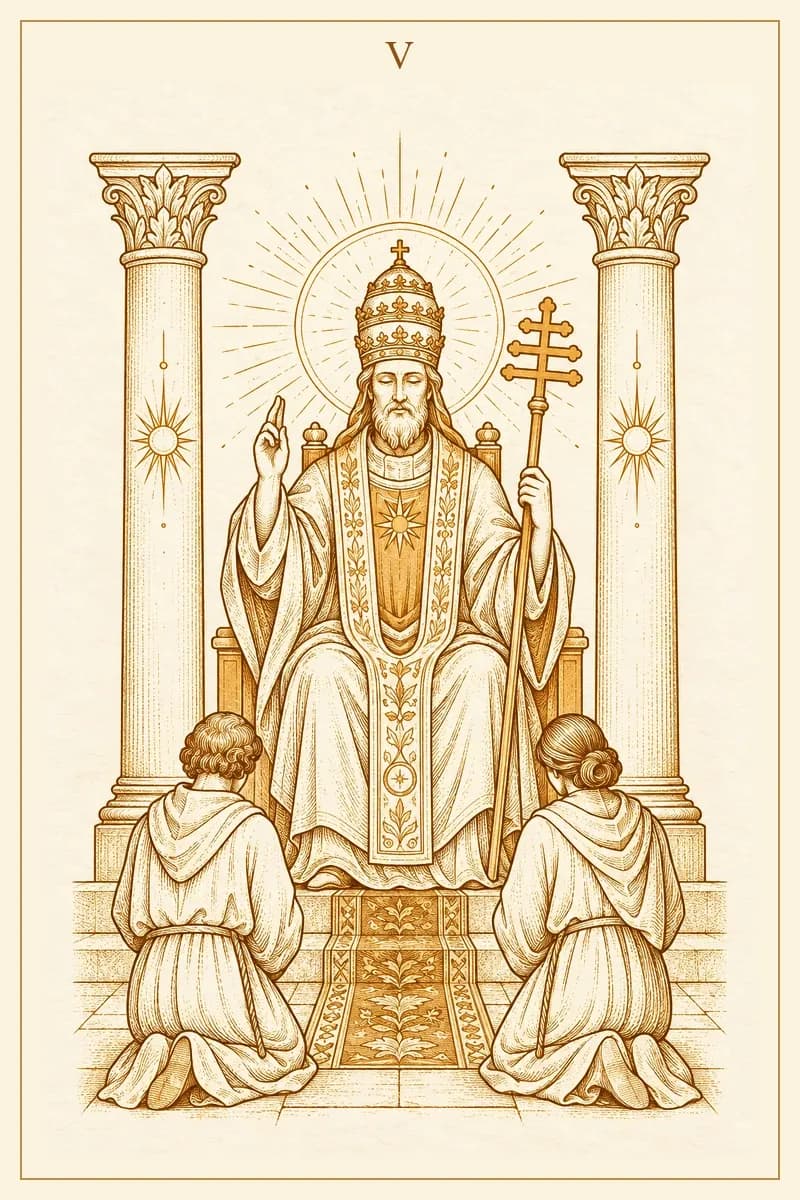
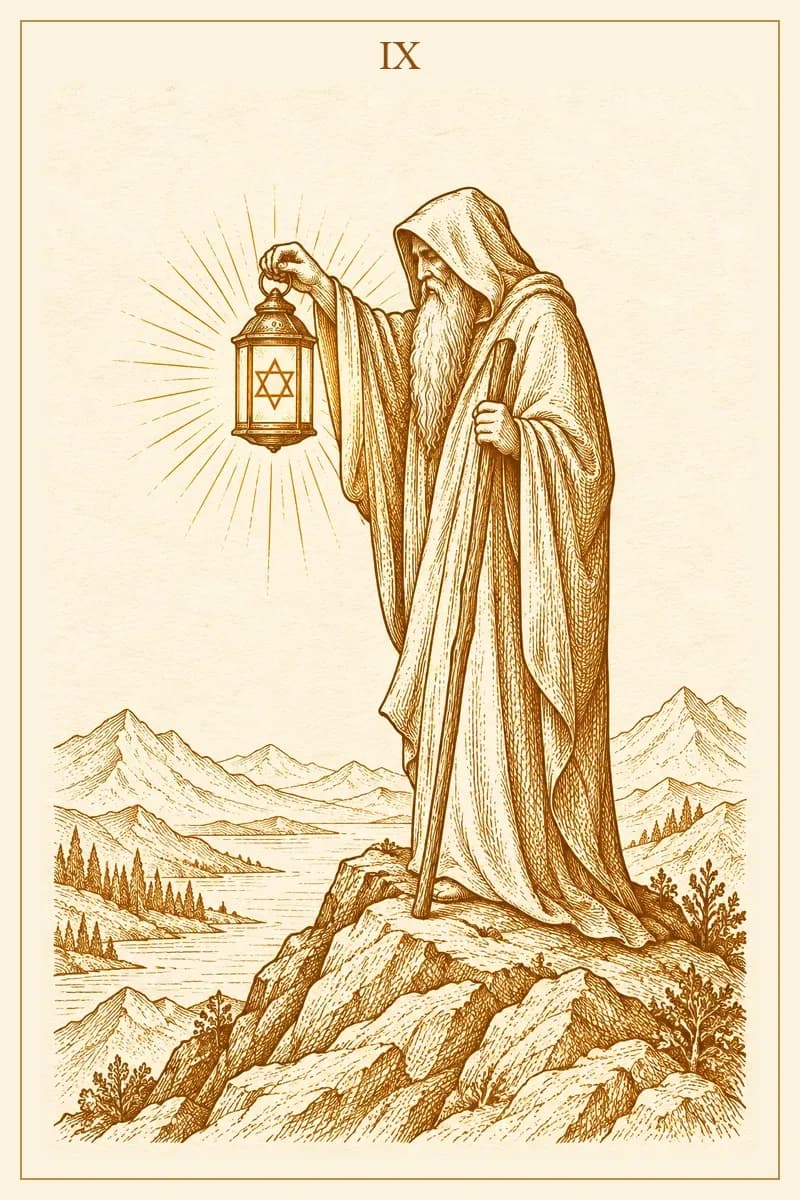
Picture two men who devoted their lives to wisdom — one built a cathedral, the other walked into a cave. Both found truth, but they could not agree on where it lived. That paradox sits at the center of The Hierophant and The Hermit appearing in the same reading. One card hands you a map drawn by thousands; the other hands you a lantern and says go find it yourself.
There is no clean resolution here. The Hierophant carries the weight of institution — the rituals, the doctrines, the community that holds meaning together across generations. The Hermit carries the weight of solitude — the long nights alone, the questions that don't fit neatly into any catechism. When they stand side by side, you are being asked which weight you are willing to carry, and whether you have been honest about which one you've been avoiding.
This pairing tends to arrive at a crossroads: a moment when the structures you inherited no longer feel like your own, or when your solitary searching has left you unmoored without the ballast of shared meaning. The cards are not asking you to choose one and discard the other. They are showing you that both are unfinished without the other.
Think of two load-bearing walls in the same building. Remove either one, and the ceiling comes down. The Hierophant is the external wall — visible, structural, built by hands that came before yours. The Hermit is the internal one — hidden within the floor plan, easy to overlook until it fails.
The tension is not tradition versus rebellion. It is congregation versus contemplation. The Hierophant needs people — his power is relational, transmitted through ceremony, through the act of teaching others. The Hermit needs distance — his clarity comes from stepping outside the noise long enough to hear the signal. Neither function works properly without the other's counterweight.
Where this pairing cuts deepest is in the question of authority. Whose voice have you been following — and have you ever stopped long enough to check whether it matches the voice inside? That is the friction generating heat in this combination.
In a relationship reading, this pairing often signals a partnership where one person craves ritual and shared framework — anniversaries marked, traditions built together, roles defined — while the other needs space that goes unexplained. The tension is not about love; it is about the shape love is allowed to take.
If this reflects a current relationship, the challenge is not incompatibility but translation. The Hierophant partner may read the Hermit partner's withdrawal as rejection. The Hermit partner may read the Hierophant partner's need for structure as control. Both are misreading the other's love language through the lens of their own architecture.
For those searching, this pairing suggests you are at a stage where you need to know what you actually believe about love — not what you were taught, not what looks right from outside — before you can build something real with another person.
Professionally, The Hierophant and The Hermit together often mark a moment of quiet professional crisis. You may hold a position within an institution — a company, a field, a tradition — that once felt like home but now feels like a costume. Or you may have spent years working alone, developing expertise, only to find that your work needs an audience, a context, a community to fully exist.
The architecture metaphor holds here too: you may be an exceptional craftsman building in isolation, but every structure eventually needs to bear weight for someone. The Hermit's lantern illuminates; the Hierophant's cathedral is what makes that light meaningful to others.
This is a productive tension for anyone considering how to bring private knowledge into a public form — writing a book, teaching, formalizing a practice, or stepping into a leadership role within a field you've studied deeply but quietly.
The shadow of The Hierophant is dogma — the moment when tradition stops being a living system and becomes a cage. The shadow of The Hermit is spiritual narcissism — the belief that your solitary insight is superior to any wisdom held collectively.
Together, their shadows compound. You may be retreating into isolation as a way to avoid accountability to a community, while telling yourself it is noble discernment. Or you may be clinging to an institution's framework as a way to avoid the terrifying work of forming your own convictions. Both are forms of avoidance dressed in wisdom's clothing.
Watch for signs that your withdrawal is actually fear of disagreement, or that your orthodoxy is actually fear of uncertainty.
Keep or share this combination reference
Continue through published pairings that share The Hierophant or The Hermit.
authority meets doctrine
driven introspection
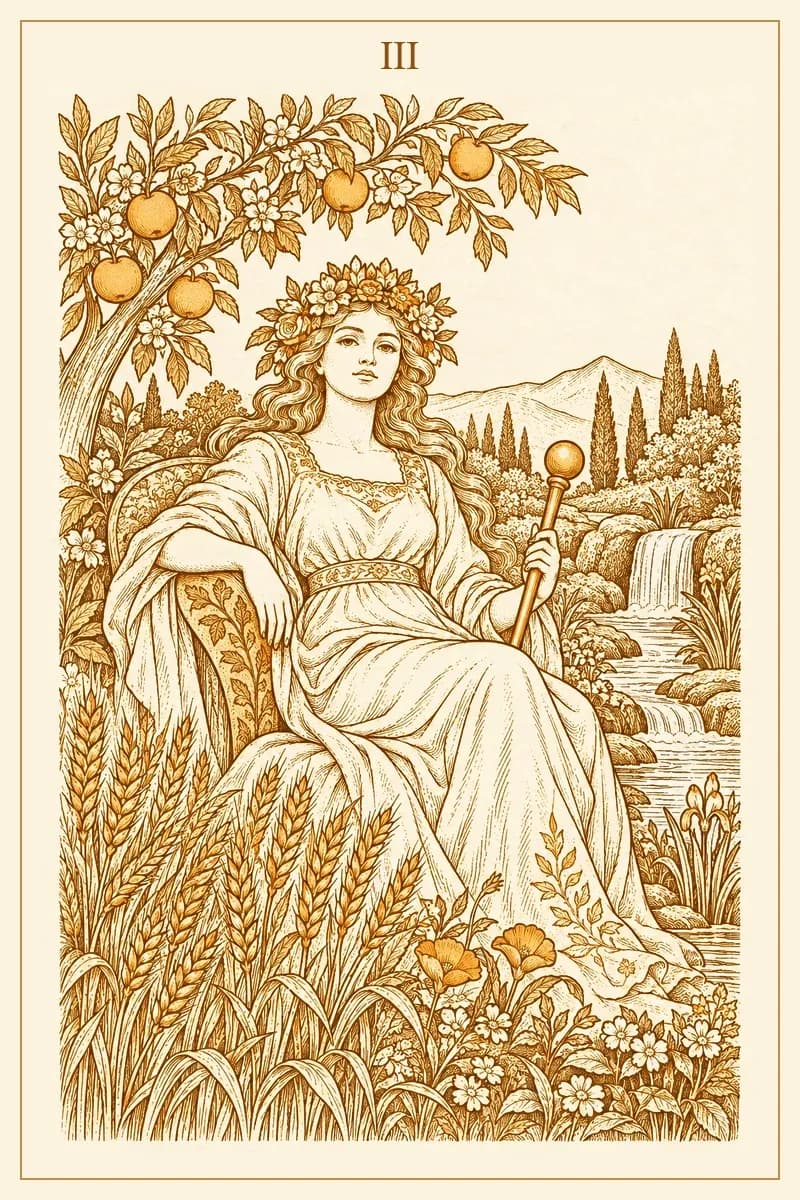
abundance versus doctrine
outer vs inner authority
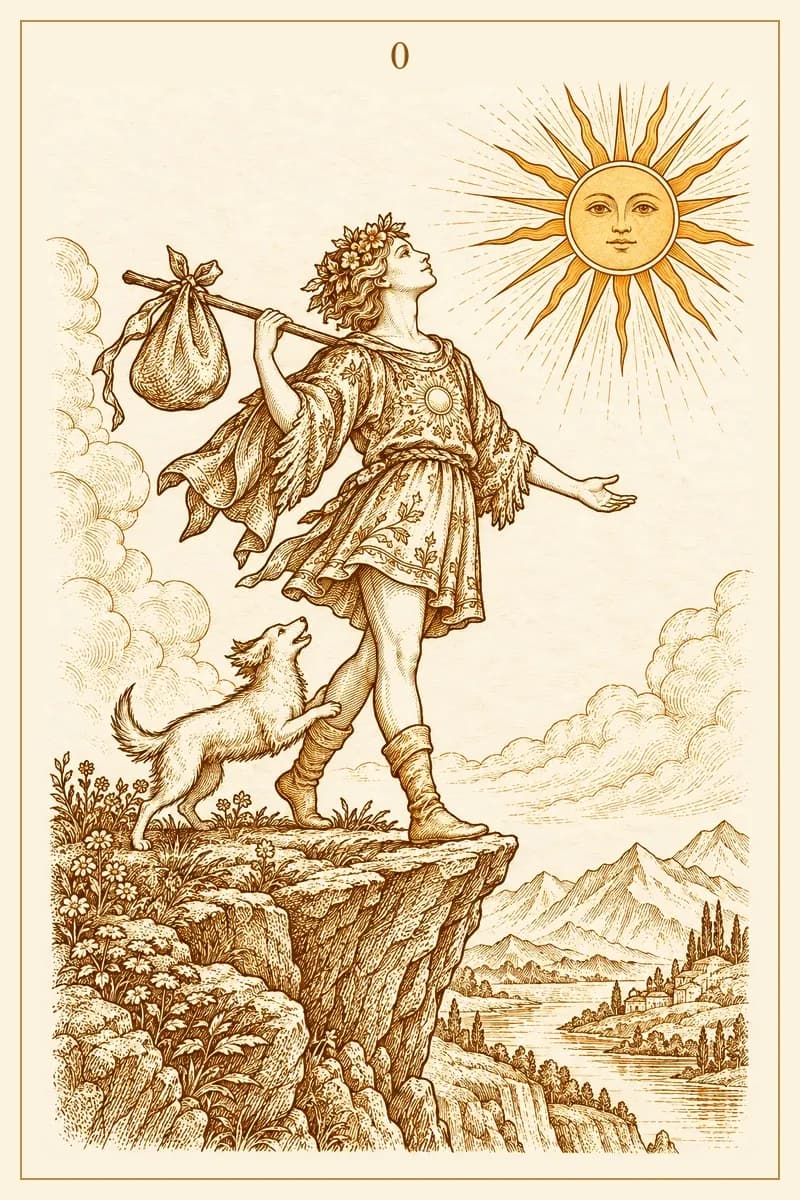
Sacred Rebellion
abundance meets withdrawal
✦ Bring it to the cards ✦
Use this pairing as a starting point, then let a spread listen to the situation that is actually yours.
Begin a contextual reading