
Card Combination
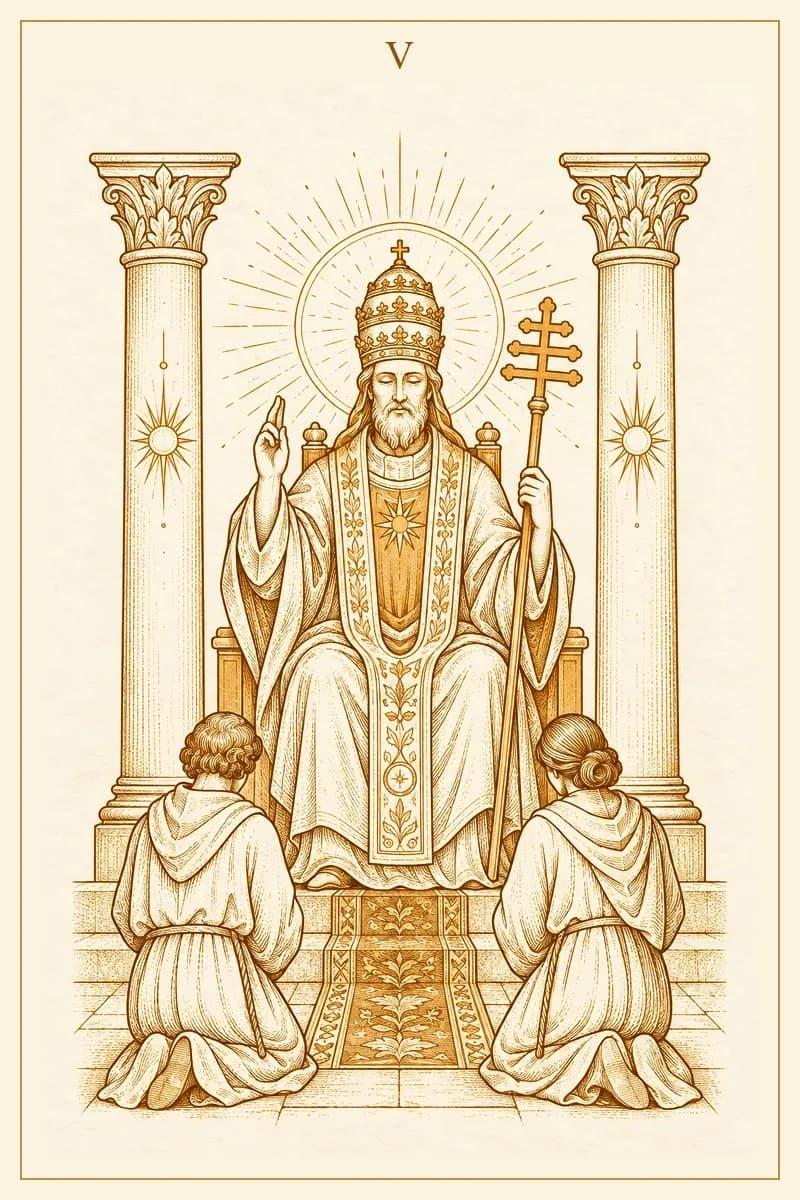
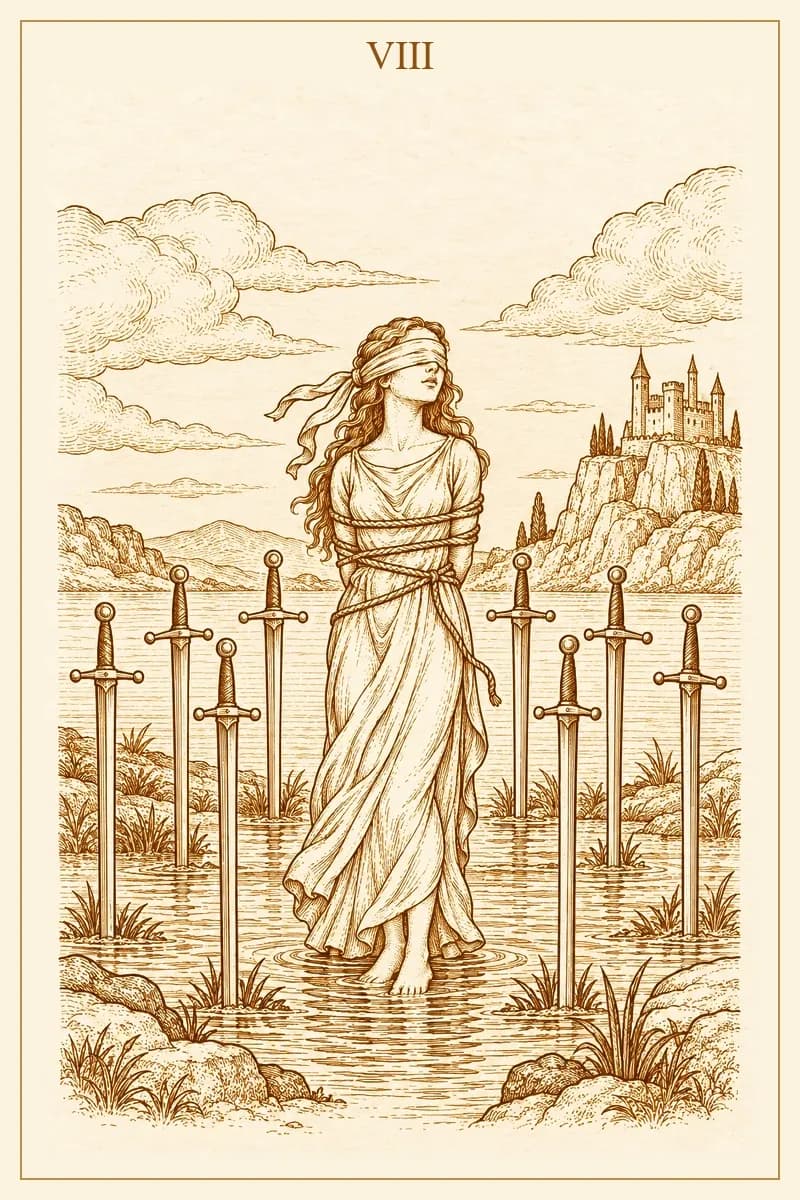
Meaning of The Hierophant and Eight of Swords Combination: Trapped by Belief
Doctrine as blindfold
A prison built without walls is still a prison. You can stand in the middle of an open field, arms bound, eyes covered, and be more confined than any person behind bars — because at least the prisoner knows who locked the door. The Hierophant and the Eight of Swords describe exactly this kind of captivity: one created not by chains but by catechism, not by guards but by deeply absorbed rules about what is allowed, what is sacred, and what will happen to you if you stray.
The Eight of Swords figure stands blindfolded, swords planted around her like a fence. She could walk free — the swords are not touching her. But she has been told, or has told herself, that moving is dangerous. Meanwhile, the Hierophant sits enthroned, holding the keys to heaven and the structure of earthly order. His authority is real. The architecture he maintains — of tradition, institution, belief — has stood for centuries. The problem arises when that architecture is no longer a cathedral you choose to enter but a maze you cannot find your way out of.
Something in your current situation has you convinced that the walls around you are load-bearing. They may not be. Before you accept the blueprint you've been handed, it is worth measuring the room yourself.
The Core Tension
The Hierophant builds systems to protect people: moral frameworks, religious structures, institutional codes. At their best, these provide scaffolding — temporary support while you find your footing. At their worst, they become the building itself, something so solid and authoritative that questioning it feels like heresy.
The Eight of Swords shows what happens when a person has fully internalized that authority. The blindfold is not imposed from outside; it is worn willingly, or worn so long it has been forgotten. The binding around the figure's arms is not tight — one shrug and it loosens. But if you have been taught that shrugging is sinful, insubordinate, or spiritually dangerous, you will stand still.
Together, these cards name a specific kind of suffering: the suffering of someone who knows, somewhere deep down, that they are not actually trapped — but who cannot grant themselves permission to move.
Love & Relationships
In relationships, this combination often appears around dynamics where one partner holds significantly more institutional or moral authority — or where one person has absorbed so many rules about what love is supposed to look like that they cannot see what is actually in front of them.
You may be staying in a relationship because leaving would violate something you were taught: family obligation, religious vow, cultural expectation, the belief that suffering in love is noble. Or you may be rejecting a relationship that is genuinely good because it does not fit the approved template. The Eight of Swords does not judge your tradition. It asks whether your tradition is giving you sight or taking it.
For couples already together, this pairing suggests one partner may be using shared belief systems — religious doctrine, family rules, social norms — to keep the other small. Devotion to principle can become a tool of control.
Career & Purpose
Professionally, this combination points to environments where institutional culture has calcified into something that stifles rather than supports. You may work somewhere with a great deal of hierarchy — respected tradition, senior gatekeepers, established procedure — and find yourself unable to propose new approaches because the unspoken rule is that new approaches are suspect.
The Hierophant's structure can be a cathedral or a bureaucratic maze depending on who built it and why. Right now, it may be functioning as the latter. Notice whether the restrictions you're navigating are written down anywhere or whether they are simply assumed to be true because no one has challenged them in a long time.
Shadow Side
The shadow of this combination is sophisticated self-deception. It is easy to spot someone else being controlled by doctrine. It is much harder to see it in yourself — because the beliefs doing the controlling feel like your own values, your own conscience, your deepest convictions. They were installed so early, and reinforced so consistently, that questioning them does not feel like intellectual inquiry. It feels like moral collapse.
The Eight of Swords reminds you that the most confining beliefs are the ones you defend most fiercely. If a rule produces suffering and you cannot examine it, that is the blindfold doing its work.
Action Steps
- 1Identify one rule — about love, work, or yourself — that you have never questioned. Write down where it came from and whether you would choose it now.
- 2Notice when you use institutional language ("that's just how it's done," "that's not proper") to avoid a decision that actually requires your own judgment.
- 3Take one small action that the rule would forbid and observe what actually happens — not what you were taught would happen.
- 4The Hierophant and the Eight of Swords do not tell you to burn down every structure you live inside. They tell you to check whether the door you think is locked is actually locked. Tradition and authority have genuine value — but only when you are choosing them with open eyes. The blindfold comes off the moment you decide to reach up and remove it. The question is whether you believe you are allowed to.
Related Pairings
Continue through published pairings that share The Hierophant or Eight of Swords.
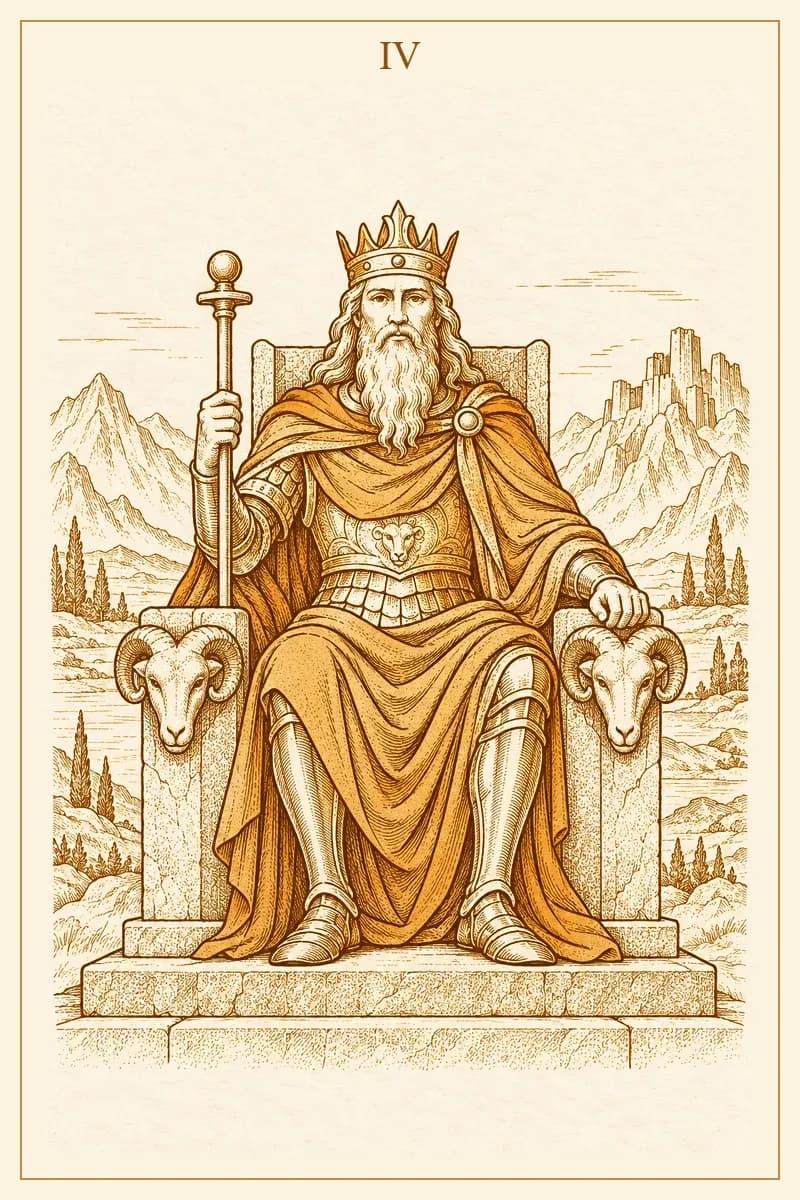
Authority meets doctrine
Meaning of The Emperor and The Hierophant Combination: Two Pillars of Order
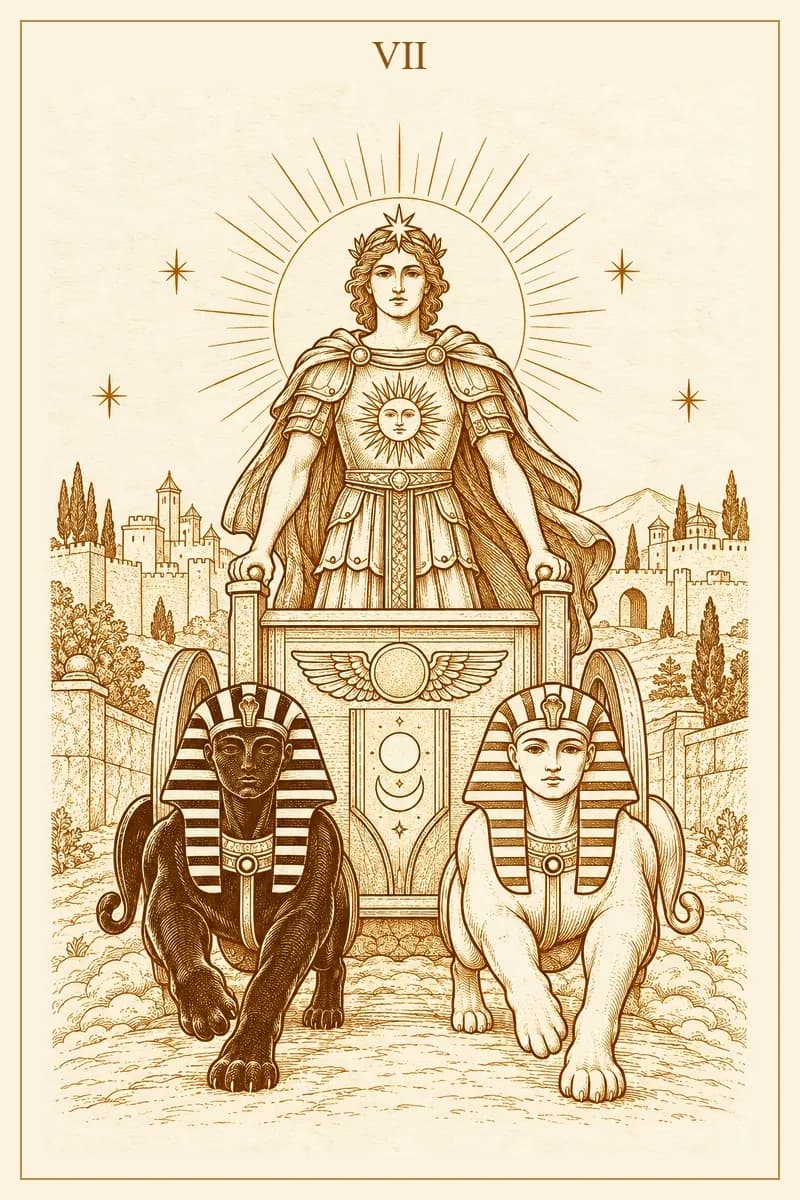
Willpower as trap
Meaning of The Chariot and Eight of Swords Combination: Trapped Victory
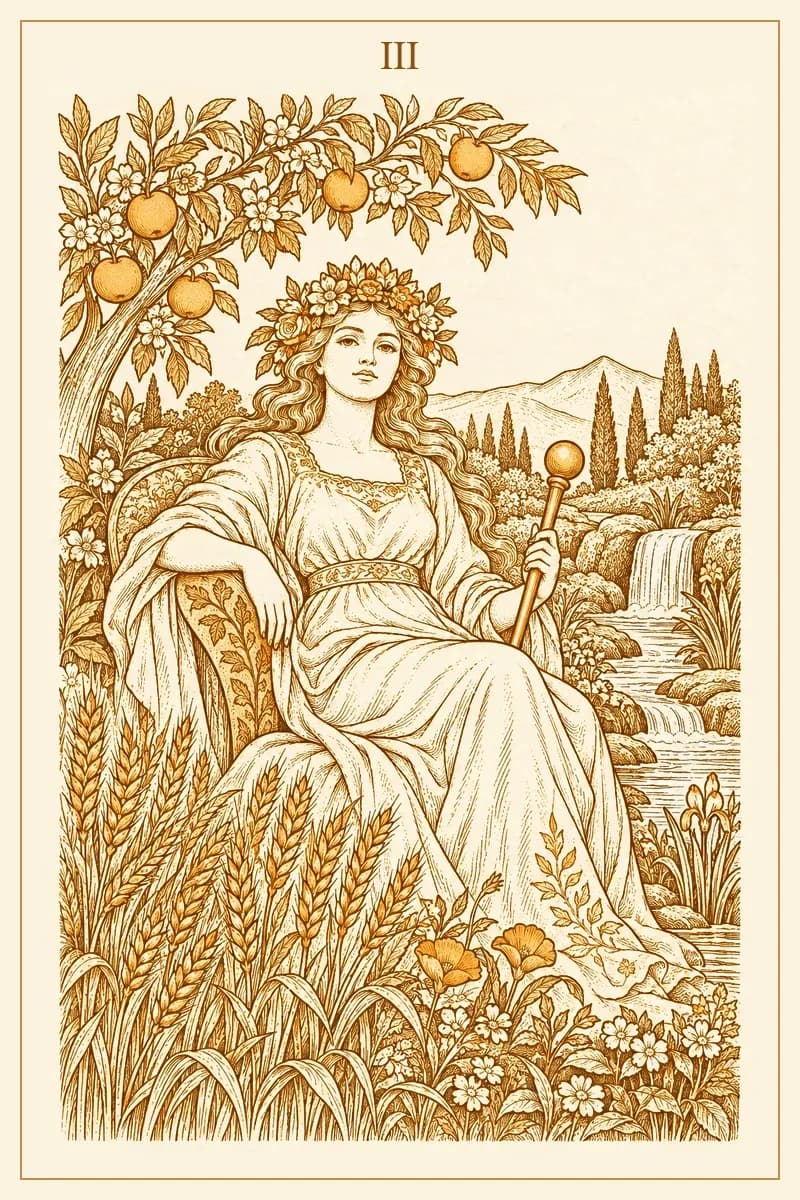
Abundance versus doctrine
Meaning of The Empress and The Hierophant Combination: Nature Meets Doctrine
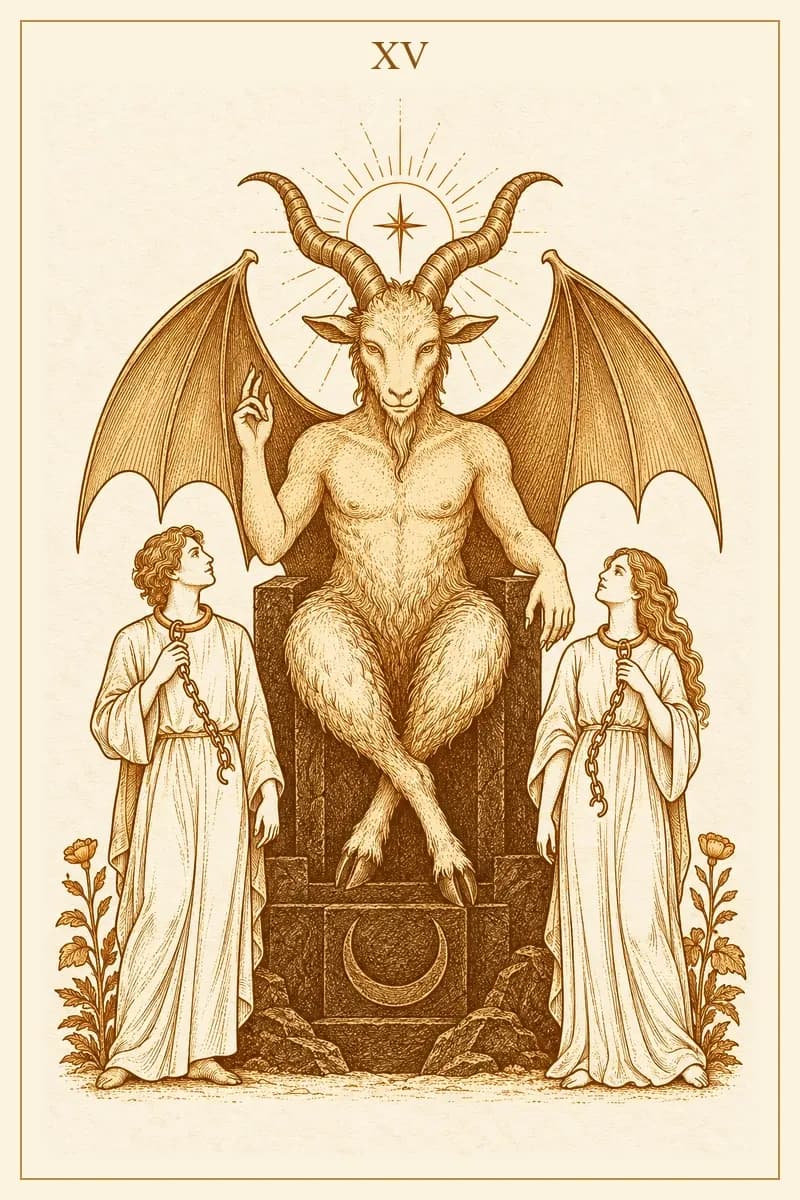
Self-built prisons
Meaning of The Devil and Eight of Swords Combination: Constructed Captivity
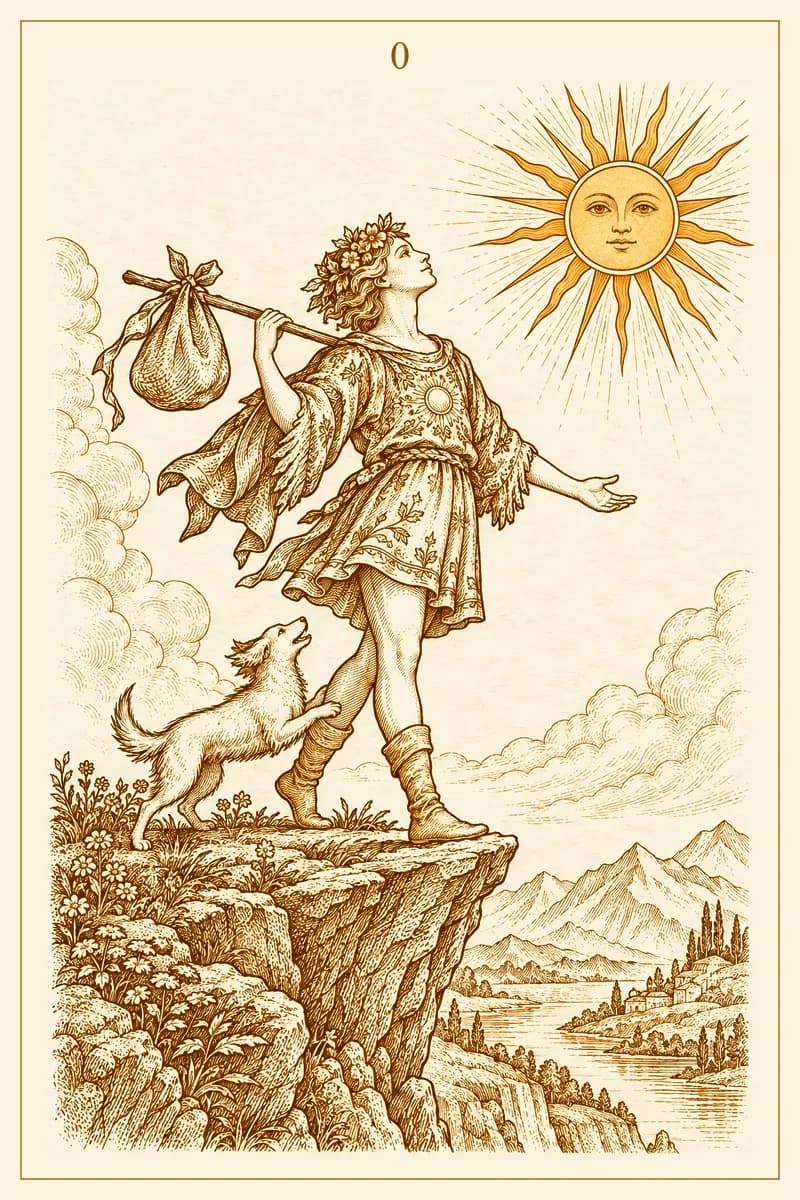
Sacred rebellion
Meaning of The Fool and The Hierophant Combination: Tradition Meets Freedom
Authority as cage
Meaning of The Emperor and Eight of Swords Combination: Trapped by Control
✦ Bring it to the cards ✦
Bring The Hierophant and Eight of Swords into your own reading
Use this pairing as a starting point, then let a spread listen to the situation that is actually yours.
Begin a contextual reading