
Card Combination
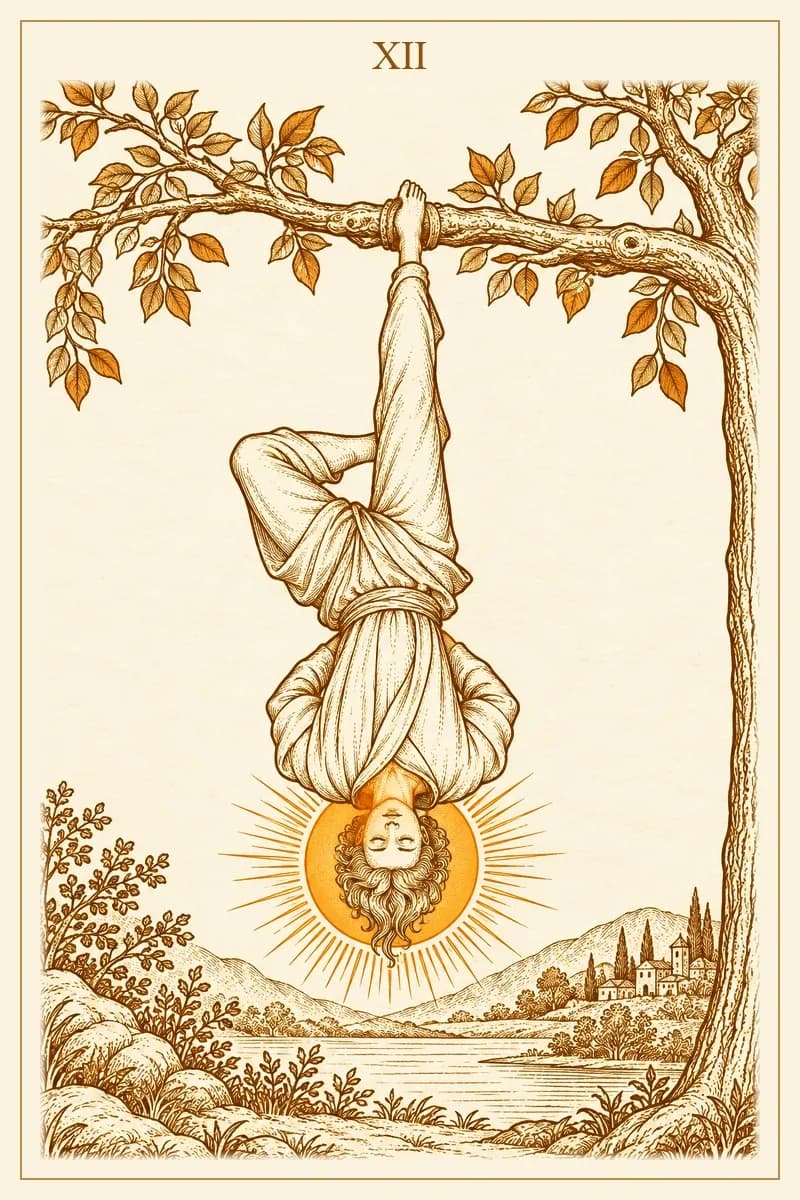
Meaning of The Hanged Man and Six of Pentacles Combination: Generosity Reexamined
Surrender transforms generosity
The most effective supply line in any campaign is the one the opponent never considers cutting because they don't recognize it as a supply line at all. In warfare, the side that controls the flow of resources controls the conflict — and the Six of Pentacles has been managing that flow with careful precision, doling out support here, withholding it there, maintaining a balance of generosity that keeps the system functional. Then The Hanged Man arrives and asks a question that threatens the entire operation: who decided you were the one distributing?
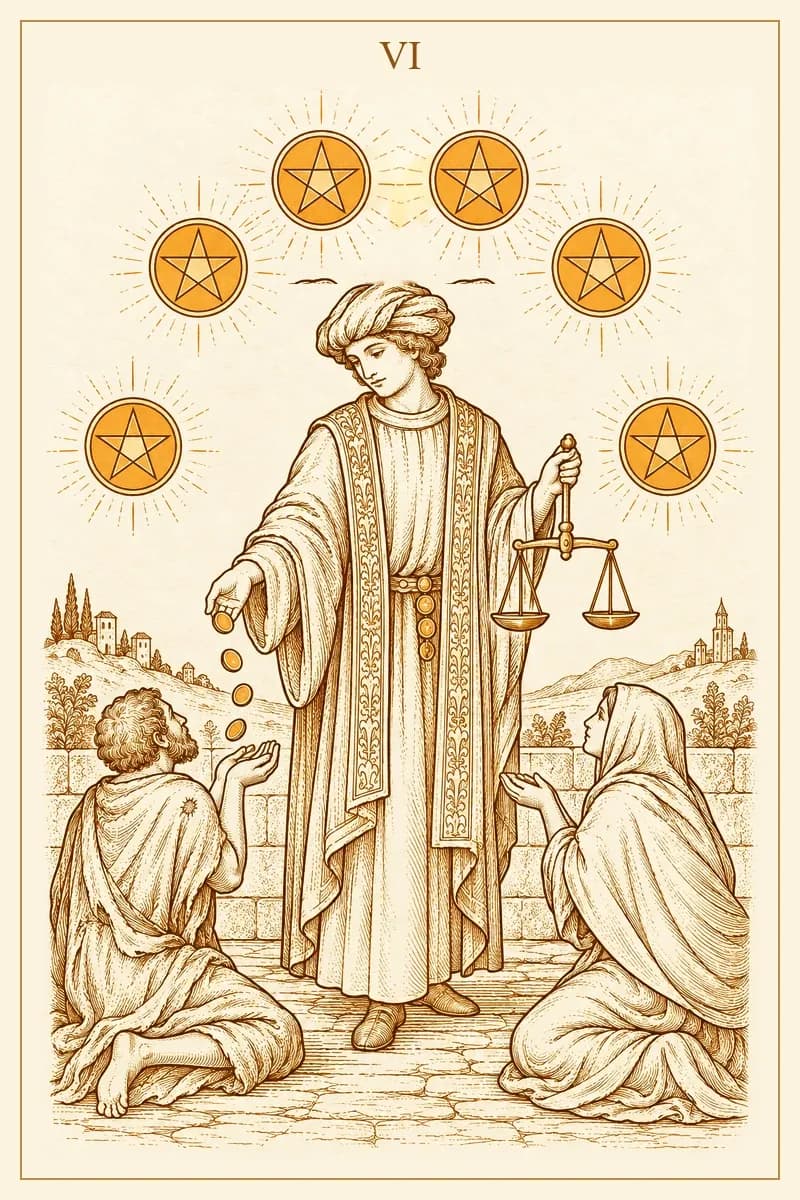
The Six of Pentacles shows a wealthy figure holding scales in one hand while distributing coins to two kneeling recipients. The image appears benevolent. Look longer and the power dynamic sharpens. The giver stands. The receivers kneel. The scales measure not just fairness but control.
The Core Tension
The Six of Pentacles operates within a clear hierarchy: someone has more and shares it with those who have less. This arrangement can be genuinely generous, and often is. Charity, mentorship, financial support — the Six's gifts are real and needed. But the card also encodes an unexamined assumption: that the current distribution of who gives and who receives is natural and fixed.
The Hanged Man inverts this assumption by inverting himself. From his suspended position, the giver and receivers look identical — or rather, their roles appear reversible. What if the person kneeling has something the standing figure desperately needs? What if the most strategic resource in this campaign is not the coins being distributed but the perspective of those receiving them?
This is not abstract philosophy. It has immediate practical implications for how you relate to generosity — both giving and receiving.
Love & Relationships
In romantic partnerships, this combination illuminates dynamics of unequal giving. One partner may have positioned themselves as the provider — emotionally, financially, practically — while the other has accepted the receiving role. This arrangement may have begun organically, even lovingly. But The Hanged Man asks whether it has calcified into a power structure that neither partner chose deliberately.
The partner who always gives may discover, upon honest examination, that their generosity serves a function beyond kindness: it maintains control. The partner who always receives may discover that their acceptance has been a form of strategic compliance rather than genuine gratitude. Both positions can be comfortable. Neither is authentic when it becomes fixed.
For those seeking relationships, this combination warns against the tendency to establish your value by being the generous one from the start. Giving extravagantly in early dating is often a supply line you build to make yourself essential — a strategic position, not a loving one.
Career & Purpose
Professionally, The Hanged Man and Six of Pentacles describe a workplace dynamic where resources, credit, or opportunities are being distributed by someone who has assumed the authority to distribute them. This may be appropriate — managers allocate resources, leaders set priorities. But the Hanged Man suggests examining whether the allocation system itself is sound.
Are the people receiving support the ones who genuinely need it, or the ones who are most visible? Is credit being distributed based on contribution or on proximity to the distributor? Is mentorship flowing toward those with the most potential or those who remind the mentor of themselves?
If you are in a position of distribution, these cards recommend a genuine audit of your generosity. Suspend your usual criteria for one week and observe who you would help if your current assumptions about merit and need were inverted.
If you are in a receiving position, examine whether you have become dependent on a supply line that could be redirected at any time. The Hanged Man's strategic counsel is clear: build capacity that does not depend on anyone else's decision to share.
Shadow Side
The shadow of this combination is manipulation disguised as generosity. The giver who uses their position to maintain psychological control. The receiver who performs gratitude to ensure the flow continues. Both parties are complicit in a transaction dressed as kindness.
The deeper shadow is the refusal to receive. Some people have so thoroughly identified with the giving role that accepting help feels like a defeat. The Hanged Man, who surrenders voluntarily, demonstrates that receiving is not weakness — it is a different form of strength that the Six of Pentacles' giver desperately needs to develop.
Action Steps
- 1Examine one relationship where you primarily give and honestly assess whether your generosity creates dependence, connection, or control — then adjust your approach based on what you find.
- 2Accept one offer of help or support that you would normally decline, and notice what feelings arise when you shift from the giving to the receiving position.
- 3Identify one instance where resources, credit, or attention are being distributed according to unexamined assumptions, and advocate for a different allocation — even if it costs you personally.
Related Pairings
Continue through published pairings that share The Hanged Man or Six of Pentacles.

momentum versus surrender
Meaning of The Chariot and The Hanged Man: Momentum Meets Stillness
Power and Giving
Meaning of The Chariot and Six of Pentacles: Power Meets Generosity

control vs release
Meaning of The Emperor and The Hanged Man: When Control Meets Surrender

power through generosity
Meaning of The Devil and Six of Pentacles Combination: Generosity Under Control
fertile suspension
Meaning of The Empress and The Hanged Man: Fertile Pause
power and benevolence
Meaning of The Emperor and Six of Pentacles: Power That Gives and Takes
✦ Bring it to the cards ✦
Bring The Hanged Man and Six of Pentacles into your own reading
Use this pairing as a starting point, then let a spread listen to the situation that is actually yours.
Begin a contextual reading