
Card Combination
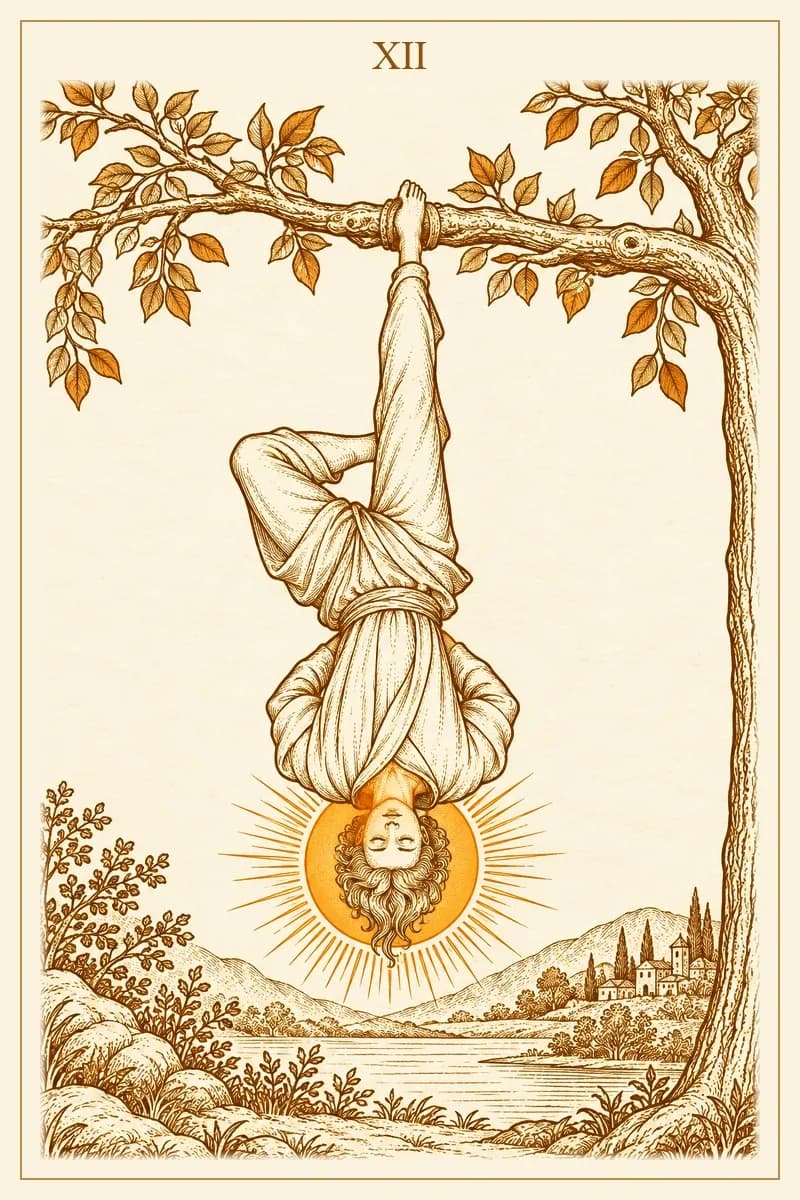
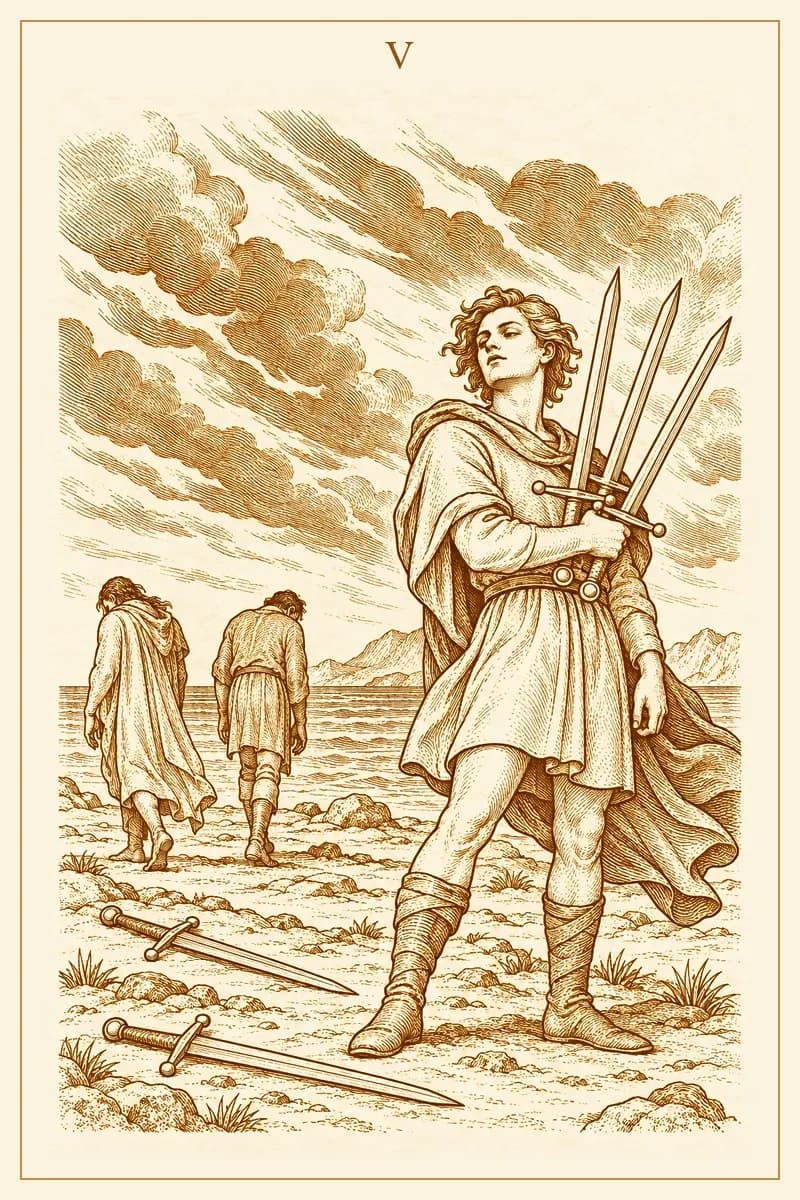
Meaning of The Hanged Man and Five of Swords Combination: Surrender That Costs You
strategic surrender
The cards are on the table. Someone already knows what you're holding, and you're still sitting there, chin up, suspended between a move you won't make and a fight you can't win. That's where The Hanged Man and the Five of Swords drop you — not gently, not with ceremony, but mid-hand, mid-argument, mid-everything.
The Hanged Man is not a pacifist card. He's a card of deliberate pause — the gambler who stops, leans back, and reads the table before folding or going all in. But pair him with the Five of Swords, the card of contested victories and bitter aftermath, and the pause curdles. The figure hanging upside-down is no longer gathering perspective. He's watching his chips get raked off the table while he contemplates the ceiling.
This combination lives in the territory between principled withdrawal and costly inaction. The line between those two things is thinner than most readings admit.
The Core Tension
The Hanged Man trades time for clarity. The Five of Swords trades dignity for dominance. Together, they create a scenario where someone is philosophically checked out of a conflict that is very much continuing without their consent.
Here is the uncomfortable question this pairing forces: whose silence is actually winning? In poker, a long pause can signal strength or paralysis — and your opponents will read it both ways until you act. The Five of Swords doesn't wait for anyone to reach enlightenment. Its figures have already pocketed the swords and are walking away, smirking. The person left behind — the one still hanging, still reflecting — inherits the loss.
This isn't to say The Hanged Man's instinct is wrong. Sometimes stepping back from a destructive dynamic is the only sane move. But the Five of Swords is a card of aftermath. The battle has already happened. The question this pairing raises is not should I engage? but did I wait so long that the game ended without me?
Love & Relationships
In a relationship reading, this combination points to a standoff that one person has already emotionally exited. The Hanged Man may believe they are taking the high road — choosing not to fight, choosing to see things from the other person's angle, choosing peace over conflict. What the Five of Swords reveals is that the other person experienced that withdrawal as abandonment or as a concession.
Someone folded without saying so. The other partner picked up all the chips and is now acting accordingly. Arguments that go unaddressed don't dissolve; they calcify into precedents. If you've been the patient one, the non-reactive one, the one who "rises above" — check whether your silence has been interpreted as consent to terms you never agreed to.
Career & Purpose
Professionally, The Hanged Man and Five of Swords together describe a meeting you didn't speak up in, a decision you let pass without objection, a colleague who filled the vacuum you left with your own ideas — credited to their name.
The Hanged Man in a workplace setting can masquerade as strategic patience. And sometimes it is. But the Five of Swords is ruthlessly transactional. It marks moments where someone else's aggression, however low-key, rewrote the outcome while you were waiting for the right moment to act. There may not have been a right moment. There was only the moment — and it passed.
Reclaiming ground here doesn't require confrontation. It requires presence. Show up to the next hand and bet something.
Shadow Side
The shadow of this combination is self-righteous passivity. The story goes: I'm not fighting because I'm above this. But the Five of Swords strips that story down. It doesn't care who is morally correct. It records who acted and who didn't. The wound here isn't that you lost — it's that you lost while believing your non-participation was a form of winning.
There's also a second shadow: the person who used Hanged Man energy as an excuse — the one who withheld, stonewalled, or withdrew under the guise of enlightened detachment, and then blamed the other party for the wreckage left by that absence.
Both shadows belong to the same card. One is unconscious; the other is calculated.
Action Steps
- 1Identify one conflict you've been "rising above" and name the actual cost of your silence — not in abstract terms, but in concrete outcomes already in motion.
- 2If you've lost ground at work or in a relationship, stop diagnosing why and make one visible move to re-engage: a conversation, a counter-proposal, a direct statement of where you stand.
- 3Notice whether your patience is genuine strategic stillness or whether it's a way of not having to be accountable for a choice you've already made but haven't said out loud.
Related Pairings
Continue through published pairings that share The Hanged Man or Five of Swords.
momentum versus surrender
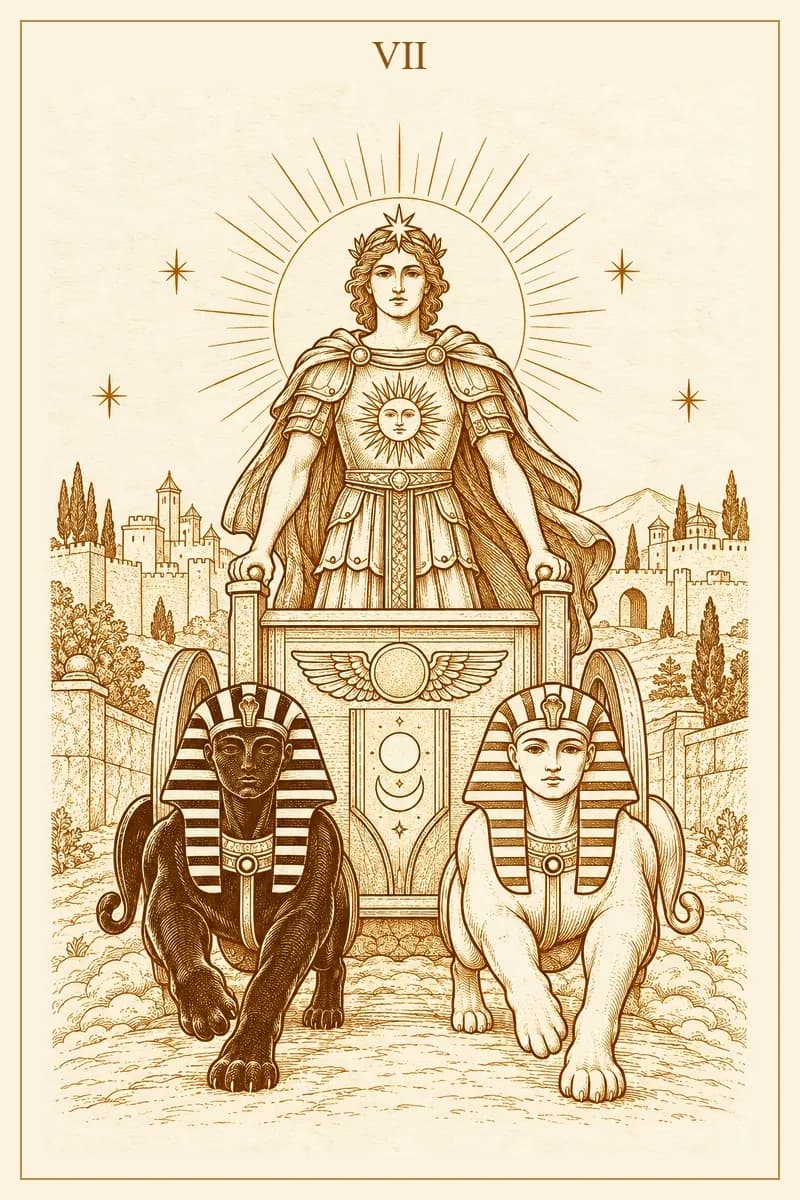
Meaning of The Chariot and The Hanged Man: Momentum Meets Stillness
costly victory
Meaning of The Chariot and Five of Swords Combination: Winning at a Cost
control vs release
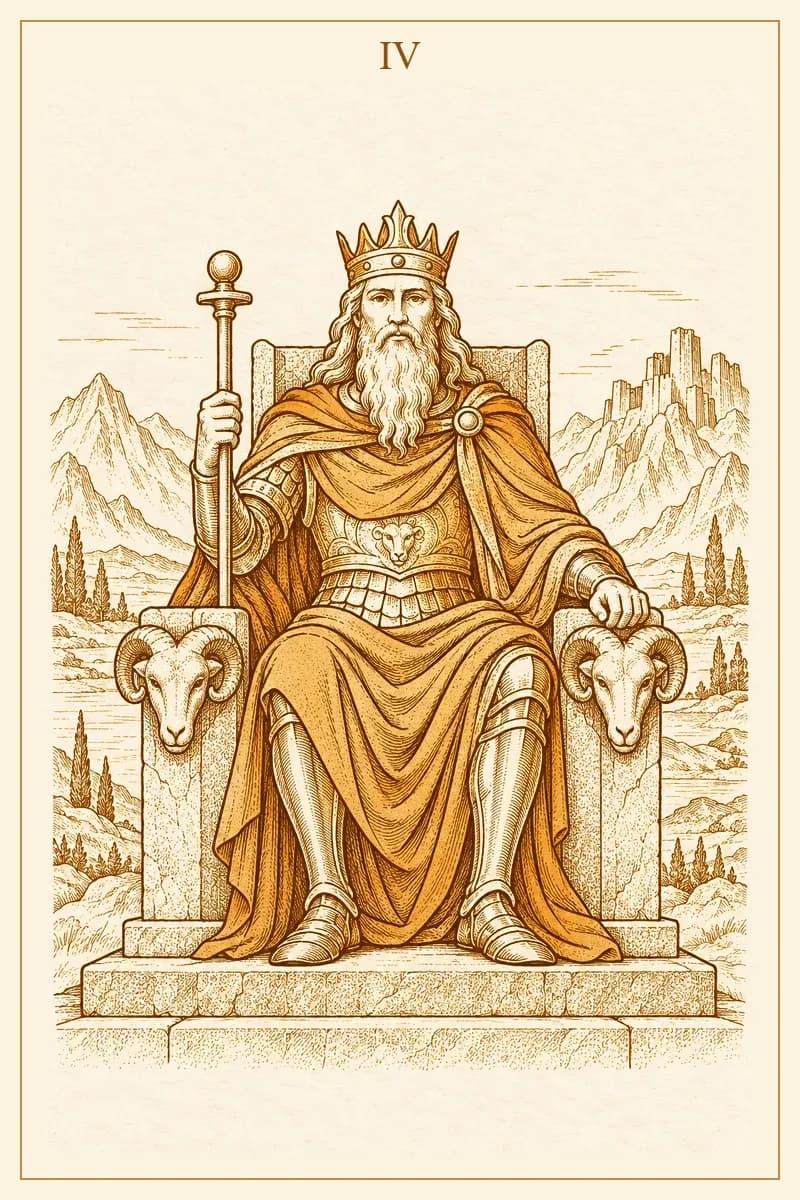
Meaning of The Emperor and The Hanged Man: When Control Meets Surrender
Toxic Power Games
Meaning of The Devil and Five of Swords Combination: Toxic Power Games
fertile suspension
Meaning of The Empress and The Hanged Man: Fertile Pause
pyrrhic authority
Meaning of The Emperor and Five of Swords: Winning at What Cost
✦ Bring it to the cards ✦
Bring The Hanged Man and Five of Swords into your own reading
Use this pairing as a starting point, then let a spread listen to the situation that is actually yours.
Begin a contextual reading