
Card Combination
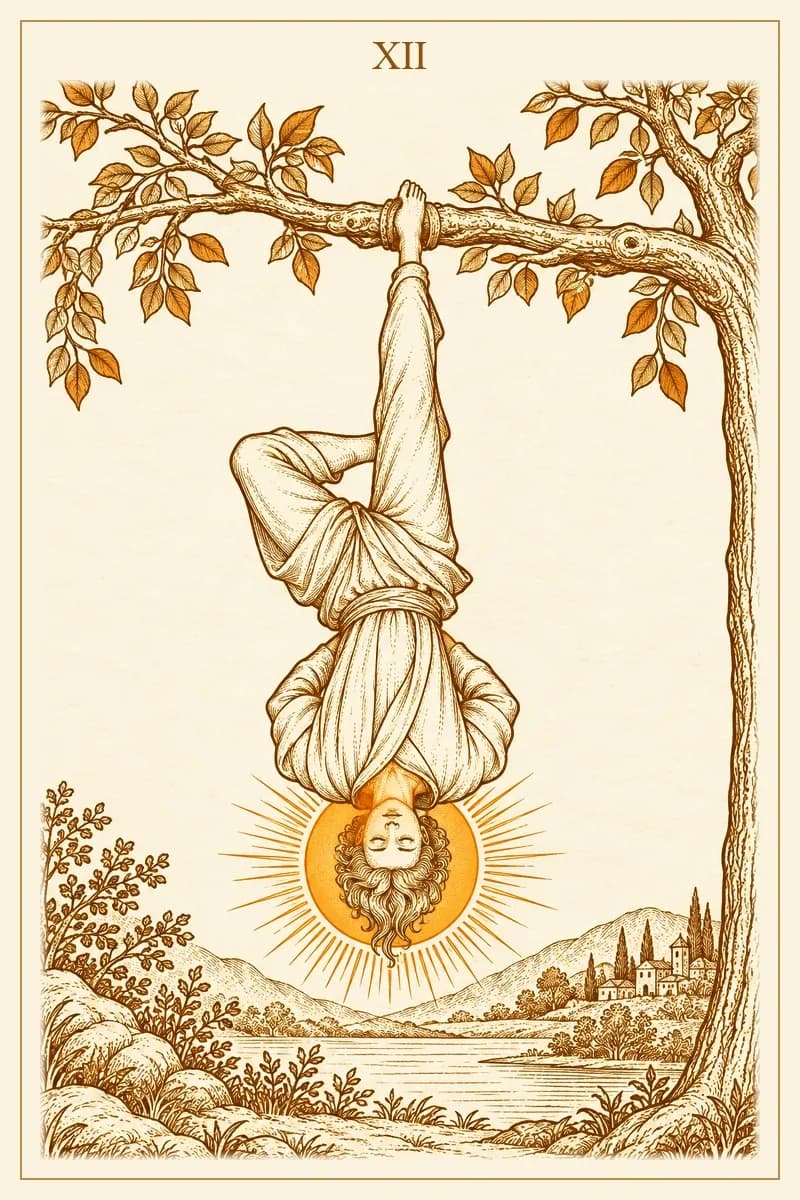
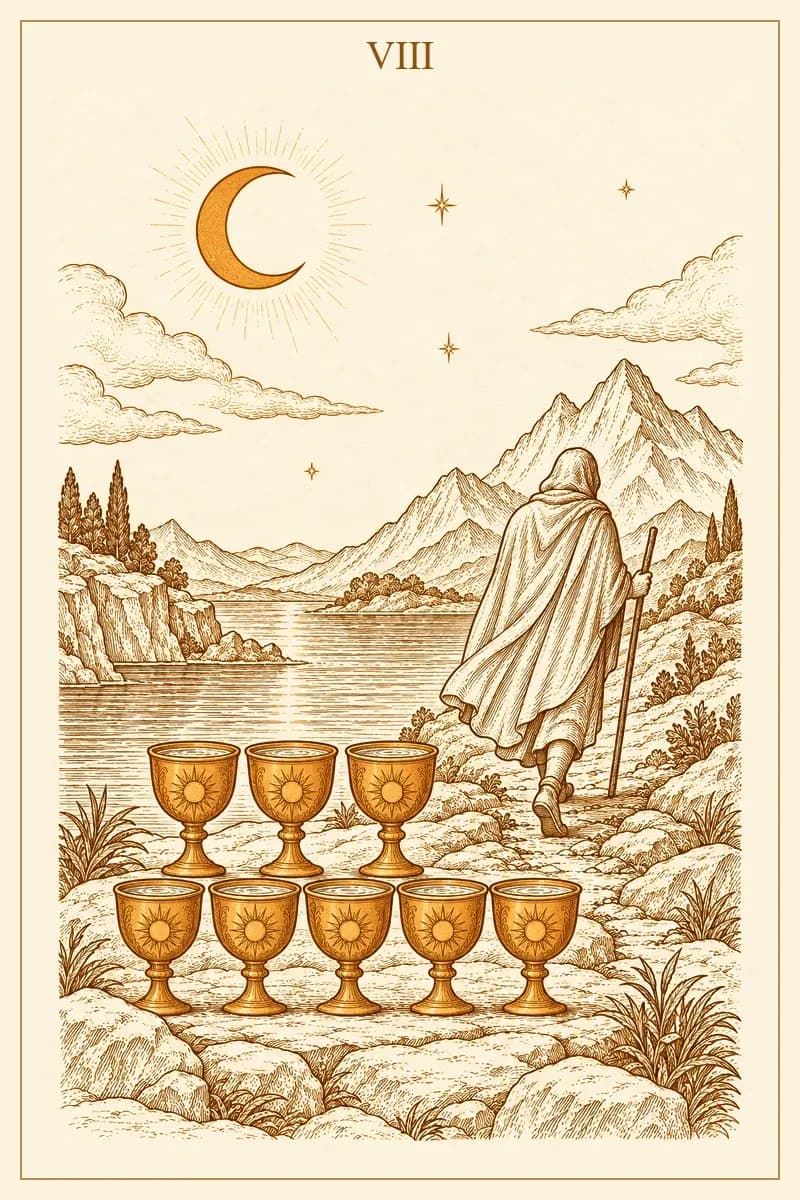
Meaning of The Hanged Man and Eight of Cups Combination: The Pause Before Departure
Suspended departure
A bag sits packed in the hallway. It has been packed for weeks. You keep walking past it, checking that it is still there, then going back to your usual seat. An audience has already shifted in their chairs. A stage is set for an exit. But the actor has not moved yet, and the reasons for staying are growing stranger and less convincing each time you rehearse them.
This is the scene that the Hanged Man and the Eight of Cups set together — the liminal space between a decision already made in your bones and the moment your feet finally honor it. The Eight of Cups is the card of the meaningful departure, the deliberate walking away from something that once held everything you wanted. The Hanged Man is voluntary suspension, the pause before a pivot. Together they describe a threshold state that most people recognize instantly: you already know, and you are not quite ready for what knowing requires of you.
There is nothing weak about this space. There is something necessary about it.
The Core Tension
The Eight of Cups does not leave because things went wrong. It leaves because something is missing — a depth, a meaning, an alignment between what is present and what the soul is reaching toward. That is a harder kind of leaving than escape. You cannot blame the thing you are walking away from. You can only acknowledge that it no longer fits.
The Hanged Man brings a complication: a demand for complete stillness before movement. Its energy is not foot-dragging — it is the recognition that a departure of this magnitude requires a different kind of preparation. You cannot sleepwalk out of a life you built with intention. You have to see it clearly first, from the upside-down vantage point that stillness provides.
The tension, then, is timing. The Eight of Cups says the leaving is necessary. The Hanged Man says not yet. Both are right. The question is whether the pause remains purposeful or calcifies into an indefinite delay that protects you from having to grieve what you are leaving behind.
Love & Relationships
In relationships, this pairing is one of the most emotionally precise combinations in the deck. It appears when someone has reached an inner certainty that a relationship has run its course — not because of cruelty or betrayal, but because of quiet incompatibility, a slow divergence of paths, an accumulating sense of absence even in presence.
The Hanged Man in this context is not weakness or indecision. It is the recognition that leaving a person is a serious act and that acting from clarity is more humane than acting from panic. The pause matters. But it has an expiration. The longer you remain suspended while your partner lives with the uncertainty your distance creates, the more damage accumulates on both sides of the relationship.
If you are in this space, the most honest question is not whether to leave — your Eight of Cups has already answered that — but whether you are using the Hanged Man's pause to prepare for a clean, clear departure or to avoid initiating the pain.
Career & Purpose
Professionally, this combination marks the person who is mentally no longer in the role, the company, or the industry — but physically has not resigned yet. The Eight of Cups energy has done its audit and found the situation lacking. The dream it once served is no longer present. There is no catastrophe to point to, which makes the exit harder to justify, harder to explain, harder to initiate.
The Hanged Man in this context is valuable precisely because impulsive departures from stable positions carry real cost. There are practical matters: finances, transition plans, relationships that need to be honored in how you leave, not just in the fact of leaving. The pause allows those preparations. But preparation is not the same as avoidance, and eventually the script requires the actor to step off the stage.
Shadow Side
The shadow of this pairing is grief-avoidance. Leaving something real — a relationship, a career, a community — means mourning it. The thing had value once. Walking away requires admitting that and then absorbing the loss anyway, because continued presence would cost more than departure.
The Hanged Man can be recruited by the psyche as a grief-postponement strategy. Every day in suspension is another day before the loss becomes real. Watch for the moment when your stillness stops producing new insight and simply extends the comfortable ambiguity of not-quite-leaving. That is the moment when the pause has become the problem.
Action Steps
- 1Write down, in concrete terms, what you are waiting for before you move — name the specific condition, person, or event you are waiting on, and then ask whether that condition is actually within reach.
- 2Identify one small, reversible action that moves in the direction of your Eight of Cups departure and take it this week — a single conversation, a single inquiry, a single boundary stated aloud.
- 3Allow yourself one hour to grieve what you are leaving, not to analyze it or justify it — grief is the work that makes clean departures possible, and it cannot be skipped.
Related Pairings
Continue through published pairings that share The Hanged Man or Eight of Cups.
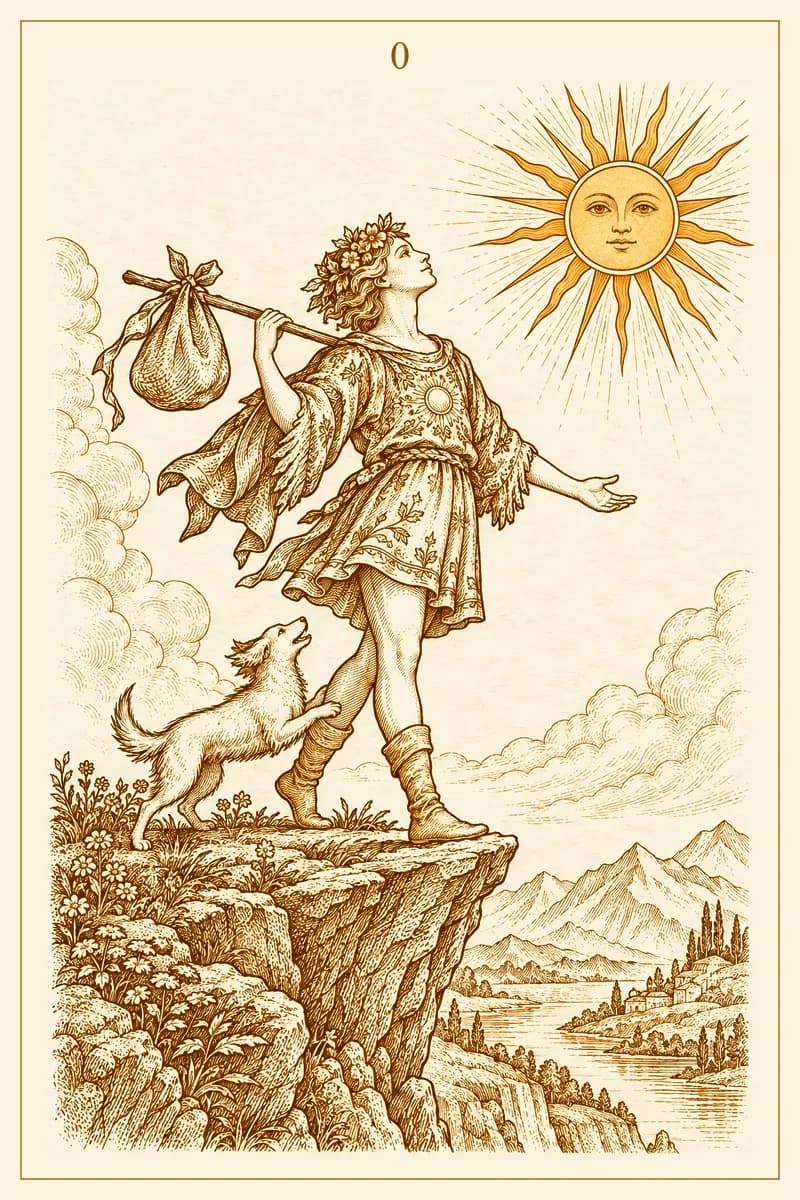
Stillness ambushes motion
Meaning of The Fool and The Hanged Man Combination: Stillness Ambushes Motion
Deliberate departure meeting unconscious motion
Meaning of The Fool and Eight of Cups Combination: Two Kinds of Walking Away
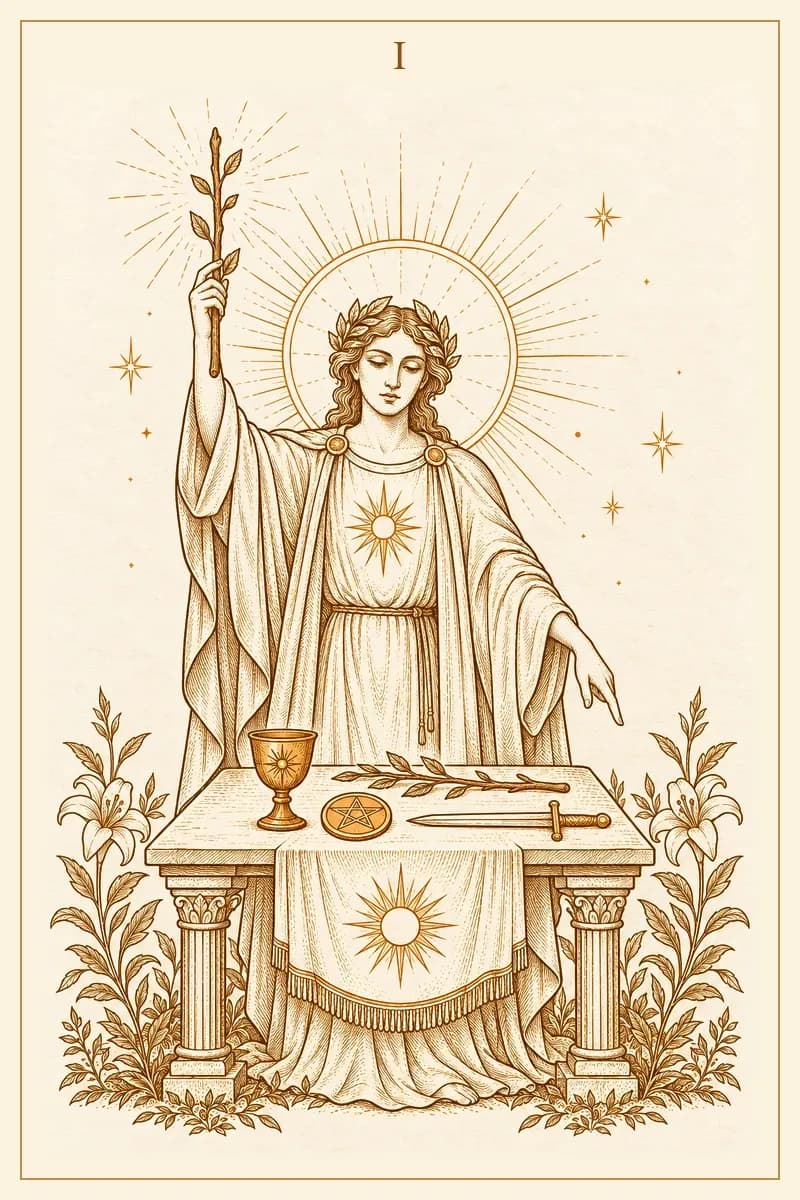
Control versus release
Meaning of The Magician and The Hanged Man Combination: When Control Meets Surrender
Purposeful departure from a structure you built yourself
Meaning of The Magician and Eight of Cups Combination: When Skill Demands Abandonment
Sacred surrender
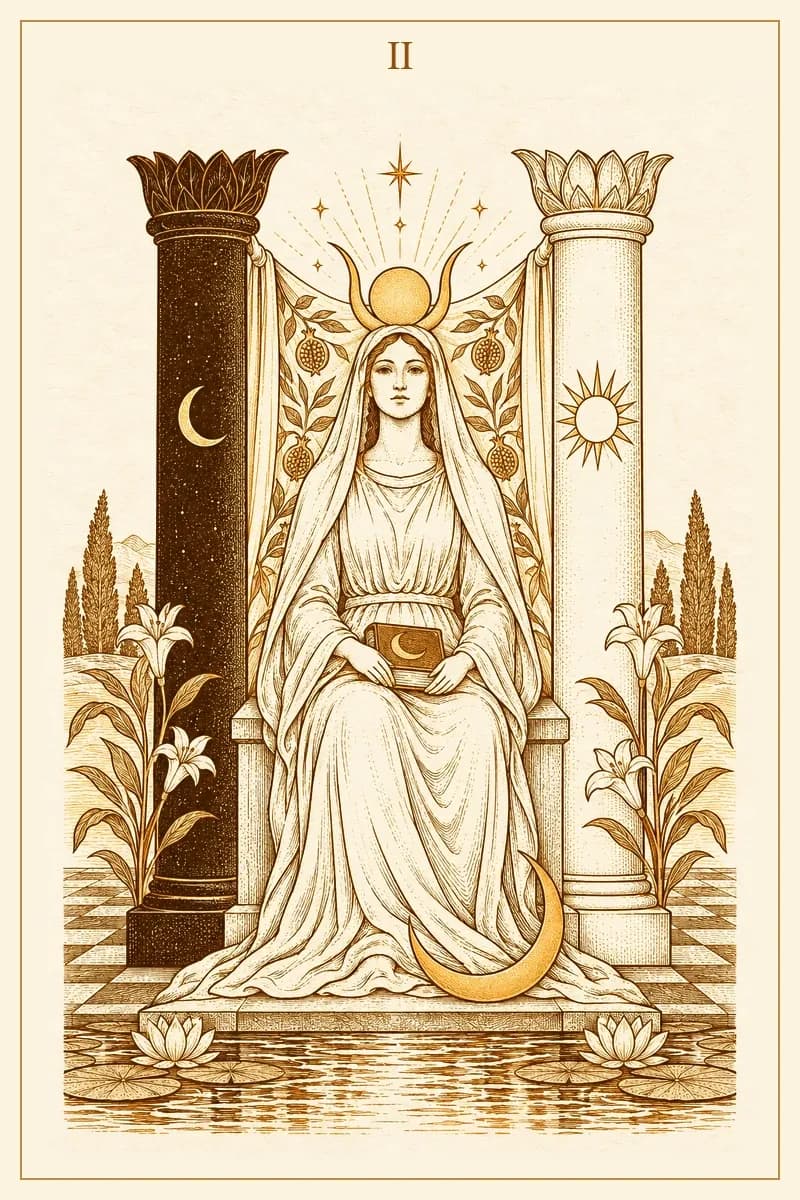
Meaning of The High Priestess and The Hanged Man Combination: Sacred Surrender
Wise departure
Meaning of The High Priestess and Eight of Cups Combination: The Wise Departure
✦ Bring it to the cards ✦
Bring The Hanged Man and Eight of Cups into your own reading
Use this pairing as a starting point, then let a spread listen to the situation that is actually yours.
Begin a contextual reading