
Card Combination
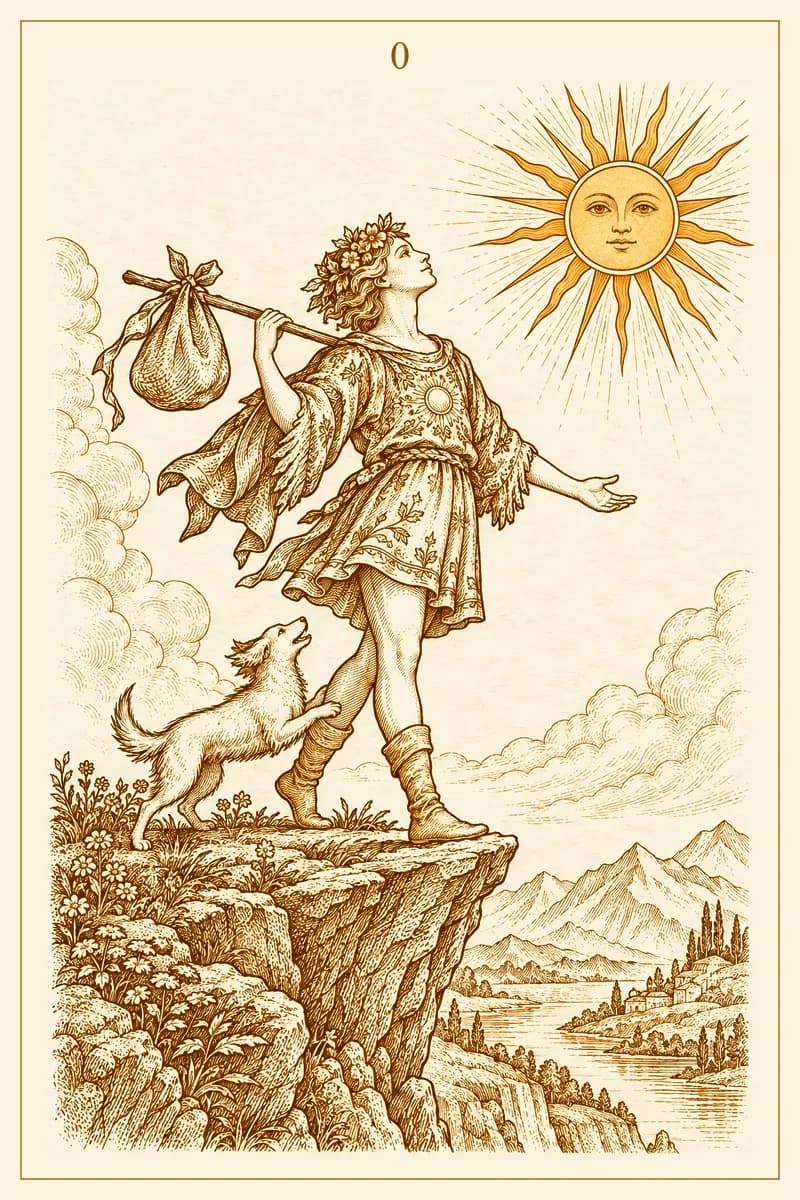
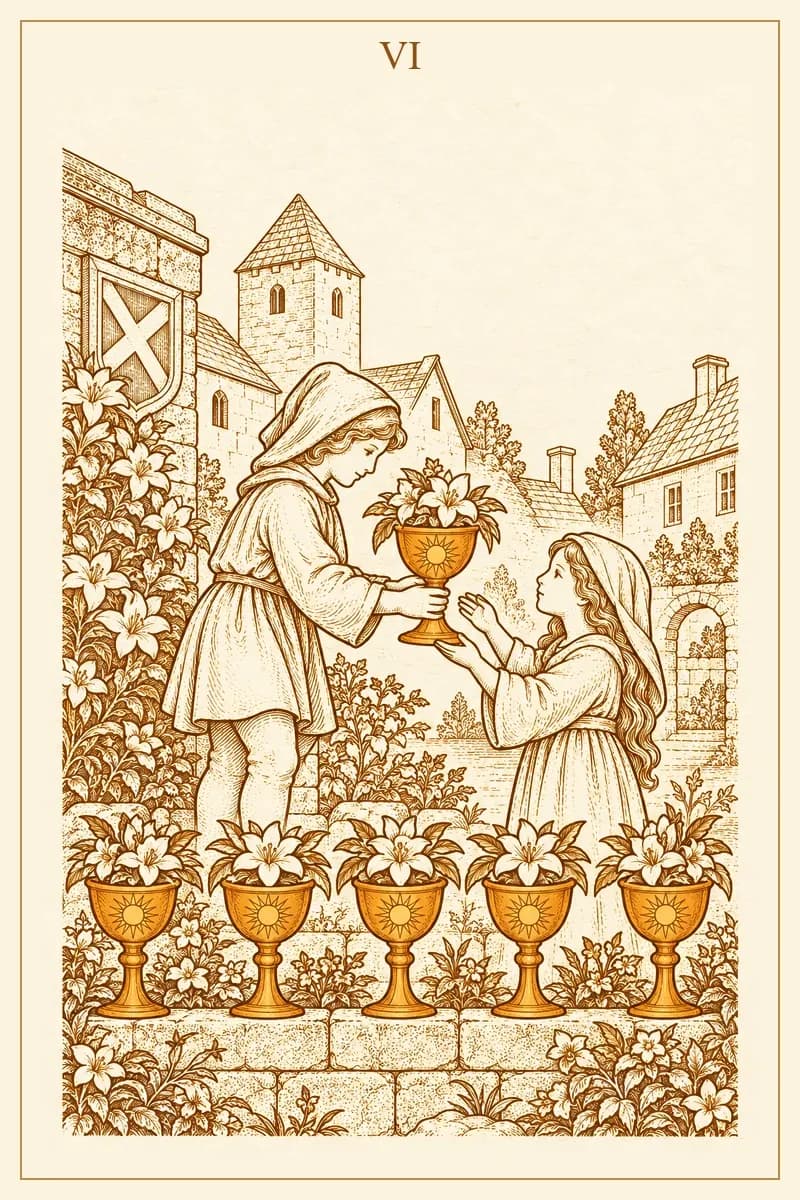
Meaning of The Fool and Six of Cups Combination: No Recipe, Pure Ingredient
Presence meeting memory
A recipe is a preserved decision: someone once figured out the right proportions, the correct temperature, which ingredients belong together, and wrote it down so the discovery doesn't have to be made again. Following a recipe is not the same as cooking without one. Both produce food. The texture of the experience is entirely different.
The Fool has no recipe. Has never tasted this particular dish, doesn't know what worked last time, carries no institutional memory of which combinations ended in disaster. This is not ignorance — it's the specific condition of the first attempt: everything is still possible, including the version that surpasses what anyone has cooked before.
The Six of Cups is the recipe book. More precisely: it is someone standing in the kitchen holding the recipe book and not reading it so much as inhabiting it — the smell of that dish filling the room the moment they open the cover, the whole history of every time it was made returning at once.
When these two appear together, the combination asks what you're actually cooking with: the ingredients in front of you, or the memory of how they used to taste.
The Core Tension
The Six of Cups holds joy from another time — childhood, past connection, simpler versions of relationships that later became complicated. Its gift is genuine warmth. Its structural limitation is that it faces backward. The people, moments, and feelings it contains were real; whether they are the right tools for the present kitchen is a separate question.
The Fool carries none of this. Not because the Fool lacks depth, but because the Fool hasn't yet accumulated it. Every experience arrives without a reference point, without comparison, without the overlay of "this is like that time when." This makes the Fool extraordinarily present, and extraordinarily unable to use what came before.
Together, they describe a situation where the past and something genuinely new are both available. The question the combination poses is whether you're drawing from memory in a way that enriches the present, or in a way that substitutes for it.
Love & Relationships
The Six of Cups in romantic readings often describes a return — to a past relationship, to someone who reminds you of a past relationship, or to the feeling that love had before it acquired history. This is not automatically a problem. Sometimes the return is exactly what's needed.
The Fool alongside this asks whether the openness is genuine or nostalgic. The Fool falls in love with what is actually there; the Six of Cups can fall in love with a version of what was once there. If this combination appears in a reading about a current relationship, the more useful question is whether you're seeing your partner or a memory wearing their face.
At its best, this pairing brings the Fool's unguarded present-tense attention to love that already has depth and history. Innocence that has been tested and remained is different from innocence that has never been tested yet.
Career & Purpose
The Six of Cups at work often appears when someone is returning to familiar territory: a previous career, a revived project, skills that were set aside but never fully lost. The Fool's energy alongside this confirms that the return is genuine — this is not mere repetition but an actual beginning.
Use the combination this way: let the Six of Cups identify what was already mastered, what worked before, what the recipe actually contains. Then let the Fool's energy apply that knowledge without the accumulated caution that can turn "I know how this works" into "I know it won't work differently."
Shadow Side
The Six of Cups' shadow in this combination is nostalgia that becomes inhabitable — a preserved version of how things used to be, maintained and decorated until it looks more appealing than the present. The Fool alongside this shadow doesn't help: the Fool's openness can be colonized by the Six's past, producing someone who leaps with total enthusiasm toward something that no longer exists.
The Fool's shadow here is the refusal to learn from what was already tried. Some recipes exist because people used the wrong ingredients and wrote down what happened. The Fool who will not consult the Six of Cups is liable to repeat experiments that were already concluded at significant cost.
Action Steps
- 1Find one place where you're using memory to warm the present rather than to inhabit it. The warmth can be real; notice whether it belongs to now.
- 2Identify whether a "return" you're considering is a genuine beginning or a repetition that feels safer because it's familiar. Both are available; only one is honest.
- 3Let the Six of Cups show you one thing you once loved before you learned to complicate it. Approach it this week with the Fool's specific absence of irony.
Related Pairings
Continue through published pairings that share The Fool or Six of Cups.
Reckless momentum
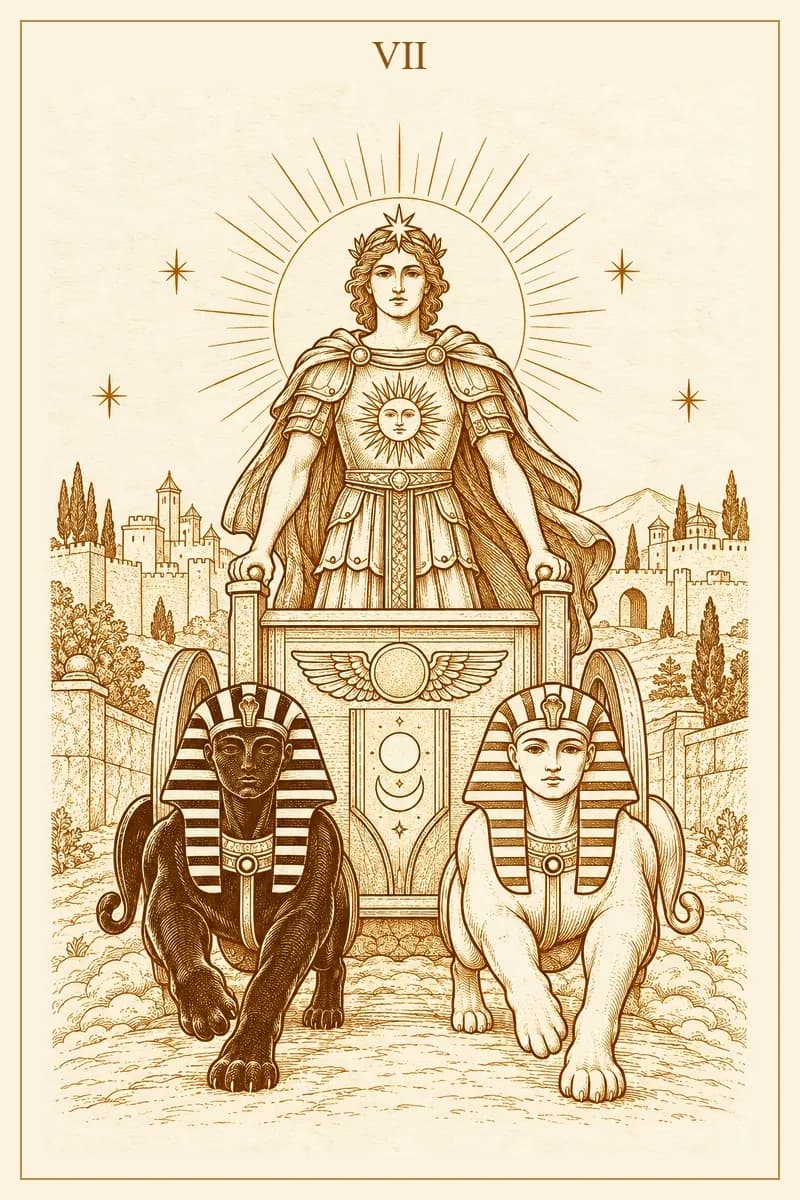
Meaning of The Fool and The Chariot Combination: Reckless Momentum
Nostalgia versus drive
Meaning of The Chariot and Six of Cups Combination: Past Versus Forward Drive
Innocence meets appetite
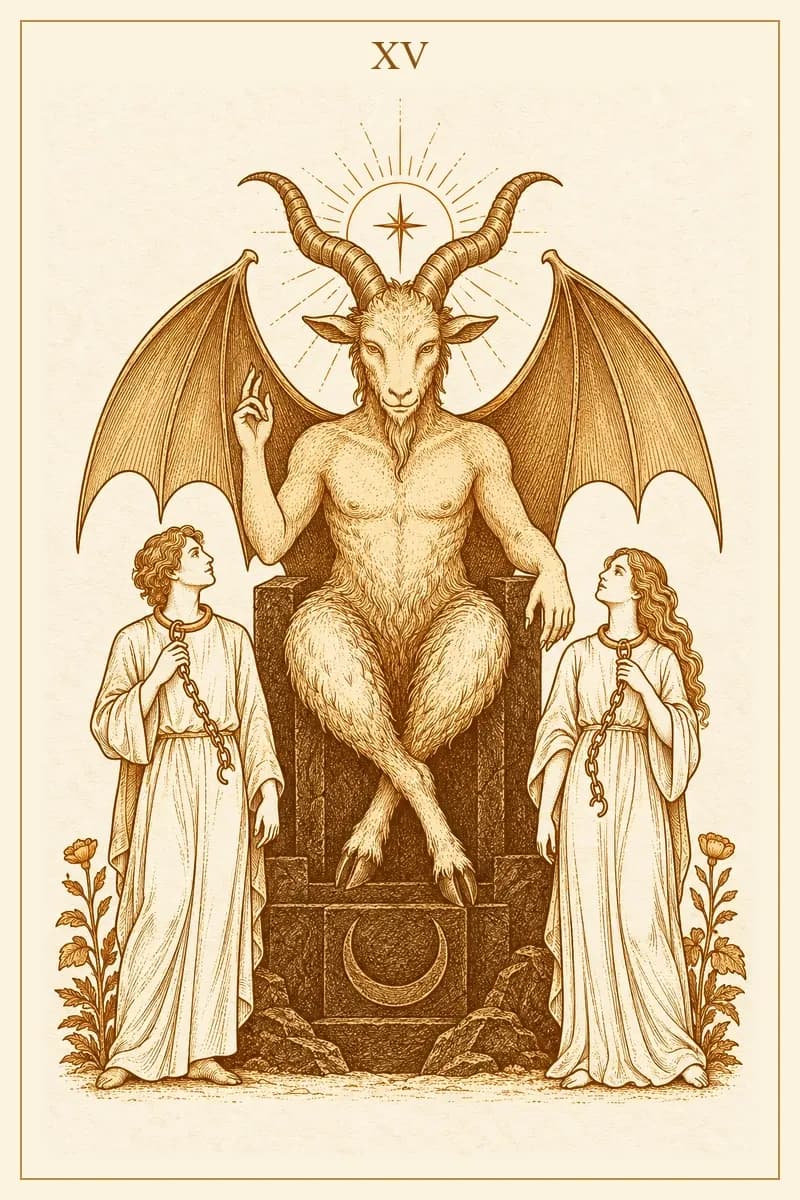
Meaning of The Fool and The Devil Combination: Innocence Meets Appetite
Nostalgic bondage
Meaning of The Devil and Six of Cups Combination: Sweetness That Chains

Structured freedom
Meaning of The Fool and The Emperor Combination: Structured Freedom
The structured self reckoning with the innocent self that built it
Meaning of The Emperor and Six of Cups Combination: When Authority Remembers Tenderness
✦ Bring it to the cards ✦
Bring The Fool and Six of Cups into your own reading
Use this pairing as a starting point, then let a spread listen to the situation that is actually yours.
Begin a contextual reading