
Card Combination
Meaning of The Fool and Eight of Swords Combination: Bound by Choices Not Made
Trapped potential
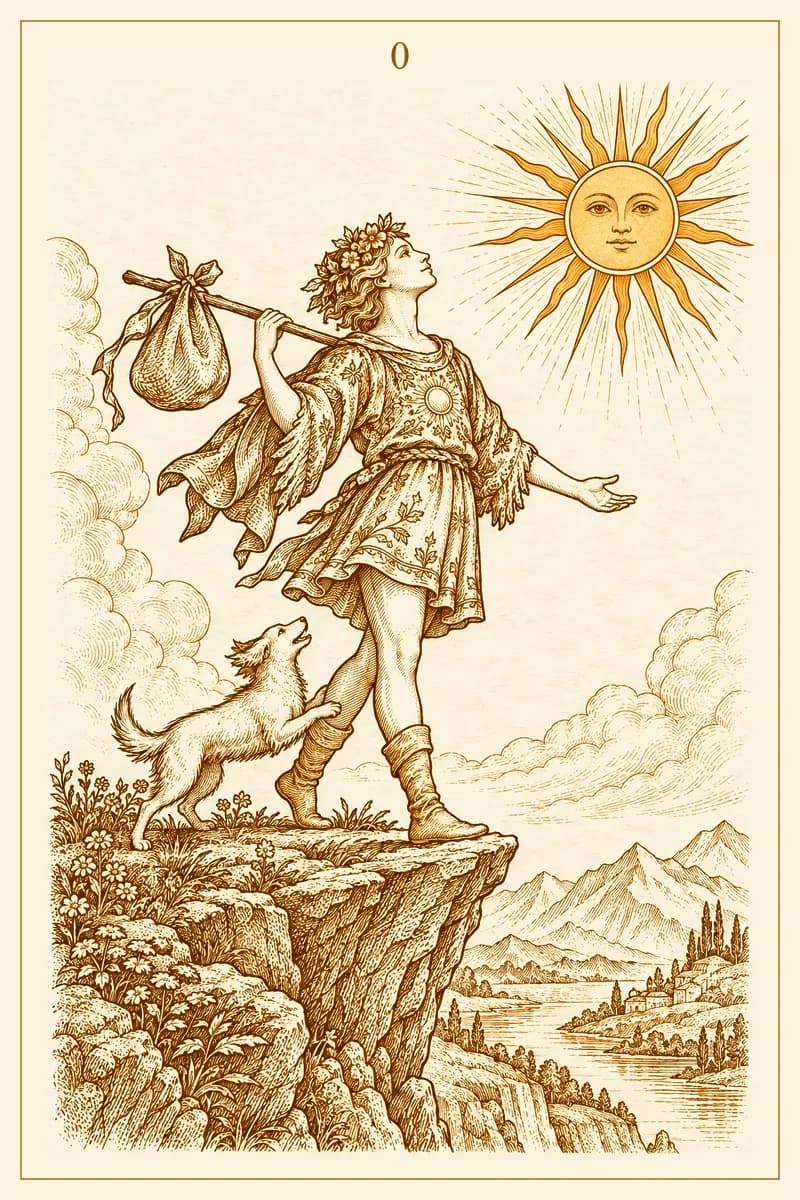
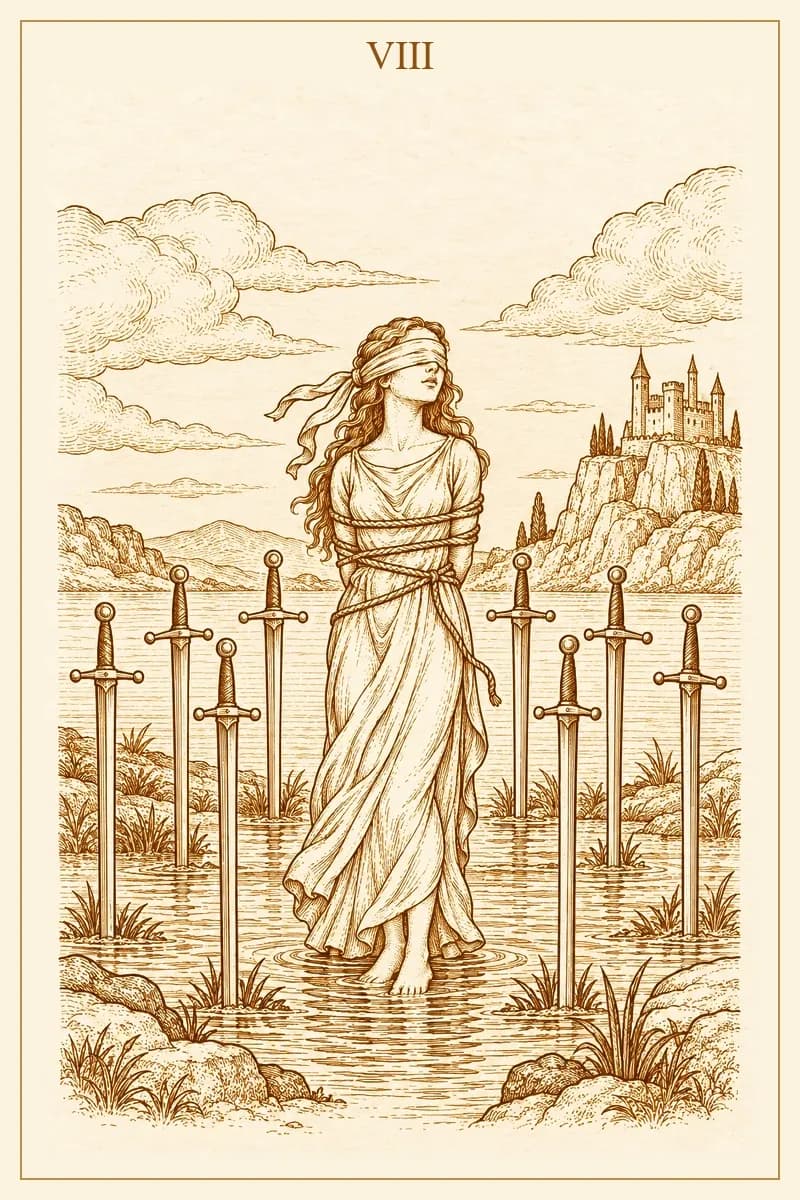
The curtain rises. Center stage, a figure stands blindfolded and bound, surrounded by eight swords driven into the earth. Just offstage, another figure waits — pack on back, dog at heel, one foot hovering over the cliff's edge, ready to step into open air. Neither one knows the other is there. That is the whole tragedy, and the whole possibility, of this combination.
The Core Tension
Unlimited forward momentum meets complete paralysis. One card carries no memory, no hesitation, no map. The other card carries nothing but restriction — and almost all of that restriction is internal. The Eight of Swords does not show a prisoner in chains. It shows someone tied loosely enough to walk away, surrounded by swords that could be stepped around, wearing a blindfold that was not nailed on.
When these two cards land together, the central question is not whether you are capable of moving forward. You clearly are. The question is whether you have convinced yourself that every exit is blocked when in fact the theater has several doors and none of them are locked.
Trapped potential is perhaps the sharpest kind of frustration. There is energy here — real, abundant, almost reckless energy — but it has nowhere to go because a story is being told about why it cannot go anywhere. The Fool does not tell that story. The Eight of Swords tells it on repeat.
Love & Relationships
In a relationship reading, this pairing often points to someone who is desperate to commit — or to leave — but has built an elaborate mental architecture explaining why neither move is possible right now.
You are waiting for the right moment. You are waiting for your partner to change first. You are waiting for circumstances to shift before you say the thing you have been rehearsing silently for months. The Eight of Swords wraps your instincts in justification. The Fool keeps rattling at the bars.
If you are single, this combination can describe the classic trap of knowing exactly what you want but generating a perfect list of reasons why you cannot pursue it: too old, too damaged, too busy, too soon after the last one. The wanting is Fool-level vivid. The stopping is Eight of Swords-level thorough.
The invitation here is not to be reckless. It is to notice that the blindfold is something you are wearing, not something that was placed on you against your will. You can take it off.
Career & Purpose
Professionally, this combination appears when someone has a bold idea — a product pitch, a career pivot, a creative project — and has managed to preemptively defeat it through internal veto.
The Fool arrives with the spark. The Eight of Swords runs immediate threat assessment: the market is too crowded, the timing is off, someone else already tried it, you do not have enough experience, you do not have the right connections, the economy. By the end of the Eight's monologue, the spark is out.
What makes this pairing worth paying attention to is that not all of those concerns are wrong. Some of the swords are real obstacles. But the blindfold prevents you from sorting the genuine risks from the invented ones, so every risk feels fatal and every obstacle feels immovable.
The work, literally, is to take the blindfold off. Examine each sword individually. Most will turn out to be thinner than they looked.
Shadow Side
The shadow side of this combination is the seduction of the cage. Being bound is uncomfortable, but it is also clarifying. You cannot be blamed for not moving if you are tied up. You cannot fail at the leap if you never get to the edge.
The Eight of Swords can become a very convincing excuse, and the Fool's energy — rather than pushing toward freedom — can be redirected into building more elaborate explanations for the imprisonment. You start to perform helplessness with real commitment. The performance becomes the identity.
Watch for the moment when describing the trap becomes more energizing than escaping it.
Action Steps
- 1Write down the three strongest reasons you believe a specific goal is currently impossible, then spend ten minutes challenging each one as if you were arguing for someone else's freedom, not your own.
- 2Identify one small action — one sword you could step around, not all eight at once — and do only that. The Fool always starts with a single step.
- 3Notice whether you are talking about your situation more than you are doing anything about it. The Eight of Swords thrives in narration. The Fool thrives in motion.
- 4This combination does not mean you are weak or self-defeating. It means there is a gap between your actual capacity and the story you are currently telling about that capacity. The cage is real in the sense that you are experiencing it as real. It is not real in the sense that the door is locked. Somewhere between the Fool's willingness to leap without looking and the Eight's insistence that every direction is blocked, there is a version of you that looks carefully, identifies one unlocked exit, and walks through it.
Related Pairings
Continue through published pairings that share The Fool or Eight of Swords.
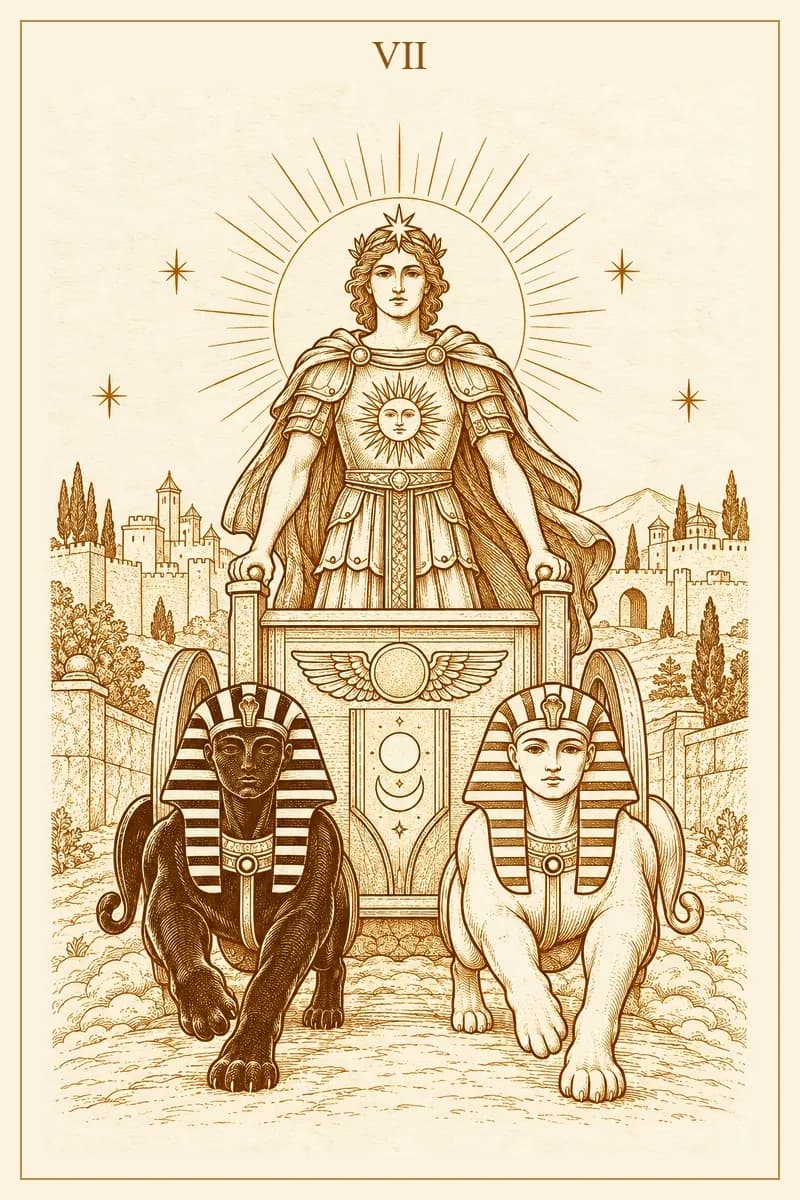
Reckless momentum
Meaning of The Fool and The Chariot Combination: Reckless Momentum
Willpower as trap
Meaning of The Chariot and Eight of Swords Combination: Trapped Victory
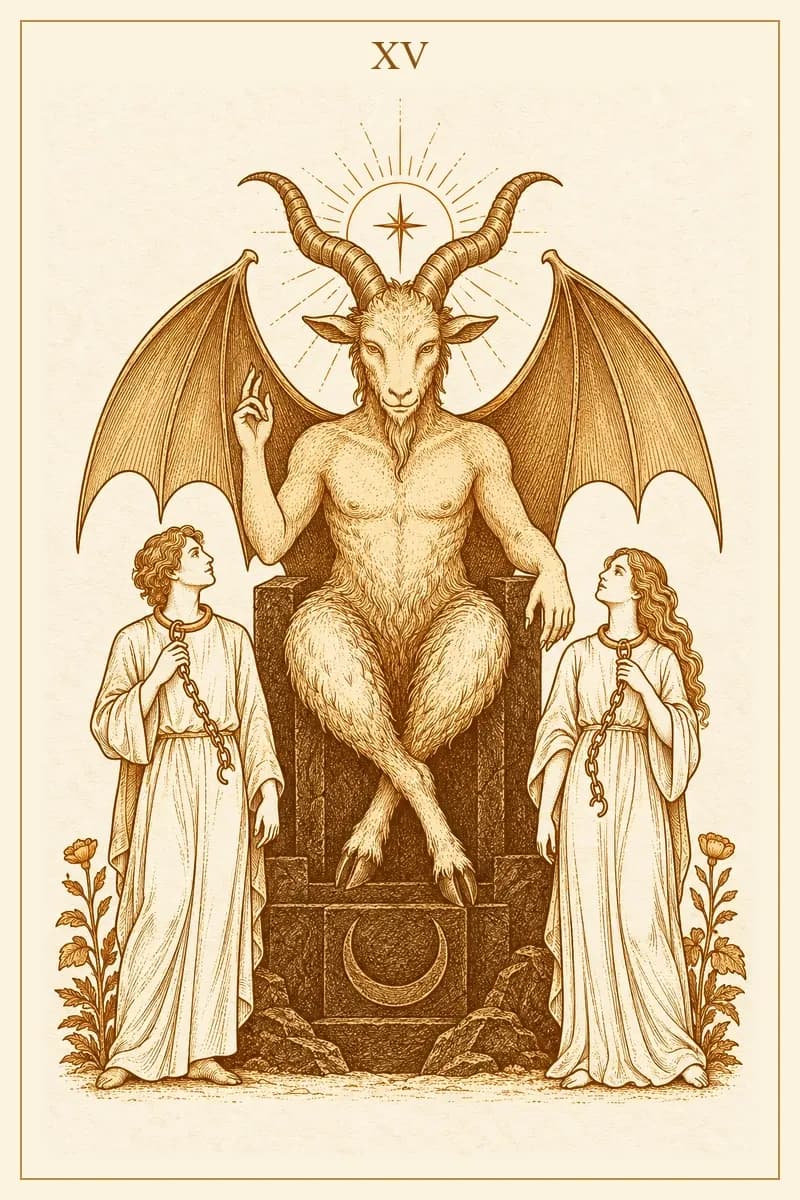
Innocence meets appetite
Meaning of The Fool and The Devil Combination: Innocence Meets Appetite
Self-built prisons
Meaning of The Devil and Eight of Swords Combination: Constructed Captivity
Structured freedom
Meaning of The Fool and The Emperor Combination: Structured Freedom
Authority as cage
Meaning of The Emperor and Eight of Swords Combination: Trapped by Control
✦ Bring it to the cards ✦
Bring The Fool and Eight of Swords into your own reading
Use this pairing as a starting point, then let a spread listen to the situation that is actually yours.
Begin a contextual reading