
Card Combination
Meaning of The Empress and Six of Cups Combination: What the Past Still Feeds
Memory's nourishment
Every house you have ever lived in still stands somewhere inside you — and what grows in your garden today is shaped by those foundations you can no longer see.
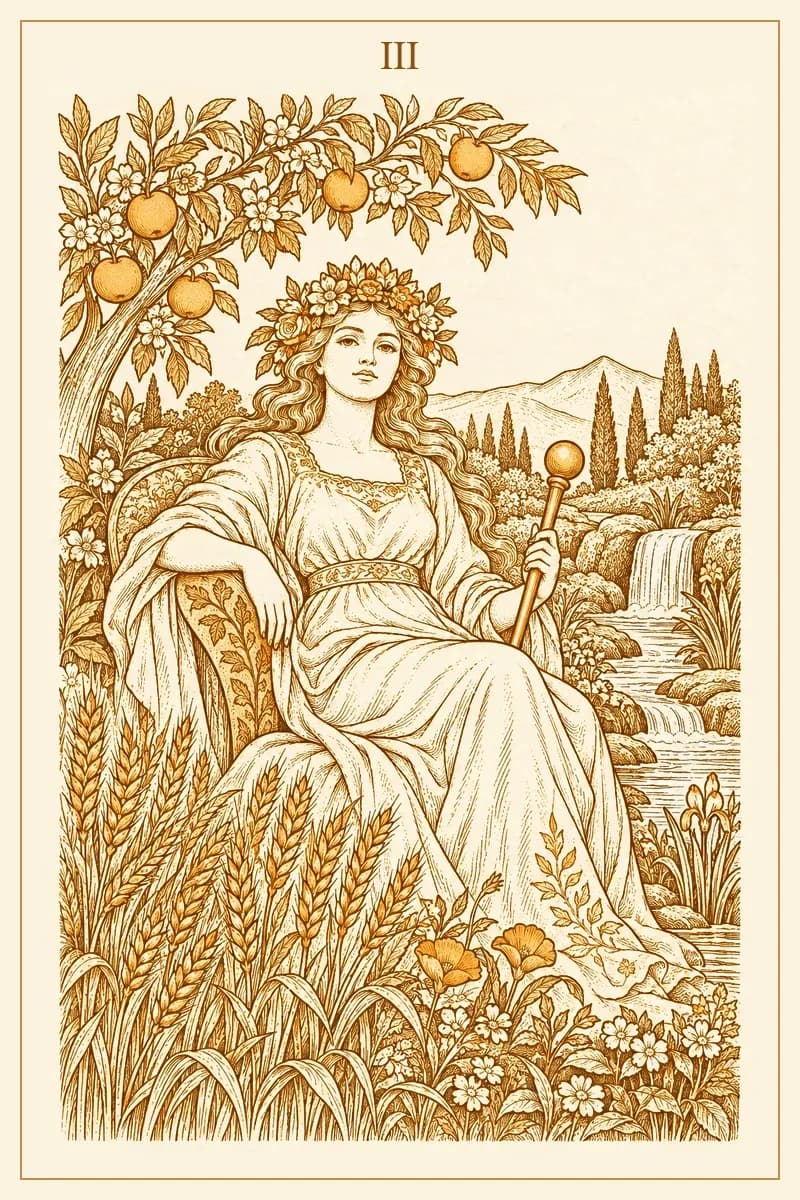
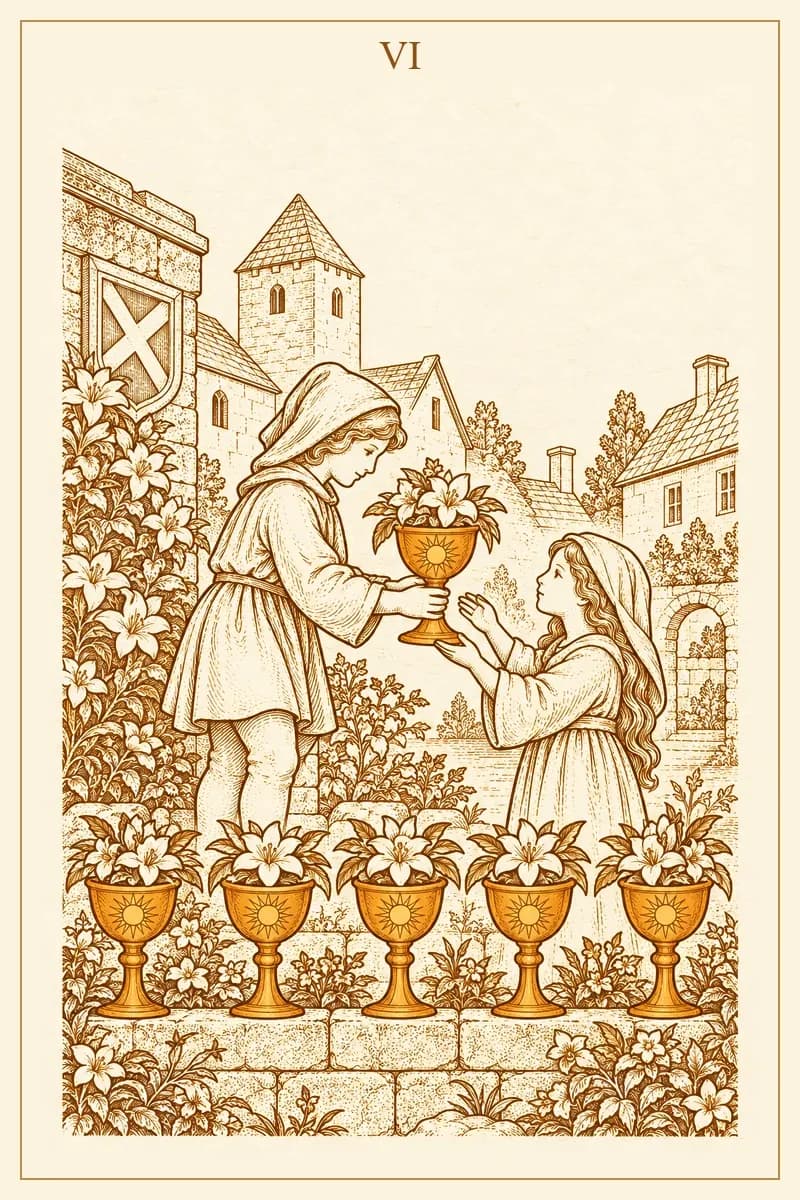
The Empress is the great gardener of the tarot: present, fecund, rooted in sensory experience, pressing her palms into living soil. The Six of Cups is something quieter — a child handing flowers to another child, a courtyard bathed in golden afternoon light, the smell of a kitchen you have not stood in for thirty years. Separately, each card speaks a clear language. Together, they raise an architectural question: is the past a foundation you build upon, or a sealed room you keep returning to instead of building anything new?
That question is not comfortable. But it is the right one.
The Core Tension
Think of memory as building material. Properly used, reclaimed timber — wood that has already lived through weather, already proven its grain — makes the strongest structures. The Empress knows this. She does not create from nothing; she composes from everything that has come before her, every seed that has already fallen, every season already lived. The Six of Cups, at its most generative, is exactly that: lived experience offered back as raw material, the emotional blueprint from which present abundance draws its form.
But reclaimed timber can also become a hoard. Some people do not build with the old wood — they stack it, label it, refuse to let it be cut or shaped, because cutting it would mean admitting that the original structure is gone. Nostalgia does this. It takes the past and encases it in glass, then stands outside the glass and calls that standing living. The Empress cannot plant inside a museum. She needs open ground.
The tension in this pairing is not memory versus forgetting. It is memory-as-compost versus memory-as-monument. One feeds the soil; the other paves it.
Love & Relationships
The emotional architecture of childhood is the first house most people ever inhabit. Its rooms — how love was given, how it was withheld, what warmth smelled like, what safety felt like — become the unconscious floor plan against which every subsequent relationship is measured. The Six of Cups, in a love reading alongside the Empress, is pointing at that original blueprint.
For some, this is genuinely nourishing. A person who experienced early love as generous and warm may carry that template into adulthood as a kind of structural gift — an instinctive faith that intimacy is safe, that partners can be trusted, that love does not have to be earned through suffering. The Empress flourishes on that ground.
For others, the blueprint is less helpful. If the original house had warped walls — love that was conditional, affection wrapped in control, joy made possible only through performance — then the Six of Cups in this pairing is not nostalgia for something sweet. It is the ghost of a pattern still insisting on repeating itself. The Empress, in that case, keeps planting the same garden in the same flawed soil and wondering why the yield never changes.
The invitation here is not to demolish the past. It is to read its architecture honestly: which walls are load-bearing, and which ones you built around a wound that has since healed?
Career & Purpose
Every creative person carries a collection of formative rooms: the teacher who handed them a book that changed their axis, the mentor whose standards were impossibly high and therefore permanently instructive, the first piece of work that felt genuinely alive. The Six of Cups, in a creative or professional context, is the card of those rooms — and the Empress is what you build once you leave them.
The healthiest creative relationship with the past is apprenticeship without captivity. You absorb the influence, you let it shape your sensibility, and then you allow it to become invisible infrastructure — the joists beneath the floorboards rather than the room itself. The Empress creates; she does not curate. She does not want to live in a museum of her influences. She wants to grow something that has never grown before, even if it grows from old roots.
If this pairing appears when you are creatively blocked, ask what you are protecting. Sometimes the answer is that you have elevated a past creative peak — a project that felt perfect, a period of work that seemed to arrive effortlessly — into a monument you are afraid of surpassing or contradicting. The past becomes a blueprint you dare not deviate from. That is not reverence. That is a sealed room.
Shadow Side
The shadow of this combination is innocence kept deliberately intact. The Six of Cups can idealize the past to the point of falsification — smoothing away the difficult textures, retaining only the light, returning again and again to a version of history that never quite existed as purely as memory insists. And the Empress, who is deeply sensory and comfort-seeking, can be seduced by that softness.
The result is a kind of creative or emotional paralysis dressed as loyalty. You are not building; you are tending a shrine. You are not loving; you are recreating a childhood template without examining it. The soil stays unbroken because breaking it feels like betrayal.
Notice if the past in your life has become a standard against which the present is always found wanting. Notice if you describe your best creative work, your most alive relationship, your greatest sense of self — always in the past tense.
Action Steps
- 1Sort your timber. Write down three things from your past — relationships, creative periods, emotional patterns — and ask of each one: is this something I am building with, or something I am preserving? The distinction matters.
- 2Plant something that has no precedent. Do one creative or relational act this week that is not modeled on anything you have done before. Let the Empress move into genuinely new ground, even if it is only a small patch.
- 3Let one memory become compost. Choose something from your past that you have kept too clean, too perfect, too untouched — and let yourself see it with full complexity. The imperfect memory is the useful one. Compost works because it has already broken down.
Related Pairings
Continue through published pairings that share The Empress or Six of Cups.
Creative momentum
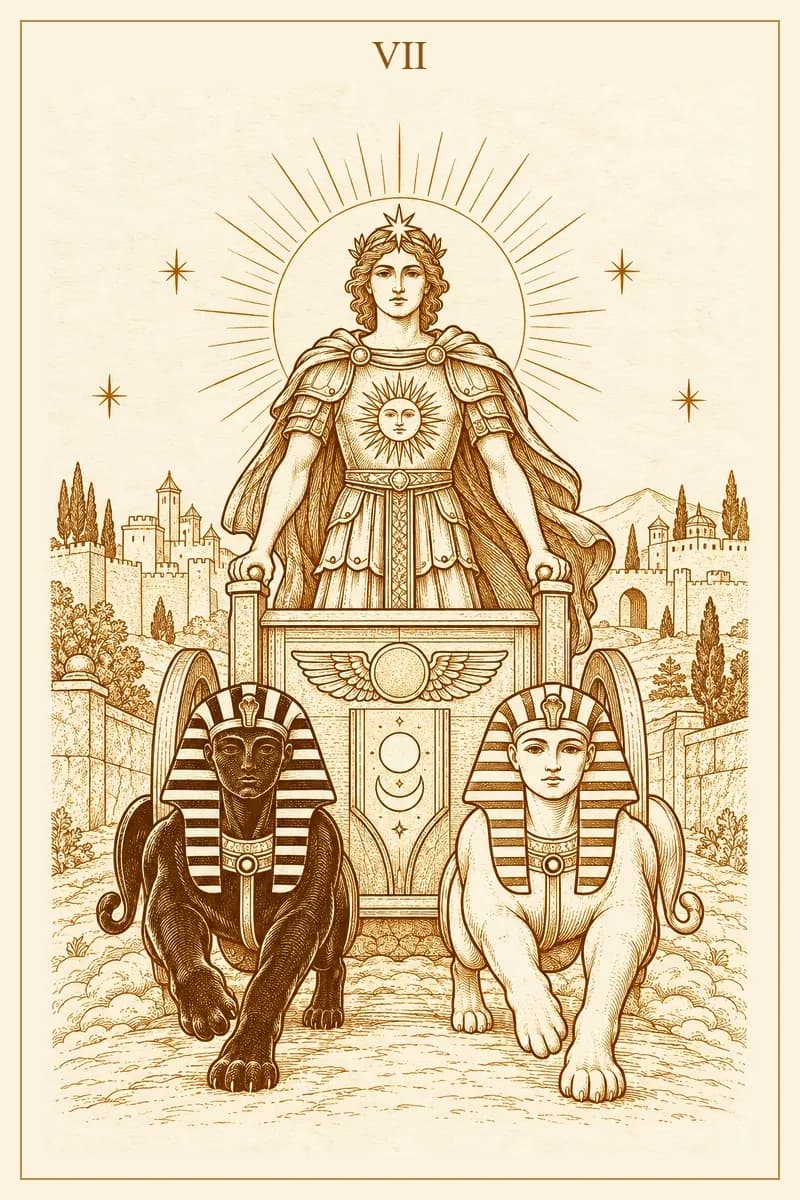
Meaning of The Empress and The Chariot Combination: Creative Force in Motion
Nostalgia versus drive
Meaning of The Chariot and Six of Cups Combination: Past Versus Forward Drive
Bound abundance
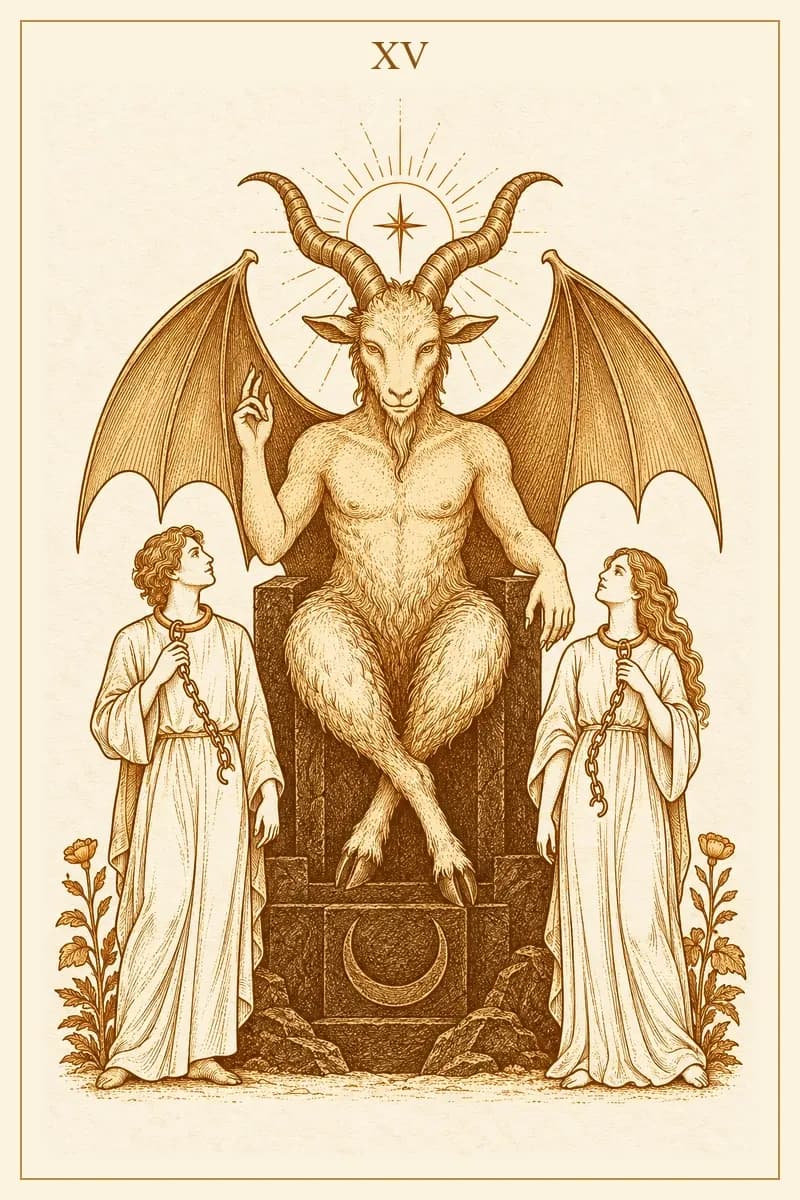
Meaning of The Empress and The Devil Combination: When Abundance Becomes a Chain
Nostalgic bondage
Meaning of The Devil and Six of Cups Combination: Sweetness That Chains

Nature and structure united
Meaning of The Empress and The Emperor Combination: Nature Meets Structure
The structured self reckoning with the innocent self that built it
Meaning of The Emperor and Six of Cups Combination: When Authority Remembers Tenderness
✦ Bring it to the cards ✦
Bring The Empress and Six of Cups into your own reading
Use this pairing as a starting point, then let a spread listen to the situation that is actually yours.
Begin a contextual reading