
Card Combination

Meaning of The Emperor and Six of Wands Combination: The Triumphant Leader
Triumphant authority
For eleven years the stage manager has run the company from the dark: calling every cue, settling every dispute, building the schedules that let the actors shine. Tonight, at the final curtain call, the cast turns and waves her out from the wings. She hesitates at the edge of the light, headset still around her neck, then steps forward, and the whole house rises to its feet.
The Emperor and the Six of Wands meet in that single step. The Emperor is authority built out of structure, discipline, and decisions no audience ever sees. The Six of Wands is the public moment when that work is finally recognized, the laurel raised in front of a cheering crowd.
Together they describe leadership becoming visible. What has been governed quietly is now celebrated openly, and the real question is how the leader carries the applause once the lights are on.
The Core Tension
The spotlight does not care about the script.
A leader can spend years building the right systems, making the right decisions, commanding the right respect in the right rooms — and still be surprised by the moment when all of that private authority becomes publicly visible. When the crowd acknowledges what you built, the experience is not quite what the building of it felt like.
This is the essential drama of the Emperor meeting the Six of Wands: private command becoming public triumph.
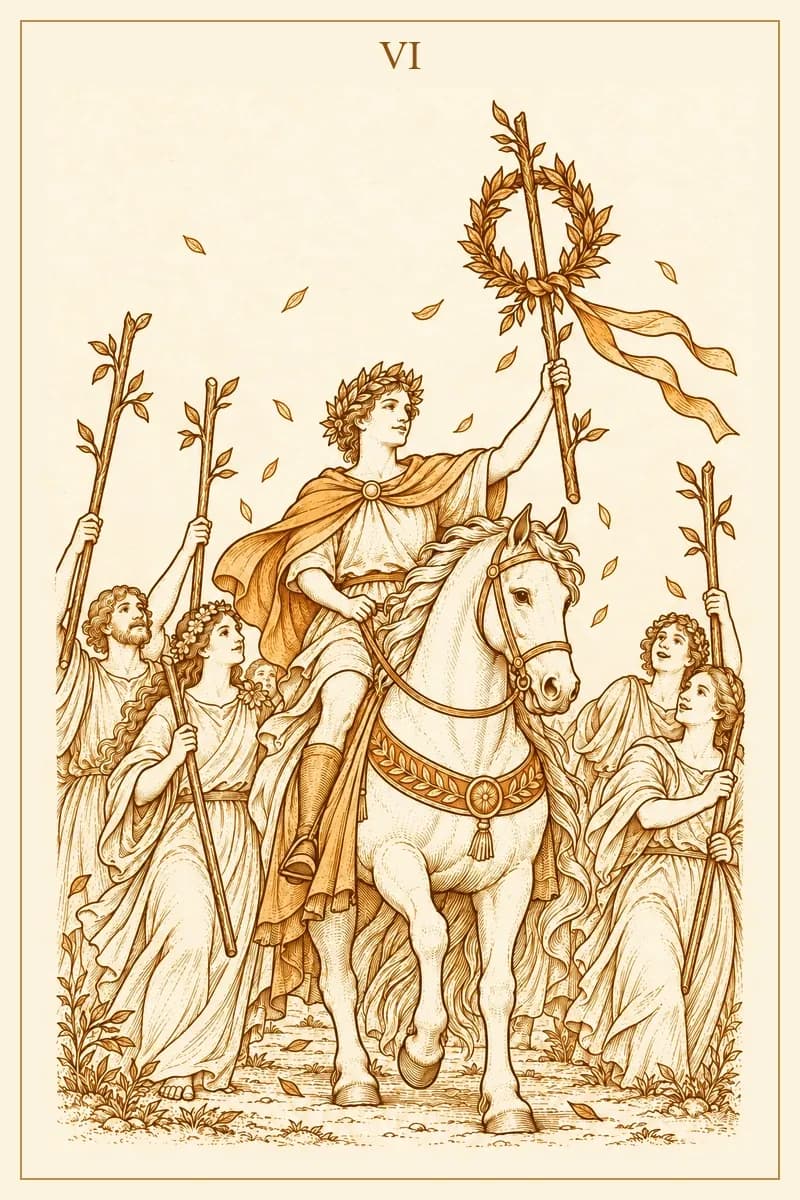
The Emperor is the backstage power. He is the architect and the administrator, the one who issues the orders that make everything else possible. He does not need the crowd — or so he tells himself. He governs by the force of structure, not by the warmth of public approval. The Six of Wands, by contrast, is entirely public: a figure on horseback, raised above the crowd, laurels on the wand, acknowledgment coming from every direction. It is the moment of visible victory.
When these two appear together, the curtain has gone up. The Emperor's work is being seen. The question this pairing always raises is whether the leader is prepared for what it means to be seen — not just respected in the private halls of power, but celebrated in the open square.
Love & Relationships
In a love reading, the Emperor and Six of Wands together carry an uncommon energy: the public recognition of a relationship, a partnership, or a person's capacity for leadership within intimacy.
This pairing sometimes appears when a relationship becomes official in the eyes of the broader world — not just a private understanding between two people but something declared, announced, brought into the social sphere. The Emperor provides the structure and commitment; the Six of Wands provides the public acknowledgment that the structure is real and worth recognizing.
For individuals, this combination can describe the moment when someone who has always been the stable, authoritative, quietly competent partner receives genuine appreciation for that role — from their partner, from the people around them, or simply from themselves. Being the Emperor is often invisible work. The Six of Wands says: it has been seen.
The shadow possibility in love is the performance of authority rather than the exercise of it. A relationship maintained for its appearance rather than its substance. The Six of Wands is a crowd-facing card; the Emperor, at his worst, can become more concerned with how the leadership looks than with how the structure actually functions. Examine whether the recognition feels earned or merely performed.
For those navigating early courtship, this pairing often describes someone who commands attention in a room — who carries themselves with a presence that generates acknowledgment without demanding it. There is something genuinely compelling here. The question is whether the authority is matched by the depth beneath it.
Career & Purpose
Professionally, this is among the most unambiguous success combinations in the deck. The Emperor's long, often invisible work of institution-building is receiving its public moment.
What the Six of Wands adds to the Emperor's energy is crucial: external validation. The Emperor does not need to be told he is right; he generally knows. What the Six of Wands represents is the moment when the world confirms it — an award, a promotion, a public endorsement, a project that reaches wide recognition, a business that is named or reviewed or celebrated in a sphere larger than the one it was built in.
This pairing frequently appears in readings for people about to receive a significant professional recognition that they may not fully expect. The Emperor energy suggests the achievement has been real and sustained, not accidental. The Six of Wands suggests the recognition is coming from outside, from the crowd, and it carries genuine weight.
For those in leadership positions, this combination signals an optimal moment to make a significant public move — launch something, announce something, step into a more visible role. The structural conditions are aligned. The public moment is available. The Emperor who refuses to step into the spotlight at this juncture is missing a strategic opportunity that the Six of Wands may not hold open indefinitely.
One practical note: recognize the people who helped build what is being celebrated. The Six of Wands shows a single figure elevated above the crowd, but the Emperor who built the systems knows that no institution is built alone.
Shadow Side
The shadow of this pairing lives in the seduction of the spotlight.
The Emperor, by nature, should be skeptical of public approval — his authority does not derive from it, and it should not be maintained by it. When the Six of Wands enters his world and the crowd appears, the risk is that he begins to govern for the audience rather than for the institution. Decisions become performative. The work that is visible gets more attention than the work that is essential. The system suffers while the figure on the horse looks magnificent.
This is how capable leaders lose their actual power: they trade the difficult work of genuine authority for the easier high of public recognition. The Six of Wands is a heady card. Its celebration is real — but it is a moment, not a state.
The second shadow: mistaking recognition for completion. The Emperor on the horse, wreathed in laurels, must eventually come down and return to the administration. Triumph is not a destination. It is a data point.
Action Steps
- 1Allow yourself to receive one acknowledgment this week without deflecting, minimizing, or immediately redirecting to the next task. Receive it fully. That practice is harder than it sounds for someone with Emperor energy.
- 2Identify who, specifically, contributed to the achievement that is being recognized or that you are building toward. Find a way to say so to them directly, not in a group announcement, but individually.
- 3Notice whether you are making any current decisions based on how they will look rather than whether they will work. The Emperor and the Six of Wands are at their best when the work is good enough to deserve the spotlight — not when the spotlight is the reason for the work.
- 4Authority that has done the real work is ready to be seen. This combination confirms that what has been built is substantial, and that the public moment of recognition is not accidental — it is the natural consequence of sustained, structural effort. Step into it. Stand in the light without apology. Then go back to work.
Related Pairings
Continue through published pairings that share The Emperor or Six of Wands.
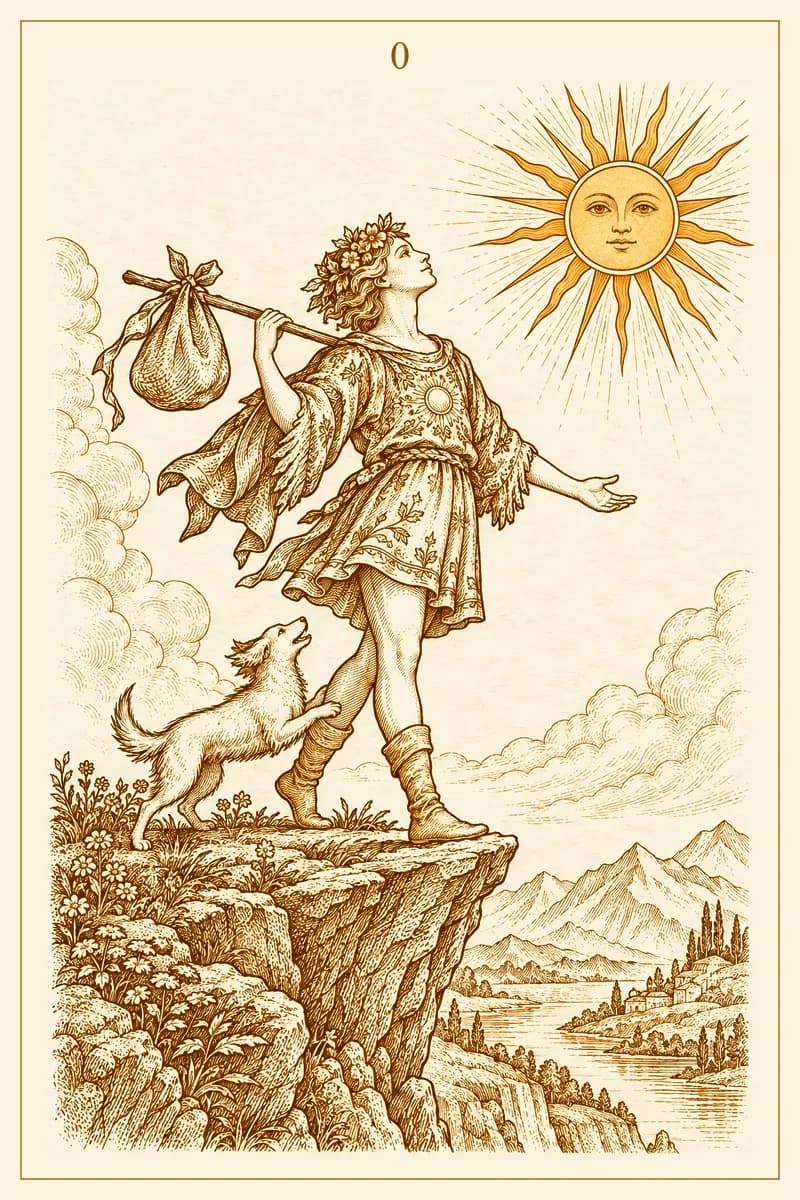
Structured freedom
Meaning of The Fool and The Emperor Combination: Structured Freedom
Unearned applause
Meaning of The Fool and Six of Wands Combination: Accidental Triumph
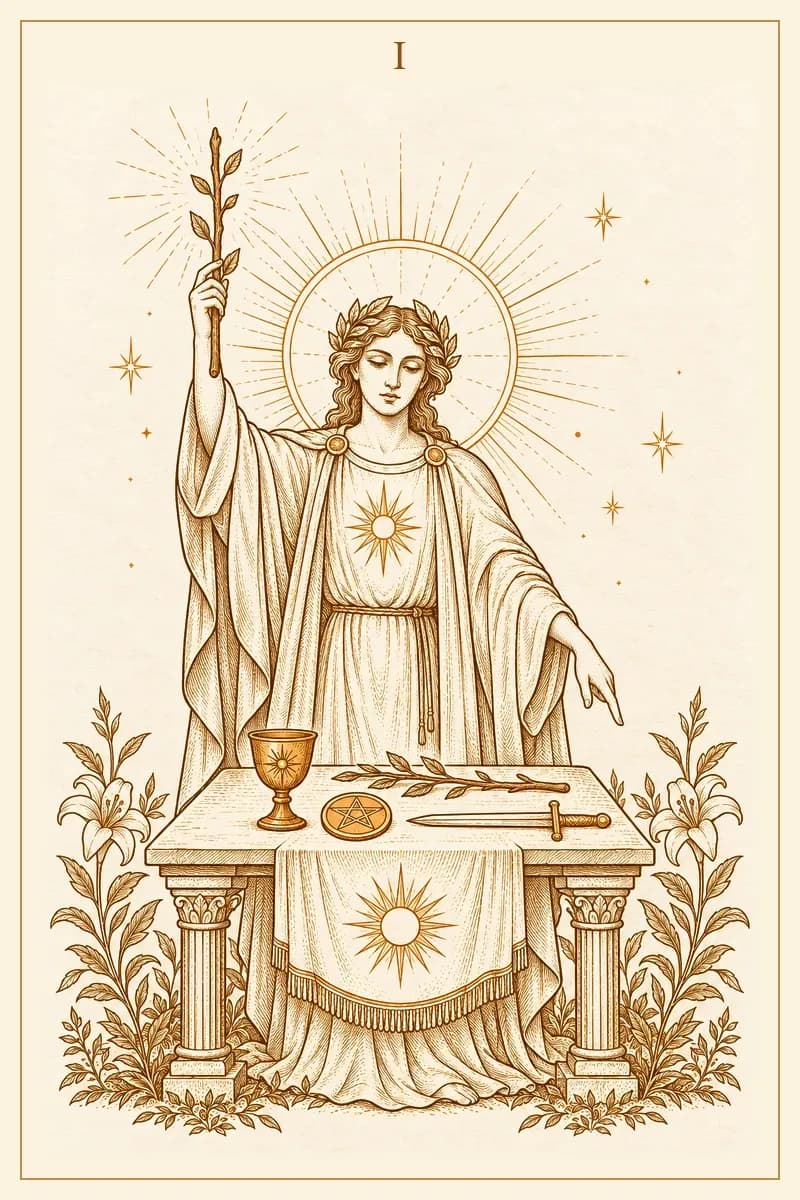
Disciplined mastery
Meaning of The Magician and The Emperor Combination: The Architect of Command
Quiet skill, public acclaim
Meaning of The Magician and Six of Wands Combination: The Craft Behind the Crown
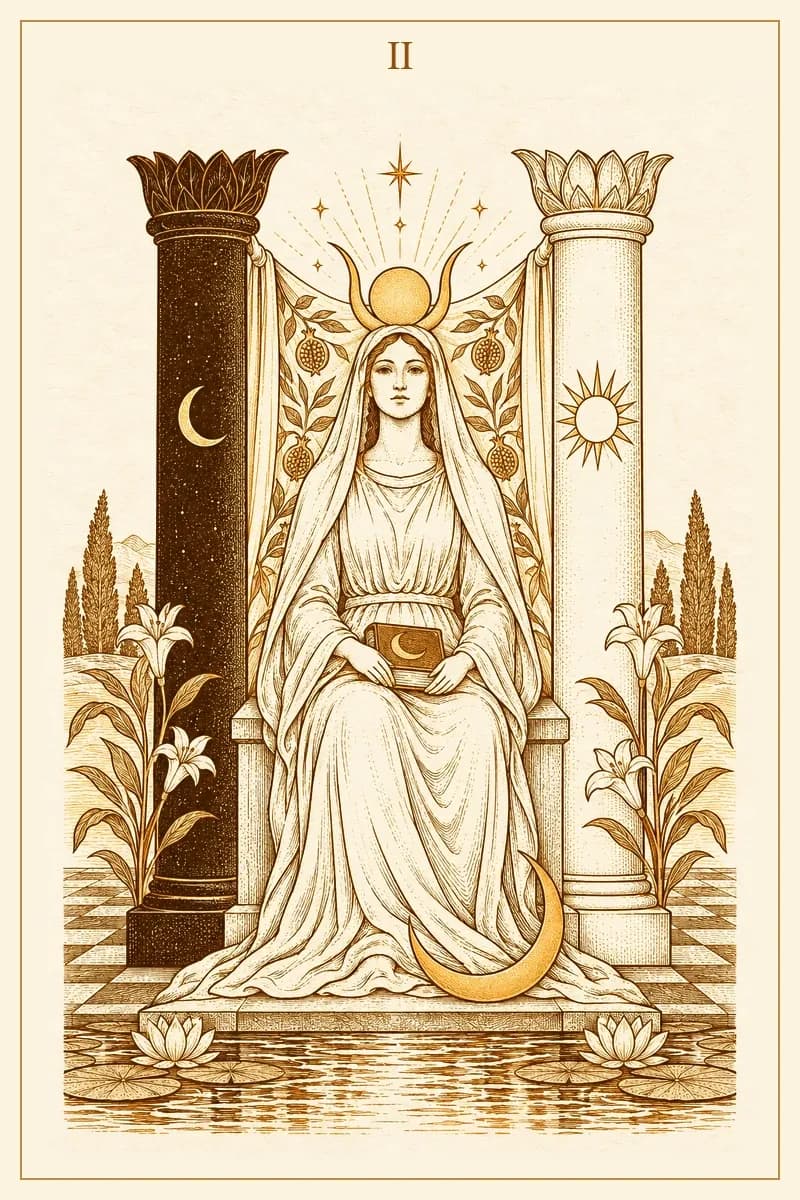
Hidden order
Meaning of The High Priestess and The Emperor Combination: Hidden Order
Earned recognition
Meaning of The High Priestess and Six of Wands Combination: The Victory That Begins in Silence
✦ Bring it to the cards ✦
Bring The Emperor and Six of Wands into your own reading
Use this pairing as a starting point, then let a spread listen to the situation that is actually yours.
Begin a contextual reading