
Card Combination
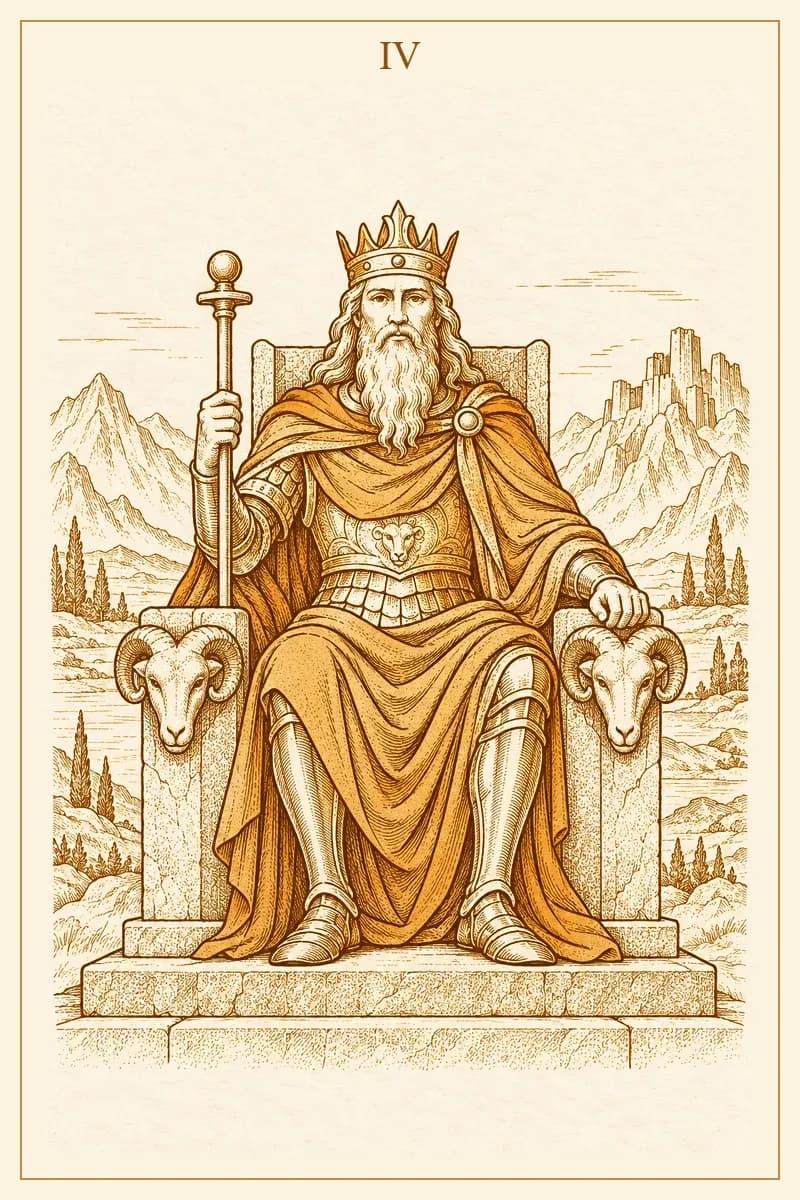
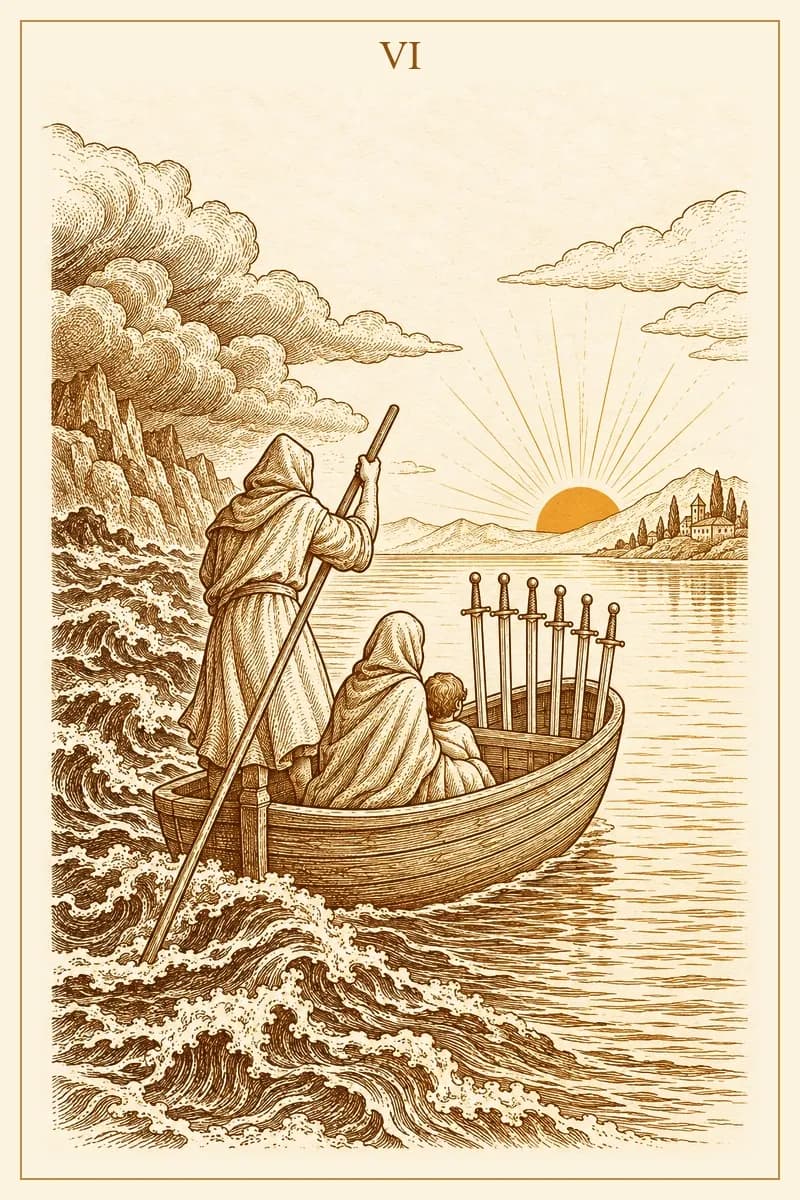
Meaning of The Emperor and Six of Swords Combination: Ordered Departure
Structured transition
The boat has already left the shore. You didn't announce it, didn't hold a ceremony — you simply decided the old territory was no longer tenable, loaded what mattered, and pushed off. Now you're mid-river, surrounded by grey water, and the Emperor sits in the stern, arms crossed, watching the far bank with the calm authority of someone who has crossed rivers before and knows exactly what the other side requires.
This is not drift. The Six of Swords is often read as passive — as if the figure in the boat is simply being carried. But paired with the Emperor, there is intention behind every stroke of the oar. The movement away from turbulence is a decision, not a surrender. The Emperor doesn't flee; he relocates his domain to more stable ground.
What makes this pairing striking is the combination of will and weariness. The Emperor provides the blueprint; the Six of Swords supplies the honest admission that the current structure is no longer worth defending. Something had to give. The question this pair raises is not whether you should go — that ship has sailed — but how you'll govern once you arrive.
The Core Tension
The Emperor is a card of fixed foundations. He builds walls, establishes law, and holds territory. The Six of Swords, by contrast, is a card of passage — of leaving one psychological or physical state for another. Together they create an architectural paradox: a builder who must move before he can build.
The tension lives in the timing. The Emperor prefers to act from a position of established strength; the Six of Swords demands movement before that strength is fully secured. You are not crossing because you're ready. You're crossing because staying has become the greater risk. That requires a different kind of authority — not the authority of a king on his throne, but the authority of a commander on the move, making decisions in motion.
Love & Relationships
In relationships, this combination describes a deliberate, if painful, transition. One partner — or both — has acknowledged that the current dynamic is unsustainable, and instead of simply enduring it, they are choosing to navigate toward something different. This could mean a serious conversation that restructures how the relationship operates, a physical separation undertaken with mutual respect, or a solo journey of emotional recovery after a relationship that ended under authority gone wrong.
The Emperor here does not storm out. He draws up terms. He makes the departure methodical. If you are the one leaving, you are doing it with a plan. If you are the one being left, you may experience this pairing as cold — but cold is not always cruel. Sometimes structured endings protect both people from further damage.
Career & Purpose
Professionally, this pairing points to a strategic exit or restructuring. You are moving away from a role, organization, or approach that has become choppy — not because you failed, but because the conditions shifted and you are clear-eyed enough to recognize it. The Emperor's energy ensures this isn't impulsive. There is a transition plan. There are handoffs, documented processes, a timeline.
This combination also appears when someone is building something new in a different environment — taking hard-won expertise from a turbulent context and applying it somewhere with better foundations. The Six of Swords says the old place drained you. The Emperor says you carry the competence you built there with you.
Shadow Side
The shadow of this pairing is emotional avoidance dressed as rational planning. The Emperor can use structure to bypass grief. The Six of Swords can become a permanent holding pattern — always in transit, never actually arriving somewhere and planting the flag. If every difficult situation gets "managed" into a strategic departure, you may find yourself perpetually mid-river, never building the thing you keep saying you'll build once conditions improve.
There is also the risk of leaving too cleanly. Some relationships and situations require a messier reckoning before you go. The Emperor's instinct to impose order can suppress necessary conflict, and the Six of Swords can enable a too-tidy exit that leaves important things unresolved.
Action Steps
- 1Identify one specific destination, not just a direction — vague movement away from pain is not the same as moving toward something defined.
- 2Document what you're carrying with you: skills, lessons, relationships worth keeping. The Emperor doesn't cross empty-handed.
- 3Allow one honest conversation about what the departure means, even if it's uncomfortable. Structured doesn't have to mean sealed off.
- 4The Emperor and Six of Swords together describe a crossing made with full awareness. You are not running. You are relocating your authority to ground where it can actually stand. The difficulty is real, the water is cold, and the far bank is not yet familiar — but you've surveyed it, and you know it's solid. Build there.
Related Pairings
Continue through published pairings that share The Emperor or Six of Swords.

Structured freedom
Meaning of The Fool and The Emperor Combination: Structured Freedom
Undirected leap meeting deliberate passage to calmer waters
Meaning of The Fool and Six of Swords Combination: The Leap and the Crossing
Disciplined mastery
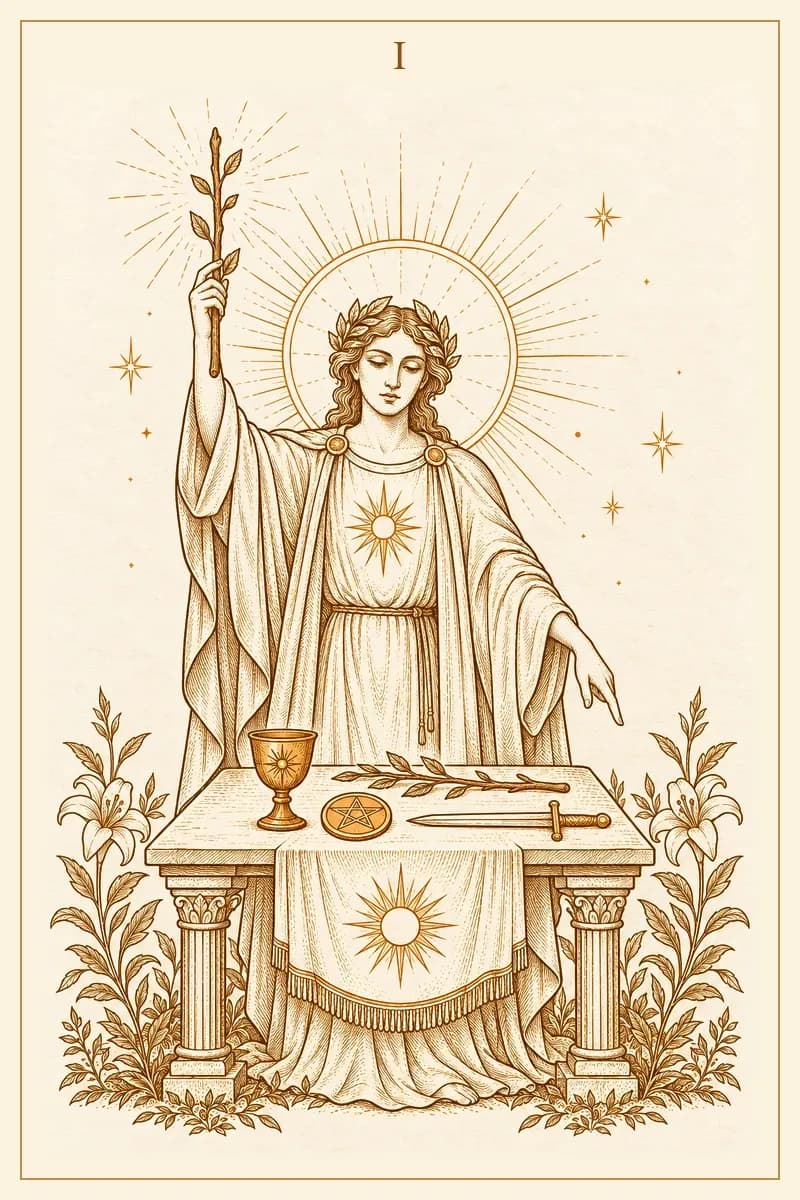
Meaning of The Magician and The Emperor Combination: The Architect of Command
Directed transition — using skill and will to navigate away from turbulence
Meaning of The Magician and Six of Swords Combination: Skill Meets Passage
Hidden order
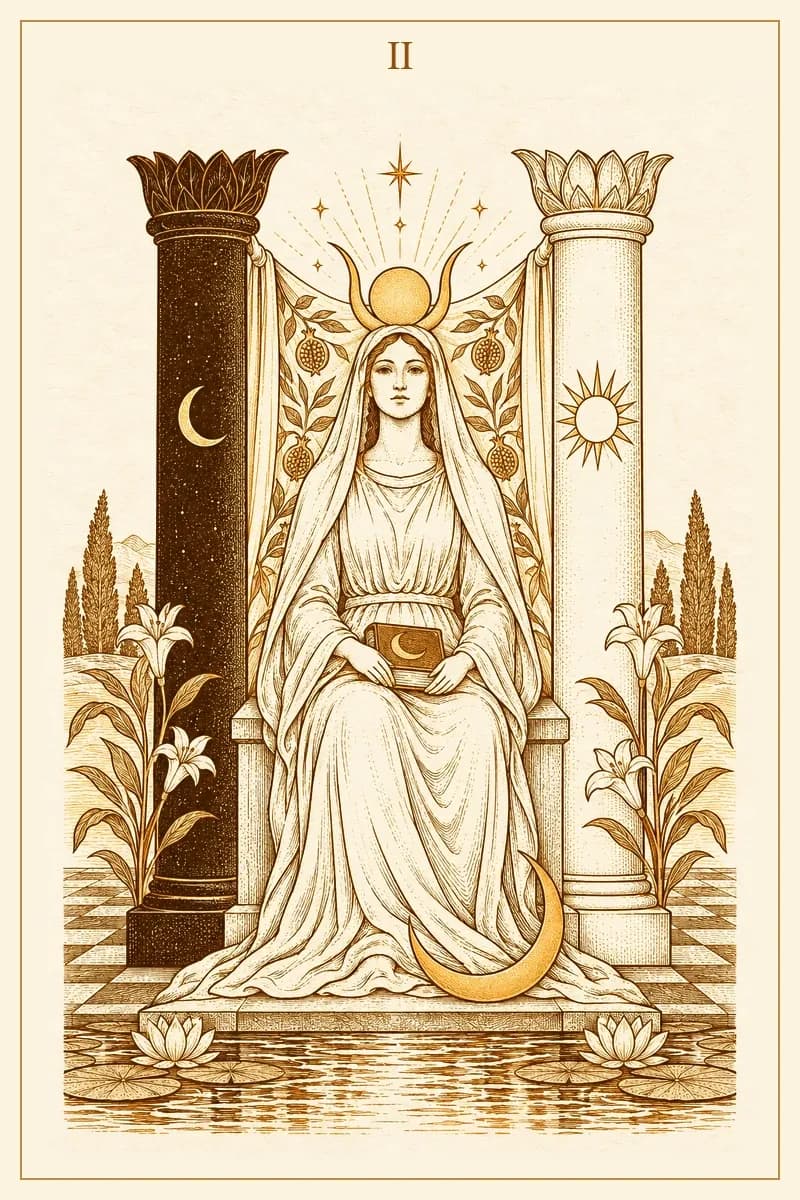
Meaning of The High Priestess and The Emperor Combination: Hidden Order
Intuition as navigator
Meaning of The High Priestess and Six of Swords Combination: The Inner Navigator
✦ Bring it to the cards ✦
Bring The Emperor and Six of Swords into your own reading
Use this pairing as a starting point, then let a spread listen to the situation that is actually yours.
Begin a contextual reading