
Card Combination
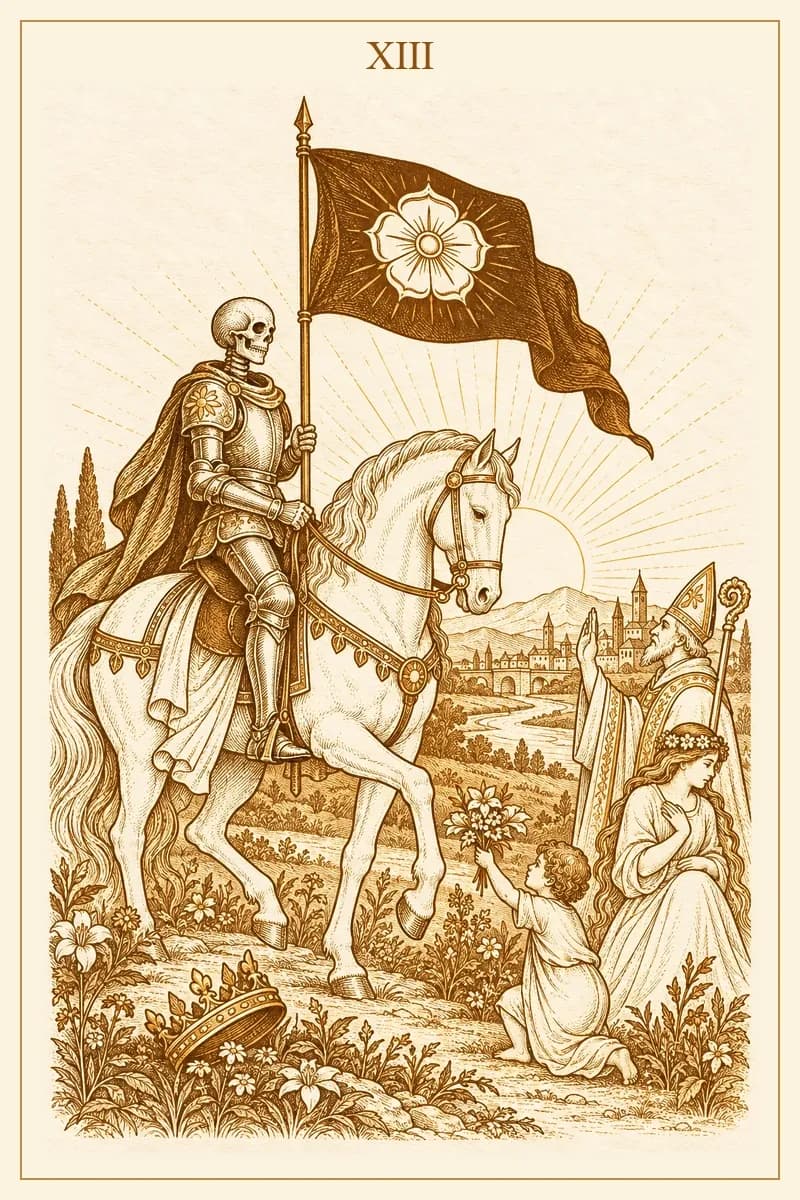
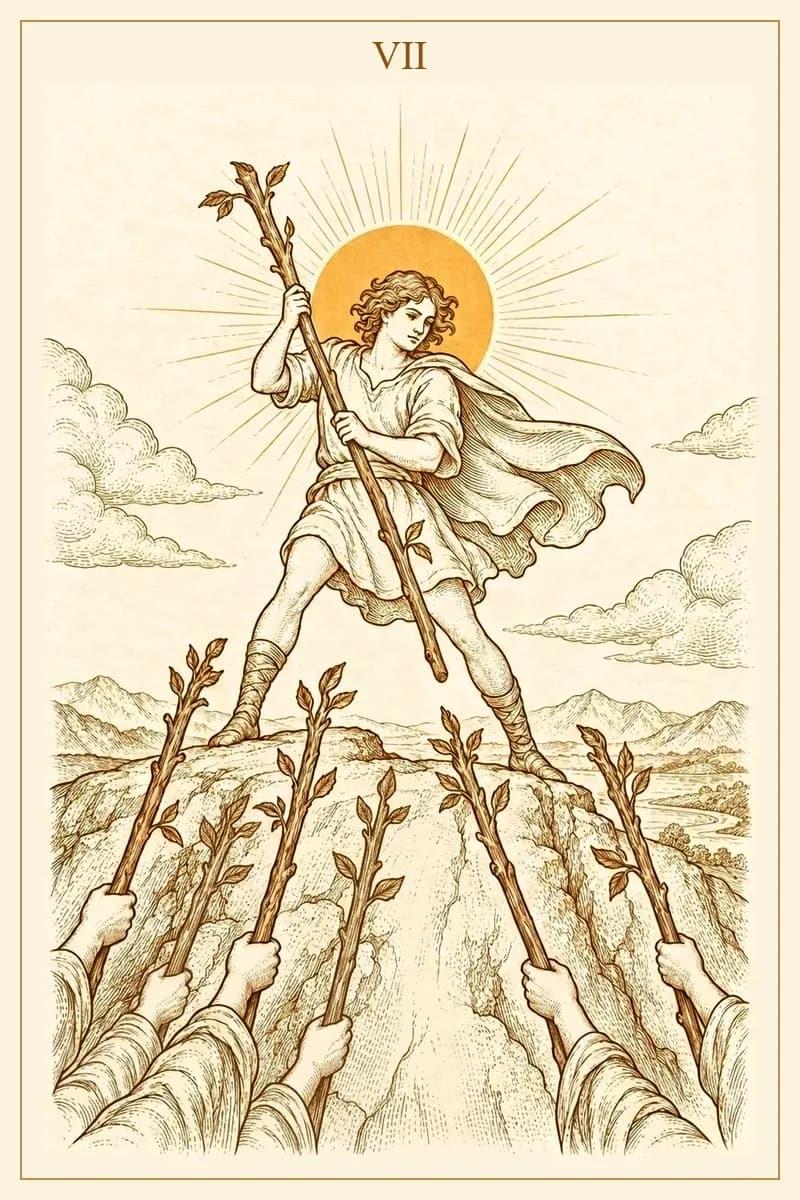
Meaning of Death and Seven of Wands Combination: Defending What Must End
Resistant transformation
There is a smell that rises from autumn soil after the first hard frost — sharp, mineral, final. The garden you tended all summer stands blackened at the stems, and yet your hands still grip the rake as if smoothing the beds one more time could reverse what the cold has already decided. Your knuckles ache. The wind carries the scent of decomposition, which is also the scent of fertility if you know how to read it.
That frozen-garden feeling lives at the center of Death paired with the Seven of Wands. One card strips the landscape bare. The other plants its feet and raises a staff against the stripping. The friction between them is not comfortable, but it is deeply human — the body's refusal to release what the season has already claimed.
The Core Tension
Death operates like winter: impersonal, thorough, unconcerned with your preferences. It dissolves what has run its course — habits, identities, relationships that stopped growing long ago. The Seven of Wands, by contrast, is pure personal will. It stands on a hill and dares anything to come closer. It fights not because victory is guaranteed but because fighting is the only posture it knows.
Together, these cards create a tug-of-war between an unstoppable force and a stubborn defender. The tension is not about whether transformation will happen — it will. The real question is what you are actually defending. Sometimes the Seven of Wands protects something genuinely worth keeping: a value, a boundary, a hard-won skill. Other times it defends nothing but the familiar shape of your own comfort. Distinguishing between the two is the entire work of this pairing.
Love & Relationships
In relationships, this combination often surfaces during seasons of unavoidable change — a partner outgrowing old dynamics, a household restructuring after loss, or the slow erosion of patterns that once felt permanent. One person may be ready to let the old form of the relationship die so something more honest can grow. The other stands guard over the way things were, interpreting every shift as an attack.
If you are the one defending, notice whether you are protecting the relationship or protecting yourself from the discomfort of not knowing what comes next. If you are the one pushing for change, recognize that your partner's resistance may carry legitimate information. The branch that bends in a storm survives; the one that refuses to move at all eventually snaps. But so does the one that offers no resistance whatsoever. Somewhere between rigidity and collapse, there is ground worth standing on together.
Career & Purpose
Professionally, Death and the Seven of Wands often appear when an industry, role, or project is undergoing irreversible change. You may be defending a position — literally or figuratively — while the landscape reorganizes around you. Budgets get cut. Teams get reshuffled. The skill set that made you indispensable two years ago now feels like last season's harvest.
The productive move here is strategic defense rather than blanket resistance. Identify which professional assets still carry genuine value and fight to preserve those. Let the rest compost. A farmer who insists on growing tomatoes in December wastes energy and seed. But a farmer who protects the greenhouse through winter emerges in spring with seedlings already started while everyone else is still turning soil.
Shadow Side
The shadow of this pairing is martyrdom disguised as strength. The Seven of Wands can convince you that suffering through resistance is noble, that holding your ground against all evidence is courage. Paired with Death, this shadow creates a person who exhausts themselves fighting a transformation that would actually serve them.
Watch for these signs: defending positions you no longer believe in, picking fights to avoid grieving, interpreting every ending as a personal defeat. The shadow also works in reverse — using Death's energy as an excuse to abandon commitments the moment they become difficult. Not everything that feels like an ending is one. Some things simply require more effort than you expected.
Action Steps
- 1Identify one area where you are spending energy defending something that has already ended — a habit, an expectation, an outdated version of yourself — and consciously redirect that energy toward what is actually growing.
- 2Set one non-negotiable boundary that protects something you genuinely value, not something you are merely afraid to lose, and communicate it clearly to the person who needs to hear it.
- 3Spend fifteen minutes outdoors observing what is dormant versus what is dead in the landscape around you, and let that observation inform how you assess your own situation.
Related Pairings
Continue through published pairings that share Death or Seven of Wands.
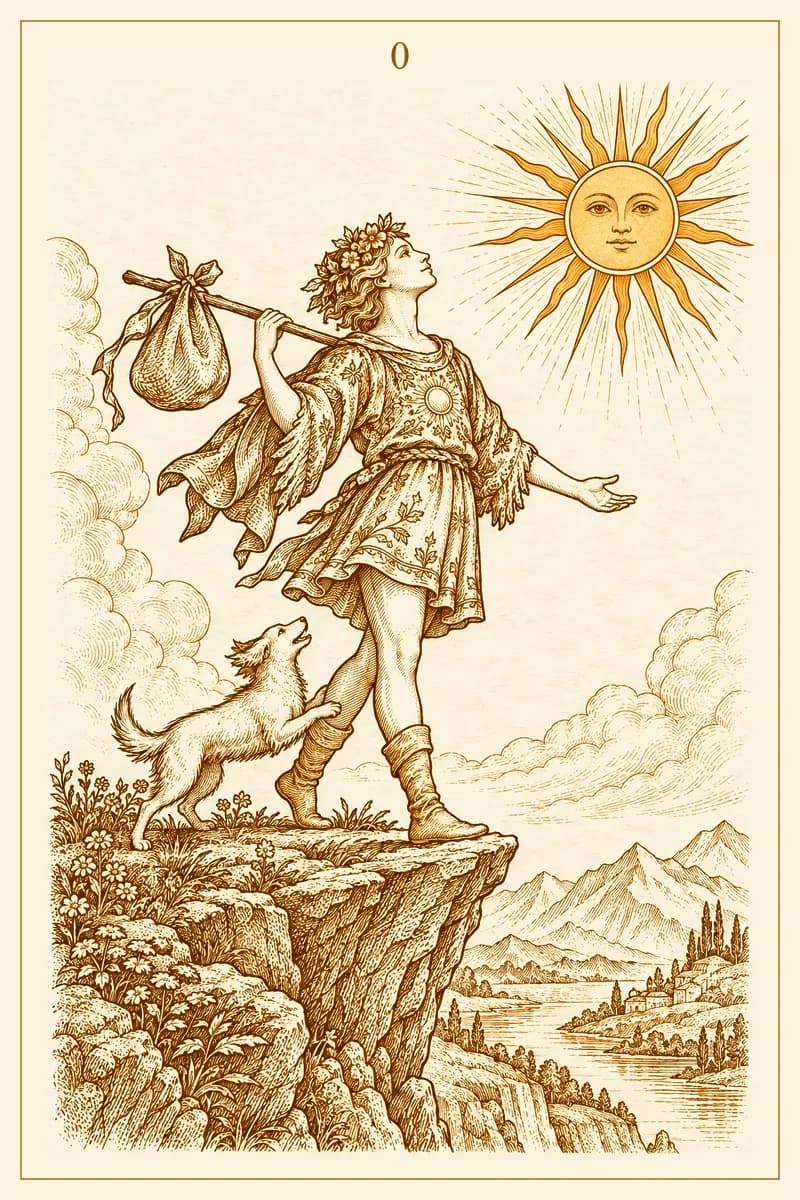
Ending births beginning
Meaning of The Fool and Death Combination: Ending Births Beginning
Unexpected defense
Meaning of The Fool and Seven of Wands Combination: Standing Ground You Didn't Plan to Defend
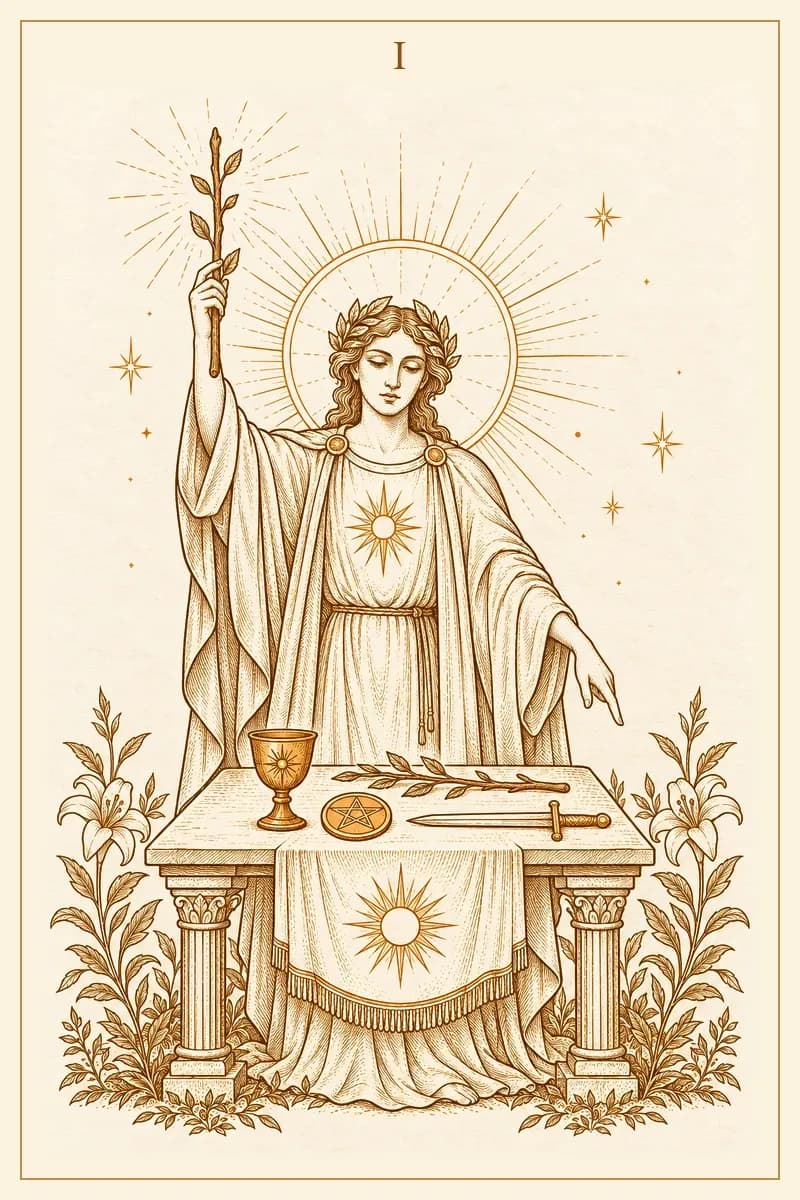
Craft confronting transformation
Meaning of The Magician and Death Combination: Skill Meets the Knife
Skilled defense under pressure
Meaning of The Magician and Seven of Wands Combination: Defending What You've Built
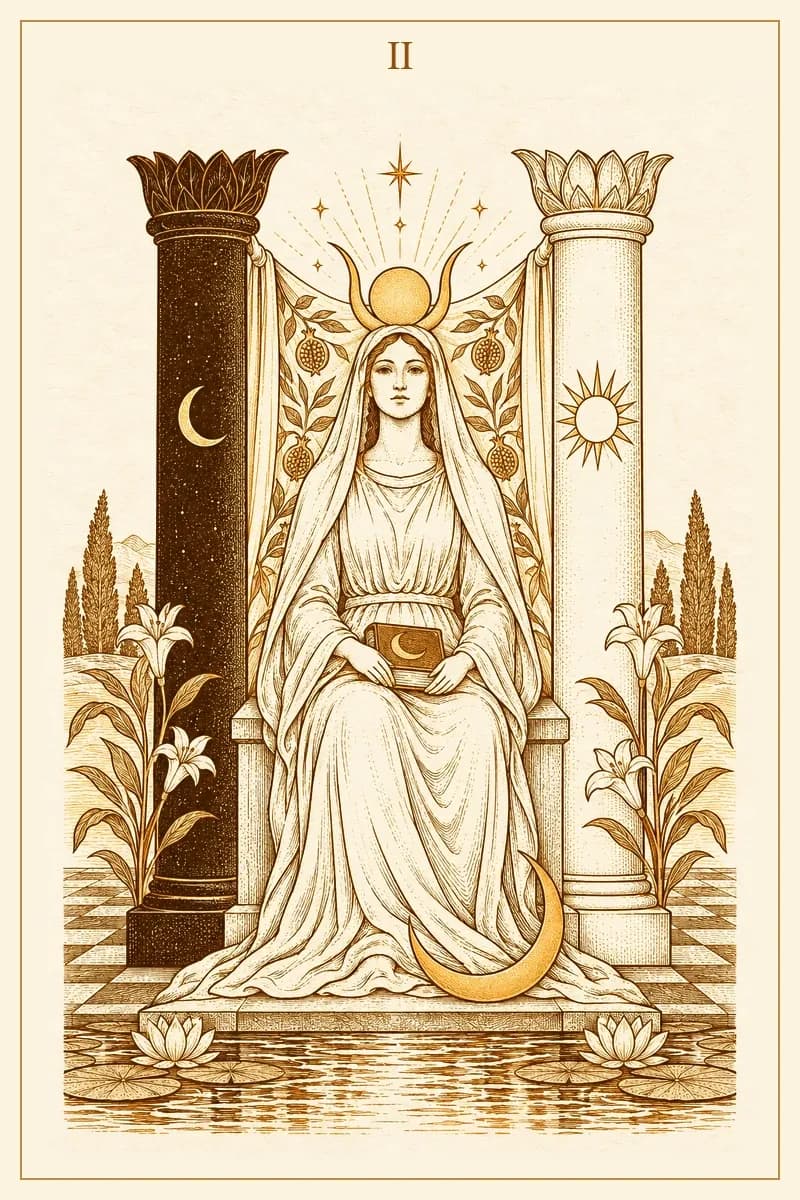
Silent dissolution
Meaning of The High Priestess and Death Combination: Hidden Transformation
Certainty under pressure
Meaning of The High Priestess and Seven of Wands Combination: Hold Your Ground with Inner Knowing
✦ Bring it to the cards ✦
Bring Death and Seven of Wands into your own reading
Use this pairing as a starting point, then let a spread listen to the situation that is actually yours.
Begin a contextual reading