
Card Combination
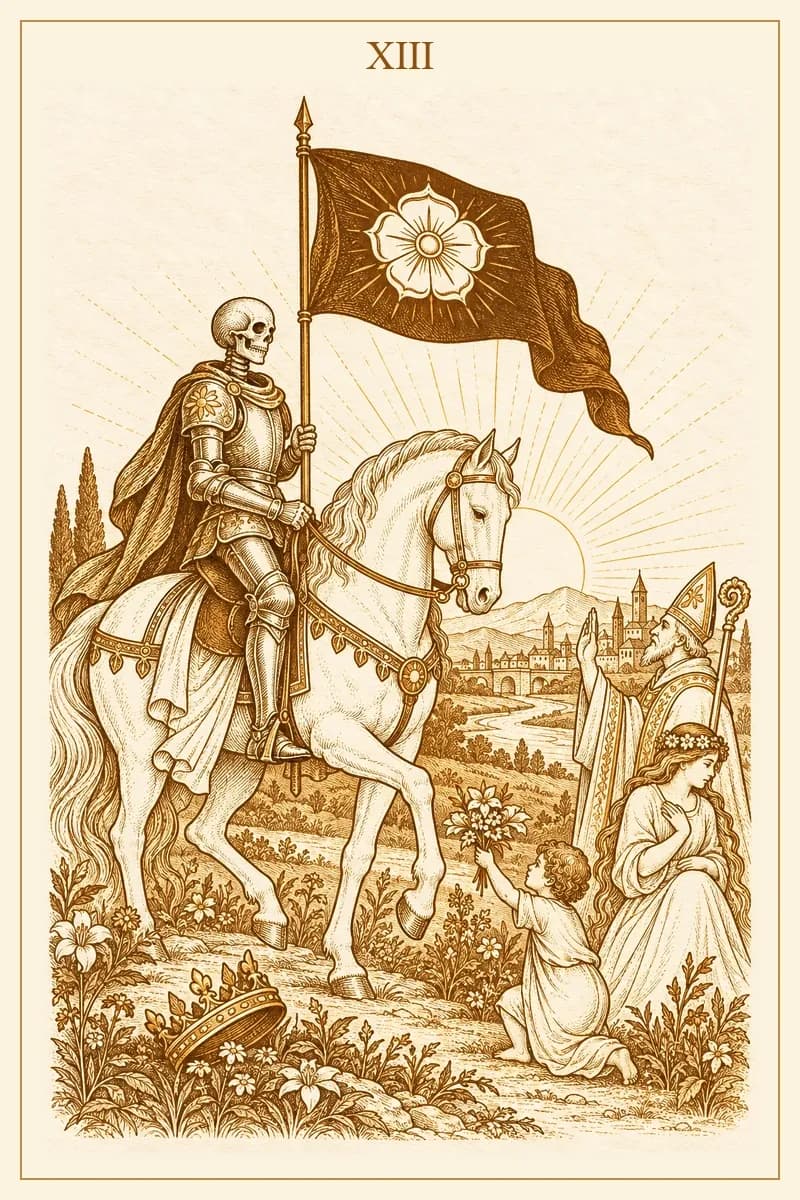
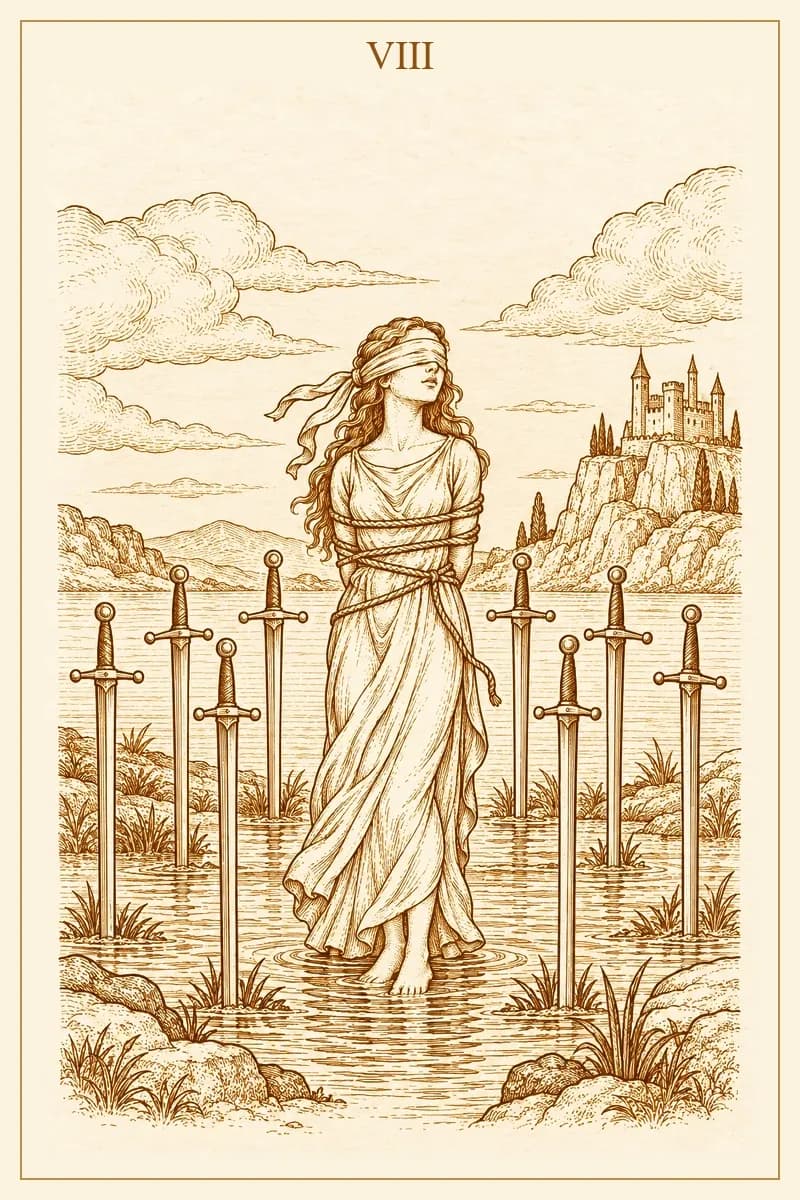
Meaning of Death and Eight of Swords Combination: Trapped Transformation
Paralyzed transformation
One actor stands center stage with a scythe, ready to bring the curtain down. The other is blindfolded, bound loosely by ropes that could fall away with a single deliberate movement. The audience holds its breath — not because escape is impossible, but because the blindfolded performer refuses to believe the ropes are loose. This is the drama Death and the Eight of Swords stage together: a scene where the final act demands surrender, yet the lead cannot stop rehearsing fear.
The scythe-bearer does not wait for permission. Death moves through the set, dismantling props, pulling backdrops from their rigging. Meanwhile, the bound figure flinches at every sound, convinced that stillness equals safety. What the audience sees clearly — that the bindings are theater, that the transformation is already underway — remains invisible to the one living inside the scene.
The Core Tension
Death insists on dissolution. The Eight of Swords insists on analysis, on cataloging every possible danger before taking a single step. Together they create a specific kind of suffering: the awareness that something must end, paired with the inability to participate in that ending. The transformation happens regardless — Death does not negotiate — but the Eight of Swords determines whether you move through it with open eyes or with a blindfold you tied yourself.
This tension is not abstract. It shows up as the relationship you know is over but cannot leave because you have constructed seventeen reasons why leaving would be worse. It shows up as the career pivot you have researched for two years without submitting a single application. Death has already closed the door. The Eight of Swords keeps you pressing your face against the glass, pretending it might reopen.
Love & Relationships
In romantic territory, these cards together describe a connection where both people sense the ending but neither speaks it aloud. The Eight of Swords contributes silence disguised as diplomacy — "if I don't name it, it isn't real." Death contributes the slow rot that silence produces. Conversations circle the same grievances without resolution, not because resolution is impossible but because honest words feel more dangerous than the quiet decay.
If you are single, this pairing points to a pattern of self-restriction dressed as selectiveness. The stories you tell about why love hasn't arrived — too busy, too damaged, too particular — may be the very ropes keeping you immobile on a stage that has already been reset for a different play. The old casting call expired. The question is whether you will audition for the next role or keep memorizing lines from a script that no longer exists.
Career & Purpose
Professionally, Death and the Eight of Swords flag a period where institutional change is colliding with personal rigidity. The department restructures. The industry shifts. The technology you mastered becomes legacy code. Death is not punishing you; it is clearing the stage for the next production. But the Eight of Swords has you calculating worst-case scenarios so thoroughly that you mistake preparation for action.
The specific trap here is over-identification with your current role. When your job title becomes your identity, any threat to the position feels like a threat to the self. Death asks you to separate who you are from what you do. The Eight of Swords argues that such separation is reckless. Neither is entirely wrong, but one of them is keeping you frozen while the scenery changes around you.
Shadow Side
The shadow of this combination is the secret comfort of helplessness. Being trapped — or believing yourself trapped — absolves you of responsibility. If you cannot move, you cannot fail. If the ropes hold you, you never have to test whether the next scene is one you can perform. Death and the Eight of Swords together can become an alibi: "I would have changed, but I was stuck."
Examine honestly whether your constraints are structural or theatrical. Real obstacles exist. But the Eight of Swords specializes in fabricating convincing replicas, and Death's pressure can make even flimsy barriers feel like prison walls. The shadow work here is distinguishing between the ropes that bind and the ropes that merely drape.
Action Steps
- 1Name one specific thing you are holding onto purely out of fear of what comes after it ends, then take the smallest concrete step toward releasing it — cancel the subscription, send the message, clear the drawer.
- 2Write down the three worst outcomes you are imagining and beside each one, note what you would actually do if it happened — not to minimize the fear, but to prove your capacity to respond.
- 3Identify one area where you have been performing helplessness as a strategy, and replace one passive sentence in your self-talk ("I can't") with a directional one ("I won't yet, because").
Related Pairings
Continue through published pairings that share Death or Eight of Swords.
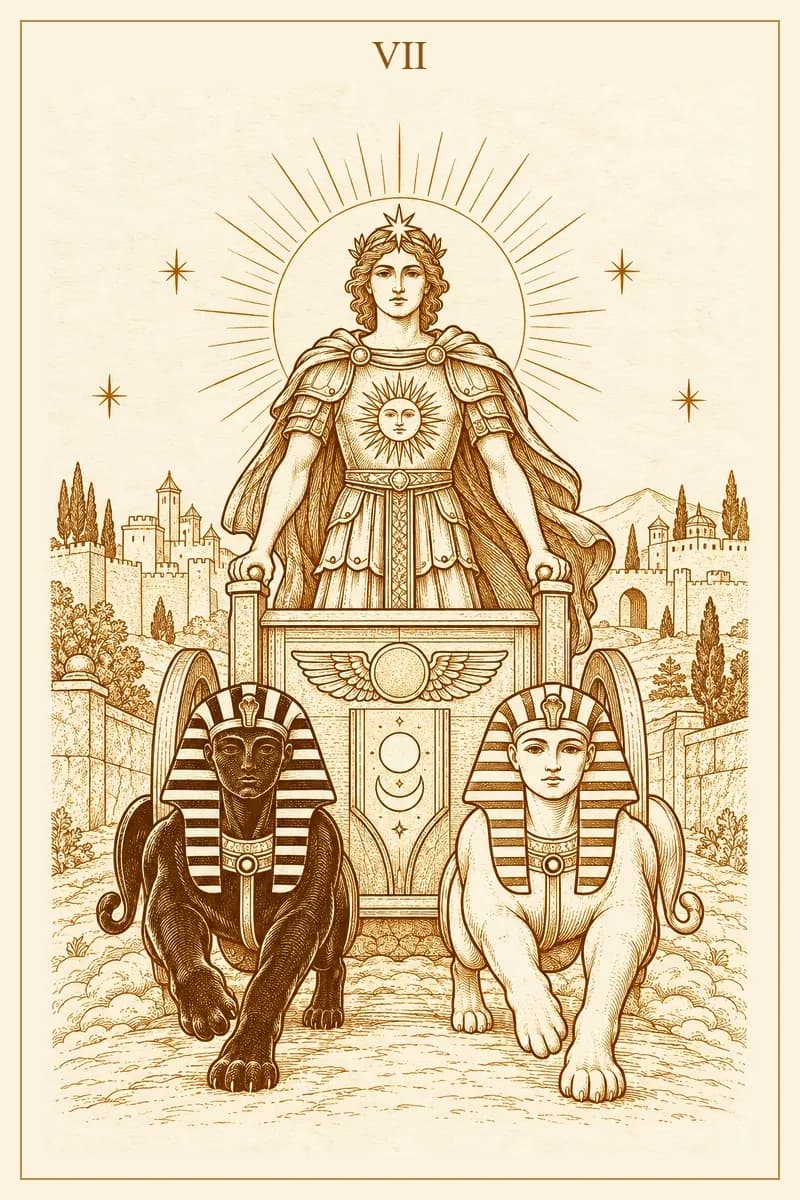
Driven transformation
Meaning of The Chariot and Death Combination: Momentum Meets Transformation
Willpower as trap
Meaning of The Chariot and Eight of Swords Combination: Trapped Victory
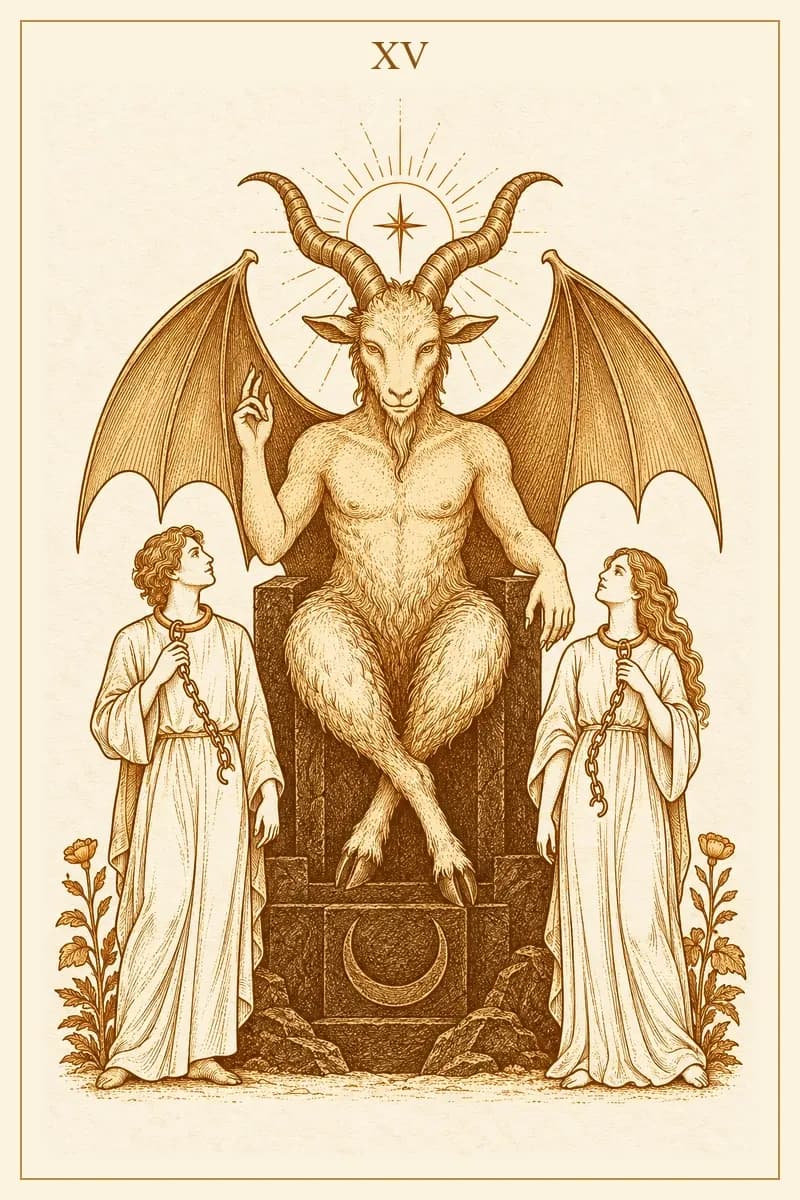
Forced liberation
Meaning of Death and The Devil Combination: Forced Liberation
Self-built prisons
Meaning of The Devil and Eight of Swords Combination: Constructed Captivity
Hidden transformation
Meaning of Death and The Moon Combination: Hidden Transformation
Authority as cage
Meaning of The Emperor and Eight of Swords Combination: Trapped by Control
✦ Bring it to the cards ✦
Bring Death and Eight of Swords into your own reading
Use this pairing as a starting point, then let a spread listen to the situation that is actually yours.
Begin a contextual reading