Loading your view
The page is gathering the latest information.
The page is gathering the latest information.
collapse into uncertainty
The most frightening diagnosis is not the one that explains what is wrong. It is the one that reveals how wrong the previous explanation was. A misdiagnosis, treated for years, does not simply fail — it restructures the patient around the wrong story of themselves. When the Tower and the Moon appear together, this is the clinical reality they describe: not just the collapse of a structure, but the discovery, in the rubble, that the structure was built on something that was never solid to begin with.
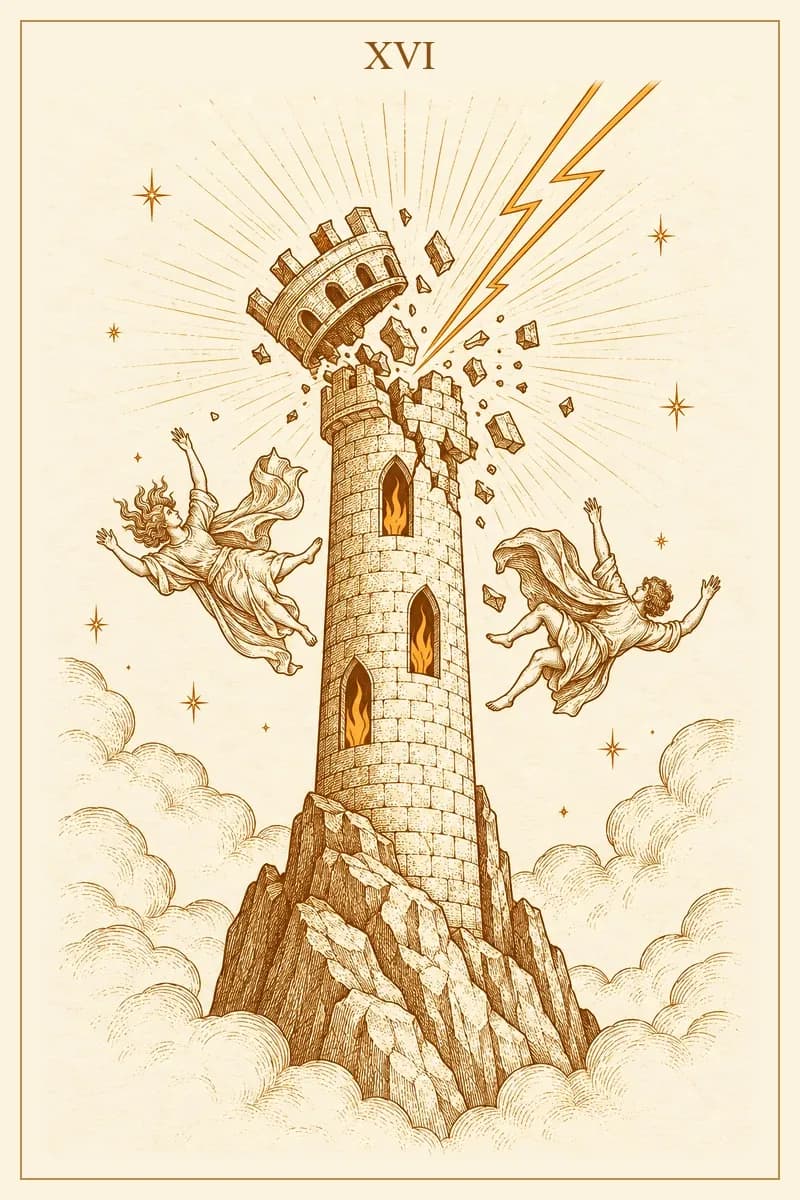
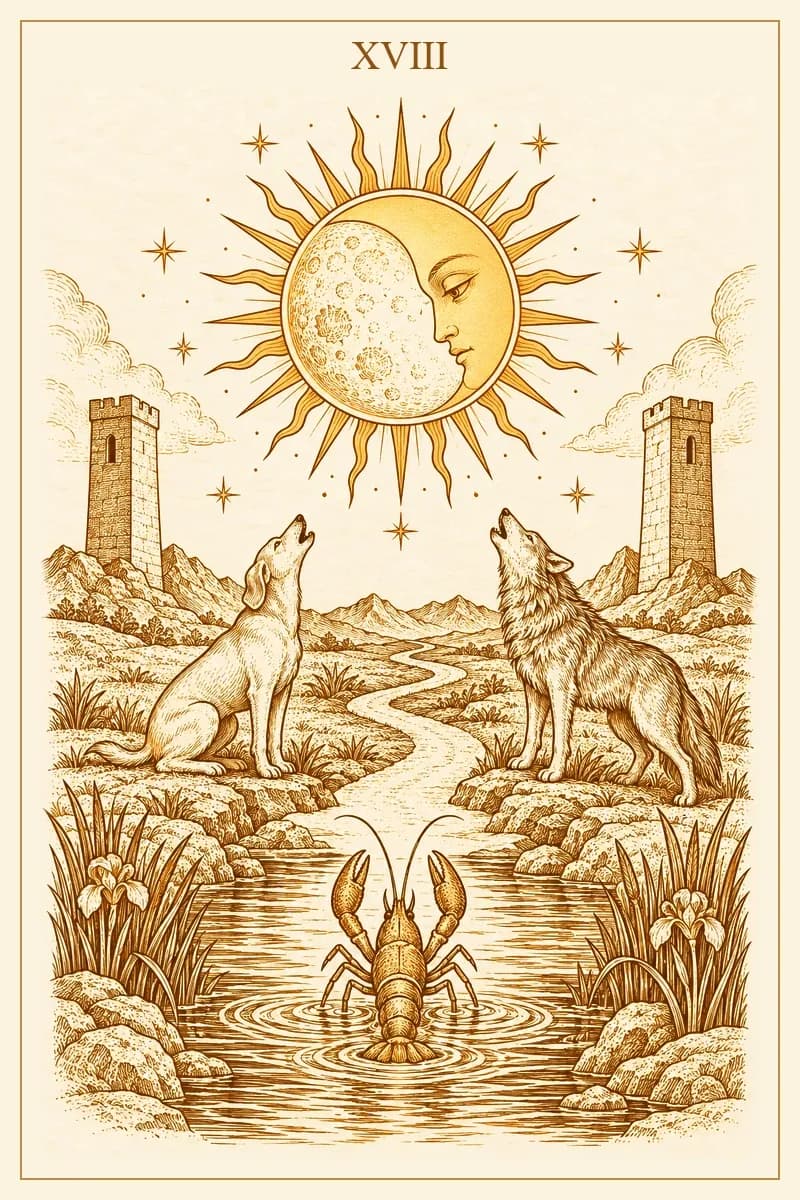
The Tower is a violent clarification. It does not introduce problems — it exposes them. The lightning does not damage a healthy building. It finds the fault lines that were always there and makes them suddenly, undeniably visible. This is not comfortable. It is, in the medical sense, a crisis that is also a diagnosis: the moment when the hidden becomes visible and the treatment can finally begin. But the Moon is there too, and the Moon does not offer the clean edges of revelation. The Moon is fog. The Moon is the walk from the broken structure toward something you cannot yet see, lit only by reflected light, attended by the low sound of things you cannot name.
Together, they describe the period that follows a rupture: not the rupture itself, not the recovery, but the bewildering middle ground where the old certainties are gone and the new ones have not yet formed. This is the most psychologically demanding territory in the deck, and the most productive.
The Tower offers destruction as information. The Moon offers disorientation as process. The tension between them is the tension between the shock of seeing clearly and the necessity of not seeing clearly yet — because some truths cannot be integrated all at once without destroying the person doing the integrating.
In medical terms, this is the difference between the diagnosis and the treatment plan. The diagnosis arrives with brutal clarity. The treatment is long, uncertain, and requires the patient to tolerate not knowing whether it is working while it is working. The Tower's work is done quickly. The Moon's work takes as long as it takes, and cannot be rushed by willpower or intelligence or the urgent desire to be on the other side of it already. The core tension is between the need for resolution and the necessity of sitting inside what cannot yet be resolved.
In a romantic context, this combination marks the aftermath of a rupture — a revelation, a betrayal, a conversation that changed everything, a sudden understanding that what was being called love was something more complicated. The Tower strips the comfortable story. The Moon then has to live inside the space where that story used to be.
What makes this pairing particularly demanding in love is that the Moon does not provide closure. It provides depth. The questions it surfaces are not quickly answered: Did I love the person or the idea of them? What did I see in them that I was actually seeing in myself? What has this collapse told me about what I actually need versus what I thought I needed? These are not questions that can be answered in the first week after the Tower falls. The Moon asks for patience with the not-yet-known.
Professionally, the Tower and the Moon together often describe a career disruption that has dislodged not just a job but an identity. The Tower removes the position, the organization, the professional structure that provided a sense of self. The Moon then reveals how much of that sense of self was never really yours — how much of it was borrowed from the institution, the title, the belonging.
This can be the experience of a sudden redundancy that opens into a surprisingly honest reassessment of what you actually want to do. Or the collapse of a business that reveals, in retrospect, that the person building it had long since stopped believing in it. The Moon's gift here is not comfort. It is the opportunity to stop performing a professional identity and start inhabiting one.
The shadow of this pairing is being trapped in the Moon's fog indefinitely — using the Tower's disruption as a reason never to rebuild, turning uncertainty into a permanent residence rather than a passage. The Moon can become an excuse for the person who is afraid to commit to any direction because all directions now feel equally unproven.
There is also a shadow around the relationship between rupture and old patterns. The Tower removes the structure. The Moon can return you, in the confusion, to habits and compulsions that were operating before the structure was ever built. Renovation is not the same as healing. A new structure built on the same fault line will fall again.
Keep or share this combination reference
Continue through published pairings that share The Tower or The Moon.

controlled force shattered
willpower versus illusion
forced liberation
hidden compulsion

authority meets collapse
authority confronting the unseen
✦ Bring it to the cards ✦
Use this pairing as a starting point, then let a spread listen to the situation that is actually yours.
Begin a contextual reading