Loading your view
The page is gathering the latest information.
The page is gathering the latest information.
resilience through rupture
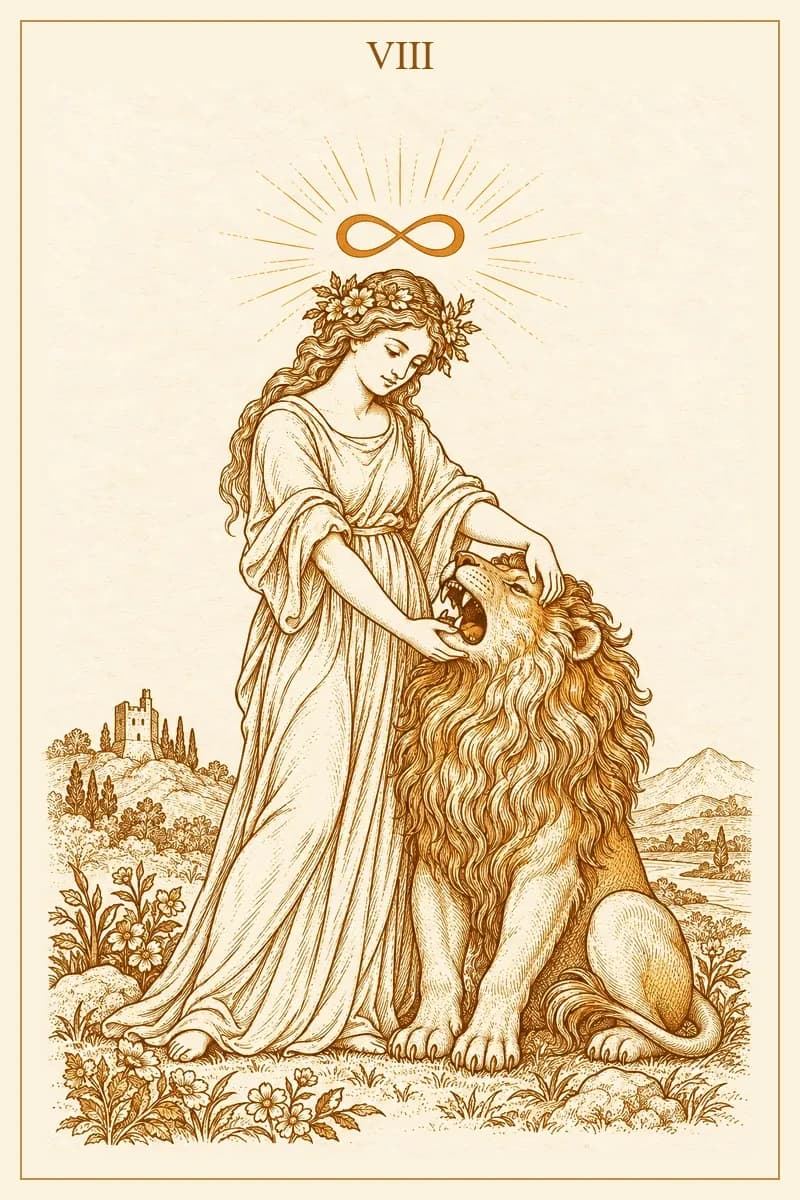
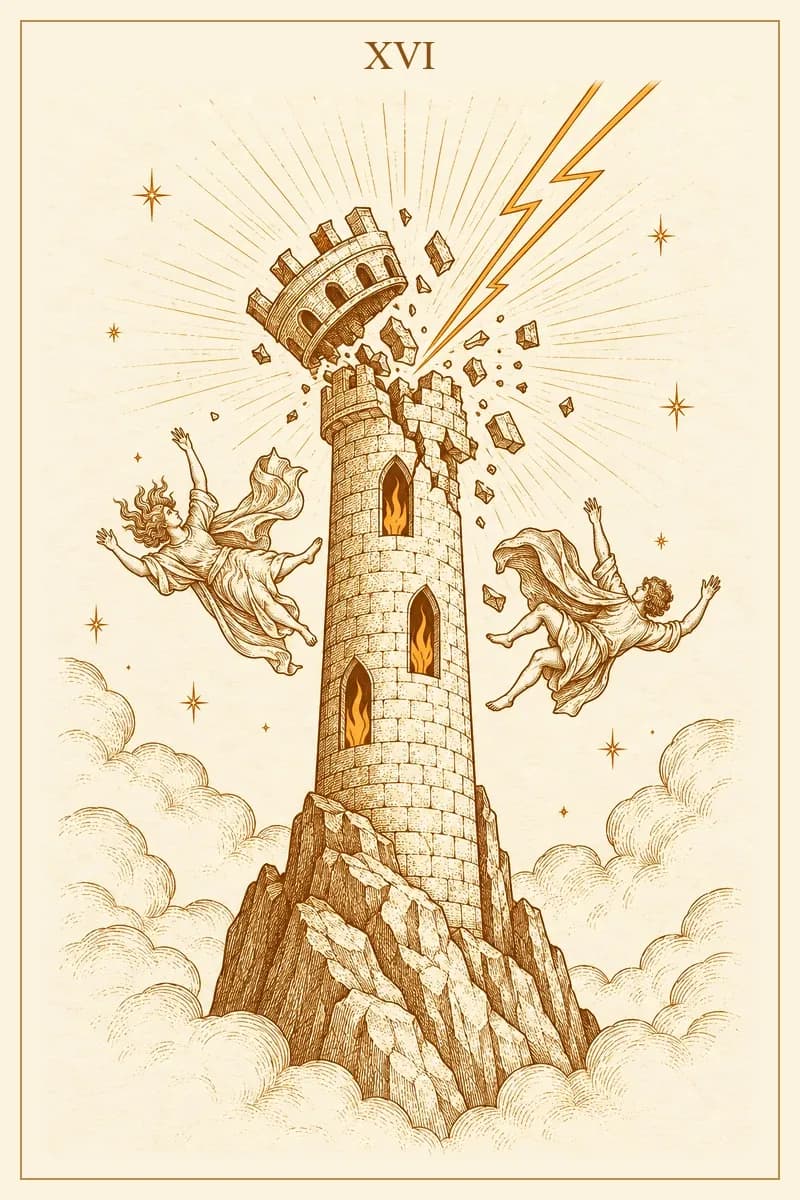
The building is already cracking. You can hear it — that low groan of something structural giving way — and the question is not whether it falls but what you do while it falls. That is exactly the space where Strength and The Tower meet: not before the disaster, not after the rubble settles, but in the live moment of collapse itself.
Most people freeze or flee when a Tower moment hits. The lightning doesn't ask permission. The wall doesn't wait until you're ready. What Strength offers in that instant is not immunity from the falling stones but a quality of presence that keeps you from becoming rubble yourself. It is the difference between a building that pancakes and one with a core shear wall that holds while everything peripheral gives way.
These two cards together describe someone who has — or urgently needs — that shear wall. Not armor. Not denial. A deep, quiet center that can absorb enormous shock without shattering. That is harder than it sounds, and the cards know it.
The Tower is violent and impersonal. It destroys what was built on shaky foundations, and it does so without consulting you. Strength, by contrast, is intimate and deliberate — it works through patience, through breath, through the gentle hand on the lion's jaw. Put these two cards together and you have a contradiction that is also a curriculum: can you hold your center when the situation has stripped away every external support you were leaning on?
The tension is not between the cards themselves — it's between the person you were before the collapse and the person the collapse is forcing you to become. Strength doesn't prevent The Tower. It determines what survives it.
In a relationship reading, this pairing often marks a moment of reckoning that has been building longer than either person admitted. A conversation that finally happens. A truth that comes out sideways through a fight. The Tower in love is rarely only destruction — it is also the moment when the false version of the relationship stops being sustainable.
What Strength asks here is specific: can you respond rather than react? Can you stay present with the other person's pain — or your own — without becoming cruel, cold, or catastrophizing? Relationships that survive Tower moments usually do so because at least one person held the Strength posture: grounded, honest, not punishing.
If you are single, this combination can mark the collapse of a story you were telling yourself about why you were alone, or what you needed, or what you deserved. That story falling apart is the Tower. Sitting with what's true underneath it is Strength.
The Tower at work looks like a restructuring, a sudden termination, a project that crumbles in public, a reputation hit that feels catastrophic. Strength alongside it does not mean the professional damage isn't real. It means the damage does not have to reach your core.
Practically: this combination advises against panic moves. The impulsive resignation, the scorched-earth email, the dramatic exit — all Tower energy turned inward and amplified. Strength here counsels a deliberate pace. Assess what actually fell and what is still standing. Not every wall in the building came down.
For people in leadership, this pairing is especially pointed. How you behave when the structure is shaking is the most visible thing you will ever do. Calmness under structural failure is not passivity — it is the highest form of competence.
The shadow of Strength alongside The Tower is the performance of calm. There is a way to appear composed that is actually dissociation — a checked-out stillness that looks like mastery but is really numbness. If you are using Strength energy to avoid feeling the real loss that The Tower brought, the rubble will collect in your basement and cause problems later.
The Tower insists on grief. It insists on the acknowledgment that something real ended. Strength's shadow here is using composure as a bypass for that necessary mourning. Real strength has room for the loss. It doesn't perform its way through.
Watch also for the reverse: using Tower chaos as an excuse to abandon the patient, careful work that Strength requires. Destruction can feel like relief. Sometimes it is. But burning things down is not the same as rebuilding on solid ground.
Keep or share this combination reference
Continue through published pairings that share Strength or The Tower.

controlled fire
controlled force shattered
hard power vs soft power
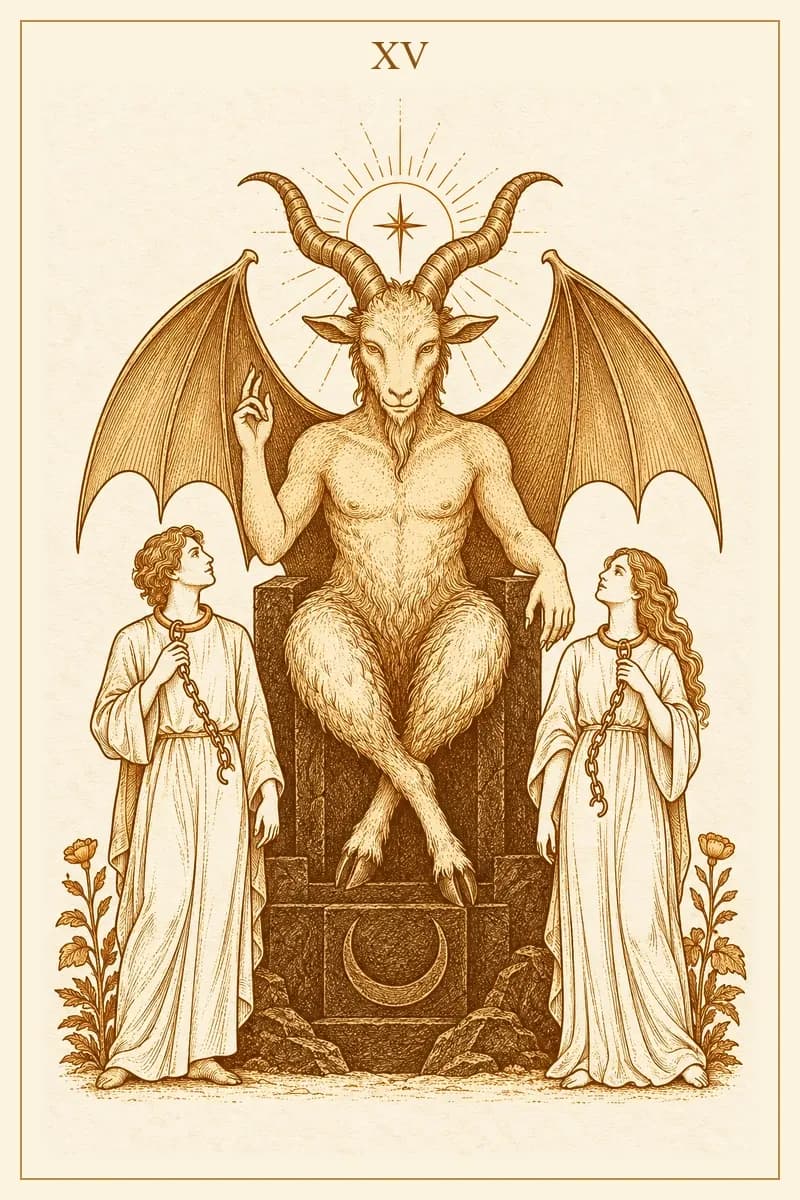
forced liberation

nurturing power
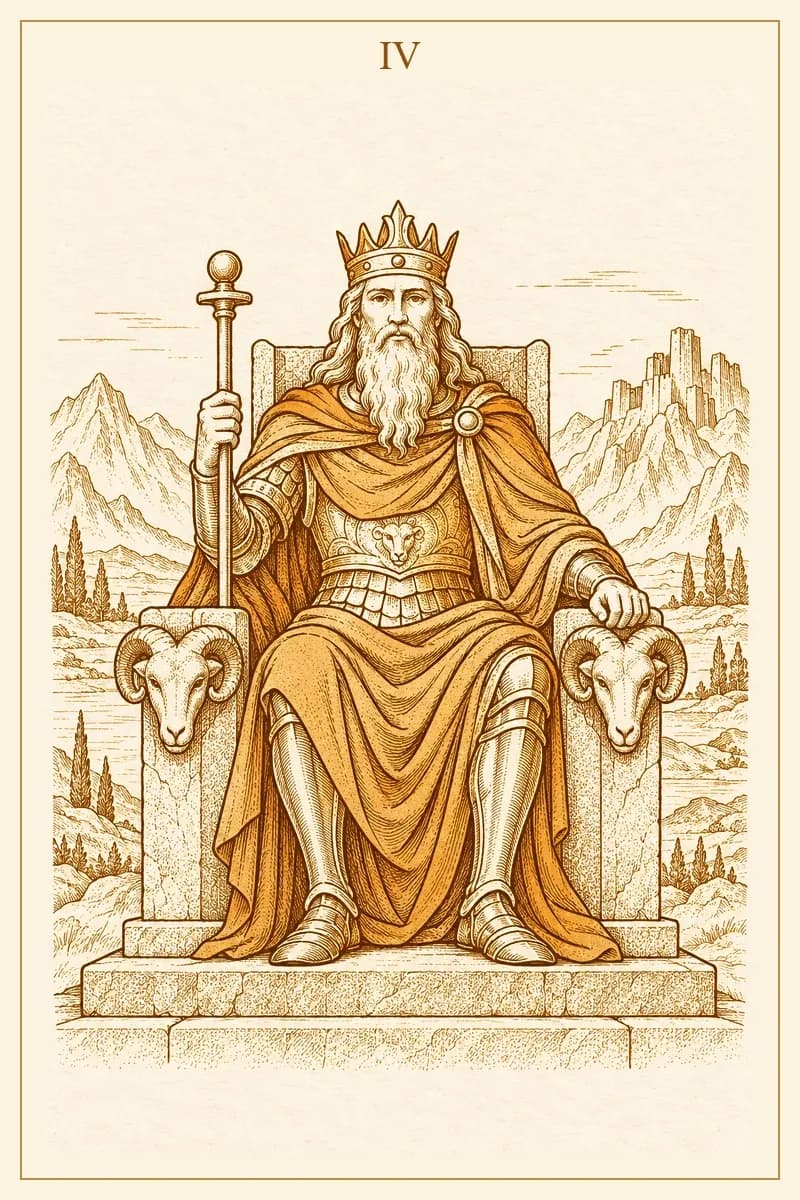
authority meets collapse
✦ Bring it to the cards ✦
Use this pairing as a starting point, then let a spread listen to the situation that is actually yours.
Begin a contextual reading