
Card Combination
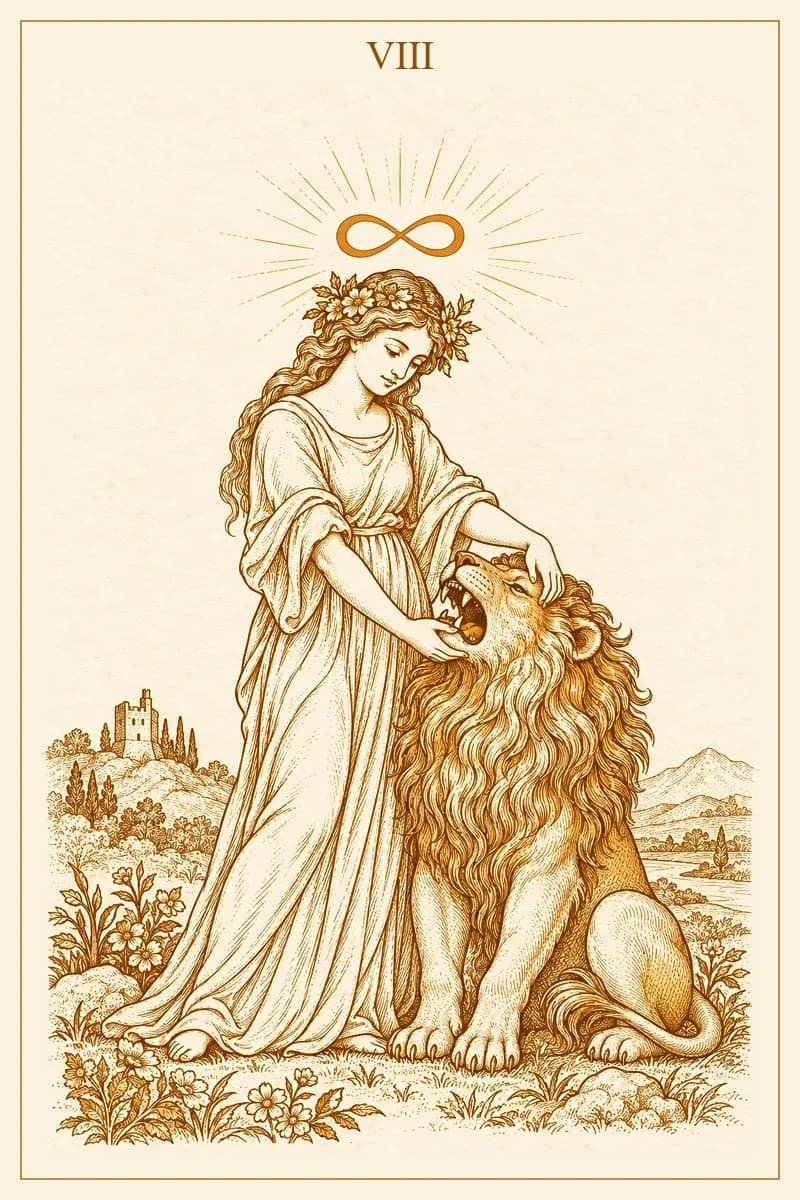
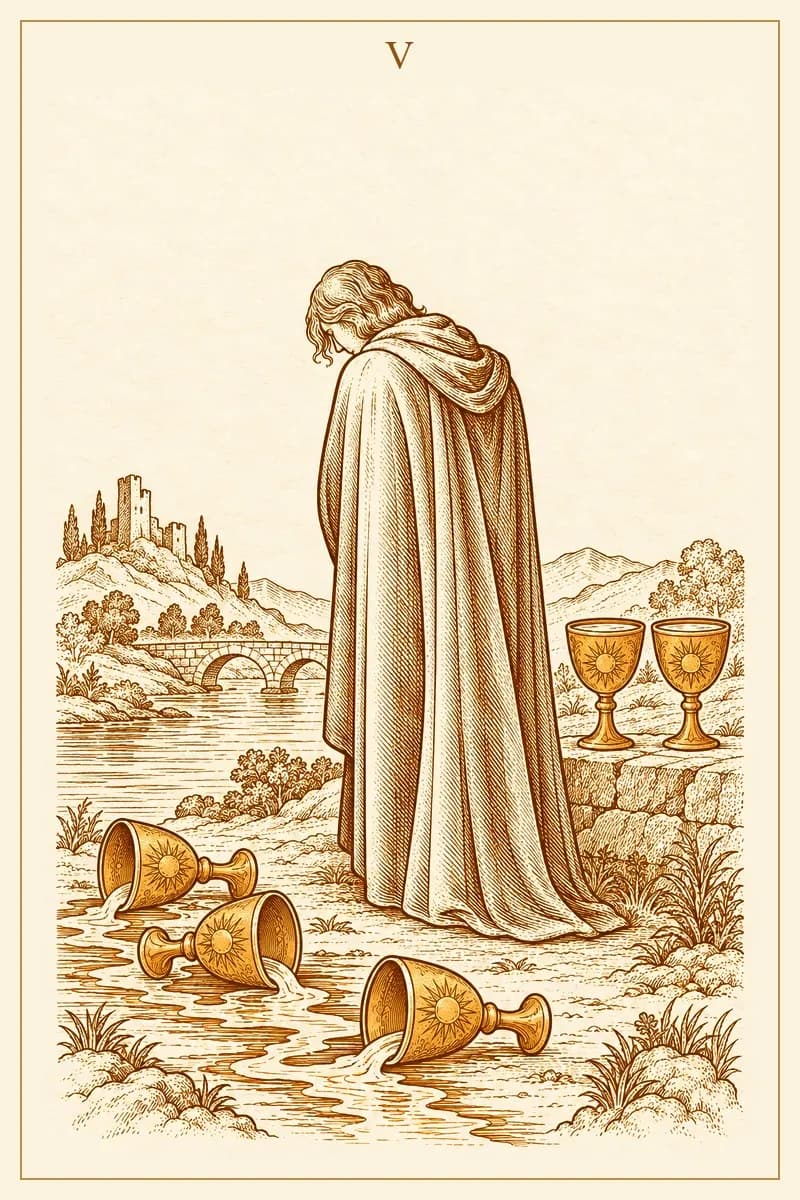
Meaning of Strength and Five of Cups Combination: Grief That Feeds You
Resilient grief
The broth has been simmering too long. The color has deepened past rich into something murky, and the kitchen smells of what was almost a perfect meal. You stand at the stove, wooden spoon in hand, looking at the three spilled cups on the counter—the mess, the waste, the herbs scattered across the tile—and you still have not put the spoon down. That is the image these two cards press into your hands: a kitchen mid-disaster, and a cook who has not walked out.
Strength does not arrive announcing itself. It shows up in the grip that loosens instead of clenches, in the jaw that unclenches before a word comes out. Five of Cups is the figure staring at what was lost, back turned to the two cups still standing. Together they create a portrait of someone in the middle of grief who still has one hand steady on the pot. Not healed. Not past it. Steady anyway.
This is not the same as being okay. It is the condition just before okay becomes possible.
The Core Tension
Five of Cups wants to catalog the damage: count the spilled cups, measure what is gone, replay how it happened. Strength, by contrast, asks for presence—not with the wound, but with yourself inside the wound. The tension is that both impulses are valid. Grief is real. So is the animal inside you that can carry it.
The danger here is performing Strength. Going through the motions of calm while the broth scorches on low heat because you keep telling yourself you are fine. The card combination does not reward that. It rewards the cook who turns the heat down, acknowledges the burned bottom, and decides what can still be salvaged—even if the final dish is different than planned.
Love & Relationships
A relationship has left marks. Maybe it ended, maybe it shifted in ways that felt like loss, maybe it is ongoing and something broke inside it that has not been repaired. Five of Cups sits in that feeling: the grief of what this was supposed to be. Strength says you are not required to either deny the loss or dissolve into it.
In practical terms: you can love someone and grieve the version of them—or the version of you in that relationship—that no longer exists. You are allowed to hold both. What Strength asks is that you not wound yourself further by deciding grief is weakness. The most tender moment in any kitchen is when you taste something that didn't work and still stay curious about why.
Career & Purpose
A project collapsed. A role changed under your feet. An opportunity passed to someone else while you watched. Five of Cups at work is the spreadsheet that shows what was lost, the meeting that didn't go the way you prepared for, the pitch that landed wrong. Strength here is not toxic positivity. It is the professional skill of metabolizing disappointment without letting it calcify into identity.
The cook who burns one dish and decides they are bad at cooking has made a category error. You have made a dish that didn't work. That is different. Strength combined with Five of Cups says: take inventory, register what is gone, and then—only then—look at what ingredients you still have.
Shadow Side
The shadow of this combination is martyrdom. Strength can slide into pride about how much you can endure. Five of Cups can feed that narrative: look at all I have lost, look how much I am bearing. The kitchen becomes a stage for suffering rather than a place of actual work. Watch for the point where grief becomes a story you are attached to rather than an experience you are moving through.
The other shadow is suppression dressed as Strength. The cook who cleans up the spill with mechanical efficiency and never registers that something went wrong. Skipped steps breed future mistakes. Sit with the cups that fell. You just don't have to live there.
Action Steps
- 1Identify one specific loss—name it plainly, without metaphor or minimizing—and write it in one sentence. That act of precision is Strength applied to grief.
- 2Notice where you are gripping too hard: a conversation you keep rehearsing, a wound you keep pressing. Loosening is not forgetting. It is how you keep your hands functional.
- 3Make something with your hands this week, literally in a kitchen if possible. Chop something. Stir something. Let the body work while the mind processes. The integration happens in small, physical acts.
Related Pairings
Continue through published pairings that share Strength or Five of Cups.

Controlled fire
Meaning of The Chariot and Strength Combination: Controlled Fire
Grief and momentum
Meaning of The Chariot and Five of Cups Combination: Driving Through Grief

Hard power vs soft power
Meaning of The Emperor and Strength Combination: Hard Power Meets the Quiet Force

Grief-fueled bondage
Meaning of The Devil and Five of Cups Combination: Grief Feeding Chains
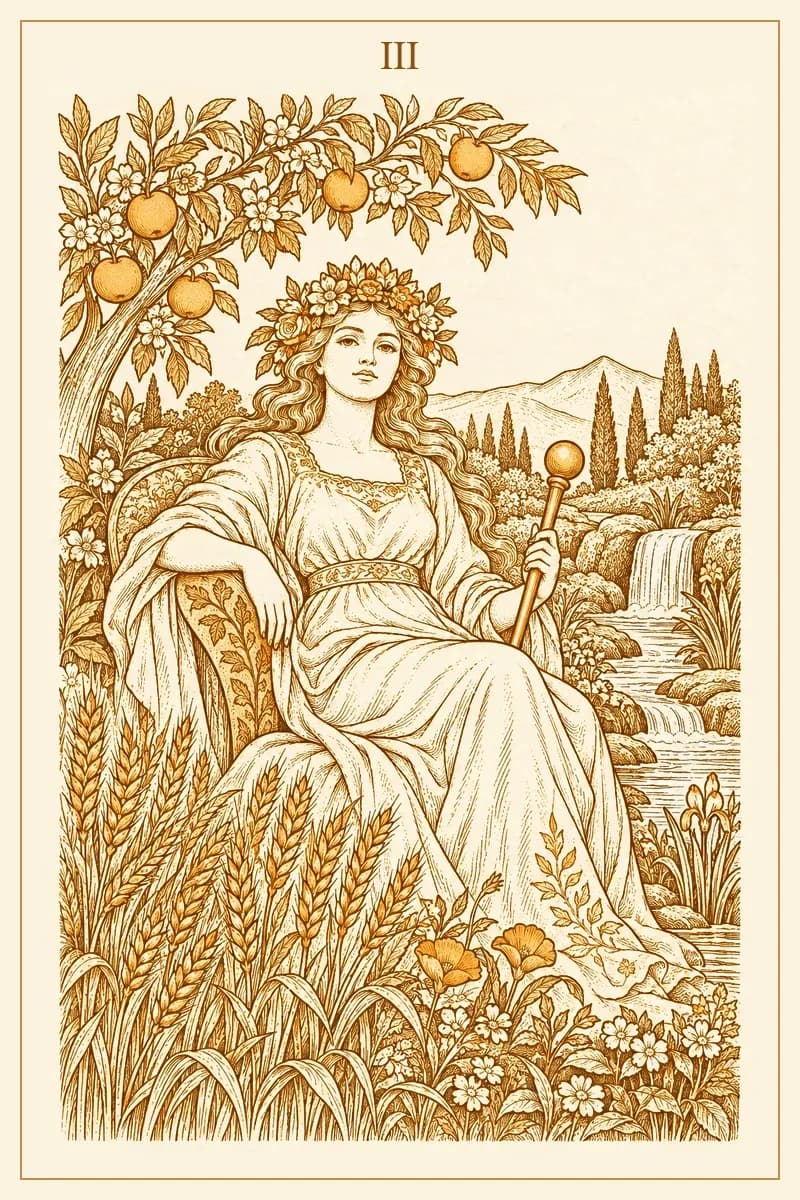
Nurturing power
Meaning of The Empress and Strength Combination: Gentle Power in Full Bloom
The grief a ruler will not allow himself — and what that refusal eventually costs
Meaning of The Emperor and Five of Cups Combination: The Ruler Who Cannot Grieve
✦ Bring it to the cards ✦
Bring Strength and Five of Cups into your own reading
Use this pairing as a starting point, then let a spread listen to the situation that is actually yours.
Begin a contextual reading