
Card Combination
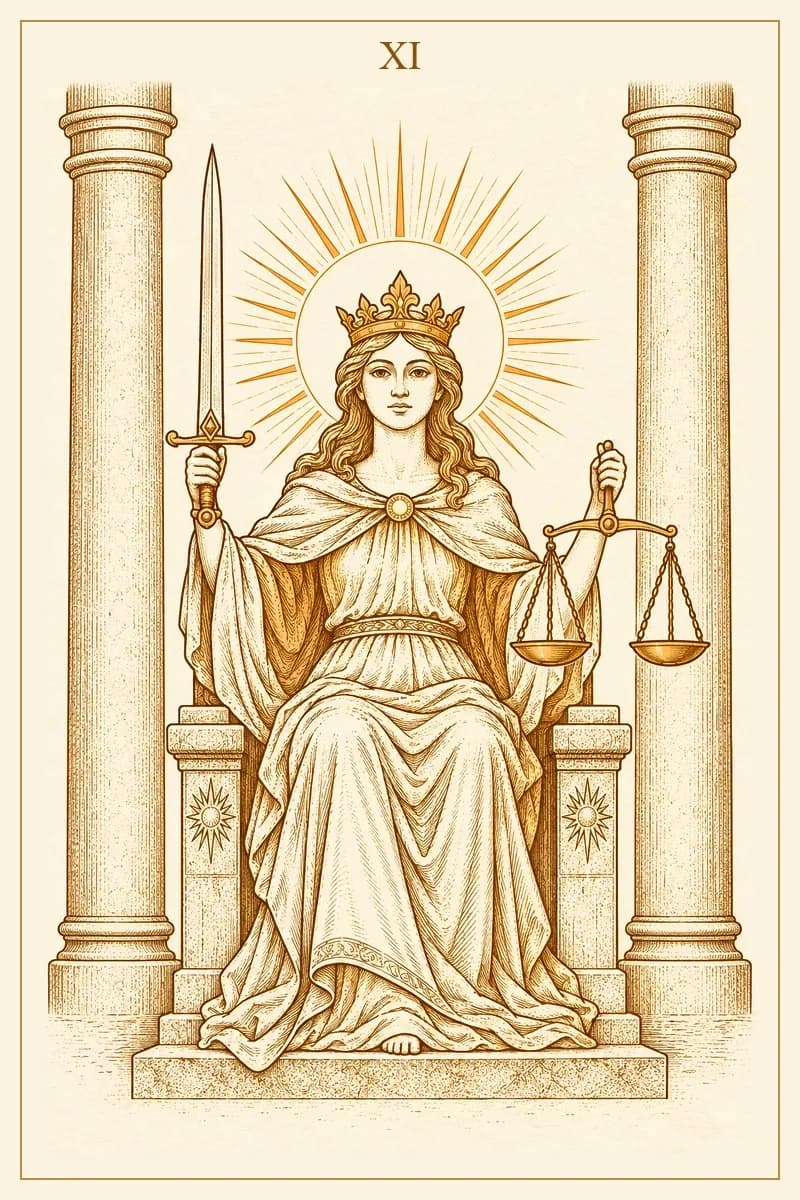
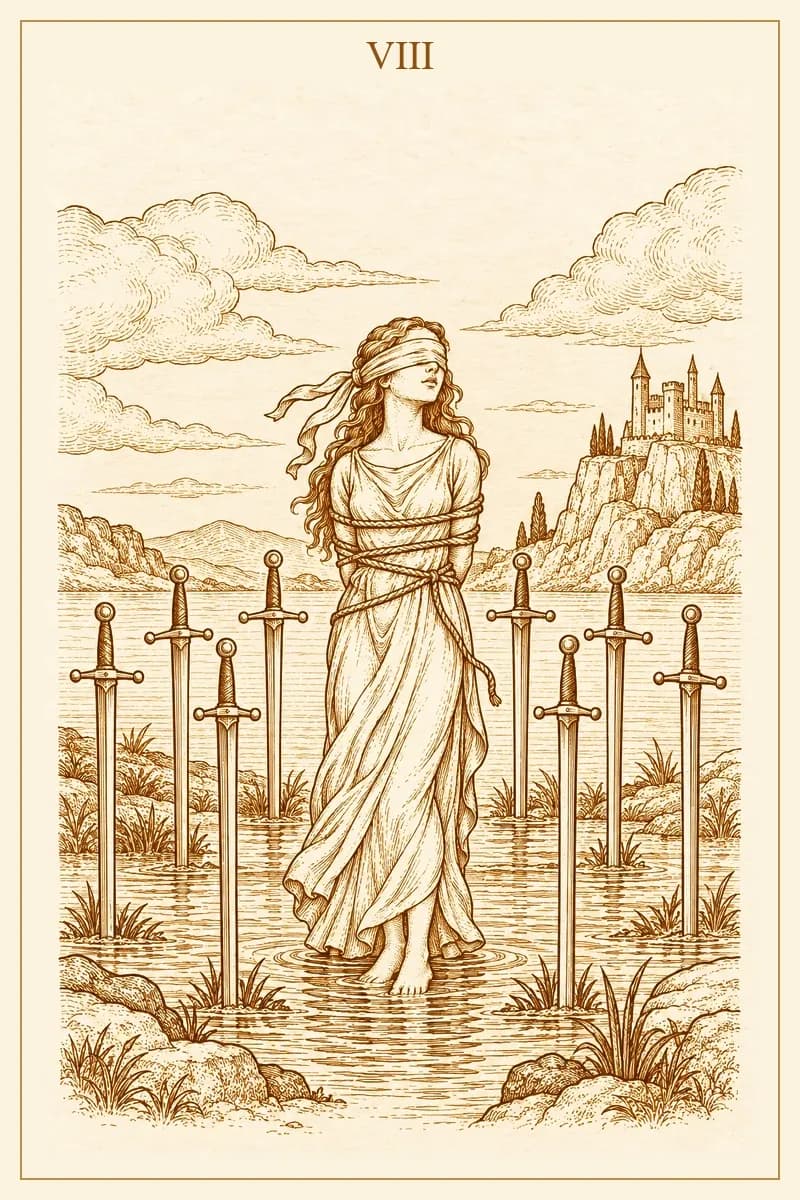
Meaning of Justice and Eight of Swords Combination: The Verdict You Already Know
Self-imposed blindness
The bandage over your eyes was placed there by your own hands. That is the central paradox here: a card of absolute impartiality sitting alongside a card of absolute self-restraint. One demands you look; the other has convinced you that looking is impossible. The tension between them is not comfortable, but it is clarifying.
There is something almost clinical about this pairing. Think of a physician who has run every test, reviewed every scan, and arrived at a diagnosis—then watches the patient refuse to read the results. The information exists. The conclusion is already drawn. What remains is only the patient's willingness to stop covering their ears and receive what reality has prepared for them.
This combination does not punish. It waits. And it will keep waiting, with the patience of stone, until you decide that continuing to stand blindfolded in a field of swords is more painful than the moment of acknowledgment you have been postponing.
The Core Tension
Justice operates through cause and effect. Every action produces a consequence; every pattern eventually produces a reckoning. Eight of Swords, by contrast, is the art of staying frozen—surrounding yourself with perceived dangers so numerous that movement seems impossible, while the actual binding is nothing more than a mental loop you have been running long enough to mistake for reality.
Together, these cards describe a situation where the facts of the case are not in dispute. The "verdict," in a very real sense, already exists. What is in dispute is whether you will acknowledge it. The Eight of Swords does not argue against Justice; it simply refuses to make eye contact. And Justice, being what it is, does not need eye contact to be valid.
The practical implication: something in your life has reached a natural conclusion that logic and evidence support clearly. You may be the last person in the room to name it aloud.
Love & Relationships
In relationships, this pairing often surfaces when someone knows, with the calm certainty that sits below panic, that a dynamic has become unsustainable—yet has built an elaborate internal architecture of reasons why change is impossible or premature.
The Eight of Swords here is not your partner holding you captive. It is the story you have been telling yourself about why you cannot leave, cannot speak, cannot draw a line. Justice asks a harder question than "what do you want?" It asks: given the actual record of what has happened, what does the situation objectively warrant?
If you have been waiting for permission to see things clearly, this combination is the closest tarot gets to granting it.
Career & Purpose
Professionally, this pairing appears at decision points where a role, a project, or a working relationship has run its course—but the person most affected has been running diagnostics on every possible alternative explanation instead of reading the plainest one.
There is often a fear of being wrong encoded in the Eight of Swords: if you name the problem precisely and act on it, you are committed. The safer strategy, emotionally, is to remain uncertain. But Justice in this position suggests that the evidence has actually been sufficient for some time. Continued uncertainty at this stage is a choice, not a condition.
Consider what you already know about the situation that you have been hesitant to state as a fact. That is where the work begins.
Shadow Side
The shadow side of this combination is the person who uses the language of fairness to avoid accountability. Justice can be weaponized: insisting on perfect information before acting, demanding that all parties be equally at fault before you move, using the ideal of balance as an excuse to stand motionless while time passes.
The Eight of Swords can feed this tendency. If you cannot see, you cannot be held responsible for what you did not see. It is a tidy arrangement—and a dishonest one. The combination together asks whether your commitment to "fairness" is genuine or whether it is a more sophisticated version of the blindfold.
Action Steps
- 1Write down the conclusion you have been resisting in one plain, declarative sentence—no qualifications, no "but," no "maybe"—and read it back to yourself as if it were evidence presented in a case you were judging, not living.
- 2Identify one practical constraint you have named as insurmountable and test whether it is structural or whether it is a habit of thought; the difference between the two is almost always discoverable within a single honest conversation.
- 3Take one small, concrete action that aligns with what you already know to be true, before you feel fully ready—because the readiness you are waiting for is a symptom of the Eight of Swords, not a prerequisite for moving.
Related Pairings
Continue through published pairings that share Justice or Eight of Swords.
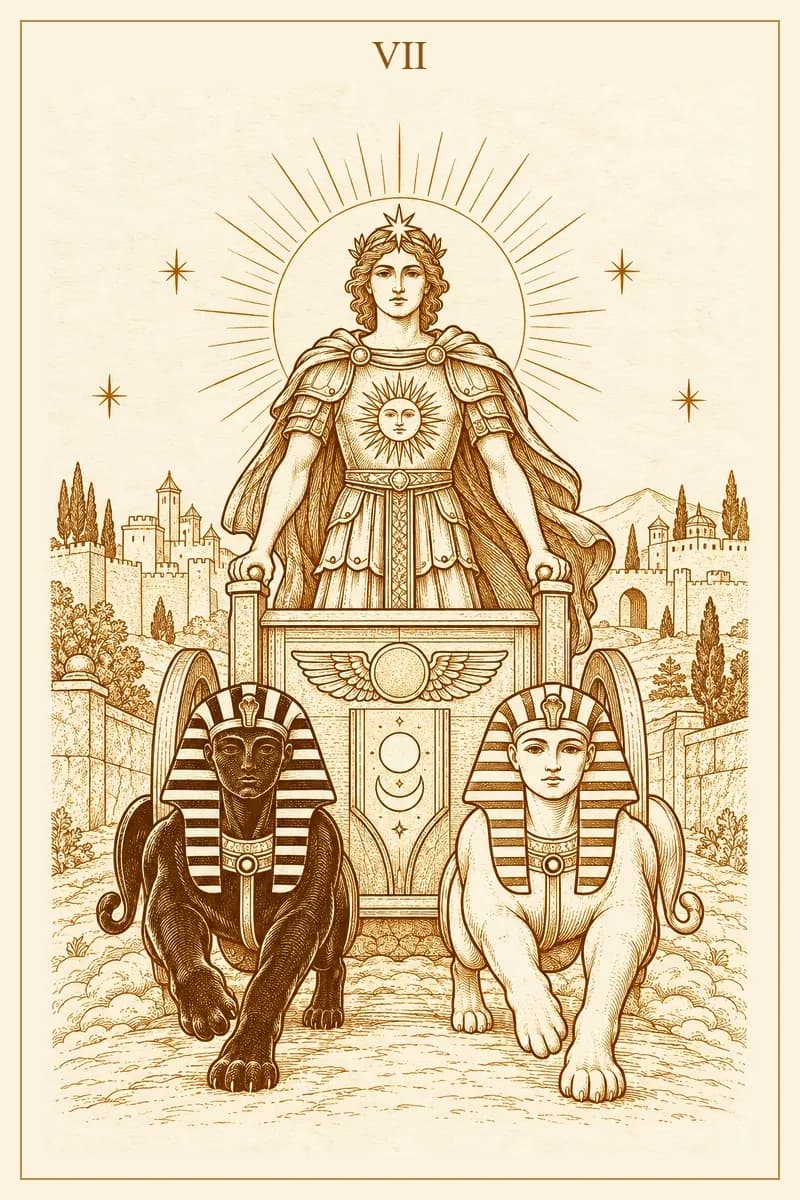
Earned victory
Meaning of The Chariot and Justice Combination: Victory Demands a Price
Willpower as trap
Meaning of The Chariot and Eight of Swords Combination: Trapped Victory

Authority meets accountability
Meaning of The Emperor and Justice Combination: Authority Meets Accountability
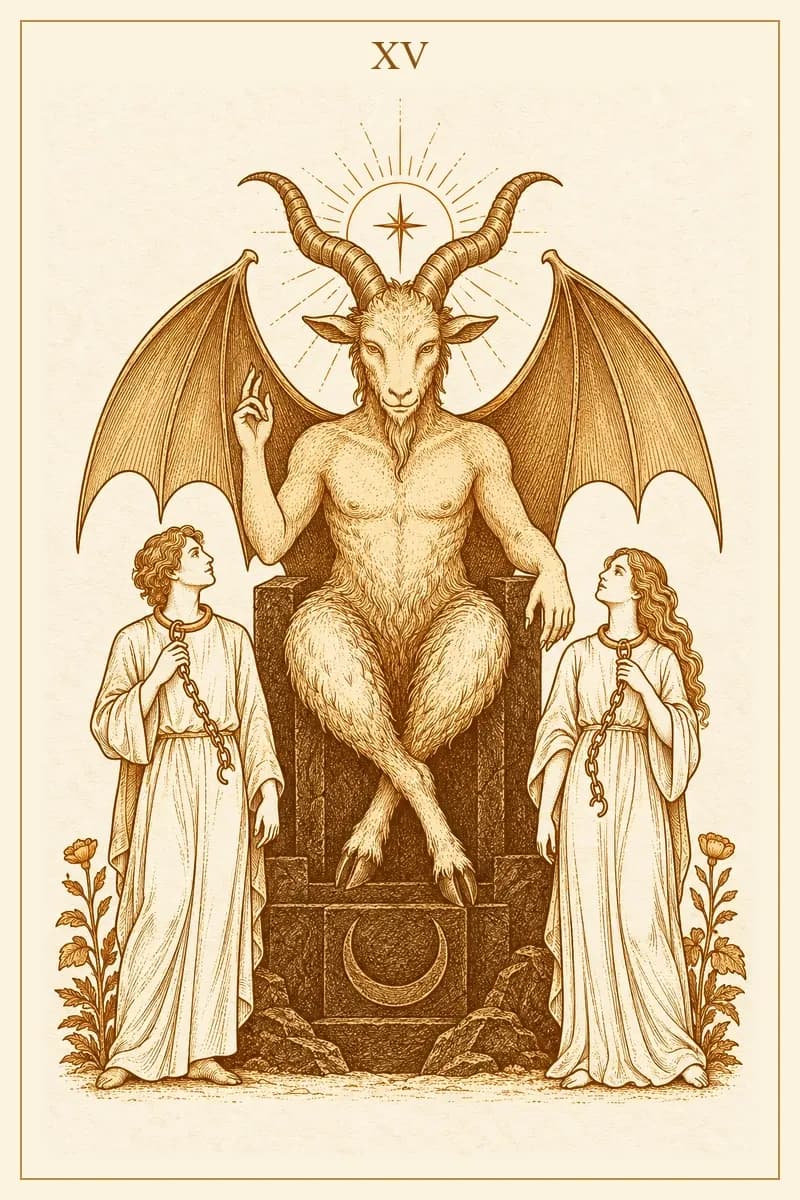
Self-built prisons
Meaning of The Devil and Eight of Swords Combination: Constructed Captivity
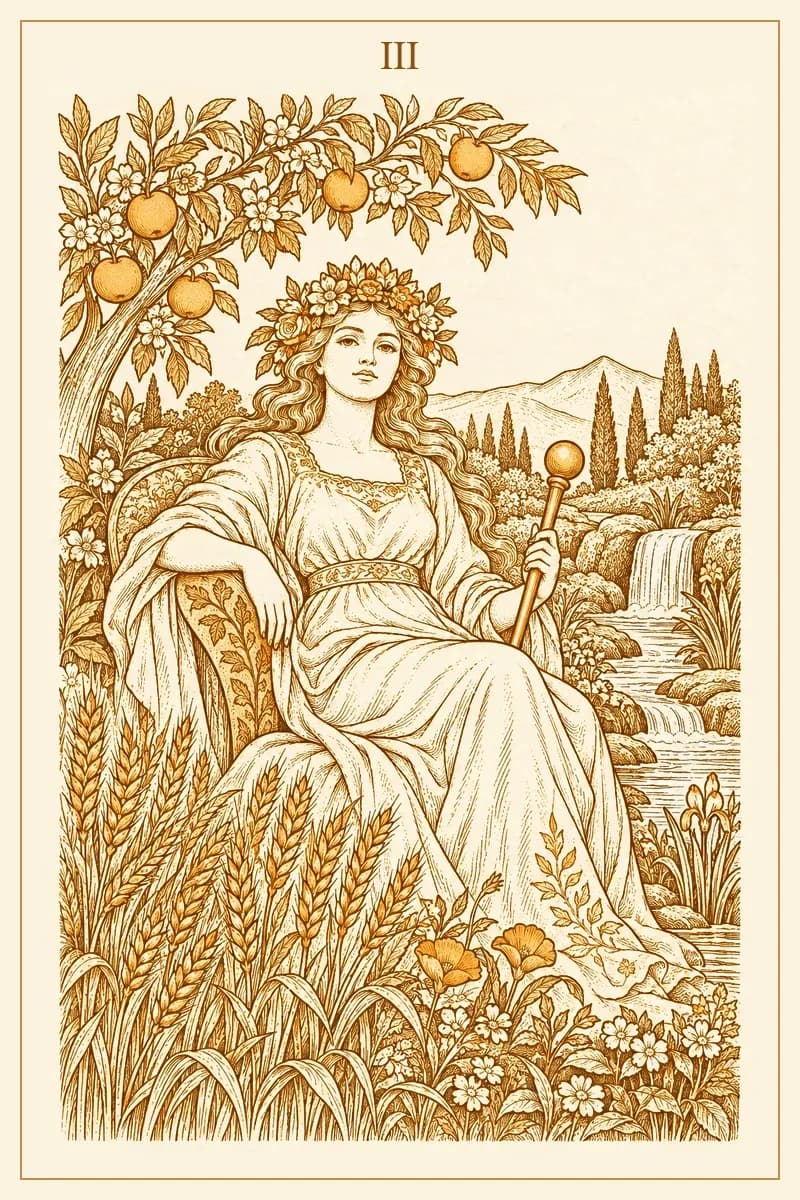
Abundance under judgment
Meaning of The Empress and Justice Combination: Abundance Under Judgment
Authority as cage
Meaning of The Emperor and Eight of Swords Combination: Trapped by Control
✦ Bring it to the cards ✦
Bring Justice and Eight of Swords into your own reading
Use this pairing as a starting point, then let a spread listen to the situation that is actually yours.
Begin a contextual reading