
Card Combination
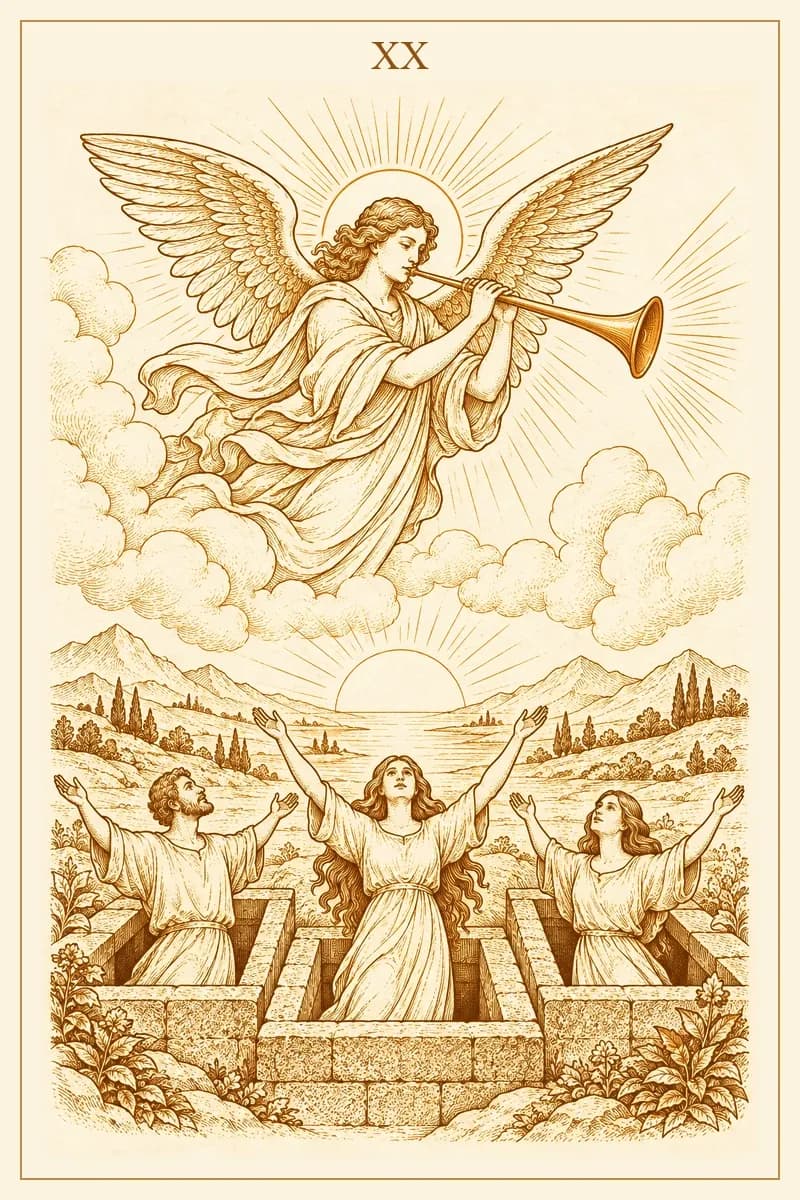
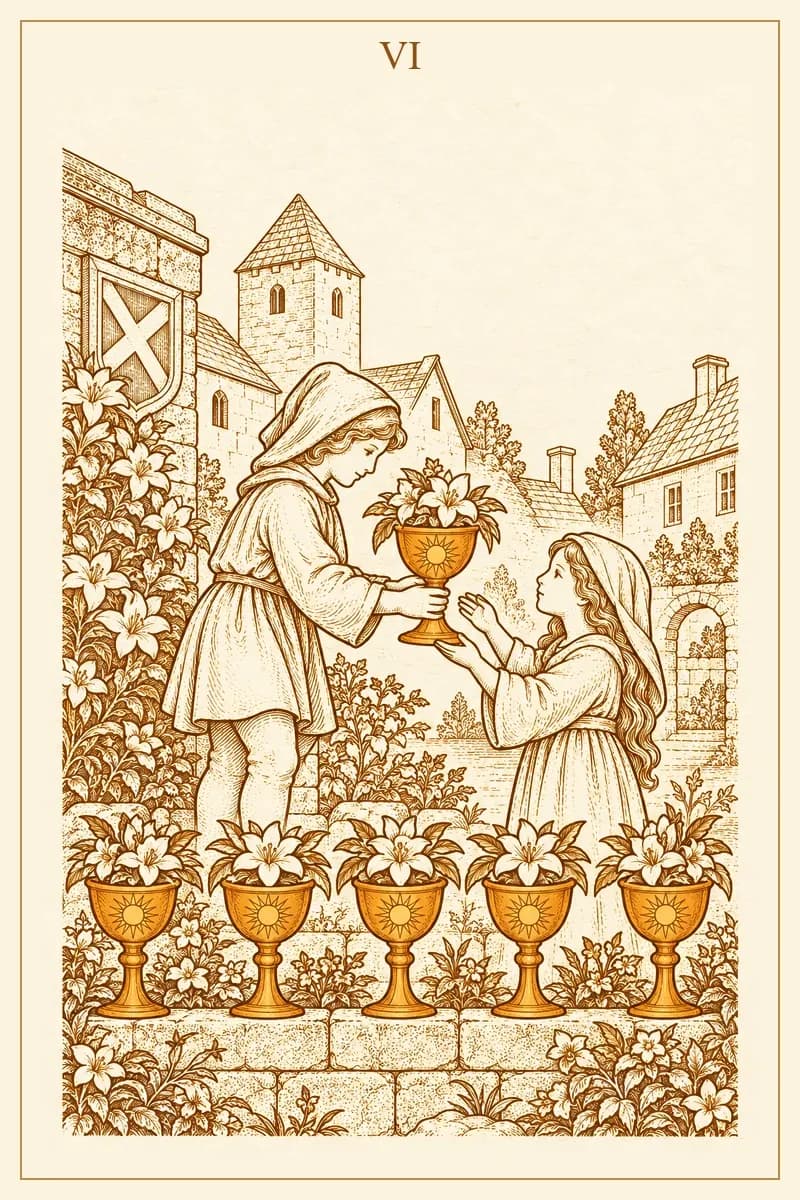
Meaning of Judgement and Six of Cups Combination: Reckoning With Roots
Reckoning with roots
The blueprint was drawn long before you knew you were an architect. You were small then — standing in someone's kitchen, watching light fall through a window, absorbing the emotional grammar of a household without having words for any of it. Those early structures became the load-bearing walls of who you are. And now the trumpet sounds. Not to demolish what was built, but to finally walk through every room with honest eyes.
Judgement does not arrive quietly. It tears the sky open and demands an accounting. But when it lands beside the Six of Cups — that tender card of memory, of flowers offered in cupped hands, of childhood sweetness and sorrow alike — the reckoning takes on an unusual texture. It becomes archaeological. You are not just being called forward; you are being called to excavate. The past is the site. The past is the material. The transformation you're moving toward has its foundation buried there.
This pairing carries a specific gravity. It doesn't let you skip the emotional excavation in favor of a dramatic forward leap. Whatever you are awakening into right now, the Six of Cups insists that something from your history has been scaffolding it all along — a gift you received and forgot, a wound that shaped your walls without your consent.
The Core Tension
Judgement wants resolution. It is the card of the final reckoning, the moment when all that was hidden surfaces and a verdict is reached — not punitive, but clarifying. The Six of Cups, by contrast, lives in a soft amber light. It prefers the corridor of memory to the bright open courtyard of decision. Together, these two cards create a productive friction: the urgency of transformation pulling against the slow, necessary work of understanding where you came from.
The tension here is between wanting to rise and needing to return. You cannot simply ascend if the foundations of your psyche remain unexamined. The Six of Cups asks you to sit with the child you were — to honor what that child experienced, what they needed and didn't receive, what gifts they carried that got buried under the demands of growing up. Judgement then takes that raw, honest material and asks: given all of this, what do you choose to become?
This is not a comfortable pairing, but it is a remarkably complete one. It covers the full arc — origin to destination, wound to wisdom, past self to reborn self. The architecture of your transformation is revealed to have been under construction for decades.
Love & Relationships
In a relationship context, this combination surfaces old relational blueprints. The way your first caregivers expressed love — or withheld it — became a template you've been decorating around ever since without fully seeing it. Judgement's call here is not to blame the past but to read the architectural plans clearly, perhaps for the first time.
If you are in a partnership, you may find that a recent conflict or quiet distance between you has triggered something much older. The Six of Cups is showing you a ghost: not of the relationship, but of your own childhood home. Recognizing that is not a detour — it is the direct route to genuine repair and depth.
For those unpartnered, the walls you've built to feel safe may have been designed by an earlier version of yourself who needed them desperately. Some of those walls have excellent craftsmanship. Some are blocking the light. Judgement asks you to decide which is which.
Career & Purpose
Professionally, the Six of Cups often surfaces a calling — something you loved before ambition, practicality, or others' expectations redirected you. Judgement amplifies this into something louder than a whisper. There is a reckoning arriving around what your work actually means to you, and the clue to navigating it lies in what you loved doing before you knew it could matter.
This doesn't necessarily mean quitting everything to become a ceramicist. It can mean allowing that childhood fascination — with stories, with systems, with building things — to re-enter your professional identity in a more honest way. The work you do best is usually the work that connects to the person you were before you learned to perform.
Watch for a moment this week when your work feels like play — even briefly. That feeling is structural information.
Shadow Side
The shadow of this combination is the seduction of the past as a permanent address. Six of Cups can tip into nostalgia that substitutes for action, a golden childhood mythology that makes the present seem perpetually disappointing by comparison. Judgement, misread, can become a grandiose fantasy about transformation that never actually touches the ground.
Together in their shadow form: you replay old memories, you trace old hurts, you feel the weight of a clarifying call — and then nothing changes. The excavation becomes a residence. The blueprint is studied but no wall is moved.
The exit from this shadow is specificity. Not "I need to heal my childhood" as an abstract project, but: one concrete behavior this week that reflects who you are choosing to become. The trumpet has sounded. The response is in the doing.
Action Steps
- 1Pull out an old photograph, letter, or object from your past and spend ten minutes writing about what it meant to you then versus what it means now — let Judgement read the Six of Cups aloud.
- 2Identify one structural habit in your relationships or work that you inherited rather than chose, and decide consciously whether to keep it or renovate it.
- 3Do one thing this week that the child you were would have recognized as true to who you are — not nostalgically, but as an act of continuity and clarity.
Related Pairings
Continue through published pairings that share Judgement or Six of Cups.

Driven reckoning
Meaning of The Chariot and Judgement Combination: Drive Meets Reckoning
Nostalgia versus drive
Meaning of The Chariot and Six of Cups Combination: Past Versus Forward Drive
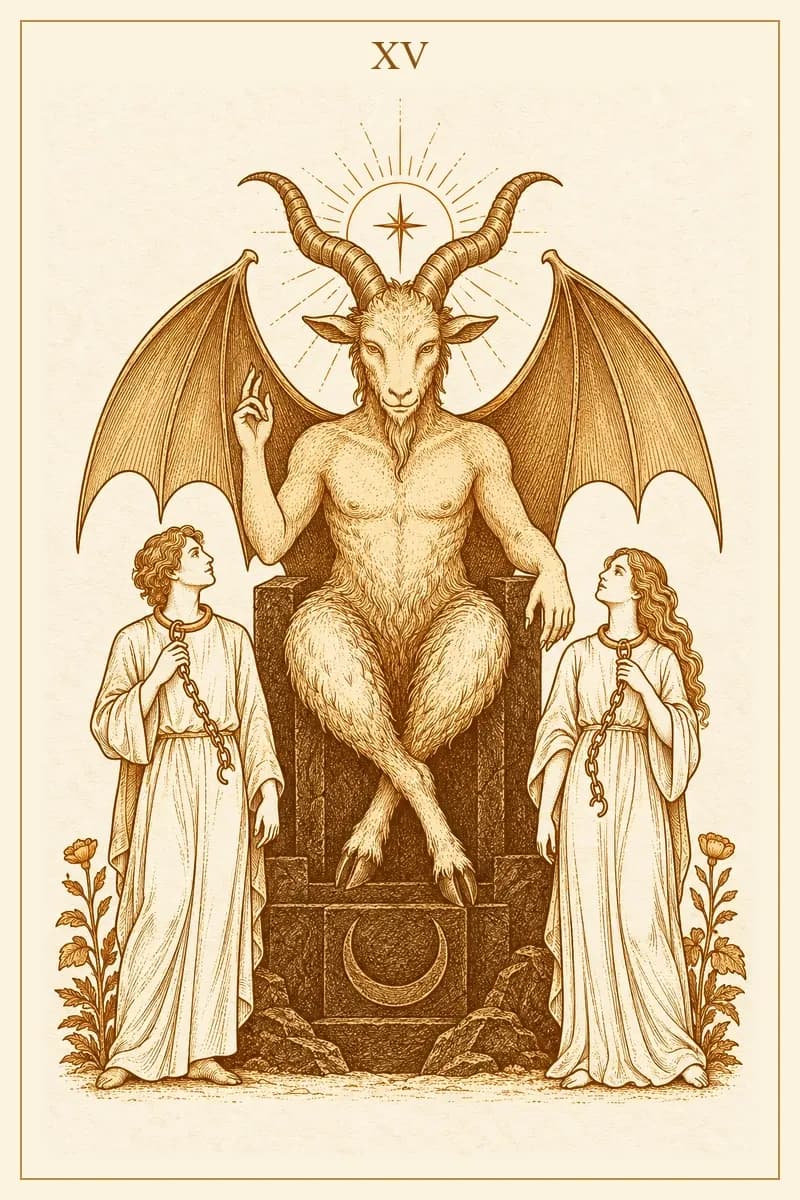
Bondage meets awakening
Meaning of The Devil and Judgement Combination: Chains and Reckoning
Nostalgic bondage
Meaning of The Devil and Six of Cups Combination: Sweetness That Chains

Earthly authority transcended
Meaning of The Emperor and Judgement Combination: When Authority Meets a Higher Summons
The structured self reckoning with the innocent self that built it
Meaning of The Emperor and Six of Cups Combination: When Authority Remembers Tenderness
✦ Bring it to the cards ✦
Bring Judgement and Six of Cups into your own reading
Use this pairing as a starting point, then let a spread listen to the situation that is actually yours.
Begin a contextual reading