
Card Combination
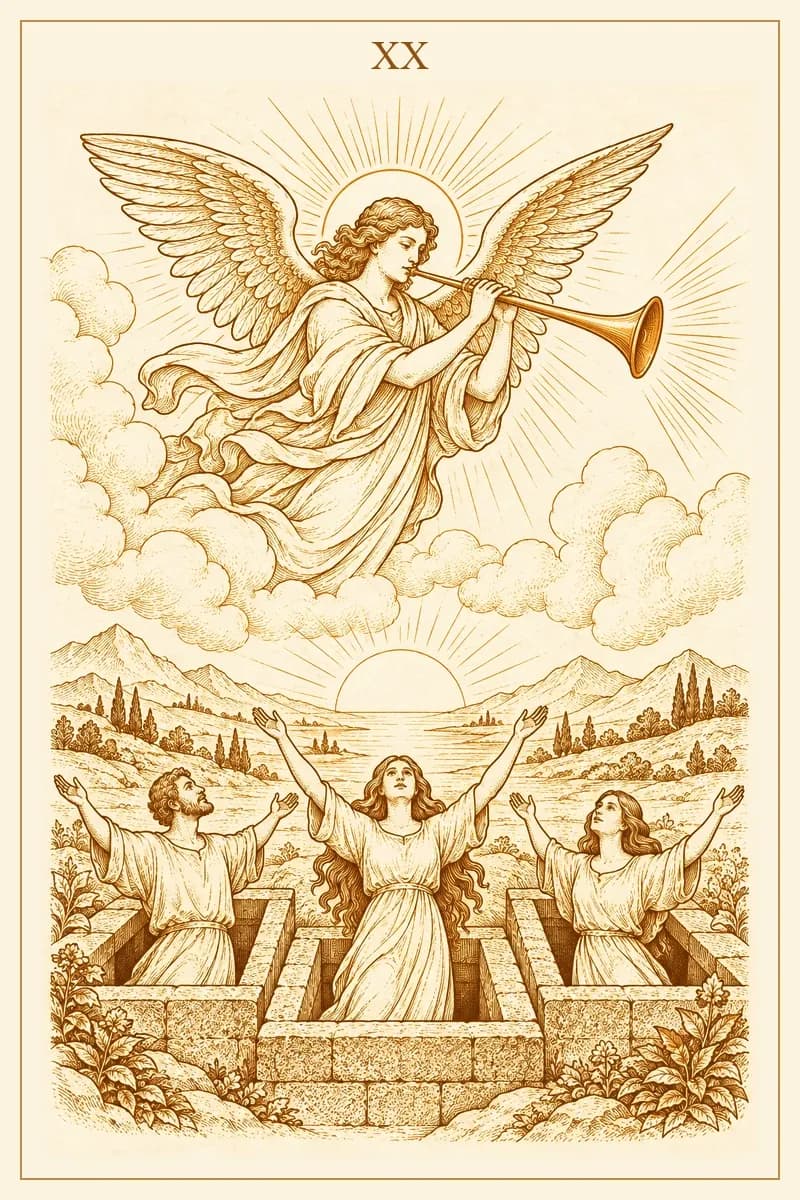
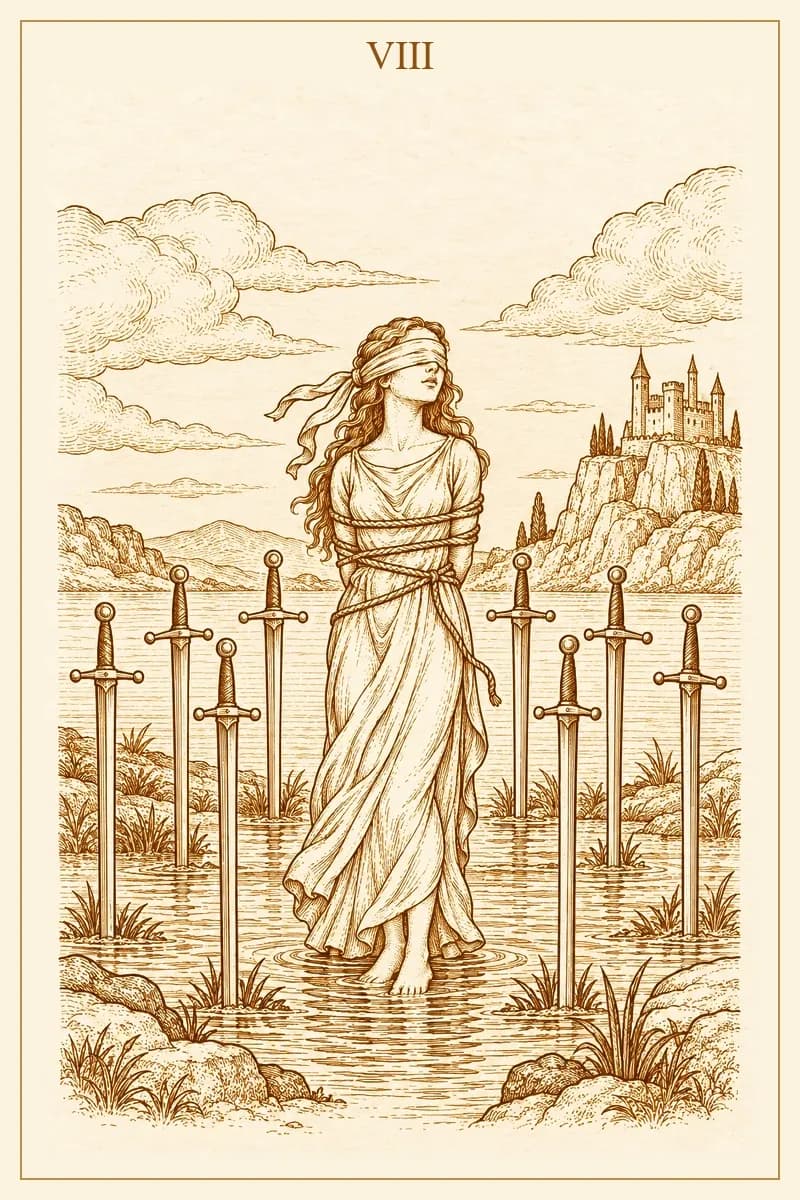
Meaning of Judgement and Eight of Swords Combination: Liberation Through Reckoning
Awakened liberation
The walls keeping you trapped were never locked from the outside. Every restriction you feel, every blind spot you maintain, every binding you curse — you hold the blueprint. Judgement arrives not as a gentle whisper but as a trumpet blast that rattles the very foundations of the structure you mistook for a cage.
Most people spend years reinforcing their own prisons, adding layers of insulation against truths they cannot bear to face. The Eight of Swords stands blindfolded among blades, convinced movement means injury. Judgement rips through that conviction with the force of an earthquake through a condemned building. What remains standing afterward is the only thing worth keeping.
The Core Tension
Here lies the collision between total self-awareness and total self-deception. Judgement demands an honest accounting — a structural inspection of every belief, every excuse, every comfortable lie. The Eight of Swords represents the elaborate scaffolding erected around a wound that never healed properly.
Think of a building inspector arriving at a structure everyone assumed was sound. The beams are rotten. The foundation has shifted. The exits were never actually sealed — they were just papered over. Judgement is that inspector, and the Eight of Swords is the condemned property. The tension is not whether renovation is needed. The tension is whether the occupant will leave voluntarily or wait for the ceiling to collapse.
This pairing refuses half-measures. You cannot patch drywall over a crumbling load-bearing wall and call it fixed. The reckoning here is total, and the liberation it offers is equally complete — but only if you stop gripping the doorframe of the building that no longer serves you.
Love & Relationships
In relationships, this combination exposes the stories you tell yourself about why love must hurt. One partner may have built an entire identity around being the one who sacrifices, the one who endures, the one who stays despite everything. Judgement interrupts that narrative with uncomfortable precision.
The Eight of Swords in love often means someone has convinced themselves they have no options — that leaving would destroy them, that speaking honestly would end everything. Judgement says: look again. The bonds are not as tight as you imagined. The consequences you fear have been inflated by years of avoidance.
For single people, this pairing demands you examine the type of partner you repeatedly choose. If every relationship leaves you feeling trapped, the common architect is you. That recognition stings, but it also hands you the drafting tools to design something entirely different.
Career & Purpose
Professionally, the Eight of Swords manifests as the colleague who insists they cannot leave a miserable position, cannot negotiate, cannot apply elsewhere. Judgement enters like a fire alarm during a meeting nobody wanted to attend anyway.
This combination often surfaces during performance reviews, restructurings, or moments when the gap between your capabilities and your current role becomes impossible to ignore. You have been overqualified for this particular prison for longer than you care to admit. The swords surrounding you are policies you never actually tested, assumptions about your marketability that expired years ago, and fears dressed up as pragmatism.
If you manage others, watch for team members who have mentally checked out but physically remain. Judgement paired with the Eight of Swords suggests someone on your team needs permission they should not need — permission to grow, to disagree, or to walk away.
Shadow Side
The shadow side of this pairing is devastating clarity weaponized against yourself. Judgement's call to truth, filtered through the Eight of Swords' victimhood, can produce a brutal inner critic that sees every flaw with microscopic precision but refuses to acknowledge any strength.
There is also the danger of performative awakening — announcing your liberation while rebuilding the exact same structure with slightly different materials. You tear down one mental prison and immediately begin constructing another, this time with better lighting and a more appealing name. The architecture changes; the imprisonment does not.
Watch for the impulse to judge others who remain stuck. Having your own blindfold removed does not qualify you as an expert on everyone else's blindness. The shadow here includes spiritual arrogance — the belief that your reckoning makes you superior to those still finding their way.
Action Steps
- 1Identify one belief about your limitations that you have never actually tested, then test it before Sunday — apply for the role, have the conversation, or make the request you assumed would be denied
- 2Walk through a physical doorway each morning and consciously name one mental restriction you are choosing to release that day, treating the threshold as a demolition site for outdated thinking
- 3Write down the three excuses you use most frequently, then beside each one, note the specific moment you first accepted it as permanent truth rather than a temporary circumstance
Related Pairings
Continue through published pairings that share Judgement or Eight of Swords.

Driven reckoning
Meaning of The Chariot and Judgement Combination: Drive Meets Reckoning
Willpower as trap
Meaning of The Chariot and Eight of Swords Combination: Trapped Victory

Bondage meets awakening
Meaning of The Devil and Judgement Combination: Chains and Reckoning
Self-built prisons
Meaning of The Devil and Eight of Swords Combination: Constructed Captivity

Earthly authority transcended
Meaning of The Emperor and Judgement Combination: When Authority Meets a Higher Summons
Authority as cage
Meaning of The Emperor and Eight of Swords Combination: Trapped by Control
✦ Bring it to the cards ✦
Bring Judgement and Eight of Swords into your own reading
Use this pairing as a starting point, then let a spread listen to the situation that is actually yours.
Begin a contextual reading