
Card Combination
Meaning of The Hierophant and Page of Cups Combination: Rules and Reverie
Rules and reverie
Midway through the second act, the student breaks from the script. Not with anger — with curiosity. The director stands in the wings holding a clipboard, watching someone discover that the character they were assigned might have something entirely unexpected to say. Nobody planned for this. The question is whether the production can hold it.
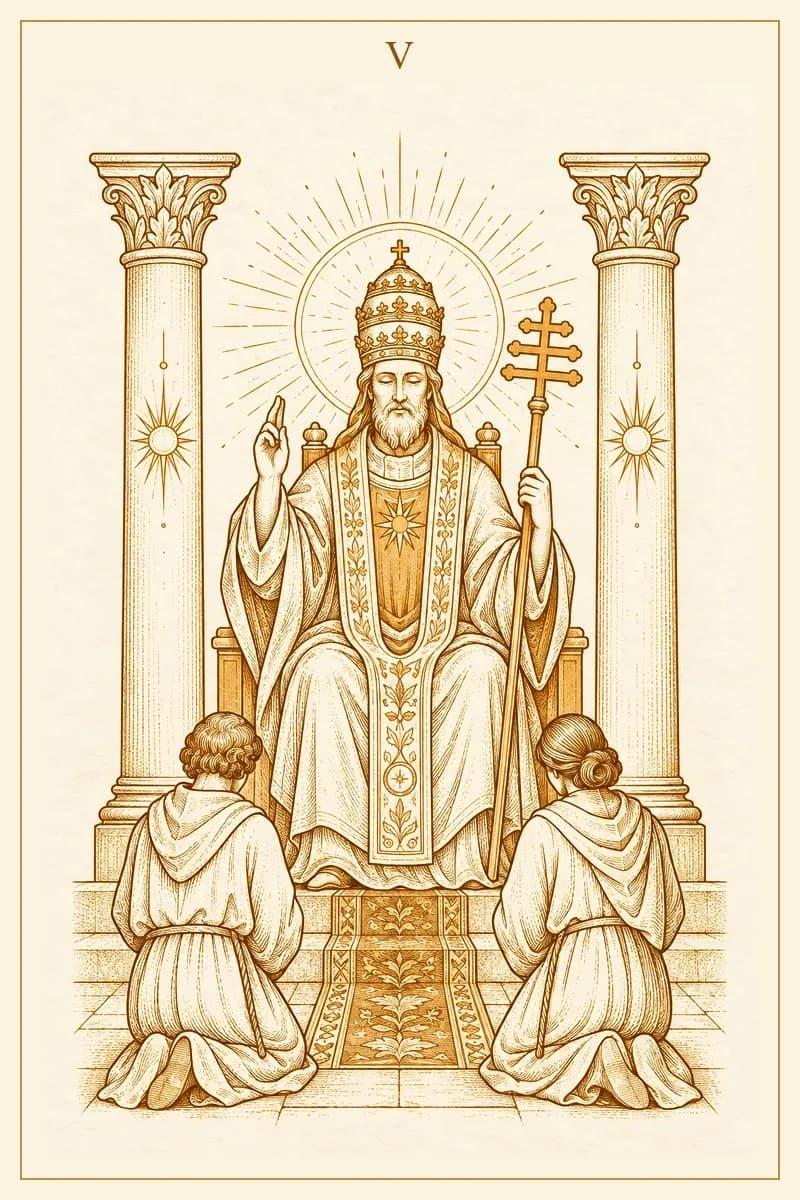
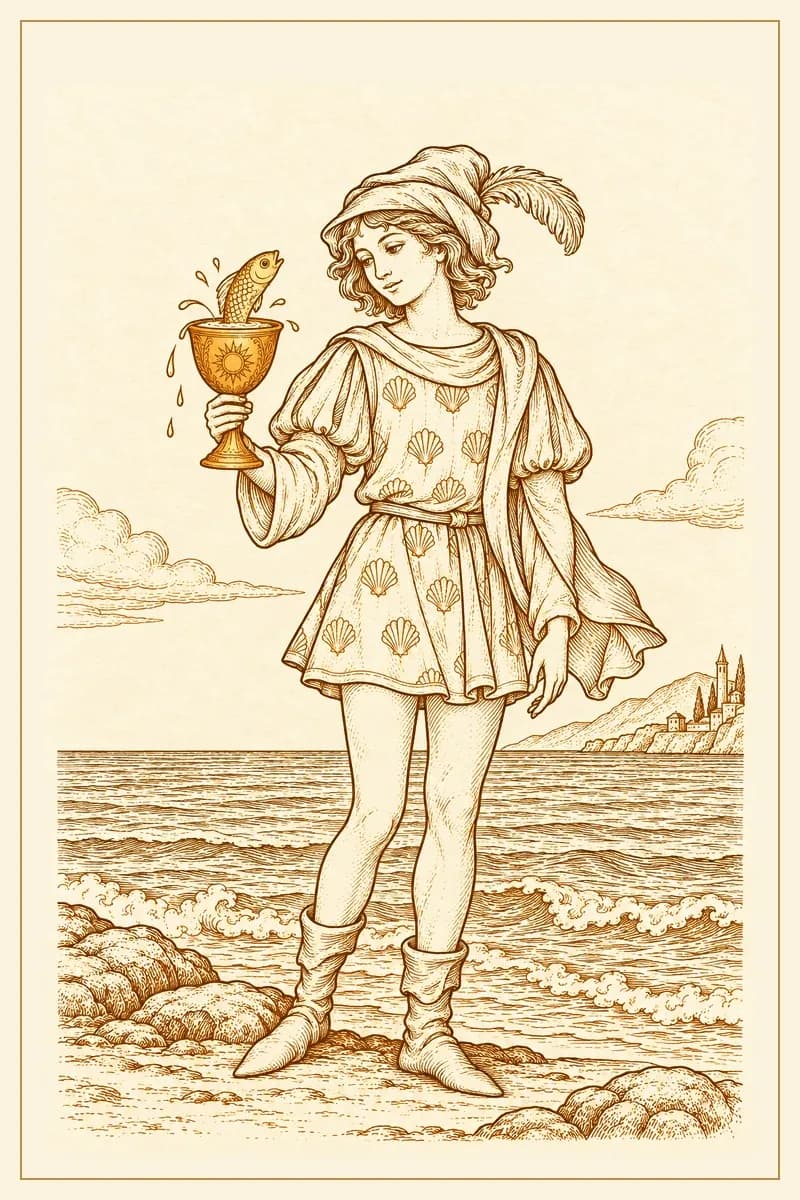
That is the scene this pairing describes. The Hierophant is the director with the clipboard — the keeper of form, tradition, and the accumulated wisdom of how things are done. The Page of Cups is the young actor who just made eye contact with a fish in a cup and started improvising. Both are necessary. One carries the architecture of the play; the other carries its living breath. When they appear together, a specific creative and spiritual tension becomes the whole point.
Something that has been kept inside a defined form is starting to leak feeling at the edges. That isn't a malfunction — it's the system working as it was designed to, long ago, when the form was first written by someone who also felt things they didn't have words for yet.
The Core Tension
Convention and imagination are not natural enemies, but they make uncomfortable roommates. The Hierophant insists on method, lineage, and the dignity of form. The Page of Cups arrives soaking wet from a daydream, full of unfiltered emotional content and zero interest in the established procedure. Neither is wrong. The tension between them is productive only if both are allowed to exist without one immediately crushing the other.
In theatrical terms: the script exists so the actors have something to depart from. Improvisation that has no relationship to any structure is just noise. Structure that allows no breath of the unexpected is just recitation. This pairing sits in the productive middle — the moment in rehearsal where the formal discipline and the raw instinct begin, tentatively, to speak to each other.
Love & Relationships
For relationships, this combination often appears when someone is bringing something emotionally raw and imaginative into a context that expects decorum. A person raised in a tradition-heavy family who falls for someone wildly creative. Someone discovering a spiritual practice that asks them to feel rather than just observe ritual. A romantic feeling that doesn't quite fit the approved categories.
The Hierophant here isn't necessarily a person — it can represent an internal authority, the voice that says "that's not how relationships work" or "you can't be with someone like that." The Page of Cups is the emotional truth that keeps surfacing anyway, undeterred, holding its fish and looking puzzled and hopeful. What matters is whether the feeling gets a hearing or gets dismissed as naïve.
For established partnerships, this can mark a moment when one partner wants to introduce more emotional authenticity, playfulness, or spiritual exploration into a relationship that has grown formal and dutiful.
Career & Purpose
Professionally, this pairing appears when someone creative is operating inside a structured institution — or when an institution is unexpectedly confronted with a creative or emotional dimension it hasn't built procedures for. A therapist discovering that the standard protocol doesn't account for what the client is actually going through. An artist navigating grant applications. A teacher who realizes the curriculum is not reaching the student in front of them.
The Page of Cups brings something genuine into a system designed around repeatable processes. The result is friction — and sometimes, when the institution is healthy enough, genuine innovation.
Shadow Side
The shadow of this pairing runs in two directions. In one direction: the Page's imaginative impulse gets so thoroughly suppressed by institutional pressure that it goes underground — emerging as passive resistance, creative blocks, or a persistent sense of suffocation that can't quite be named. In the other direction: the Page uses its emotional and creative energy to avoid ever engaging seriously with any form of discipline, drifting from feeling to feeling without building anything durable.
Both shadows involve a refusal of the relationship between structure and imagination. The first refuses imagination. The second refuses structure. Neither produces work that lasts.
Action Steps
- 1Identify one place where you've been dismissing an intuition or creative impulse because it doesn't fit the expected form — and write it down without editing it.
- 2Look at an established tradition or practice in your life and ask what it was originally designed to make people feel. Does it still do that?
- 3Find one small, low-stakes context where you can bring more emotional honesty into an interaction that normally stays formal.
- 4The Hierophant and Page of Cups are not enemies — they are the opening and closing of the same parenthesis. Structure gives imagination a container worth breaking out of. Imagination gives structure the reason it was built in the first place. Getting the most from this pairing means refusing to let either one win completely, and staying curious about what happens in the space between them.
Related Pairings
Continue through published pairings that share The Hierophant or Page of Cups.

Authority meets doctrine
Meaning of The Emperor and The Hierophant Combination: Two Pillars of Order
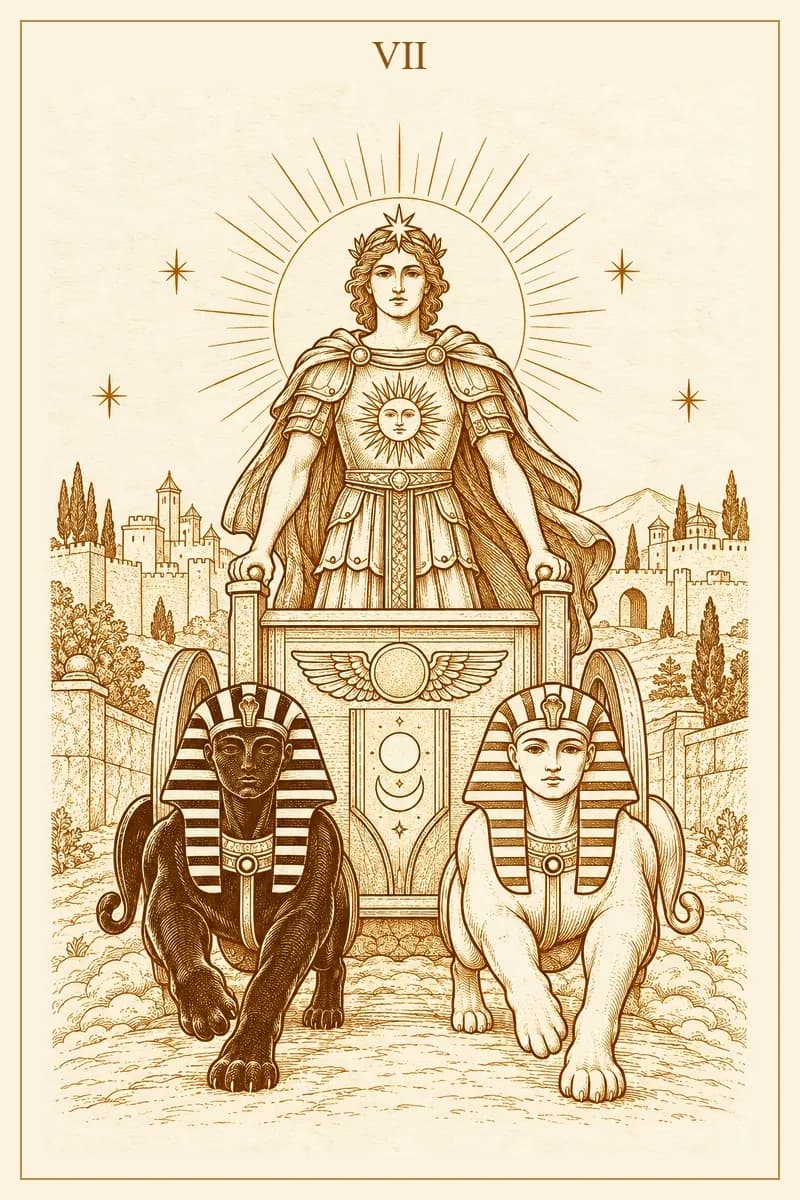
Driven emotional curiosity
Meaning of The Chariot and Page of Cups Combination: Drive Meets Wonder
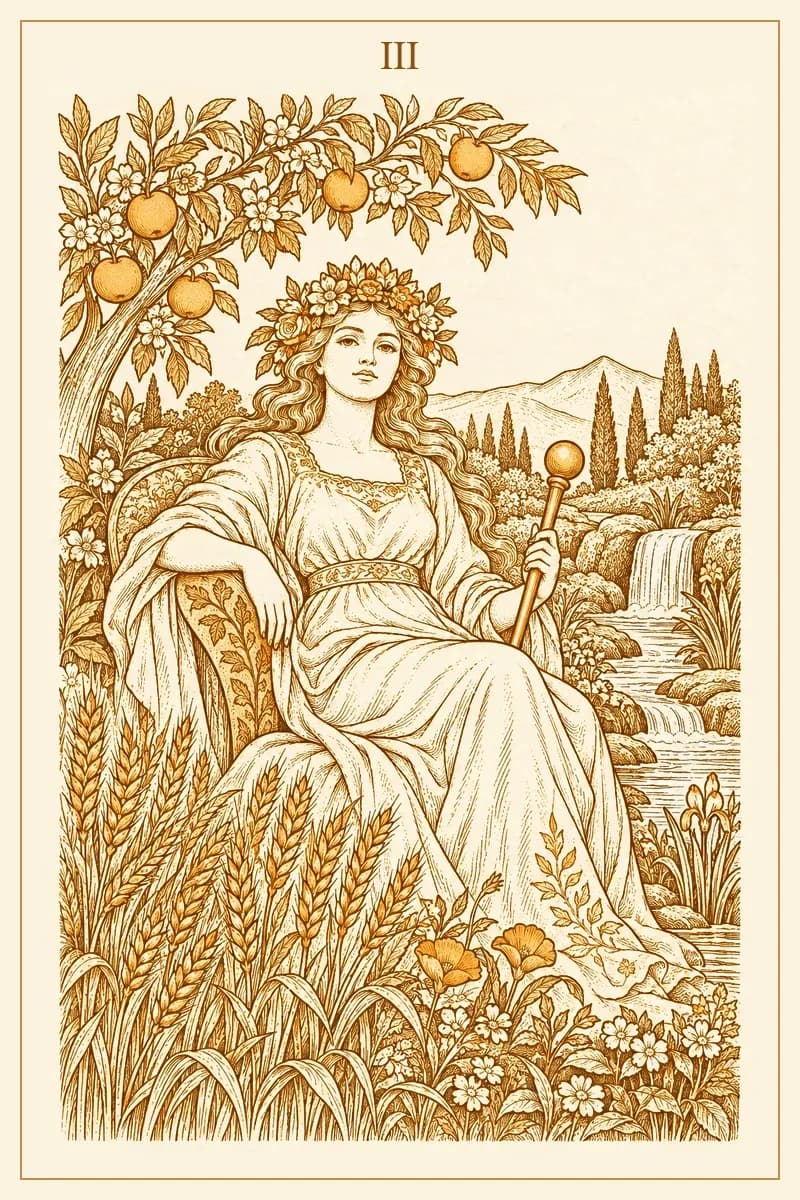
Abundance versus doctrine
Meaning of The Empress and The Hierophant Combination: Nature Meets Doctrine
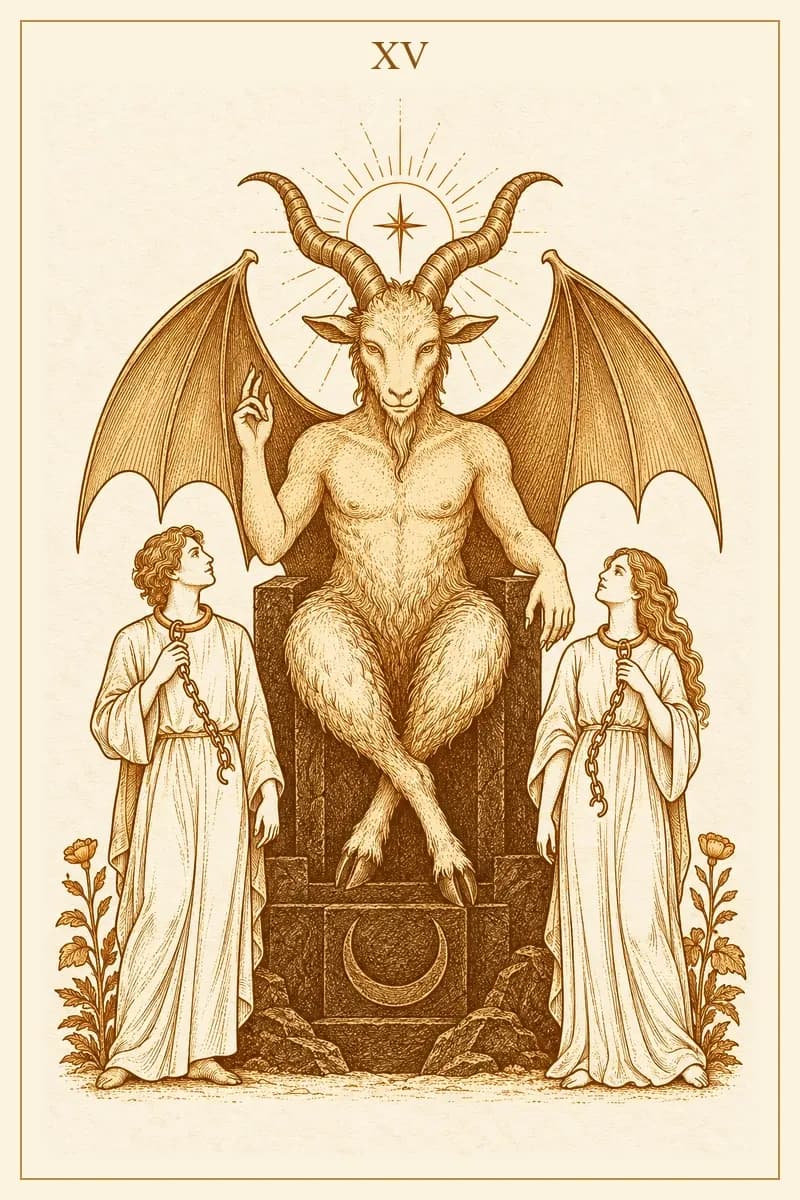
Enchanted obsession
Meaning of The Devil and Page of Cups Combination: Desire in Costume
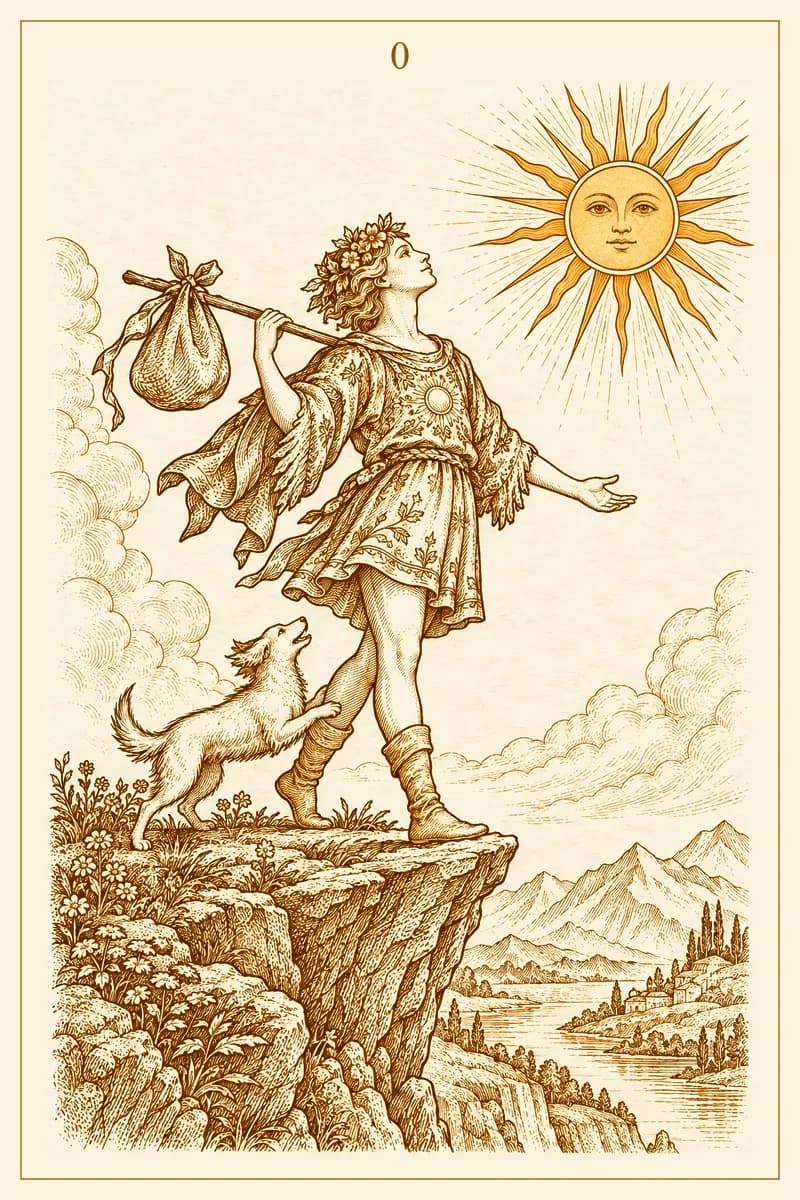
Sacred rebellion
Meaning of The Fool and The Hierophant Combination: Tradition Meets Freedom
The productive friction between hard-won experience and unguarded imagination — what each one can teach the other without destroying it
Meaning of The Emperor and Page of Cups Combination: When Experience Meets Imagination
✦ Bring it to the cards ✦
Bring The Hierophant and Page of Cups into your own reading
Use this pairing as a starting point, then let a spread listen to the situation that is actually yours.
Begin a contextual reading