Loading your view
The page is gathering the latest information.
The page is gathering the latest information.
doctrine versus surrender
The most devout person in the room and the one hanging upside-down from the rafters are often the same person, just at different points in the same story.
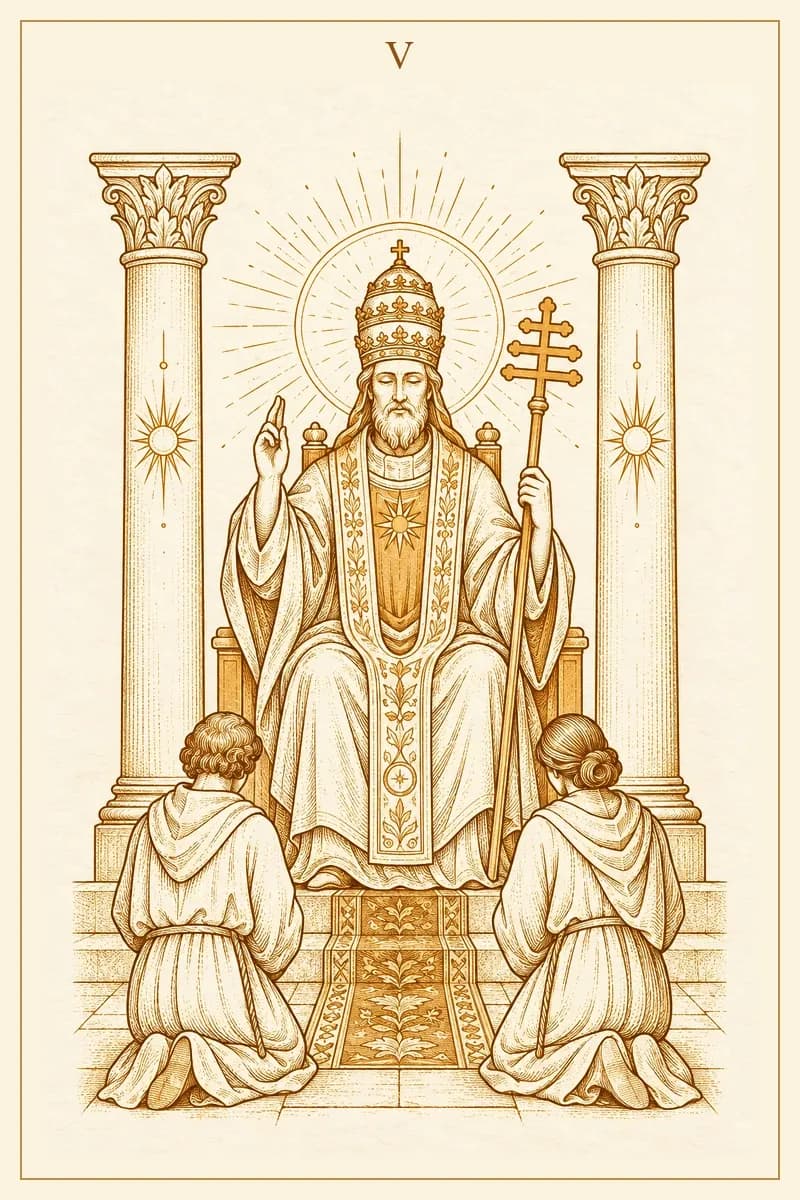
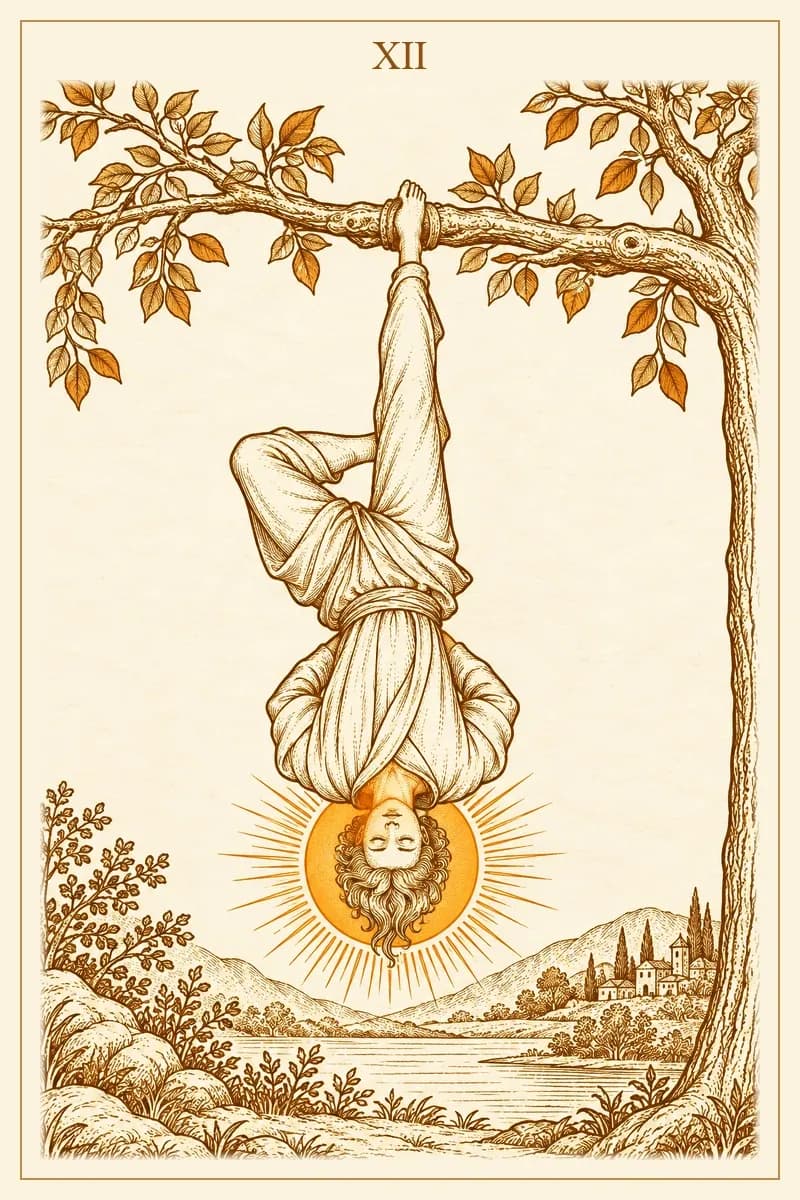
The Hierophant enters carrying every script that has ever been written about how to live correctly—religious texts, family doctrine, cultural expectation, institutional protocol. He has learned his lines. He delivers them with authority and, often, with genuine conviction. The Hanged Man enters from entirely the other direction: suspended, still, having dropped every script he was handed, watching them flutter to the floor from above. He is not rebelling. He has simply stopped performing.
When these two cards appear together, you are standing exactly at the threshold between them. The costume is on. The audience is waiting. And something inside you is asking whether the performance you are about to give is one you actually believe in, or simply one you memorized so long ago you forgot it was a role.
The Hierophant preserves. The Hanged Man suspends. The first card needs things to continue, to be transmitted faithfully, to endure through the generations. The second card needs things to stop long enough to be examined—turned over, seen from a different angle, held up to light that the original authors never anticipated.
This is not a comfortable pairing. The Hierophant does not enjoy pause. Institutions survive by moving forward, by maintaining momentum, by not letting anyone linger too long in the in-between. The Hanged Man is made entirely of in-between. He has no interest in momentum. He is interested in truth, even if truth requires hanging in the air indefinitely while everything you believed rearranges itself below you.
The core tension asks: what did you receive on faith, and what have you actually tested? Not to destroy the inheritance—but to know which parts of it are genuinely load-bearing and which are simply decoration that accumulated over time.
In relationships, the Hierophant and Hanged Man together often mark a moment of involuntary pause inside a very conventional story. You may be in a relationship that looks exactly as it should on the outside—correct by every social and familial standard—and yet something has quietly stopped working, and you are not able to explain it in terms anyone around you would accept.
The Hanged Man's stillness inside the Hierophant's framework can feel like failure. It is not. It is discernment. The relationship is being held up to the light. What you see when you look at it from this suspended angle is information you cannot get from standing upright and moving forward on schedule.
If you are single, this combination often signals that you have been waiting—not passively, but deliberately, even if you could not articulate why. Something in you knows that the next relationship needs to be built differently than what you were taught, and you are giving yourself time to understand what that means before you begin.
Professionally, the Hierophant and Hanged Man mark a collision between institutional expectation and internal recalibration. You may be inside a career structure that made perfect sense when you entered it—stable, respected, clearly mapped—and now find yourself unable to care about the metrics in the way the institution requires.
This is not burnout, though it can look identical from the outside. Burnout is depletion. What this combination describes is reorientation—a fundamental shift in what you understand work to be for. The Hanged Man is not asking you to quit. He is asking you to be honest about what you are actually doing and why, before you spend another decade doing it.
The shadow of this pairing runs in two directions. The Hierophant's shadow is the inability to tolerate the Hanged Man at all—labeling the pause as laziness, faithlessness, or crisis, and pressuring a return to the script before the insight has had time to form. Many people are pushed back into performance before they finish the stillness that would have changed everything.
The Hanged Man's shadow is permanent suspension that becomes its own form of doctrine. Endless questioning without ever arriving at conviction. Using "I'm still figuring it out" as a permanent address rather than a temporary residence. At some point, the rope needs to be cut and new ground needs to be walked on.
Keep or share this combination reference
Continue through published pairings that share The Hierophant or The Hanged Man.
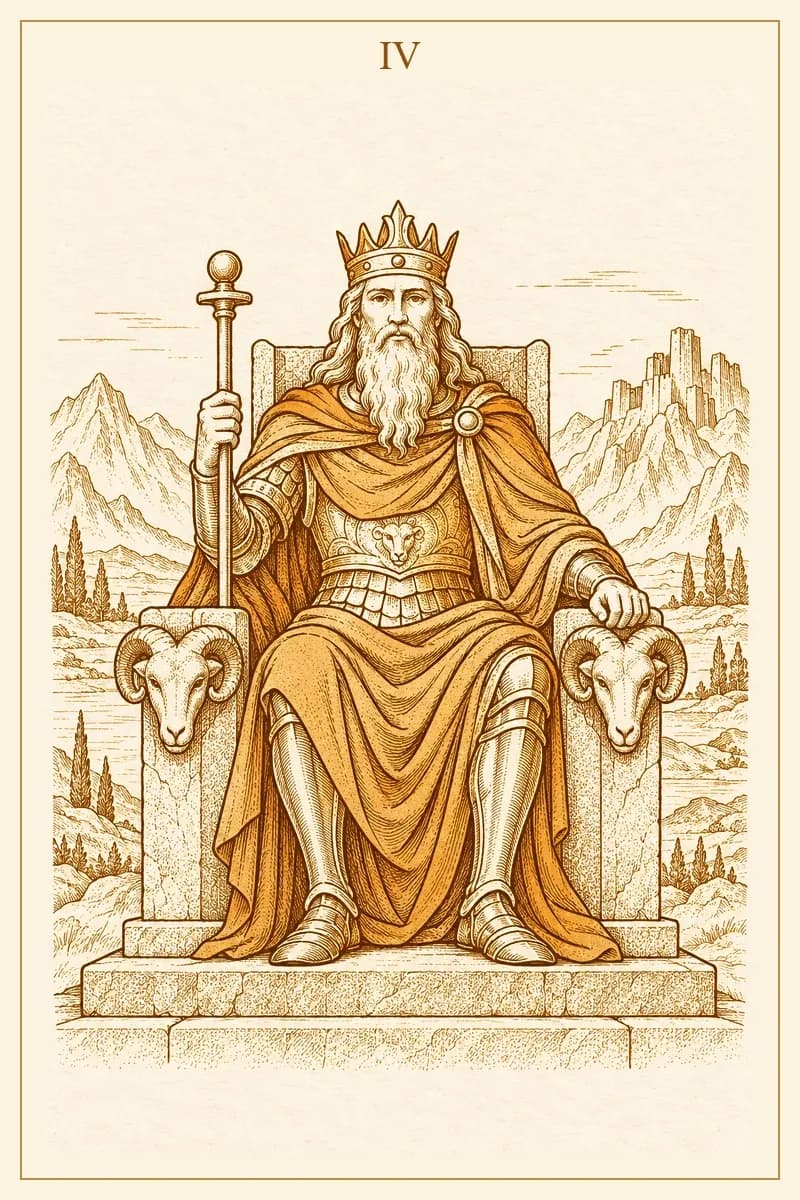
authority meets doctrine
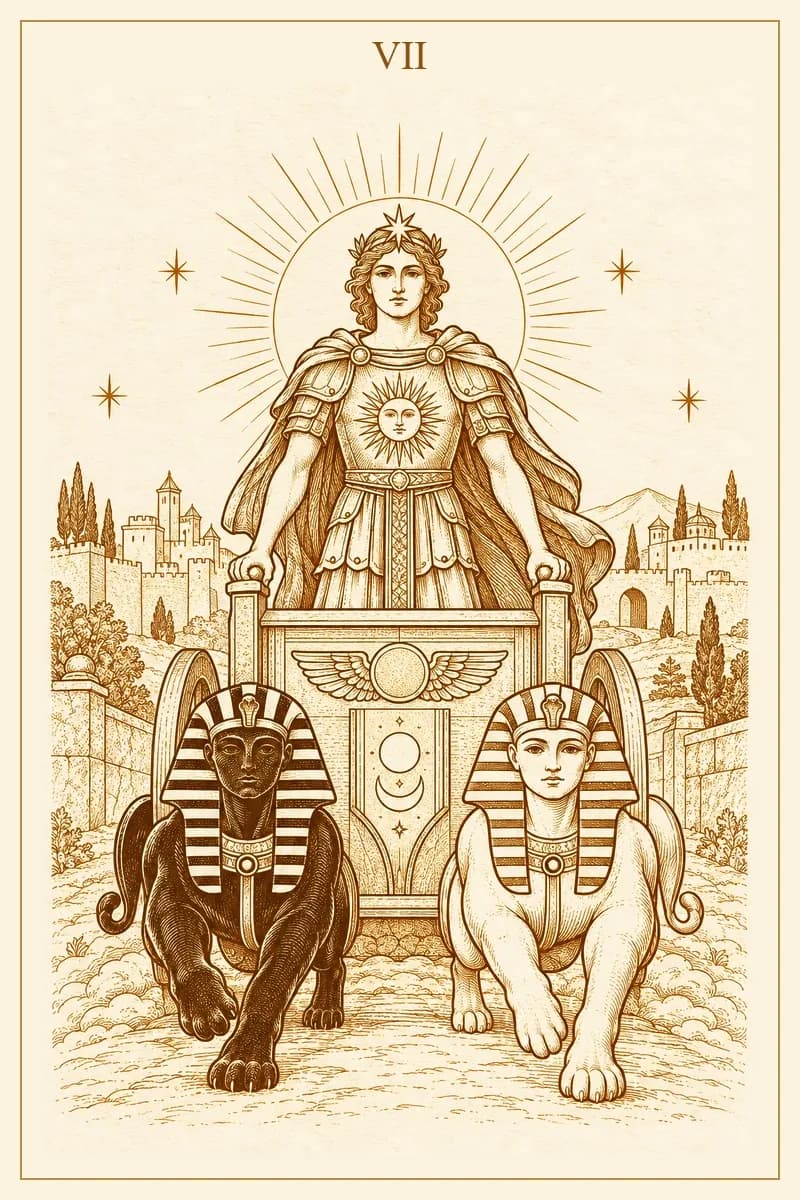
momentum versus surrender
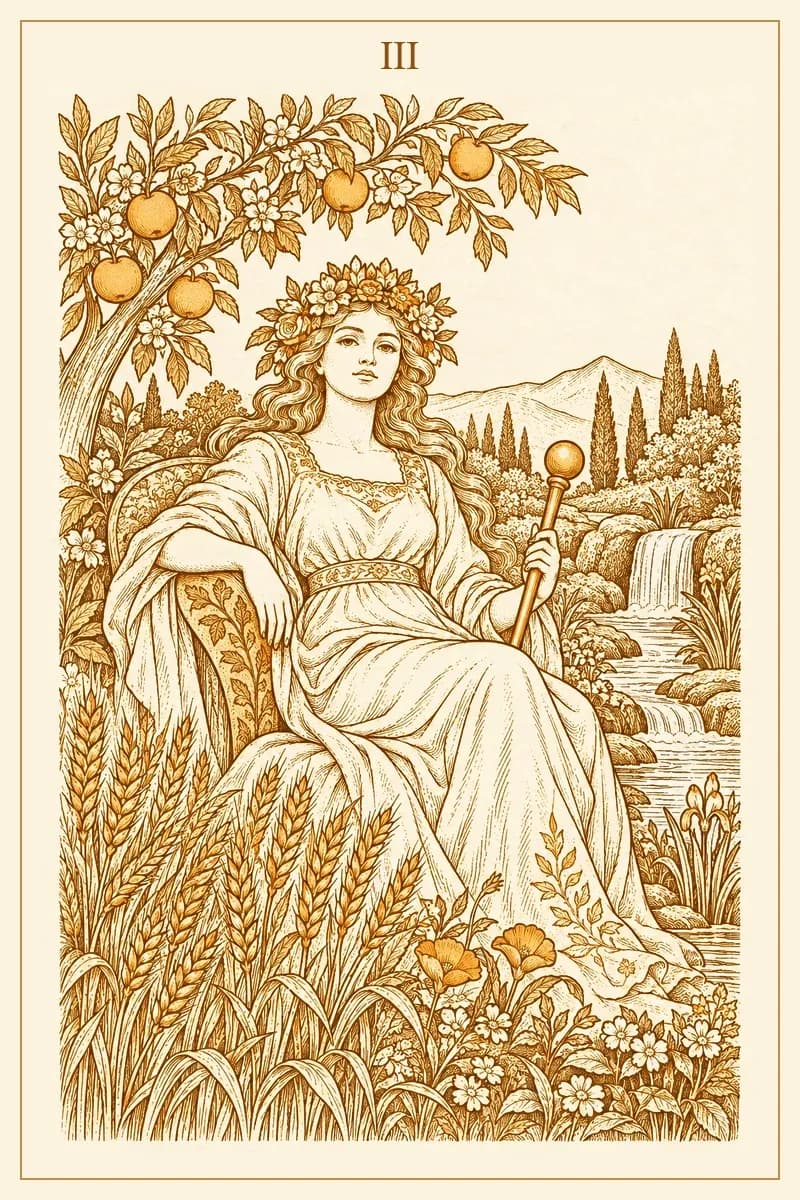
abundance versus doctrine
control vs release
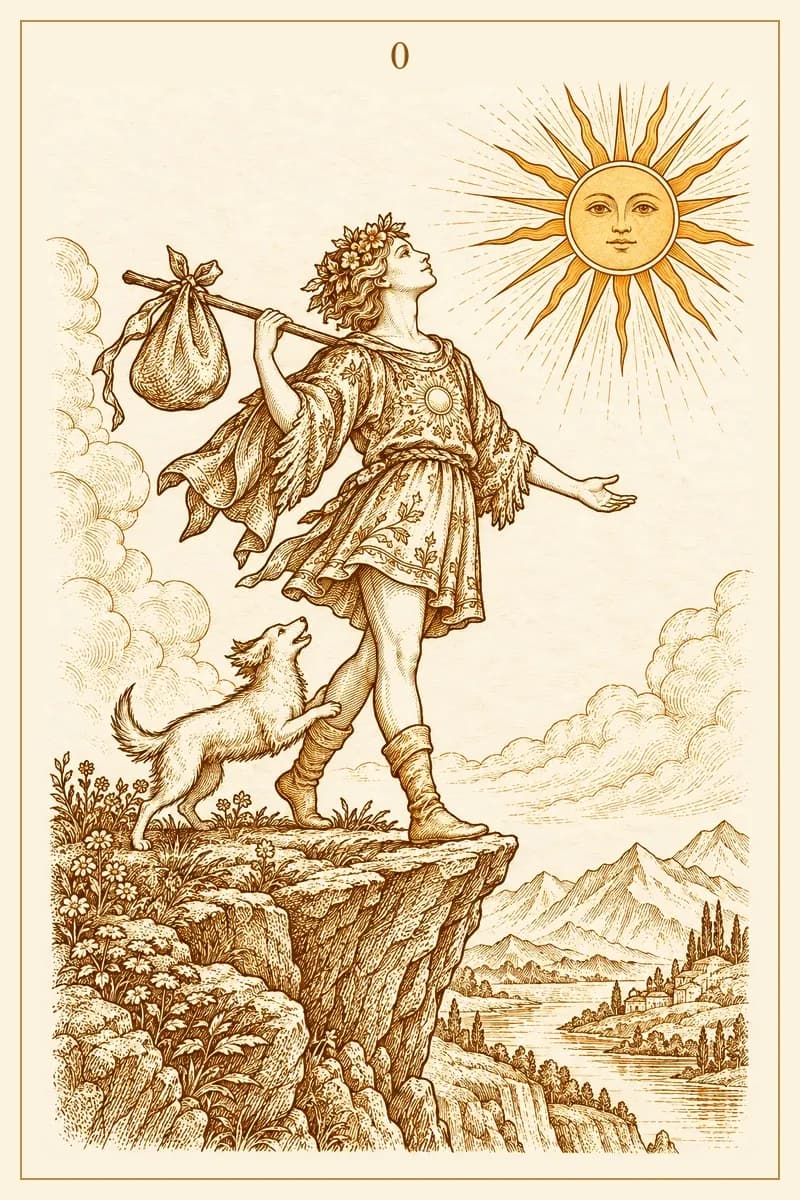
Sacred Rebellion
fertile suspension
✦ Bring it to the cards ✦
Use this pairing as a starting point, then let a spread listen to the situation that is actually yours.
Begin a contextual reading