
Card Combination

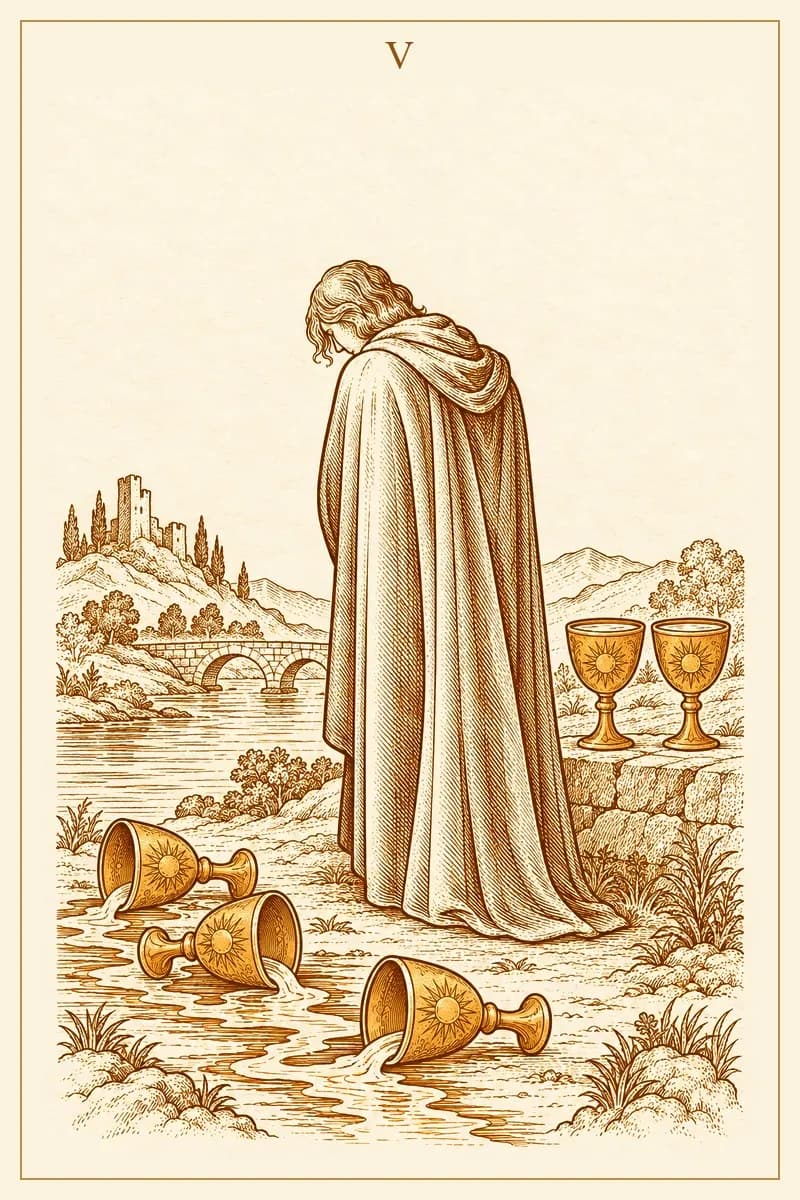
Meaning of The Hermit and Five of Cups Combination: Grief in Solitude
Grief in isolation
There is a particular kind of silence that follows loss — not the peaceful quiet of a monastery at dawn, but the heavy, airless stillness of a room where someone has been crying alone for too long. It settles in the chest like a minor chord left unresolved, vibrating at a frequency that makes ordinary conversation feel impossible. You hear everything through it: the muffled sounds of the world continuing without you, the distant rhythm of other people's lives moving forward while yours seems suspended mid-note.
That quality of suspended grief is what emerges when the lantern-bearer and the mourning figure appear side by side. One retreats to the mountain to find clarity through solitude. The other stands at the water's edge, fixated on what has spilled. Alone, each card carries its own wisdom. Together, they form a loop — introspection feeding on sorrow, sorrow deepening the retreat, until the whole internal landscape becomes an echo chamber for loss.
The key detail most readings miss is this: the Five of Cups always has two cups still standing. There is something that did not spill. The Hermit carries a lantern precisely to illuminate what darkness obscures. The danger of this pairing is not the grief itself — grief is honest and necessary — but the risk that the solitude becomes so consuming that the light never gets pointed at what remains.
The Core Tension
The Hermit is deliberate in his withdrawal. He chose the mountain. His solitude is purposeful, a tool for discernment. The Five of Cups carries no such intention — the figure there didn't plan to end up staring at spilled water. The grief arrived, and withdrawal followed by default, not by design.
When these two energies meet, the tension sits between chosen reflection and reactive isolation. The Hermit's lantern could illuminate a path through the mourning — but only if it is turned forward rather than held over the spilled cups repeatedly, as though counting them will change the number. The loop breaks when solitude shifts from avoidance into genuine examination: not replaying what was lost, but honestly mapping what the loss has revealed about what you value, what you need, and what you had perhaps already been grieving long before the cups fell.
Love & Relationships
In a relationship reading, this pairing often signals one partner who has gone quiet in a way that the other can't reach. The silence reads as cold or punishing, but it is more often a person genuinely unable to translate internal pain into spoken words. The grief may be old — a loss that predates the current relationship entirely — and the solitude is where it gets processed, slowly and without witnesses.
If you are the one pulling away: the lantern is for you too. The feelings that drove you inward deserve examination, not just endurance. If you are the partner watching someone retreat: this is not the moment to demand transparency. Presence without pressure — a kind of quiet accompaniment — tends to be more effective than any conversation you could force.
Career & Purpose
Professionally, this combination can indicate someone who has experienced a significant disappointment — a project that failed, a role they didn't get, a working relationship that ended badly — and has since become withdrawn. The Five of Cups at work often looks like disengagement; the Hermit compounds it into near-invisibility.
The risk here is that the retreat gets misread as indifference by colleagues or supervisors. The inner work happening is real, but it is invisible to anyone looking from the outside. If this resonates, consider what small signal you could send that you are still present and processing — not performing recovery, but indicating that you haven't disappeared entirely.
Shadow Side
The shadow of this pairing is rumination dressed as introspection. There is a meaningful difference between processing grief in solitude and rehearsing it on a loop until the neural pathway becomes a groove. Music offers a useful analogy: a musician practices a difficult passage by slowing it down, isolating the problem, and then moving through it. They do not simply play the wrong notes repeatedly and call that practice. The same applies here. Solitude that does not move — that circles the same memory, the same loss, the same regret — is not healing. It is rehearsal of pain.
Action Steps
- 1Write down the two cups that are still standing. Literally — list what did not leave, what still holds, what quietly remained. Do this before you revisit what was lost.
- 2Introduce one small interruption to the isolation: a walk, a meal with someone who asks nothing of you, a piece of music that does not match your current mood. Let the dissonance be intentional.
- 3Notice whether your solitude has a direction. Are you moving through something, or circling it? The difference is felt, not thought — check the body, not the argument.
Related Pairings
Continue through published pairings that share The Hermit or Five of Cups.

Driven introspection
Meaning of The Chariot and The Hermit Combination: Driven Inward
Grief and momentum
Meaning of The Chariot and Five of Cups Combination: Driving Through Grief

Outer vs inner authority
Meaning of The Emperor and The Hermit Combination: Command Meets Solitude
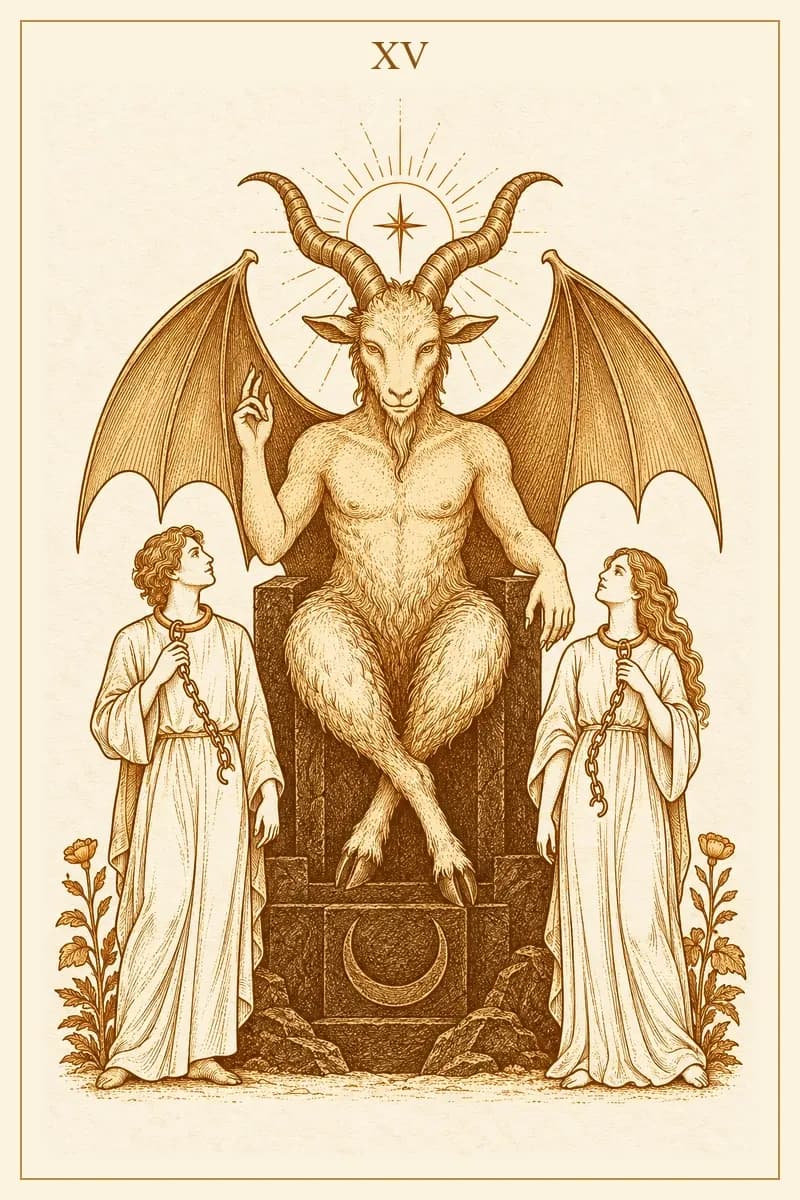
Grief-fueled bondage
Meaning of The Devil and Five of Cups Combination: Grief Feeding Chains
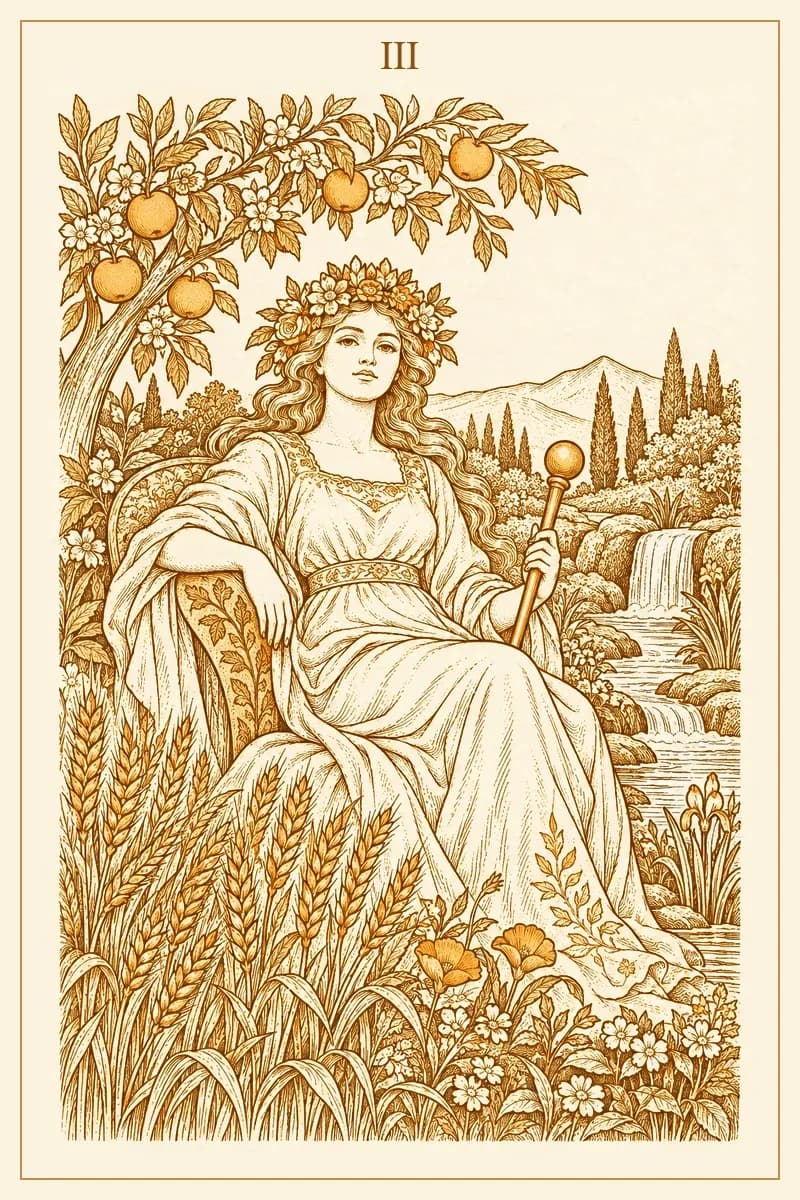
Abundance meets withdrawal
Meaning of The Empress and The Hermit Combination: Abundance Meets Solitude
The grief a ruler will not allow himself — and what that refusal eventually costs
Meaning of The Emperor and Five of Cups Combination: The Ruler Who Cannot Grieve
✦ Bring it to the cards ✦
Bring The Hermit and Five of Cups into your own reading
Use this pairing as a starting point, then let a spread listen to the situation that is actually yours.
Begin a contextual reading